For companies developing complex metal components, manufacturing lead time is often affected by more than the time required to produce the part itself. A component may not be difficult because of one specific process, but because multiple manufacturing stages need to work together before the final part can be completed.
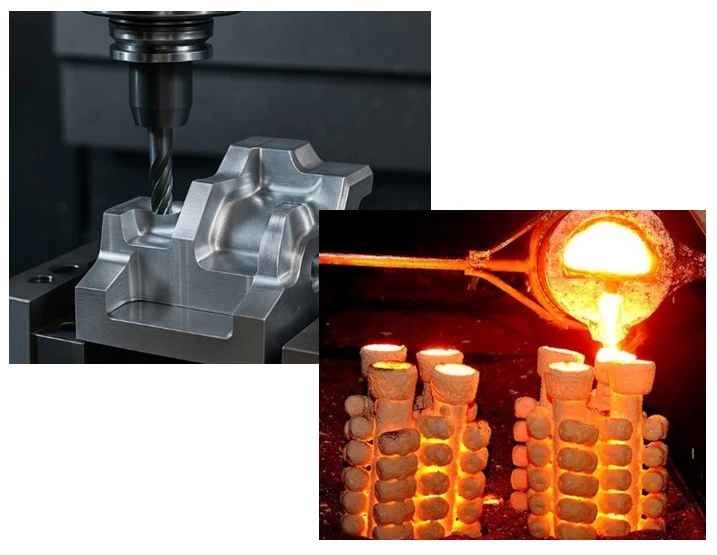
This is common for parts that combine complex geometry with precision requirements. A component may require investment casting to create the overall shape efficiently, but still need CNC machining to achieve the dimensional accuracy required for assembly and operation.
The challenge begins when these two processes are separated.
In a traditional workflow, a customer may work with an investment casting supplier first and then send the cast components to a CNC machining supplier. Although each supplier may perform its own process correctly, the connection between the two stages can introduce unexpected delays.
The CNC machining supplier receives the casting after production has already been completed. At that point, questions that affect machining efficiency still need to be answered: Does the casting have enough material allowance for machining? Which surfaces should be used as machining references? Can the part be securely fixed during machining? Are the critical tolerances assigned to the correct process?
When these questions are answered late, the project may lose time not because the machine cannot produce the part, but because the manufacturing plan needs to be adjusted after the casting is already available.
This is why some manufacturers consider combining investment casting knowledge with CNC machining planning earlier in the project. The purpose is not to replace one process with another, but to reduce the delays that occur between them.
Why Complex Parts Often Experience Longer Manufacturing Cycles
For simple components, manufacturing planning is usually straightforward. The material is selected, the CNC process is defined, the part is machined, and the final inspection is completed.
Complex components are different because the final part requirements are often divided between several manufacturing methods.
Consider a metal housing used in industrial equipment. The external structure may include curved surfaces, internal cavities, or weight-reduction features that would require extensive machining if produced from solid material.
Investment casting can create this general structure closer to the final design. However, the component may still require CNC machining for surfaces that directly affect how the part functions, such as mounting areas, alignment features, sealing surfaces, or precision holes.
The difficulty is that the casting process and machining process do not always use the same criteria.
Casting focuses on creating the overall shape and material integrity. CNC machining focuses on achieving controlled dimensions and functional accuracy.
The final component depends on both processes being planned together.
If the relationship between them is not considered early, problems often appear during the transition from casting to machining.
Learn more :CNC Machining Complex Parts Guide to Avoid Costly Failures
Where Traditional Supplier Separation Creates Delays
The biggest delay in a multi-supplier workflow is often not transportation or machine availability. It is the time required to transfer manufacturing knowledge from one supplier to another.
A casting supplier understands how to produce the cast component. A CNC machining supplier understands how to achieve the final dimensions. However, the information connecting these two stages needs to be clearly defined.
For example, a drawing may specify a final machined dimension, but it does not always explain how much additional material should remain after casting.
The CNC machining supplier needs to know whether the cast surface provides enough stock for rough machining and finishing operations. The casting process needs to consider which areas will become important machining references later.
If these requirements are not discussed until after casting production, changes may be required.
A machining supplier may need to modify the fixture design. A critical surface may need additional allowance. A feature may need a different machining sequence.
None of these issues necessarily prevent production, but they add time to the project.
For prototype and low-volume production, where engineering changes are common, these delays can have a greater impact because each adjustment may affect the entire delivery schedule.
How CNC Machining Planning Before Casting Reduces Production Delays
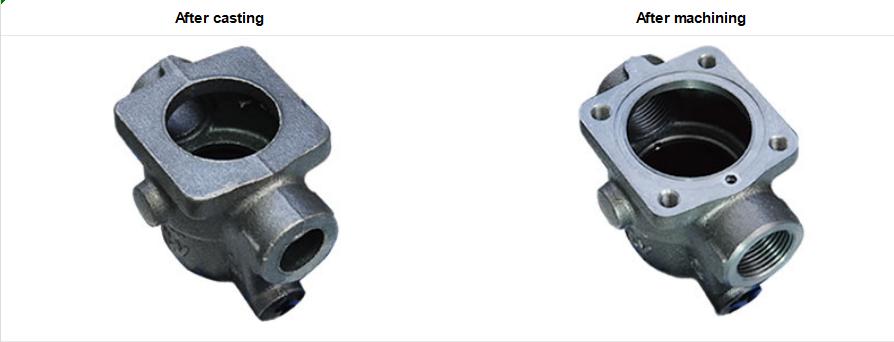
The biggest opportunity to reduce lead time is not after the casting is completed. It is during the stage when the manufacturing process is being planned.
For complex components, CNC machining requirements should influence decisions before the casting process begins. The purpose is not to change the role of investment casting, but to make sure the cast component arrives at the machining stage in a condition that can be processed efficiently.
One of the most important factors is machining allowance.
A cast component is rarely produced at the exact final dimensions for every feature. Areas that require CNC machining usually need additional material so that the machine can remove the casting surface variation and achieve the required dimensions.
However, machining allowance is not simply a matter of leaving extra material everywhere.
The amount of stock needs to match the machining requirement.
If a critical mounting surface does not have enough allowance, CNC machining may not be able to achieve the required flatness or dimensional accuracy. The solution may require changing the casting design or producing another component.
On the other hand, excessive allowance can create unnecessary machining operations. More material needs to be removed during rough machining, which increases cutting time, tool wear, and production effort.
For example, a cast industrial housing may require CNC machining on several connection surfaces and precision bores. These areas need sufficient stock for finishing operations, but the casting design should avoid adding unnecessary machining volume to areas that do not require tight control.
When machining requirements are considered during the casting stage, the CNC process becomes more predictable because the supplier knows what material condition to expect.
Why Datum Selection Matters When Machining Cast Components
Another factor that directly affects machining efficiency is datum selection.
In CNC machining, the machine needs a reliable reference system to locate the part. Every following operation depends on the accuracy of the initial setup.
This is relatively straightforward when machining standard billet material because the raw material has predictable surfaces. Cast components are different because their external geometry may be irregular and their surfaces may not provide ideal references.
A poor datum choice can create problems throughout the machining process.
For example, a cast bracket may require several machined holes, mounting faces, and alignment features. If the first machining setup uses an unstable reference, the relationship between these features may become difficult to maintain.
The issue is not only achieving individual dimensions. The challenge is ensuring that all critical features relate correctly to each other.
This is especially important for components used in assemblies where several parts must fit together. A hole that is within tolerance by itself may still create assembly problems if its position relative to another feature is incorrect.
By considering datum requirements before casting is completed, manufacturers can identify which surfaces should provide stable machining references and whether additional stock or design adjustments are needed.
This reduces the risk of discovering setup problems after the parts have already entered production.
Fixture Design Is Often the Missing Link Between Casting and CNC Machining
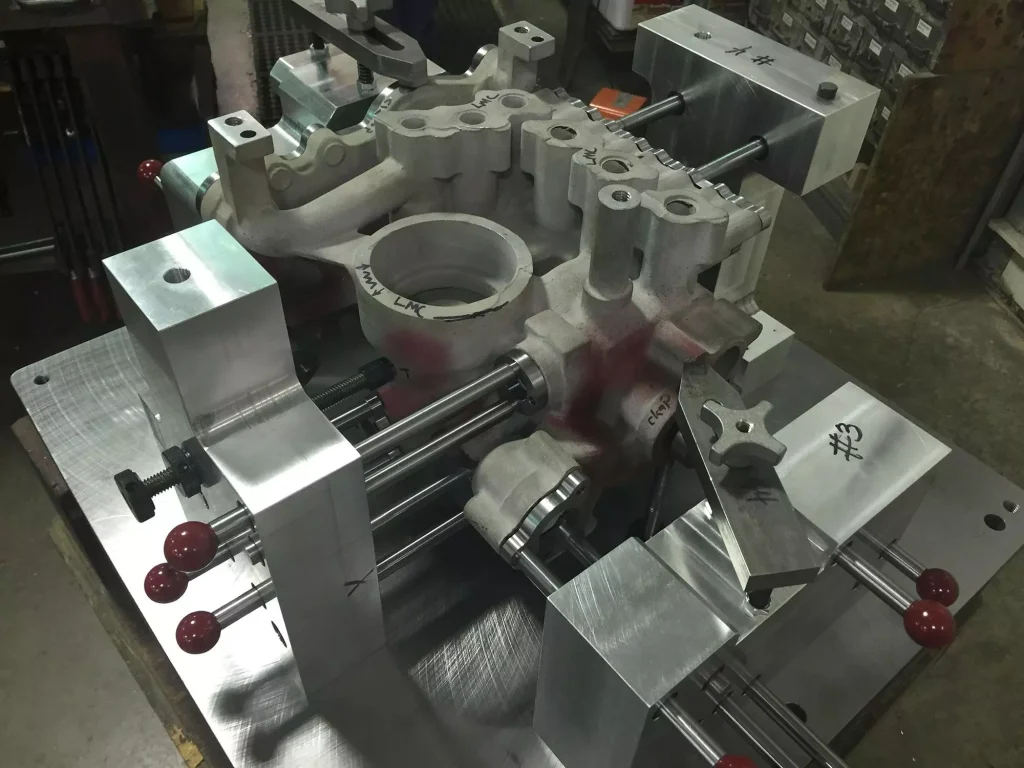
Fixture planning is another area where early coordination can affect lead time.
A CNC machine can only produce accurate parts if the component is positioned and supported correctly during machining. For cast components, this can be more challenging because the shape is often irregular.
Unlike a rectangular billet that can be clamped from standard surfaces, a cast component may require customized locating points or supporting features.
The fixture needs to achieve several objectives at the same time:
The part must remain stable during cutting.
The critical machining areas must be accessible.
The setup must allow repeatable positioning for multiple parts.
The clamping force must avoid unnecessary deformation.
If fixture planning starts only after the cast components arrive, the machining supplier may need additional time to develop and test the setup.
For prototype production, this preparation stage can represent a significant part of the schedule.
When fixture considerations are reviewed earlier, the machining process can be prepared before production begins. The supplier can understand how the part will be positioned, which tools are required, and what machining sequence is practical.
This is one of the main reasons better coordination between investment casting and CNC machining can reduce overall lead time.
The Importance of Separating Casting Features and Machined Features
A common mistake in complex part development is expecting the casting process and CNC machining process to achieve the same type of accuracy.
These processes have different capabilities.
Investment casting is valuable because it creates complex shapes efficiently. However, dimensions that directly affect assembly or mechanical performance usually require CNC machining.
The key is deciding which features belong to each process.
For example, the overall shape of an equipment bracket may be produced through casting because it involves complex geometry. However, the mounting faces that connect the bracket to other components should usually be finished through CNC machining.
Similarly, a housing may use casting to create internal passages or structural walls, while CNC machining creates the precise bore locations and sealing surfaces.
This approach prevents unnecessary requirements from being placed on the casting process while ensuring critical functional features receive the precision they need.
Clear process allocation also helps avoid manufacturing delays because each stage has a defined purpose.
How Engineering Feedback Shortens the Development Cycle
For prototype and low-volume projects, engineering feedback can have a major influence on lead time.
Many delays occur when manufacturing problems are discovered after production has already started.
A design may look acceptable on a CAD model, but machining considerations can reveal practical issues.
For example, a feature may appear suitable for casting but create difficulties during CNC machining because the cutting tool cannot access the required area. A thin wall section may also create challenges during both casting and machining because the component needs to maintain dimensional stability.
Early manufacturing feedback allows these issues to be reviewed before they become production problems.
The goal is not to redesign the part unnecessarily. It is to understand how the design will behave during the actual manufacturing process.
A CNC machining supplier can provide feedback related to:
- machining accessibility;
- fixture requirements;
- tolerance allocation;
- inspection methods;
- production sequence.
When these factors are considered earlier, the transition from casting to CNC machining becomes more controlled.
Where the 3× Lead Time Reduction Actually Comes From
The “3×” in the title should not be interpreted as the CNC machine cutting three times faster or the casting process becoming three times shorter.
In real manufacturing environments, lead time improvement usually comes from removing repeated steps and reducing uncertainty.
A traditional workflow may involve:
A casting supplier completes the part.
The CNC supplier receives the component.
The machining process is reviewed.
Fixture requirements are determined.
Manufacturing problems are identified.
Adjustments are made before production continues.
Each stage introduces potential waiting time.
A more coordinated approach moves these decisions earlier. The machining supplier understands the expected condition of the cast component before production begins. The casting process considers future machining requirements. The final machining plan is prepared based on the actual function of the component.
For complex parts, the time saved is often found in engineering preparation rather than in the machining cycle itself.
This distinction is important because many manufacturing delays are caused by uncertainty, not by the physical production process.
Why This Approach Works Well for Prototype and Low-Volume Production
The combination of investment casting and CNC machining is often considered for prototype development and low-volume production because these projects require a balance between design flexibility, manufacturing efficiency, and dimensional control.
During early product development, engineers often need to produce complex components before the final production volume is established. At this stage, producing the entire part from billet material through CNC machining may not be the most practical approach, especially when the component contains complex geometry that requires extensive material removal.
However, relying only on investment casting may also create limitations because some features cannot achieve the dimensional accuracy required for assembly and functional performance.
This is where the combination of both processes becomes useful.
Investment casting can create the basic structure of the component, including complex shapes that would require significant machining effort if produced from solid material. CNC machining can then be applied to the areas where precision directly affects the performance of the final assembly.
For example, a robotics component may require a lightweight structural body with accurate mounting locations for motors, sensors, or mechanical connections. The overall geometry may be produced through casting, while CNC machining creates the interfaces that determine how the component fits with other parts.
This manufacturing route allows engineers to validate complex designs without requiring every feature to be produced through long machining cycles.
When Investment Casting Combined with CNC Machining Is a Better Choice Than Full CNC Machining
Not every component requires investment casting.
For simple geometries, conventional CNC machining may still be the more efficient option because the manufacturing route is straightforward and does not require additional casting preparation.
The value of combining investment casting and CNC machining appears when the component contains features that create challenges for traditional machining.
A typical example is a part with a complex external structure but only a limited number of precision-critical areas.
Producing such a component entirely from billet material may require removing a large amount of material to achieve the final shape. This increases machining time and may require multiple setups.
Investment casting reduces the amount of material that CNC machining needs to remove by creating a shape closer to the final design.
CNC machining is then focused on the features that determine function, such as:
- interfaces between components;
- precision mounting locations;
- sealing surfaces;
- bores and threaded connections.
This division of manufacturing responsibility helps create a more balanced production process.
The key question is not whether casting or machining is a better process. The question is which process is better suited for each feature of the part.
The Role of CNC Machining Suppliers in the Final Manufacturing Process
When investment cast components require precision machining, the CNC machining supplier plays an important role in transforming the cast part into a finished component.
The machining supplier is not only responsible for removing material according to a drawing. The supplier also needs to understand how the original casting condition affects the machining process.
A cast component may have differences in surface condition, material distribution, and available machining stock. These factors influence how the part should be positioned, which tools should be selected, and how the machining sequence should be arranged.
For complex components, the machining strategy often determines whether the project moves smoothly from casting to final inspection.
A practical CNC machining process considers:
- how the part will be located during machining;
- which features require the highest accuracy;
- which surfaces should be machined first;
- how dimensional relationships will be maintained;
- how the final part will be inspected.
This understanding helps prevent situations where a cast component meets the casting requirements but still creates difficulties during final machining.
Inspection Considerations After Investment Casting and CNC Machining
Inspection is another area where manufacturing planning affects lead time.
A finished component is not evaluated only by whether individual dimensions meet the drawing requirements. The relationship between critical features also needs to be verified.
For example, a machined mounting surface and a precision hole may both meet their individual tolerances, but their relative position determines whether the component can be assembled correctly.
This is why inspection planning should be considered before machining begins.
Critical dimensions should be identified early, and the machining process should be designed around achieving and verifying these requirements.
Depending on the application, inspection may involve dimensional measurement of machined features, surface verification, and confirmation of geometric relationships between different areas of the part.
When inspection requirements are clear from the beginning, manufacturers can avoid additional adjustments after machining is completed.
How Integrated Planning Creates a More Predictable Manufacturing Process
The main advantage of connecting investment casting and CNC machining is not simply reducing the number of suppliers involved.
The more important factor is reducing uncertainty throughout the manufacturing process.
A complex component can experience delays when each stage is planned independently. The casting process may be optimized without considering machining requirements. The CNC process may be developed without understanding how the casting was produced.
Integrated planning creates a clearer connection between the initial design and the final machined component.
Before production begins, engineers can determine:
Which areas should be produced through casting.
Which features require CNC machining.
How much machining allowance is needed.
How the part should be positioned.
Which dimensions require inspection.
These decisions reduce the possibility of discovering manufacturing problems after production has already started.
For companies developing complex metal components, this predictability is often more valuable than simply reducing individual process times.
Conclusion
Investment casting and CNC machining are combined because they solve different manufacturing challenges.
Investment casting provides an efficient method for producing complex component shapes, while CNC machining provides the accuracy required for functional features and assembly requirements.
The reduction in lead time comes from improving the connection between these two processes. When machining requirements, fixture planning, tolerances, and inspection considerations are addressed earlier, manufacturers can reduce delays caused by process adjustments and unclear requirements.
The “3×” improvement described in this approach represents the potential impact of a better manufacturing workflow rather than a fixed machining speed increase.
For companies developing complex parts, the most effective manufacturing strategy is not always choosing one process over another. It is understanding how different processes can work together to create a more reliable path from design to finished component.