If you have searched for billet metal, billet aluminum, or a billet machined part, you may have noticed that the word “billet” is used in several different ways.
That can make the term confusing.
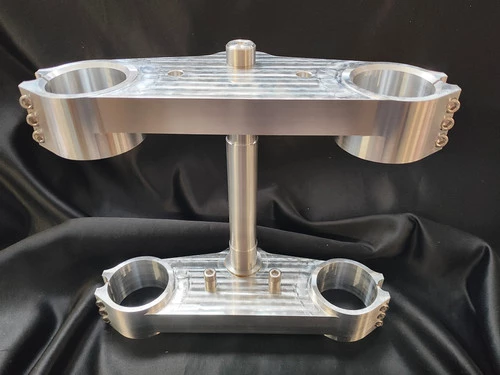
A billet is not a metal grade like 6061 aluminum, 7075 aluminum, or 17-4 PH stainless steel. In metal production, a billet is a semi-finished metal product used as feedstock for further processing. In CNC machining, however, people often use “machined from billet” to describe a part cut from solid metal stock rather than produced near-net shape by casting or forging.
That distinction matters when choosing a manufacturing process.
A part machined from billet can make sense when you need dimensional control, design flexibility, or a relatively low production quantity. But billet machining is not automatically the best choice. Casting, forging, extrusion, or another starting form can be more appropriate depending on the geometry, material, quantity, loading conditions, and amount of material that must be removed.
This guide explains what billet actually means, how billet machining works, how it compares with cast and forged material, and what to specify when requesting a CNC quote.
What Is Billet Metal?
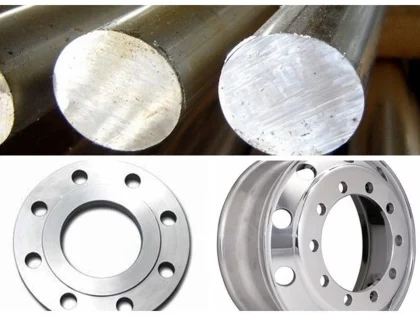
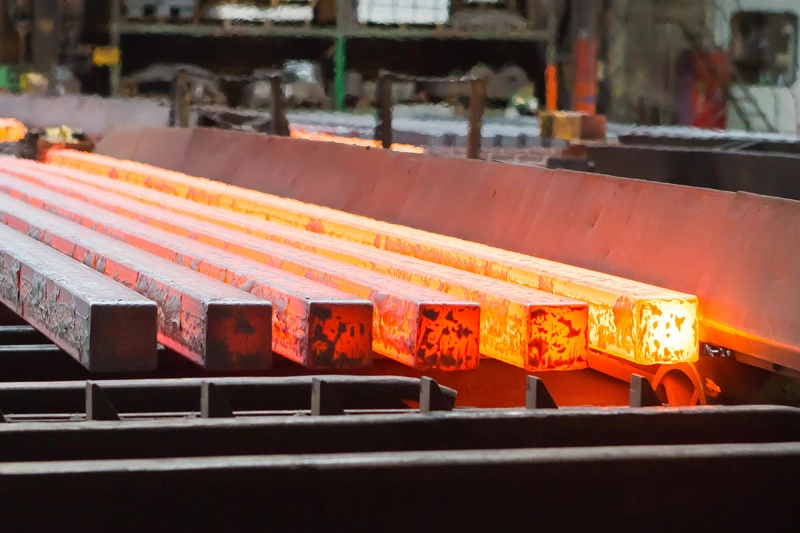
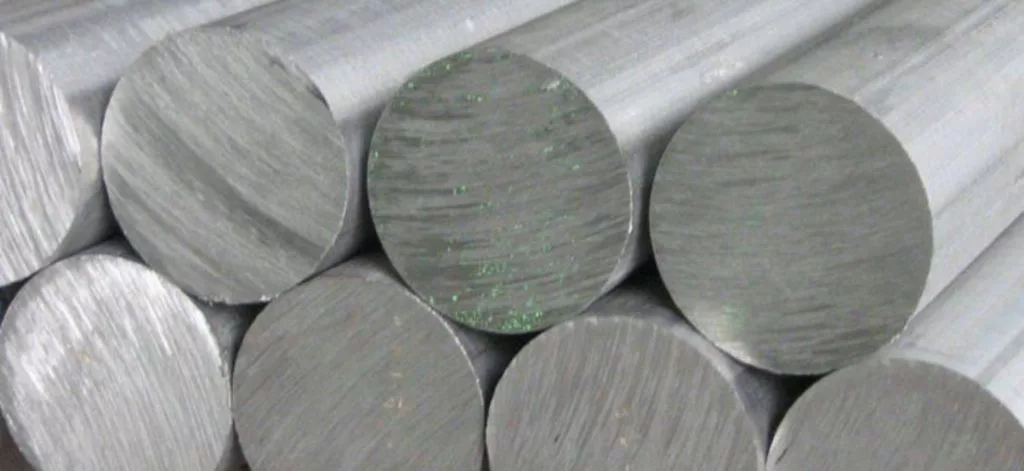
In the metal industry, a billet is a semi-finished metal product with a relatively simple, consistent cross-section. Billets can be made from different metals, including steel, aluminum, copper alloys, titanium, and others. Their exact dimensions and production route depend on the material and industry.
A billet is therefore better understood as a form or stage of metal production, not as a special material.
The distinction becomes important when someone says:
“This is a billet aluminum part.”
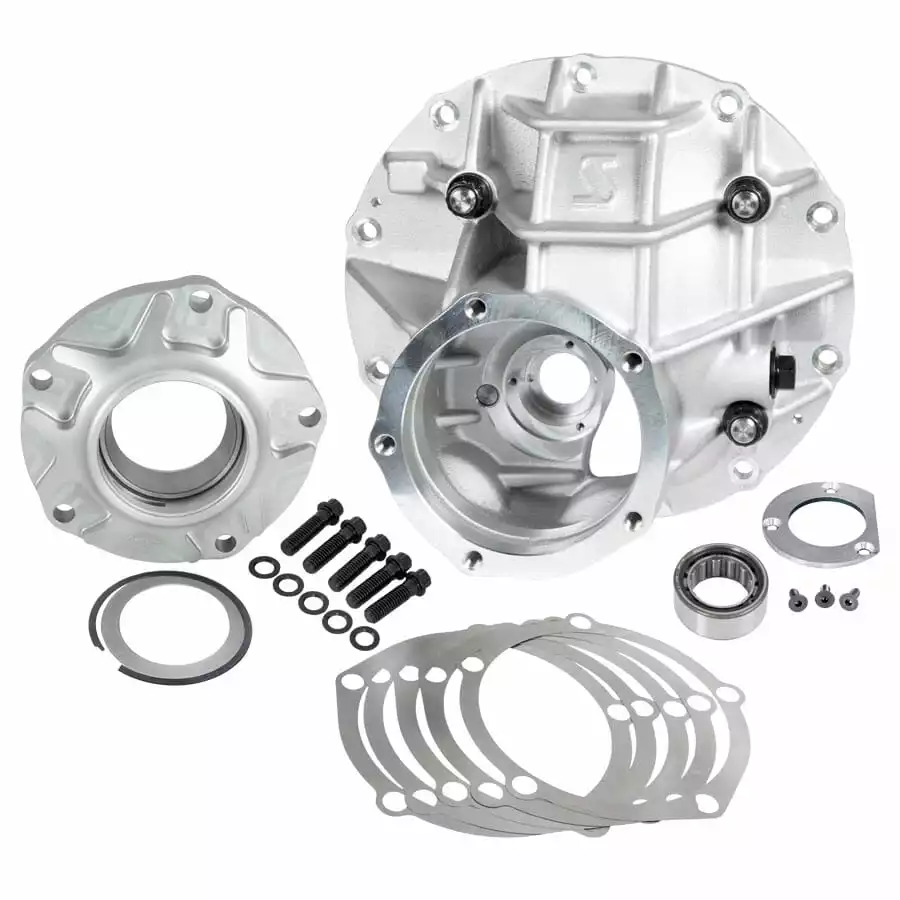
That phrase can describe a finished component that was CNC machined from solid aluminum stock. It does not tell you the alloy by itself.
For instance, 6061-T6 and 7075-T6 are both aluminum alloys, but they do not have the same mechanical properties or behave identically during machining.
The word billet tells you something about the starting form or manufacturing route. The alloy and temper tell you what material you are actually dealing with.
Is Billet a Material or a Form?
Billet is generally a form of semi-finished metal, while terms such as aluminum, steel, titanium, and stainless steel identify the material family.
That means:
- 6061-T6 = aluminum alloy and temper
- 7075-T6 = aluminum alloy and temper
- 17-4 PH = precipitation-hardening stainless steel
- billet = a form or stage of metal stock
A finished CNC component can therefore be made from billet or other solid stock, while its actual material specification still needs to identify the alloy and condition.
For steel, the distinction is particularly clear. The American Iron and Steel Institute describes billet as a semi-finished steel form used to produce long products such as bars and structural shapes.
Why Is It Called “Billet”?
The word describes the intermediate piece of metal before it becomes a more finished product.
In traditional metal production, billets may be processed further through rolling, extrusion, forging, drawing, or other operations. A billet is therefore not necessarily the final material form that a CNC shop buys and places directly into a machine. The terminology depends on the manufacturing stage being discussed.
That is why the phrase “billet” should always be read in context.
Is Billet Just Aluminum?
No.
Aluminum is probably the material most often associated with the phrase “billet,” particularly in automotive, motorsports, consumer products, and CNC machining. But billet is not limited to aluminum.
Depending on the application, billet or billet-like semi-finished stock can involve:
- Aluminum alloys
- Carbon and alloy steels
- Stainless steels
- Titanium alloys
- Copper alloys
- Brass
- Other engineering metals
Steel billets, for instance, are a standard semi-finished product in steel manufacturing.
What Is Billet Aluminum?
The important information is not simply the word “billet.” You still need to know:
- Aluminum alloy
- Temper or material condition
- Stock dimensions
- Required finished dimensions
- Machining tolerances
- Surface requirements
For a precision component, saying only “billet aluminum” leaves too many engineering questions unanswered.
What Is Billet Steel?
“Billet steel” can refer to semi-finished steel billet used for further processing. In a CNC context, however, a customer may also use “billet steel part” to describe a component machined from solid steel stock.
Those are related concepts, but they are not necessarily the same production stage.
This is one reason a CNC drawing should specify the actual material grade rather than relying on the word “billet.”
How Is Billet Metal Produced?
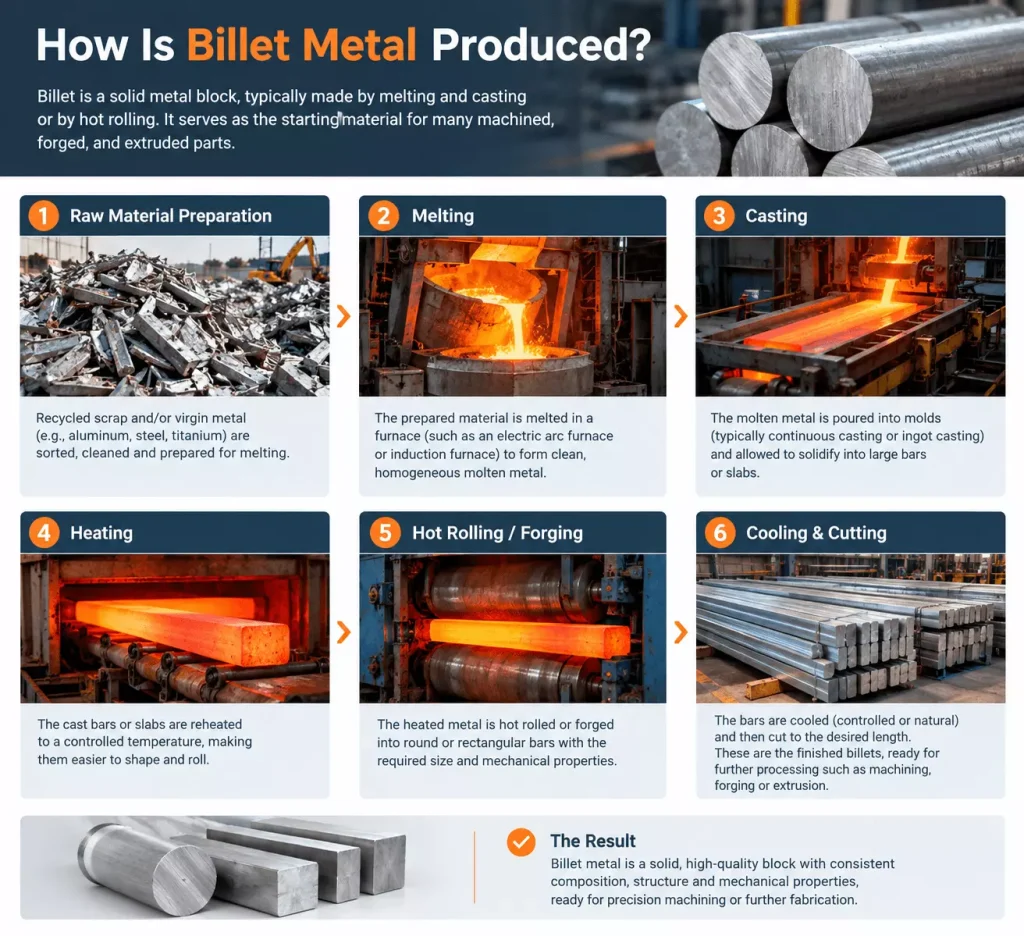
The production route depends on the metal and what the billet will be used for.
Steel billets, for instance, are commonly produced through continuous casting and then processed into long products. Other billet forms can result from casting, rolling, extrusion, or other metalworking processes.
The important point is that billet is not synonymous with one single manufacturing process.
Billet, Bar, Plate, and Block Are Not Always Interchangeable Terms
A CNC machinist may work with round bar, square bar, plate, block, tube, or other forms of stock.
The stock form affects how the part can be held, how much material needs to be removed, and how the material behaves during machining.
For a CNC quotation, it is therefore more useful to specify the actual material and stock requirements than to simply write:
“Make it from billet.”
Why Does the Starting Stock Matter?
The starting material affects more than material cost.
It can influence:
- Material utilization
- Number of setups
- Workholding
- Roughing strategy
- Part stability
- Distortion risk
- Final inspection
- Machining time
This becomes increasingly important as the geometry becomes thinner or more asymmetric.
What Happens When You CNC Machine a Billet?
This is where the difference between a billet part and a cast or forged part becomes much more practical.
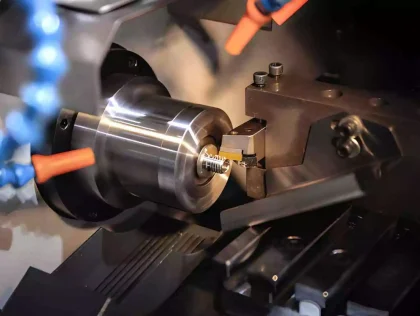
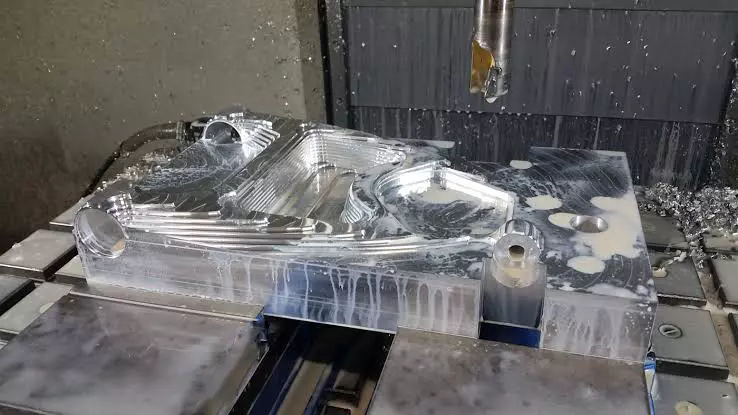
With CNC machining, the finished geometry is created by removing material from the starting stock.
The machine does not begin with the final shape.
It begins with a piece of material large enough to contain the finished part and the machining allowance required to produce it.
1. The Stock Size Is Selected Before Cutting
The first decision is not simply “which alloy?”
The stock also needs to be large enough for:
- Finished dimensions
- Tool access
- Workholding
- Machining allowance
- Fixturing requirements
- Any secondary operations
Buying stock that is unnecessarily large increases material cost and the amount of material that must be removed.
Buying stock that is too small can make the part impossible to hold or leave insufficient material for finishing.
2. Roughing Removes the Bulk of the Material
Rough machining removes the majority of the material that is not part of the finished component.
This is where billet machining can generate a large amount of chips, particularly when the finished component has deep pockets, thin walls, or a complex external shape.
The amount of material removed is therefore an important part of the manufacturing economics.
3. Material Removal Can Change Part Stability
A solid block may look stable before machining.
That does not guarantee that the finished part will remain equally stable after large amounts of material have been removed.
This matters particularly for:
- Thin-wall components
- Large pockets
- Long unsupported sections
- Large flat surfaces
- Asymmetric parts
When the geometry changes significantly during roughing, the machining strategy has to account for how the remaining material will behave.
This is one reason a precision CNC process is not simply a matter of programming the final dimensions and cutting until the tool reaches them.
4. Semi-Finishing Creates a More Stable Path to Final Size
For demanding parts, roughing and finishing are often treated as separate stages.
After bulk material removal, the part may be semi-finished before critical surfaces are taken to their final dimensions.
The objective is to avoid asking the final finishing operation to compensate for problems created during heavy roughing.
5. Critical Features Are Finished With Their Function in Mind
Not every surface on a CNC part deserves the same machining strategy.
A bore used for a bearing, a sealing surface, a datum, and a cosmetic exterior face can have very different requirements.
For a drawing with tight requirements, attention usually goes to features such as:
- Critical bores
- Datum surfaces
- Mating faces
- Sealing surfaces
- Threads
- Parallel surfaces
- Flatness-controlled surfaces
The final inspection should also be connected to those requirements rather than treating every dimension as equally important.
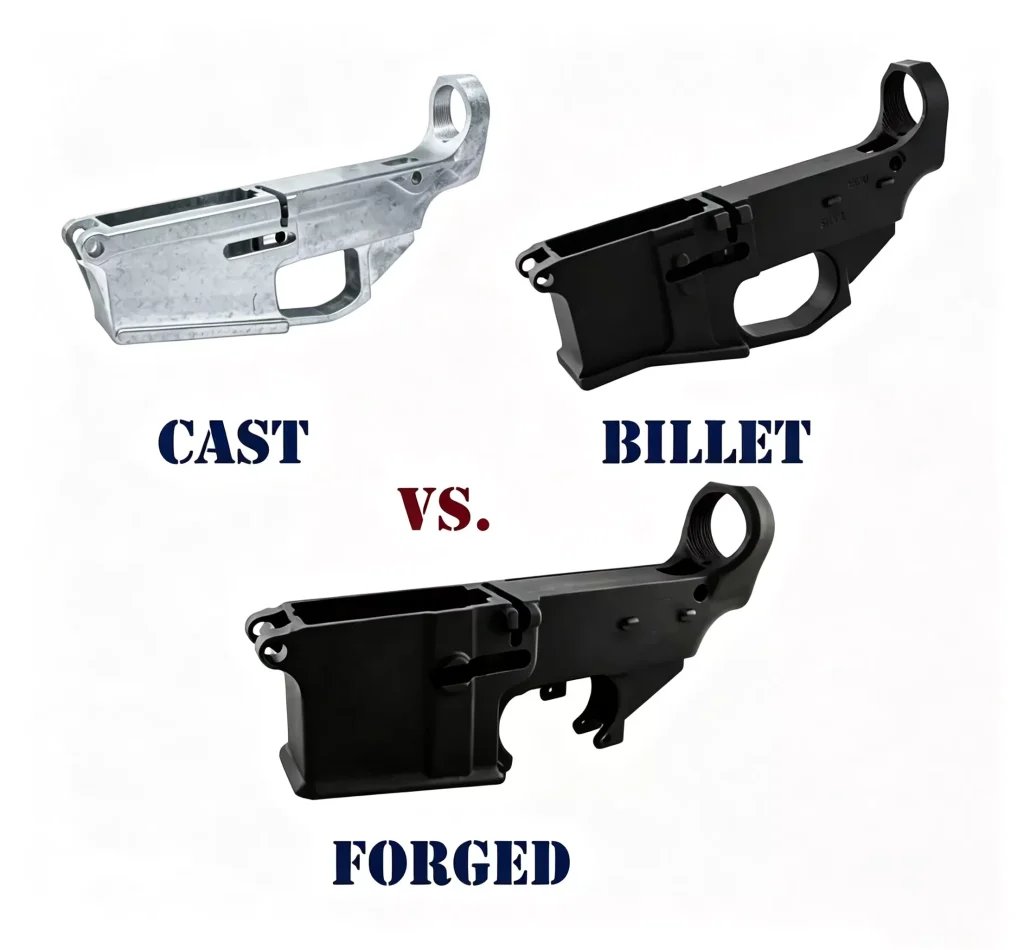
Billet vs. Cast vs. Forged Metal
Billet, casting, and forging should not be treated as simple quality levels.
They are different manufacturing routes, and each creates a different starting condition for the finished component.
| Factor | Machining From Solid Stock | Casting | Forging |
|---|---|---|---|
| Basic approach | Remove material from solid stock | Solidify molten metal in a mold | Deform metal under pressure |
| Dedicated tooling | Usually limited to fixtures | Mold required | Forging dies/process tooling required |
| Design changes | Generally flexible | Mold changes may be required | Die/process changes may be required |
| Complex internal geometry | Limited by tool access | Often advantageous | More limited |
| Material utilization | Can be low for heavily machined parts | Often better near-net shape | Usually better near-net shape |
| Low-volume work | Often practical | Depends on casting method | Tooling can be difficult to justify |
| High-volume work | Machining time can dominate cost | Tooling can be amortized | Tooling can be amortized |
| Structural requirements | Depends on alloy, temper, geometry, and stock | Depends on casting process and material condition | Grain flow can benefit some loaded designs |
The right comparison is therefore not:
“Which material is best?”
It is:
Which manufacturing route fits the part?
Current manufacturing references similarly emphasize geometry, quantity, tooling, material behavior, and production requirements when comparing billet machining with casting and forging.
Is Billet Stronger Than Forged Metal?
Not automatically.
This is one of the most common misunderstandings surrounding billet parts.
“Billet” does not describe a special high-strength alloy.
The mechanical behavior of a billet-machined part depends on factors such as:
- Alloy
- Temper
- Heat treatment
- Original stock manufacturing route
- Grain structure
- Part geometry
- Loading direction
- Stress concentration
- Fatigue requirements
Forging can provide an important advantage in applications where controlled material flow and grain orientation contribute to the required mechanical performance. That does not mean every forged component is automatically stronger in every possible loading condition than every billet-machined component.
The actual material specification and design requirements have to be considered together.
Static Strength Is Not the Same as Fatigue Performance
A simple tensile-strength comparison does not describe every real-world application.
For components subjected to repeated loading, vibration, impact, or cyclic stress, fatigue performance can become much more important.
That is one reason forged material is often considered for highly loaded structural components.
For other applications, the main requirement may instead be dimensional accuracy, complex machined geometry, low production quantity, or fast design iteration.
The manufacturing route should follow the requirement rather than the marketing label.
Why Do Engineers Choose Billet Machining?
Billet machining is useful when the flexibility of CNC machining outweighs the advantages of a near-net-shape process.
No Dedicated Casting Mold or Forging Die
For a new part, machining directly from solid stock can avoid the need for dedicated forming tooling.
That can simplify early-stage production when the design is still changing.
Prototypes and Low-Volume Parts
When only a small number of components are required, the economics of dedicated tooling may not make sense.
CNC machining can move directly from a drawing or 3D model to a machined component without waiting for a production mold or forging die.
Complex Machined Features
CNC machining is particularly useful when the part contains combinations of:
- Pockets
- Bores
- Threads
- Slots
- Contoured surfaces
- Precision mounting features
The final geometry is limited by machine capability, cutter access, workholding, and inspection requirements rather than by the need to reproduce a mold cavity.
Design Changes Are Easier to Accommodate
If a hole moves, a pocket becomes deeper, or a wall changes thickness, a CNC program and tooling strategy can often be revised without modifying a permanent mold or forging die.
That flexibility is valuable during prototype development and design verification.
When Should You Not Machine a Part From Billet?
Billet machining is not automatically the right answer.
There are situations where another manufacturing route deserves serious consideration.
High Production Volumes
If thousands or tens of thousands of identical components are required, spending machine time removing large amounts of material from every part can become inefficient.
At higher volumes, casting, forging, extrusion, stamping, or other near-net-shape processes may become more attractive because tooling costs can be distributed across many parts.
Excessive Material Removal
A simple question is:
How much of the original stock will become chips?
If a finished component occupies only a small portion of the starting block, material utilization can become a major cost factor.
This is particularly important for expensive alloys.
Complex Internal Geometry
If a component contains internal passages that cannot be reached by standard cutting tools, machining from a solid block may require multiple operations or may not be practical at all.
Casting or another forming process can sometimes create internal geometry that is difficult to reproduce through subtractive machining.
Constant-Section Components
For a component that maintains the same cross-section over a long length, extrusion followed by CNC machining may be more appropriate than cutting the entire profile from a larger block.
Fatigue-Critical Components
When a component is highly loaded and fatigue performance is a primary design requirement, forging or another controlled forming process may deserve evaluation.
The correct decision depends on the actual alloy, geometry, load case, production quantity, and applicable specifications.
Why Can Billet Machining Be Expensive?
The CNC machine is only one part of the cost.
Material Utilization
A billet-machined component may begin as a substantially larger piece of material than the finished part.
The difference becomes chips and scrap.
For expensive materials, the value of the removed material can become significant.
Machining Time
Deep cavities, large amounts of roughing, small tools, complex 3D surfaces, and difficult tool access can all increase cycle time.
Two parts with the same finished weight can have very different machining costs if one requires substantially more material removal or more complicated toolpaths.
Tool Wear
Material choice also affects cutting behavior.
Harder or more difficult-to-machine materials can require different tooling, cutting parameters, coolant strategies, and tool-change planning.
Multiple Setups
A part that can be completed in one setup is fundamentally different from one that requires several reorientations.
Every additional setup introduces:
- Setup time
- Fixturing requirements
- Datum transfer
- Additional inspection points
- Potential alignment error
This is why manufacturability should be reviewed before machining starts.
Secondary Operations
The CNC machining price may not represent the complete production route.
Depending on the drawing, the part may also require:
- Deburring
- Heat treatment
- Anodizing
- Plating
- Passivation
- Powder coating
- Surface finishing
- Additional inspection
A useful RFQ therefore defines the complete requirement rather than only the raw material.
How Should You Specify a Billet Machined Part?
If you are requesting a quote, “billet aluminum” is not enough information.
A supplier still needs to know what material and finished part you actually require.
Specify the Alloy and Temper
Instead of:
Aluminum
provide the applicable alloy and temper, such as a specified 6061 or 7075 condition when that is what the design requires.
The exact material should come from the engineering specification rather than being selected only because it is commonly used.
Define Critical Dimensions and Tolerances
Not every dimension necessarily needs the same tolerance.
Identify the dimensions that control:
- Fit
- Alignment
- Bearing location
- Sealing
- Assembly
- Functional movement
This helps the machining process focus attention where it matters.
Identify Datums
If the drawing defines Datum A, B, or C, those references should drive the setup and inspection strategy.
A dimension without a clear datum relationship can be interpreted differently during manufacturing.
Specify Surface Finish
If a sealing face requires a particular roughness, state it.
Do not assume that “CNC machined” automatically means every surface will receive the same finish.
Define Inspection Requirements
If CMM inspection, dimensional reports, material certificates, or another inspection record is required, include that in the RFQ.
Inspection requirements can affect both process planning and quotation.
Send the Current Drawing Revision
A CNC supplier should quote against a defined revision.
If the 3D model and 2D drawing do not match, the discrepancy should be resolved before production rather than discovered after machining.
What Information Does a CNC Shop Need to Quote a Billet Part?
A practical RFQ package normally includes:
- 2D drawing
- 3D CAD model when available
- Material and temper
- Quantity
- Drawing revision
- Critical tolerances
- Surface finish
- Threads and inserts
- Heat treatment requirements
- Surface treatment requirements
- Inspection requirements
- Material certification requirements
This information is much more useful than simply writing:
“Need a billet CNC part.”
The more clearly the functional requirements are defined, the easier it is to determine whether machining from solid stock is actually the right process.
Billet vs. Cast vs. Forged: Which Route Fits Your Part?
There is no universal winner.
The better question is what the part actually needs.
Consider machining from solid stock when:
- The quantity is relatively low
- The design may change
- Tight machined features are important
- Dedicated forming tooling is difficult to justify
- The geometry is accessible to CNC tools
- Fast prototype or replacement production is important
Consider casting when:
- The geometry is well suited to a mold
- Internal or near-net-shape features are important
- Production quantity can justify tooling
- Reducing machining time is a major objective
Consider forging when:
- Mechanical loading is a major design driver
- Fatigue performance is important
- The geometry is suitable for forging
- Production quantity can justify the required tooling and process development
Consider extrusion followed by CNC machining when:
- The part has a repeated cross-section
- A large percentage of the profile can be created before CNC machining
- The remaining features are suitable for secondary machining
The final process should be selected from the actual part drawing, material requirements, quantity, and production objectives rather than from the word “billet” alone.
Billet Metal FAQ
Is billet just aluminum?
No. Billet is a form or stage of metal stock, not an aluminum-only material category. Steel, aluminum, copper alloys, titanium, stainless steel, and other metals can be supplied or described as billet depending on the manufacturing context.
What is billet steel?
In steel production, a billet is a semi-finished steel product used as feedstock for further processing into products such as bars and other long products.
Is billet steel stronger than forged steel?
Not simply because it is called billet. Mechanical performance depends on the alloy, material condition, manufacturing route, geometry, loading, and required performance. Forging can provide advantageous grain flow for some highly loaded applications.
What is the difference between steel and billet steel?
Steel identifies the material family. Billet describes a semi-finished form or production stage. “Billet steel” therefore does not automatically mean a different type of steel.
Why is it called billet?
The term refers to an intermediate metal form used for further processing. In different manufacturing contexts, the billet may subsequently be rolled, forged, extruded, drawn, or machined.
Is billet better than cast metal?
Not universally. Billet machining can be useful for precision, low-volume production, and design flexibility, while casting can be advantageous for complex geometry and higher-volume production.
Is billet better than forged metal?
Not universally. Forging can be advantageous where controlled deformation and grain flow are important, while machining from solid stock can be advantageous where flexibility, low tooling requirements, or complex machined features matter.
Is billet expensive?
It depends on the part. Material price, material utilization, machining time, tooling, setups, inspection, finishing, and production quantity all affect the final cost.
Can billet metal be CNC machined?
Yes. CNC milling and turning can be used to produce components from suitable solid metal stock. The actual machining method depends on the material, stock geometry, finished part geometry, tolerances, and tool access.
Final Takeaway
Billet is not a magic material and it is not automatically better than cast or forged metal.
It is a starting form or manufacturing description whose meaning depends on context.
For CNC machining, the important question is not simply:
“Is this part billet?”
The more useful questions are:
What alloy and material condition is required?
How much material must be removed?
What tolerances and functional surfaces matter?
How many parts are required?
Does the geometry suit machining from solid stock?
Would casting, forging, or extrusion reduce cost or improve performance?
Once those questions are answered, the manufacturing route becomes much clearer.
Have a Part You Are Considering Machining From Billet?
Send the 2D drawing, 3D model, material specification, quantity, and critical requirements. The part can then be reviewed for machining approach, material utilization, tolerances, and inspection requirements before production.