Introduction: Many CNC Machining Problems Start Before Production Begin
For companies purchasing CNC machined parts, selecting a supplier is not simply about comparing prices and waiting for delivery. Many manufacturing problems do not happen because a supplier lacks CNC equipment or cannot complete the machining process. Instead, they often result from insufficient communication and evaluation before production begins.
CNC machining may appear to be a straightforward process of manufacturing parts from CAD drawings, but actual production involves multiple stages. A component must go through engineering review, machining process planning, material confirmation, tool selection, machining strategy development, dimensional control, surface finishing, and final inspection before it becomes a finished product.
Any misunderstanding during these stages can affect part quality, production lead time, and final application performance. A drawing may define the geometry of a component, but successful manufacturing also depends on understanding how the part should be produced, which dimensions require strict control, and what challenges may appear during machining.
In actual manufacturing, many risks are created before the machine starts running. Incomplete drawing requirements, unsuitable part designs, unclear tolerance definitions, or insufficient process planning can all create problems later in production.
Therefore, when selecting a CNC machining supplier, customers should not evaluate only the quoted price. A reliable machining partner should have the ability to understand engineering requirements, identify manufacturing risks, and develop suitable production solutions before machining begins through comprehensive CNC machining services.
1. Do Not Focus Only on CNC Machining Price: Low Quotes May Hide Higher Manufacturing Costs
During CNC machining procurement, price is usually one of the first factors customers compare. However, differences between suppliers are not only related to profit margins. They often reflect differences in manufacturing conditions, process planning, quality requirements, and production control.
CNC machining costs are influenced by many factors, including material selection, part complexity, machining time, tolerance requirements, and surface treatment requirements. Understanding suitable materials for CNC machining is important when evaluating manufacturing cost.
A reliable machining quotation should be based on a complete understanding of the part requirements. If a supplier only estimates the cost based on part appearance or basic machining time without reviewing the actual manufacturing requirements, the initial quote may appear lower, but additional costs can appear later during production.
For precision components, hidden costs often come from issues such as rework, delayed delivery, additional inspection requirements, or process adjustments. A lower initial price does not always represent a lower overall project cost.
From a manufacturing perspective, the goal of CNC machining is not simply to reduce the unit price of a part, but to achieve a stable balance between quality, efficiency, and production cost. A suitable machining process should consider how the part will be produced repeatedly while maintaining consistent quality.
Different manufacturing approaches can lead to different results even for the same component. The machining sequence, workholding method, cutting strategy, and process planning all influence production efficiency and dimensional stability.
A capable CNC machining supplier should evaluate these factors during the quotation stage instead of discovering manufacturing difficulties after production has already started.
2. Do Not Ignore Whether a Supplier Has Real CNC Manufacturing Capability
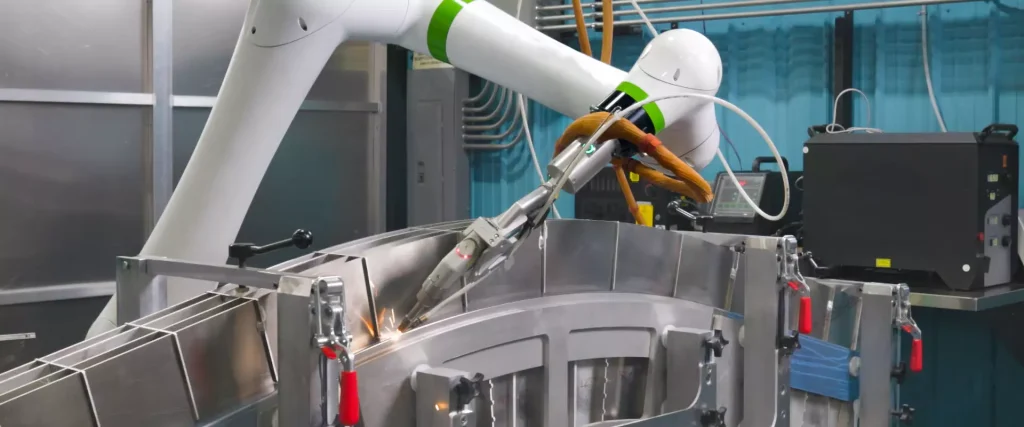
When selecting a CNC machining supplier, one common mistake is focusing only on the equipment list or the machining services displayed on a website. Many manufacturers show capabilities such as CNC Milling, CNC Turning, and 5-axis machining, but these descriptions alone cannot fully represent their ability to solve real manufacturing challenges.
CNC machining is not simply a process of loading a CAD file into a machine and waiting for the finished part. Machine accuracy provides the foundation, but final part quality depends on engineering analysis, process planning, machining control, and inspection methods.
In actual production, the same component may be manufactured using different machining approaches. Different process choices can directly affect machining efficiency, surface quality, dimensional stability, and production consistency.
Complex components require consideration of tool accessibility, fixture stability, machining sequence, and material behavior during cutting. High-precision parts require additional attention to dimensional control throughout the machining process.
The difference between a capable supplier and an inexperienced supplier is often not whether a part can be machined once, but whether it can be manufactured consistently.
A part that passes inspection during initial production does not automatically mean it can be produced reliably over long-term production runs. Stable manufacturing requires repeatable processes, controlled parameters, and effective quality management.
Therefore, evaluating a CNC machining supplier should go beyond reviewing equipment lists. Customers should understand whether the supplier has a complete manufacturing process covering engineering review, machining planning, production control, and final inspection.
3. Unclear Drawings and Technical Requirements Can Increase CNC Machining Risks
In CNC machining projects, engineering drawings are the connection between customer requirements and manufacturing execution. However, many machining issues do not happen because the supplier lacks capability. They often occur because technical requirements are not clearly defined before production starts.
A 3D model can describe the overall shape and structure of a component, but it does not always communicate every manufacturing requirement. Important details such as dimensional tolerances, critical fitting areas, surface roughness, material specifications, and inspection requirements need to be clearly confirmed before machining.
In precision machining, the functional performance of a part is often determined by specific manufacturing requirements rather than its overall appearance. Critical dimensions, positioning accuracy, mating surfaces, and geometric relationships can directly affect assembly performance and product reliability.
For this reason, engineering review is an important step before CNC production. A proper review helps identify machining difficulties, clarify critical dimensions, and determine which areas require closer control during manufacturing.
In manufacturing, there is a significant difference between “a part can be machined” and “a part can be machined consistently.” Some components may be possible to manufacture, but without proper machining sequence, fixture design, or process planning, maintaining stable quality during production can become difficult.
Working with a CNC machining supplier that can participate in early engineering discussions helps reduce uncertainty during production. A capable supplier does not simply follow the drawing; it also evaluates the manufacturability of the design from a production perspective.
4. Excessive Precision Requirements May Increase Cost Without Improving Product Performance
Precision is often one of the most important concerns when purchasing CNC machined parts. However, from a manufacturing perspective, not every dimension requires the highest possible accuracy. Tolerance requirements should be determined based on part function, assembly requirements, and operating conditions rather than simply making every dimension as precise as possible.
Tighter tolerances usually require more manufacturing control. Higher precision requirements may involve longer machining time, stricter machine condition control, more inspection procedures, and additional process management. If these requirements are unnecessary for the actual application, they can increase manufacturing costs without providing additional product value.
During CNC machining projects, it is common to see drawings where multiple dimensions are assigned very tight tolerances. However, not every dimension has the same importance. Areas that affect assembly accuracy, positioning, movement, or sealing performance require strict control, while non-functional areas may not require the same tolerance level.
A reasonable tolerance strategy is not about reducing quality requirements. It is about applying the correct manufacturing standard to the correct part features.
Precision control also depends on more than machine capability. Material properties, part size, structural rigidity, and thermal effects during machining can influence final dimensional accuracy. Large aluminum components, thin-wall structures, and complex geometries often require careful process planning to maintain stability.
A reliable CNC machining supplier should not simply accept every tolerance requirement without analysis. Instead, the supplier should help evaluate whether those requirements are necessary and identify a practical balance between part performance and manufacturing cost.
5. Ignoring DFM Analysis Can Create Manufacturing Difficulties
A completed design does not always mean a part is ready for CNC production. Product designers usually focus on function, performance, and overall structure, while manufacturing requires additional consideration of tool accessibility, machining space, workholding methods, material behavior, and production efficiency.
DFM (Design for Manufacturing) analysis evaluates whether a design can be produced effectively before machining begins. The purpose is not to change the product concept, but to identify potential manufacturing issues and improve the transition from design to production.
During CNC machining, the challenge of complex components is often not completing one individual operation, but maintaining stability throughout the entire manufacturing process. Deep cavities may require careful tool selection and vibration control. Thin-wall structures may require strategies to reduce deformation. High-precision areas may require a specific machining sequence to maintain accuracy.
Without proper manufacturing evaluation, production may require repeated adjustments, longer machining time, and additional cost.
DFM becomes even more important for parts intended for repeat production. A component that is successfully machined once does not always mean it can be produced consistently over hundreds or thousands of units. Long-term production requires repeatable processes, stable machining conditions, and controlled quality standards.
A CNC machining supplier with engineering analysis capability can identify manufacturing risks before production begins and help customers avoid problems that may appear later in the project.
6. Unconfirmed Material Specifications Can Affect Final Part Performance
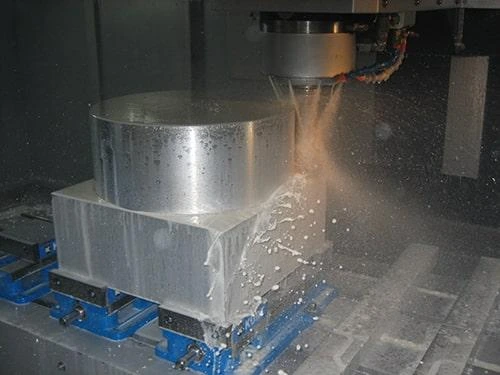
Material selection is a critical part of CNC machining, but it is often overlooked compared with price and delivery time. Incorrect or unclear material specifications can directly affect the strength, durability, and long-term performance of machined components.
Different material grades, heat treatment conditions, and material sources can influence mechanical properties, corrosion resistance, hardness, and machining behavior. Even materials with similar names may have different performance characteristics depending on their condition and specification.
For standard mechanical parts, material differences may not always create immediate problems. However, for components used in demanding environments such as high loads, elevated temperatures, corrosive conditions, or precision equipment, material consistency and traceability become much more important.
Material choice also affects the machining process itself. Aluminum alloys, stainless steels, titanium alloys, and high-temperature alloys each have different cutting characteristics and require different machining approaches.
Before production begins, material grade, condition requirements, and documentation requirements should be clearly confirmed. A reliable CNC machining supplier should ensure that the selected material meets the required specification and is suitable for the intended application.
Material confirmation is not simply a purchasing step. It is an essential part of ensuring that the finished component performs reliably after machining.
7. Final Inspection Alone Cannot Guarantee Consistent CNC Machining Quality
Many customers believe that a dimensional inspection report is enough to prove that a CNC machined part is reliable. However, inspection results only show the condition of a finished component at a specific point in time. They do not fully represent whether the entire manufacturing process is stable.
Consistent quality is built during production, not created only at the final inspection stage. Factors such as machine condition, tool wear, machining parameters, fixture stability, and operator control can all influence the final result.
A stable CNC machining process requires control throughout the entire manufacturing cycle. Before production, technical requirements need to be confirmed. During machining, critical dimensions and process conditions need to be monitored. After completion, appropriate inspection methods are used to verify that the finished parts meet the required specifications.
Different components require different levels of inspection. Standard mechanical parts may only require basic dimensional verification, while precision components with strict tolerance requirements may require advanced measurement equipment such as Coordinate Measuring Machines (CMM) to confirm critical features.
The purpose of quality control is not only to identify defective parts after production. More importantly, it is to reduce the possibility of problems occurring in the first place. A reliable CNC machining supplier should focus on establishing a controlled manufacturing process rather than relying only on final inspection to separate acceptable and unacceptable parts.
For long-term production projects, process stability is often more important than a single successful delivery. A supplier that can maintain consistent quality across repeated production cycles provides greater value than one that only meets requirements occasionally.
8. Ignoring Surface Finishing Requirements Can Affect Final Assembly and Performance
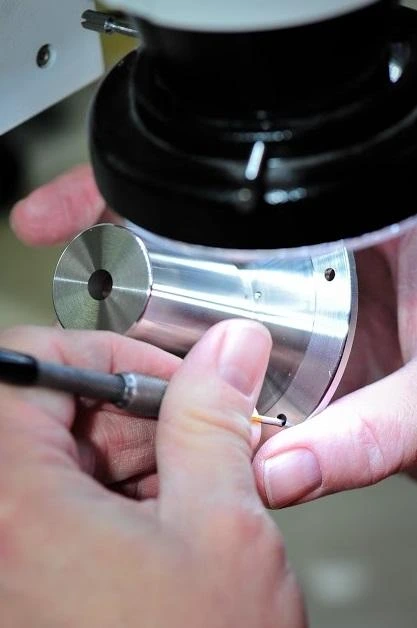
CNC machining does not always represent the final manufacturing stage. Many industrial components require additional surface treatments after machining to improve corrosion resistance, wear resistance, surface appearance, or functional performance.
Surface finishing is not only an aesthetic consideration. It can also affect dimensional accuracy and assembly performance. For precision components, the relationship between machining tolerances and surface treatment thickness needs to be considered before production begins.
For example, aluminum components that require anodizing will experience dimensional changes due to the formation of the surface oxide layer. If critical dimensions are not considered during machining, the final treated part may not achieve the required fit or assembly condition.
Different surface treatments also have different effects on material properties and part performance. Processes such as anodizing, passivation, polishing, coating, and other finishing methods need to be selected based on the actual application requirements.
A reliable CNC machining supplier should understand how post-processing affects the finished component, not just focus on the machining operation itself. Coordination between machining, inspection, and surface treatment is an important part of achieving consistent final quality.
9. Moving Directly Into Mass Production Without Validation Can Increase Manufacturing Risks
For new CNC machining projects, especially parts with complex structures, tight tolerances, or long-term supply requirements, moving directly into mass production can create unnecessary risks.
Although a design may already be completed, actual manufacturing still requires verification of the machining process. Factors such as fixture methods, machining sequence, cutting strategy, inspection approach, and quality requirements need to be confirmed before stable production can be achieved.
CNC machining is not simply a process of reproducing a CAD model. The transition from design to physical production requires practical validation. A part may look correct in the design stage but reveal manufacturing challenges once actual machining begins.
Prototype production or small-batch validation provides an opportunity to confirm whether the manufacturing approach is suitable. It helps verify dimensional requirements, evaluate process stability, and identify potential improvements before larger production quantities are released.
A component that can be machined successfully once does not necessarily mean it can be manufactured consistently over a long production period. Mass production requires repeatable processes, controlled machining conditions, and standardized inspection methods.
For customers requiring continuous supply, the supplier’s ability to support product development and process validation is an important consideration. A machining partner that can participate from the early development stage and gradually establish a stable production process can significantly reduce future supply risks.
10. Selecting a CNC Machining Supplier Requires More Than Reviewing Equipment and Price
When purchasing CNC machining services, equipment capability, machining range, and quotation level are usually the easiest factors to compare. However, the success of a machining project often depends on the manufacturing capability behind these visible factors.
A reliable CNC machining supplier should have a complete production system covering engineering review, process planning, material management, machining control, inspection, and delivery management. The final quality of a component is not determined by a single step, but by the entire manufacturing process working together.
Different projects have different priorities. Some components require strict dimensional accuracy, some require specific material performance, while others require stable repeat production over a long period. These different requirements require different manufacturing strategies.
For customers, the value of a CNC machining supplier is not only the ability to produce a part according to a drawing. A capable supplier should also provide manufacturing input when design requirements, materials, machining methods, or quality standards create potential risks.
Good communication and engineering support can prevent many issues before they occur. During a machining project, clear discussion of drawings, technical requirements, production progress, and quality expectations helps ensure that both sides have the same understanding.
Therefore, selecting a CNC machining supplier should not only focus on whether a supplier can machine a part, but whether the supplier can manufacture it consistently and reliably.
Equipment determines basic machining capability, but engineering experience, process control, and quality management determine the final manufacturing result.
11. Key Questions to Confirm Before Choosing a CNC Machining Supplier
Before starting a CNC machining project, customers should evaluate several important factors beyond pricing. The supplier’s actual machining capability, engineering communication ability, material experience, inspection process, and production stability all influence project success.
Machining capability is not only about owning certain machines. It also includes experience with similar materials, structures, tolerance requirements, and production challenges. A supplier may have suitable equipment, but without relevant manufacturing experience, additional adjustments may be required during production.
Quality requirements should also be discussed clearly before manufacturing begins. Different customers may require different inspection standards, documentation levels, and quality records. Confirming these requirements early helps prevent misunderstandings during final approval.
Communication is another important factor in long-term cooperation. CNC machining projects often involve technical discussions, drawing reviews, design adjustments, production updates, and quality feedback. A supplier that can understand and respond effectively to these requirements can improve project efficiency.
A stable CNC machining supplier is not simply a company that provides machining services. It becomes part of the customer’s manufacturing supply chain by supporting the entire process from engineering review to final delivery.
Conclusion:
Many CNC machining problems are not caused by limitations in machining technology. Instead, they often result from insufficient communication, unclear requirements, unsuitable manufacturing planning, or selecting a supplier that does not fully understand the production process.
Price is an important factor when purchasing CNC machined parts, but the lowest quotation does not always represent the lowest overall cost. A supplier with limited engineering capability or weak process control may create additional expenses through rework, production delays, inconsistent quality, or repeated adjustments.
A reliable CNC machining supplier should have the ability to evaluate engineering requirements, develop suitable machining processes, control production quality, and maintain stable manufacturing performance. From drawing review and process planning to machining execution, inspection, and final delivery, every stage influences the final result.
For companies purchasing precision components, selecting a CNC machining supplier is not only about finding a company that can produce a part. It is about choosing a manufacturing partner that can reduce production risks and support long-term supply stability.
The value of CNC machining is not simply transforming raw material into a finished component. It is the ability to combine engineering understanding, manufacturing experience, and process control to consistently turn a design requirement into a reliable industrial product.