A Metal Part Doesn’t Start With a Machine—It Starts With a Requirement
When engineers review a new part drawing, the first discussion is rarely about which machine should be used. Instead, they begin by looking at what the part needs to achieve and how it will move through the Metal Fabrication Process.
Is it a thin stainless steel bracket that will later be bent into shape? Is it a thick aluminum plate with multiple threaded holes? Does it contain bearing seats, sealing surfaces, or features that require tight positional tolerances?
The answers to these questions determine how the part should be manufactured, and the cutting method is only one stage within the overall production process.
This is why two parts made from the same material may follow completely different manufacturing routes. Likewise, two parts with a similar shape may require different cutting approaches because their dimensional requirements, production volumes, or downstream operations are not the same.
In practice, manufacturers rarely select a cutting process based on a single factor such as cutting speed or equipment availability. Material properties, part geometry, machining allowances, and assembly requirements all influence the decision. In many cases, multiple fabrication and machining operations are combined before the finished component reaches inspection.
Understanding how these decisions are made helps product designers communicate more effectively with suppliers and allows buyers to evaluate manufacturing proposals with greater confidence.
The Question Is Usually Not “Which Cutting Method Is Better?”
Many online comparisons approach metal cutting as if the goal is to identify a single process that performs better than all others. In manufacturing, the question is usually different.
Instead of asking:
Which metal cutting method is the best?
Engineers are more likely to ask:
- Which process can produce this geometry efficiently?
- Which dimensions actually require machining?
- Will thermal cutting affect the material?
- How much stock should be left for finish machining?
- Can multiple operations be combined to reduce production time?
These questions shift the focus from comparing machines to planning an entire manufacturing process.
Consider a simple mounting plate made from 12 mm aluminum.
If the plate only requires an external profile and several clearance holes, waterjet cutting or laser cutting may complete most of the work.
However, if the same plate includes threaded holes, precision dowel locations, machined sealing faces, or tight flatness requirements, additional CNC machining is likely to become part of the process.
Although both parts begin with the same raw material, their manufacturing routes are no longer identical because their functional requirements are different.
This illustrates an important point: metal cutting is rarely an isolated operation. It is one step within a larger manufacturing sequence.
Before Choosing a Cutting Method, Manufacturers Look at Four Things
The machine itself is often discussed last.
Experienced manufacturing engineers typically evaluate the workpiece before deciding how it should be produced. While every project has its own requirements, four considerations appear repeatedly during process planning.
1. Material Behavior
Different metals respond differently to heat, cutting forces, and tool wear.
For example, stainless steel retains heat differently from aluminum. Titanium generates heat around the cutting zone more readily than many structural steels. Copper reflects laser energy more than carbon steel.
These differences influence much more than cutting speed. They also affect edge quality, distortion, tool life, and the amount of finishing work required later.
This is one reason why a process that performs well for one material may not be the preferred option for another.
2. Part Geometry
The overall shape of the component often narrows the available manufacturing options before any machine is selected.
A flat plate with external contours can usually be produced using several different cutting methods.
Once the drawing includes features such as:
- deep pockets,
- precision counterbores,
- bearing fits,
- threaded holes,
- machined reference surfaces,
the manufacturing route changes.
These features are not simply openings in the material—they define how the part functions during assembly. Producing them typically requires controlled material removal rather than profile cutting alone.
This is why many precision components pass through both cutting and machining operations before they are considered complete.
3. Dimensional Requirements
Not every dimension on an engineering drawing carries the same level of importance.
For example, the overall length of a support bracket may allow a relatively generous tolerance, while the distance between two locating holes determines whether the part can be assembled correctly.
Rather than machining every surface to the same standard, manufacturers often identify which features are functionally critical and concentrate machining resources there.
This approach reduces unnecessary machining while maintaining the dimensions that directly affect product performance.
4. What Happens After Cutting?
One question that receives less attention outside manufacturing is what happens after the first cut is made.
Very few metal components move directly from cutting to shipment.
Depending on the product, the next operation may include:
- CNC milling
- drilling
- tapping
- welding
- bending
- grinding
- surface treatment
- dimensional inspection
Each of these processes places different demands on the cut part.
For example, if a plate will later be bent, the quality of the cut edge may influence bending performance. If the component will be welded, excessive thermal distortion during cutting could increase the amount of corrective work required before assembly.
Because of these downstream considerations, manufacturers often evaluate the complete production route instead of optimizing only the first operation.
One Part Can Go Through Several Cutting Processes
People unfamiliar with manufacturing often assume that a component is produced using one machine from start to finish.
In reality, production routes are frequently built around a sequence of processes, with each operation preparing the part for the next.
Consider a thick steel base plate used in industrial equipment.
The manufacturing sequence might look like this:
- Cut the raw plate to a manageable size using a band saw.
- Produce the external profile with plasma cutting.
- Machine the mounting surface to improve flatness.
- Drill and tap the required holes.
- Inspect critical dimensions before surface treatment.
None of these operations replaces the others.
Sawing prepares the material.
Plasma cutting removes large amounts of excess stock efficiently.
CNC machining creates the features that determine how the component functions during assembly.
Each process contributes something different to the finished part.
The same principle applies to many aluminum and stainless steel components, although the specific cutting methods may change.
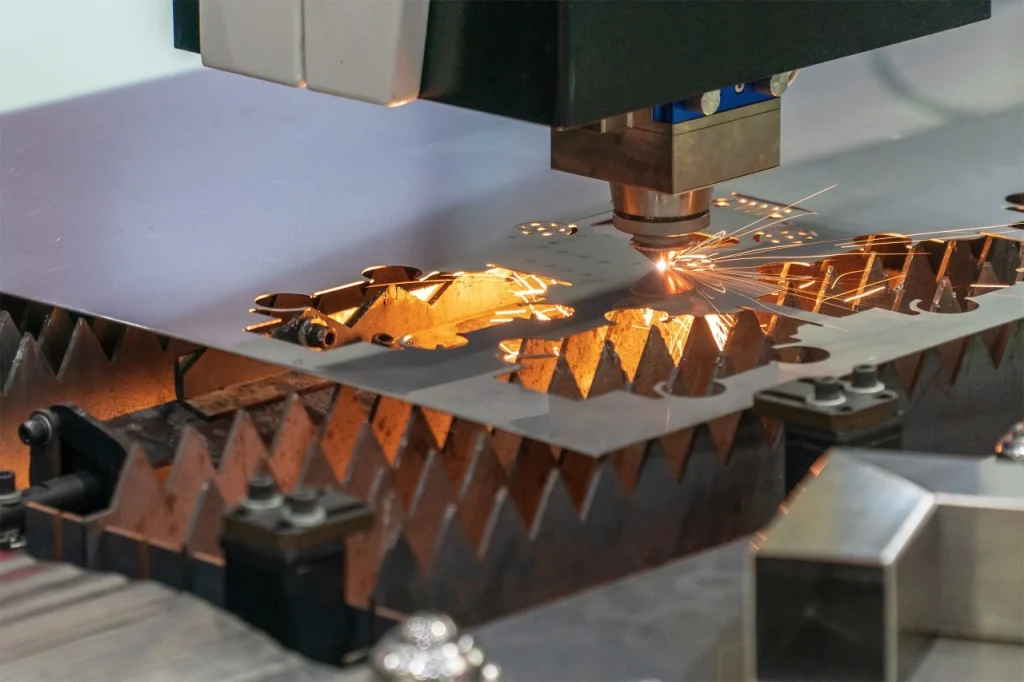
For example, a sheet metal enclosure may begin with laser cutting, continue through bending, and finish with CNC machining to produce threaded holes or precision mounting surfaces that cannot be created during the initial cutting stage.
Instead of competing with one another, different cutting methods often work together within the same manufacturing workflow.
Choosing the Machine Comes After Understanding the Part
From a manufacturing perspective, selecting a cutting method is not about identifying the most capable machine. It is about matching the process to the requirements of the part.
A thin sheet metal bracket, a precision aluminum fixture, and a heavy steel base may all begin as flat metal stock, yet the way they move through production can be completely different.
Once the material, geometry, functional dimensions, and downstream operations are understood, the choice of cutting method becomes much more straightforward.
That is why experienced manufacturers usually begin by studying the drawing rather than the machine list.
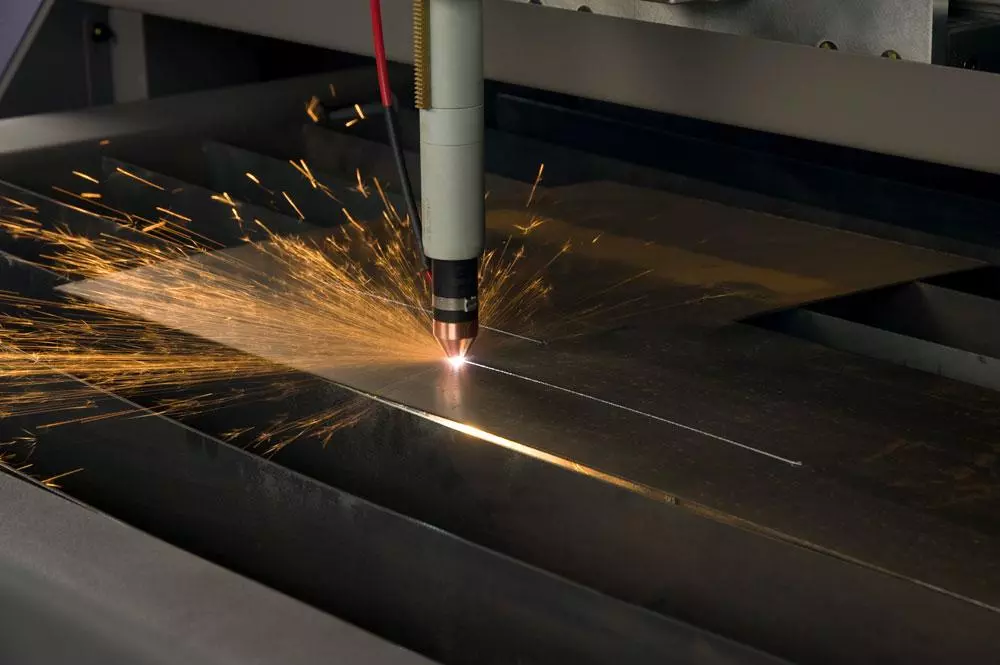
Start With the Material, Not the Machine
A common mistake when discussing metal cutting methods is focusing on the equipment before understanding the material.
A laser cutting machine, waterjet system, plasma cutter, or CNC machine may all be capable of processing metal, but the actual manufacturing decision depends heavily on how the material behaves during cutting.
Metals differ in hardness, thermal conductivity, reflectivity, strength, and machinability. These characteristics influence which processes are practical and what additional operations may be required afterward.
For this reason, manufacturers usually begin process planning by asking:
- What material is being used?
- How thick is the material?
- Will heat affect the part?
- Does the final component require machining?
- Which features are critical for assembly?
The answers help determine whether the first operation should be laser cutting, waterjet cutting, sawing, plasma cutting, or another process.
Cutting Aluminum: Balancing Speed, Heat, and Machining Requirements
Aluminum is widely used in manufacturing because of its relatively low weight, corrosion resistance, and machinability. However, selecting a cutting method for aluminum requires consideration of alloy type, thickness, and the final application.
For thin aluminum sheet, laser cutting is commonly considered because it can produce detailed profiles with relatively narrow cutting paths. This makes it suitable for components such as brackets, covers, panels, and fabricated enclosures.
However, as aluminum thickness increases, manufacturers may evaluate other options.
Waterjet cutting is often considered for thicker aluminum plates because it removes material without introducing a heat-affected zone. This can be useful when the material will later undergo precision machining or when maintaining the original material condition is important.
CNC machining is frequently involved when aluminum parts require functional features such as:
- Precision pockets
- Threaded holes
- Flat reference surfaces
- Locating features
- Tight dimensional relationships
For example, an aluminum fixture plate may begin as a saw-cut blank or waterjet-cut profile. The final accuracy of mounting holes and machined surfaces is then achieved through CNC milling.
The important consideration is not whether aluminum should be laser cut, waterjet cut, or machined. The decision depends on which operation creates the required features most efficiently.
Cutting Stainless Steel: Managing Heat and Precision
Stainless steel is one of the most commonly used engineering metals because of its corrosion resistance and mechanical properties. It is used across industries including food equipment, medical devices, industrial machinery, and general manufacturing.
When processing stainless steel sheet, laser cutting is often selected because it can create accurate two-dimensional profiles while maintaining a relatively clean edge.
Typical applications include:
- Enclosures
- Mounting brackets
- Covers
- Panels
- Fabricated components
However, many stainless steel parts require more than profile cutting.
A stainless steel component may need:
- Precision holes
- Machined slots
- Threaded features
- Flat sealing surfaces
- Controlled surface finishes
These requirements often introduce CNC machining into the production process.
For example, a stainless steel plate may be laser cut to create the outer shape, while CNC machining is used afterward to produce a precise hole pattern or a finished mounting surface.
The reason is simple: profile cutting and precision machining solve different manufacturing problems.
Laser cutting is effective at creating the shape.
CNC machining is used when the part requires controlled material removal to achieve specific functional dimensions.
Cutting Carbon Steel: Choosing Based on Thickness and Application
Carbon steel is one of the most widely processed metals in industrial manufacturing. Its broad availability and mechanical properties make it suitable for structural components, machinery parts, and fabricated assemblies.
Because carbon steel is available in a wide range of thicknesses, the preferred cutting method often depends on the size and purpose of the component.
For thin and medium-thickness sheet, laser cutting is commonly used for applications requiring clean profiles and repeatable production.
For thicker plates used in structural applications, plasma cutting is often considered because it can process larger material thicknesses efficiently.
However, plasma cutting is generally a preparation process rather than a complete finishing solution. Parts that require accurate mounting holes, flat surfaces, or close dimensional control may require additional machining afterward.
A typical workflow for a heavy steel component may include:
- Plasma cutting the rough profile.
- Removing excess material or edge imperfections.
- CNC machining critical surfaces.
- Drilling and tapping assembly holes.
- Completing inspection.
This type of process combination is common because each operation is used for the task it performs best.
Using CNC machining to remove a large amount of unnecessary material from a thick steel plate may not be efficient. Using plasma cutting alone may not achieve the accuracy required for final assembly.
Cutting Titanium: When Thermal Control Becomes Important
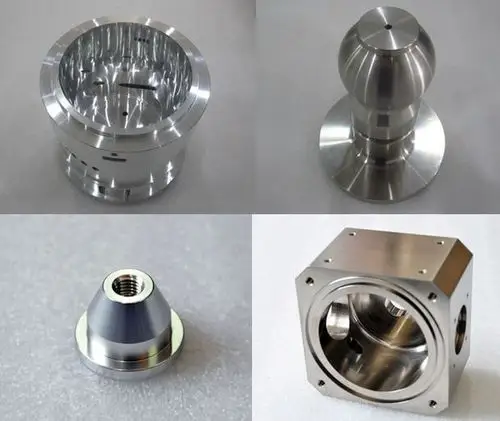
Titanium alloys are valued for their strength-to-weight ratio and corrosion resistance, which makes them important in aerospace, medical, and specialized industrial applications.
However, titanium presents challenges during manufacturing.
Compared with many common metals, titanium has lower thermal conductivity. Heat generated during cutting tends to remain concentrated near the cutting area rather than spreading quickly through the material.
This affects tool selection, cutting parameters, and process planning.
For titanium plates, waterjet cutting may be considered because the process does not introduce the same thermal effects associated with heat-based cutting methods.
After initial cutting, CNC machining may be used to create final features such as:
- Precision holes
- Complex pockets
- Contoured surfaces
- Assembly interfaces
The manufacturing strategy is often designed around controlling heat, protecting material properties, and maintaining dimensional accuracy throughout the process.
Why Material Thickness Changes the Cutting Decision
Material type is only one part of the decision. Thickness can change the most practical manufacturing approach.
A process that works well on a 2 mm sheet may not be suitable for a 50 mm plate.
For thinner materials:
- Laser cutting may provide efficient profile production.
- Mechanical cutting may prepare stock quickly.
- CNC machining may complete precision features.
For thicker materials:
- Waterjet cutting may provide a way to separate material without significant thermal influence.
- Plasma cutting may be practical for large structural components.
- Sawing may be used to prepare raw stock before machining.
Thickness also affects what happens after cutting.
A thin sheet component may move directly into bending or assembly.
A thick plate may require machining because the final part depends on accurate surfaces, holes, and dimensional relationships.
This is why experienced manufacturers avoid choosing a cutting process based only on the initial material removal step.
The final function of the part determines the manufacturing route.
The Cutting Method Is Part of a Larger Manufacturing Plan
When selecting a metal cutting method, the goal is not simply to remove material as quickly as possible.
A good manufacturing process considers the entire journey of the part:
Raw material
↓
Initial cutting
↓
Secondary machining
↓
Finishing
↓
Inspection
↓
Assembly
Each stage influences the next.
A cutting process that creates excessive distortion may increase later machining requirements.
A process that leaves insufficient machining allowance may make it difficult to achieve final dimensions.
A process that creates unnecessary waste may increase material cost.
For this reason, metal cutting decisions are usually made together with machining and production planning.
Cutting Method Selection Is a Manufacturing Decision, Not Just a Cutting Decision
Laser cutting, waterjet cutting, plasma cutting, mechanical cutting, and CNC machining all have their own roles.
The question is rarely which process replaces the others.
The more practical question is:
Which combination of processes can produce the required part efficiently while meeting its functional requirements?
By starting with the material and understanding how the component will be used, manufacturers can select a production route that balances accuracy, efficiency, and cost.
Part Geometry Often Determines the Manufacturing Process
Material selection is an important starting point, but the shape and functional requirements of a part often have an even greater influence on the final manufacturing route.
Two components made from the same aluminum alloy may require completely different processes if one is a simple flat bracket and the other is a precision machined housing.
This is because cutting methods have different capabilities when it comes to creating features.
Some processes are effective at producing two-dimensional profiles. Others are designed for controlled material removal in multiple directions.
Understanding the geometry of a part helps manufacturers decide where cutting ends and machining begins.
Simple Profiles vs. Functional Features
Many metal components begin as flat stock, plates, or bars.
For parts with simple outlines, processes such as laser cutting, waterjet cutting, or plasma cutting can often create the required external shape efficiently.
Examples include:
- Mounting plates
- Flat brackets
- Protective covers
- Structural panels
These components mainly depend on the accuracy of the outer profile.
However, many engineering parts require additional features that cannot be created through profile cutting alone.
Examples include:
- Precision holes
- Threaded holes
- Internal pockets
- Counterbores
- Curved surfaces
- Alignment features
These features affect how the part connects with other components, which means their location, size, and surface condition often require tighter control.
This is where CNC machining becomes part of the manufacturing process.
Why Two-Dimensional Cutting Is Not Enough for Many Components
Laser cutting, plasma cutting, and waterjet cutting are highly effective for creating profiles on flat material.
However, the process direction is usually limited to separating material along a defined path.
A finished mechanical component often requires features in three dimensions.
For example, consider an aluminum mounting block.
The initial material may be cut from plate stock to reduce preparation time.
However, the final component may require:
- A pocket to reduce weight
- A flat reference surface for assembly
- Several threaded holes
- A precision bore for a shaft
- Specific surface requirements
These features are not simply outlines. They define how the part performs in an assembly.
CNC milling is used because it can remove material from different areas of the workpiece while maintaining control over dimensions and feature relationships.
This is why many precision parts follow a sequence similar to:
Raw material preparation
↓
Profile cutting or sawing
↓
CNC machining
↓
Finishing
↓
Inspection
The initial cutting process prepares the material. Machining creates the functional geometry.
When Cutting Speed Creates More Work Later
One factor that is sometimes overlooked during process selection is the relationship between cutting speed and total manufacturing time.
A faster cutting operation does not always result in a faster finished part.
For example, a process may remove material quickly but leave:
- Additional grinding requirements
- Larger heat-affected zones
- More edge finishing
- Extra machining allowance
- Additional inspection steps
In these situations, the initial time savings may be reduced by later operations.
Manufacturers usually evaluate the complete production cycle rather than measuring only the first cutting operation.
A practical example is a thick metal component.
Plasma cutting may quickly create the rough shape.
However, if the final part requires:
- Flat mounting surfaces
- Accurate hole positions
- Parallel faces
then CNC machining will still be required.
The goal is not to minimize the time spent on one operation. The goal is to create an efficient sequence from raw material to finished component.
Why Precision Parts Often Require CNC Machining After Cutting
CNC machining is often considered a finishing process because it creates features that directly affect part function.
While cutting processes determine the general shape, machining controls details such as:
- Dimensional accuracy
- Hole location
- Surface flatness
- Parallelism
- Surface finish
- Thread quality
These requirements are common in parts used for mechanical assemblies.
For example, a component may need to fit with:
- Bearings
- Shafts
- Fasteners
- Sealing elements
- Guide mechanisms
The external shape alone does not determine whether the part will work correctly.
The relationship between individual features matters.
A hole may need to be located within a specific position relative to another surface.
Two faces may need to remain parallel for proper assembly.
A bore may require a controlled diameter to match a mating component.
These requirements are typically addressed through CNC machining rather than cutting alone.
How Different Metal Cutting Methods Work Together
In real manufacturing environments, different metal cutting methods are often combined rather than used separately.
Each process contributes a specific capability.
A typical workflow may look like this:
Example: Precision Aluminum Component
Step 1: Material Preparation
Aluminum plate is cut into a manageable blank.
Possible processes:
- Sawing
- Waterjet cutting
- Laser cutting
The purpose is to reduce excess material before machining.
Step 2: CNC Machining
The blank moves to CNC milling.
Operations may include:
- Face milling
- Pocket machining
- Drilling
- Tapping
- Contour machining
At this stage, the part receives the features required by the engineering drawing.
Step 3: Finishing Operations
Depending on the application:
- Deburring
- Surface treatment
- Cleaning
- Inspection
may be performed before delivery.
This workflow demonstrates why manufacturing decisions should not be based on one machine capability.
A CNC machine can produce highly detailed features, but using it to remove large amounts of unnecessary stock may not be the most efficient approach.
Likewise, a laser cutter can create accurate profiles, but it is not intended to replace precision machining when functional surfaces are required.
Where CNC Machining Services Fit Into Metal Cutting
For manufacturers providing CNC machining services, the role of machining is often to complete the features that determine part performance.
Many customers provide drawings that include requirements beyond basic dimensions.
These may include:
- GD&T requirements
- Surface finish specifications
- Thread standards
- Critical hole locations
- Assembly tolerances
Meeting these requirements requires more than simply cutting material into shape.
CNC machining provides controlled tool movement based on digital models and engineering drawings. This allows manufacturers to produce repeatable features across prototypes, small batches, and production quantities.
However, CNC machining is not always the first step.
In many projects, the most efficient approach is combining CNC machining with other cutting methods:
- Laser cutting for sheet metal profiles
- Waterjet cutting for thick or heat-sensitive materials
- Sawing for raw stock preparation
- Plasma cutting for large structural plates
The final process depends on what the component needs to accomplish.
A Practical Way to Select a Metal Cutting Method
When reviewing a new part, manufacturers often consider the following sequence:
1. Identify the Material
Determine:
- Alloy type
- Thickness
- Mechanical properties
- Heat sensitivity
2. Separate Non-Critical and Critical Features
Not every surface requires the same level of precision.
Identify:
- Functional dimensions
- Assembly interfaces
- Machined reference surfaces
3. Decide Where Cutting Ends and Machining Begins
Ask:
- Can the cutting process create the required feature?
- Will additional machining improve accuracy?
- Would another process reduce total production time?
4. Consider the Entire Manufacturing Flow
The best production route is usually the one that balances:
- Material usage
- Processing time
- Required accuracy
- Secondary operations
- Inspection requirements
Conclusion: Metal Cutting Is About Process Planning, Not Just Material Removal
Metal cutting methods provide different ways to transform raw material into usable components.
Laser cutting, waterjet cutting, plasma cutting, mechanical cutting, and CNC machining each serve different purposes. The most appropriate choice depends on the material, geometry, tolerance requirements, and how the part will be used.
In many manufacturing projects, the final solution is not a single cutting method but a combination of processes working together.
Initial cutting prepares the material.
CNC machining creates precision features.
Finishing processes complete the part according to functional requirements.
For companies sourcing custom metal components, understanding this relationship helps create more practical designs, clearer communication with manufacturers, and better production decisions.
A successful manufacturing process is not built around one machine. It is built around choosing the right sequence of operations for the part.