
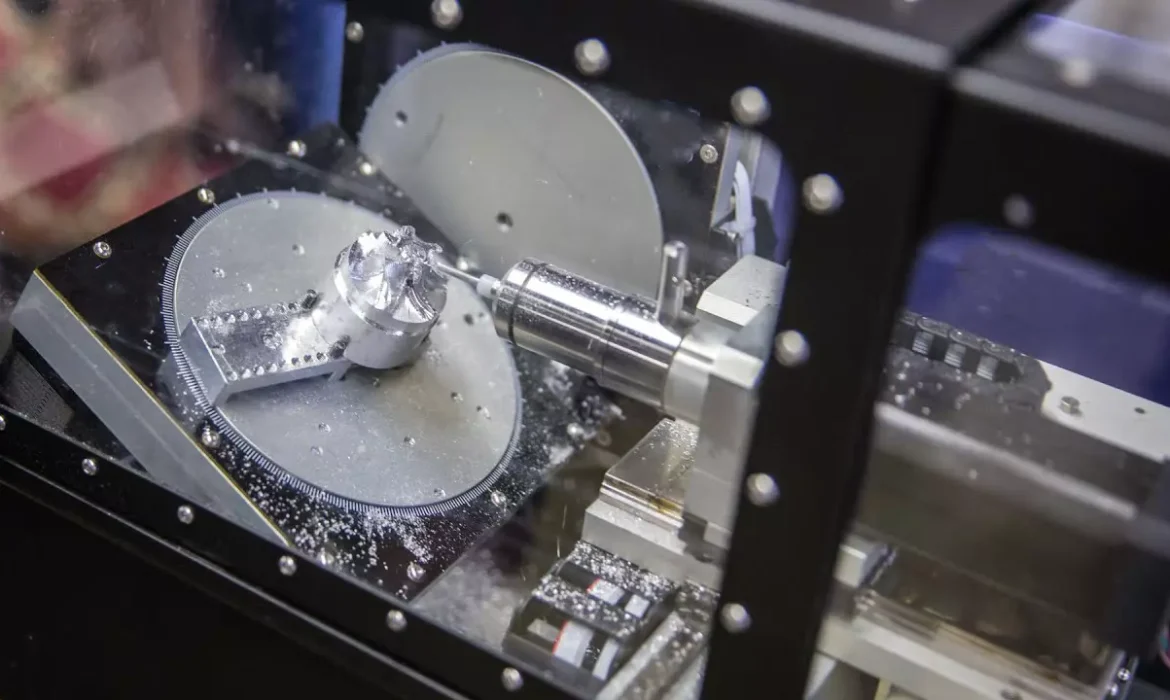
A CNC machine can make a part from aluminum, stainless steel, brass, titanium, engineering plastics, and many other materials. It can produce a simple mounting plate or a multi-sided component with pockets, holes, threads, and contoured surfaces.
That range is one reason CNC machining is used across prototype development, industrial equipment, automation, electronics, automotive components, and other manufacturing applications.
But there is an important distinction between being able to machine a part and being able to machine it efficiently, consistently, and at a reasonable cost.
A component may be technically machinable but still be a poor CNC design. A deep narrow pocket may require a long-reach tool. A thin aluminum wall may move under cutting forces. A small internal radius may require a smaller cutter and additional passes. A drawing with tight tolerances on nearly every dimension may require more inspection and process control than the component actually needs.
These details are where the real advantages and limitations of CNC machining become apparent.
What Are the Main Advantages of CNC Machining?
CNC Machining Gives Manufacturers Direct Control Over Part Geometry
One of the practical advantages of CNC machining is that the finished geometry comes directly from programmed tool movements.
This is particularly useful when a component contains several different types of features.
Take an aluminum housing as an example. The same component may require:
- mounting holes
- threaded holes
- bearing bores
- pockets
- flat reference surfaces
- counterbores
- external profiles
These features can be produced through a sequence of milling, drilling, boring, tapping, and finishing operations.
The value is not simply that “CNC can make complex shapes.” The more important point is that a single manufacturing route can handle many functional features without requiring a separate production method for every feature.
For engineering components, this can simplify the manufacturing process compared with trying to build the same geometry from multiple fabricated pieces.
Repeatability Becomes More Practical for Repeated Production
When the same part needs to be produced again, CNC machining provides a programmed process that can be reused and adjusted based on production experience.
For example, suppose a manufacturer needs 100 aluminum brackets rather than one prototype. The machining program, workholding method, tool list, inspection points, and setup procedure can be established around the first production run and then applied to subsequent batches.
This does not mean every part will automatically come out identical.
Tool wear changes cutting conditions over time. Aluminum chips can affect the machining area. Workholding can influence part position. Temperature can also affect dimensional measurements, particularly when tighter tolerances are involved.
For production machining, repeatability therefore comes from the combination of the CNC machine and the process around it—not from the controller alone.
CNC Is Particularly Useful When Part Quantities Are Limited or Still Changing
This is one of the areas where CNC machining can have a practical advantage over tooling-intensive manufacturing processes.
Imagine a new industrial component that requires 20 prototype parts for testing. The design may still change after assembly or functional testing.
Producing these parts through injection molding or die casting would introduce tooling considerations before the design has fully stabilized. CNC machining can work directly from the solid model and drawing, which makes it suitable for prototypes and many low-volume applications.
The economics change as volume increases.
If the same component eventually requires tens or hundreds of thousands of units, machining every part from billet or bar stock may not remain the preferred production method. At that point, processes such as die casting, injection molding, stamping, or forging may deserve comparison.
So the advantage of CNC is not simply “low-volume production.” It is the ability to manufacture parts without committing the project to certain types of dedicated tooling at an early stage.
Material Selection Is Relatively Flexible
CNC machining can be used with materials ranging from aluminum and brass to stainless steel, titanium, engineering plastics, and nickel-based alloys.
That matters when the material is selected for a functional reason rather than just appearance.
For example, 6061-T6 aluminum may be selected for a lightweight structural component. 7075-T6 may be considered when higher strength is important. 316 stainless steel may be used where corrosion resistance is relevant. Titanium may be selected where its combination of strength and weight is valuable.
The machining process changes with the material.
A cutting strategy that works well for 6061 aluminum cannot simply be transferred to Inconel 718. Tool selection, cutting parameters, coolant, chip evacuation, and cycle time need to be reconsidered.
The flexibility comes from CNC being adaptable to these different machining conditions, rather than from every material being equally easy or economical to machine.
Complex Features Can Be Combined Into a Single Component
CNC machining can reduce the need to manufacture certain assemblies as separate pieces when the geometry can be produced from one workpiece.
Consider a manifold block containing multiple ports, drilled passages, mounting holes, sealing faces, and threaded connections.
Instead of fabricating several pieces and joining them, the block can sometimes be machined from a single piece of material.
This can reduce certain assembly interfaces and eliminate some joining operations.
However, internal passages also demonstrate one of CNC’s limitations: the tool still needs a physical route into the material. A CAD model can contain a complex internal structure that a conventional cutting tool cannot reach.
That distinction becomes important when engineers design highly compact components.
What Are the Main Limitations of CNC Machining?
Most CNC limitations are not caused by the software being unable to describe a geometry. They come from the physical relationship between the cutting tool, workpiece, fixture, spindle, and machine axes.
This is where many problems that appear during quoting or machining can be traced back to the original part design.
Tool Access Limits What Can Be Machined
A milling cutter has a finite diameter and length.
It cannot reach a surface that is physically blocked by another part of the component, and it cannot enter every narrow cavity without considering tool size and tool length.
For example, imagine a pocket that is 10 mm wide but 60 mm deep.
A standard short cutter may not reach the bottom. A longer cutter may reach it, but the increased tool length reduces rigidity and can make vibration or tool deflection more difficult to control.
A smaller cutter may provide more clearance, but it also removes material more slowly.
This creates a practical trade-off:
smaller tool → better access → lower material removal rate
longer tool → greater reach → greater deflection risk
This is why the geometry of a CNC part directly influences machining time and cost. Design guides from machining suppliers consistently identify tool access, pocket depth, wall thickness, and internal radii as important DFM considerations.
Sharp Internal Corners Are a Real CNC Milling Constraint
A common misconception is that CNC milling can reproduce any CAD corner exactly.
It cannot create a perfectly sharp internal 90-degree corner with a conventional round end mill.
The cutter itself has a circular geometry, so the internal corner will retain a radius related to the cutter diameter.
If the design requires a very small internal radius, the manufacturer may need to use a smaller cutter. That can increase the number of finishing passes and reduce cutting efficiency.
In some applications, the design can simply allow a larger radius.
In others, a sharp corner may actually be functionally necessary. Then the manufacturer may need to consider another operation or manufacturing process, such as EDM, broaching, or a design modification.
The important question is therefore not:
“Can CNC make a square corner?”
It is:
“Does this feature actually need a square corner, and if it does, what process should produce it?”
That is a much more useful manufacturing question.
Deep Pockets Increase Machining Difficulty
Deep pockets are another feature that often looks simple in CAD but becomes more complicated on the machine.
As the pocket becomes deeper relative to its width, the cutter has to extend further into the material.
Long tools are less rigid than shorter tools. Cutting forces can cause deflection, while vibration can affect surface finish and dimensional control.
Chip evacuation can also become more difficult in a deep cavity. If chips remain in the cutting zone, the cutter can recut them rather than clearing fresh material.
For this reason, deep narrow pockets often require a different strategy from shallow open pockets. Manufacturers may use roughing and finishing operations separately, select different tool diameters, change cutting parameters, or use additional setups.
There is no single depth-to-width ratio that applies to every material, machine, and tool. Published CNC design guidance commonly uses ratios such as 3:1 or 4:1 as practical design references, but actual limits depend on the specific machining setup.
Thin Walls Can Move During Machining
Thin walls create a different problem.
The issue is not whether the finished wall is strong enough after machining. The issue is whether the wall can remain stable while the cutting tool is applying force to it.
This matters particularly with aluminum housings and pockets.
Suppose a component starts as a thick aluminum block and most of the surrounding material is removed. The remaining wall may eventually be only 1–2 mm thick.
At that stage, the wall has less stiffness than it had during roughing. A finishing pass can cause the wall to deflect, leaving dimensional variation or visible chatter.
The machining sequence therefore matters.
A manufacturer may intentionally leave additional material during roughing and remove it during a controlled finishing operation. The workholding method can also be designed to support the part in a way that reduces movement.
This is why a thin wall should not be evaluated only from the final CAD geometry.
Multiple Setups Increase Manufacturing Complexity
A CNC machine can access many features, but not necessarily all of them in one setup.
Consider a rectangular housing with:
- holes on the top
- ports on the front
- mounting holes on the side
- a pocket on the bottom
A 3-axis machining center may require the part to be repositioned several times.
Every setup requires the part to be located and secured again. The relationship between features from different setups then becomes part of the manufacturing challenge.
A 5-axis machine can reduce some setup requirements, but it does not eliminate the need for workholding and process planning.
This is one reason two parts with similar dimensions can receive very different CNC quotations. One may be machined from two orientations, while another may require four or five setups.
The CAD model alone does not reveal the complete machining cost.
Why Can CNC Machining Become Expensive?
CNC machining cost is closely tied to how much machine time and process work the part requires.
Material price is visible on a quotation, but it is not the only major factor.
A part may become expensive because it requires:
- several setups
- long machining cycles
- small cutting tools
- difficult-to-machine material
- tight tolerances
- extensive inspection
- special workholding
- additional surface finishing
Consider two aluminum parts of similar size.
Part A is a simple plate with holes and a few pockets.
Part B has deep cavities, thin walls, small internal radii, multiple orientations, and tight positional tolerances.
The raw material may cost roughly similar amounts, but the machining process can be very different.
Part B may require more programming, more tools, longer cycle time, additional setups, and more inspection.
This is why reducing CNC cost is often less about finding a cheaper machine shop and more about reducing unnecessary manufacturing difficulty in the part itself.
Tight Tolerances Are Useful When They Have a Function
Another common issue is specifying tight tolerances across a drawing without distinguishing between critical and non-critical dimensions.
Suppose a shaft must fit into a bearing. Its diameter and related geometry may need tighter control.
A nearby exterior surface that has no mating or sealing function may not need the same tolerance.
If both are given the same tight tolerance, the manufacturer may need to spend additional time machining and inspecting the second surface even though the tighter specification does not improve the component’s function.
This can affect:
- machining strategy
- tool selection
- finishing operations
- inspection time
- rejection risk
Tolerance should therefore be driven by function.
For CNC machining, a tolerance such as ±0.01 mm should not be treated as a generic capability statement. Whether that tolerance is practical depends on the feature, material, size, geometry, machining sequence, and inspection method.
Is CNC Machining Suitable for High-Volume Production?
There is no useful volume threshold that applies to every CNC project.
The economic decision depends on the part and the competing processes.
For a low-volume metal component, CNC may be attractive because there is no need to spread a large die or mold investment over thousands of parts.
For a high-volume plastic component with a relatively stable design, injection molding may make more economic sense because the production cycle can be much shorter than machining each part from solid stock.
For a metal component, die casting or forging may also become attractive when production volume, geometry, material, and required properties support the investment in tooling.
CNC can still remain part of the process after casting or forging.
A cast component, for example, may require CNC machining for:
- bearing bores
- threaded holes
- sealing surfaces
- mounting interfaces
- critical dimensions
So the real-world choice is not always CNC or another process. In many manufacturing programs, CNC is one stage within a larger production route.
When Does CNC Machining Make Practical Sense?
CNC machining is particularly useful when the component needs a combination of features that are difficult to produce economically through simpler processes.
A typical example would be a custom aluminum housing with several machined pockets, mounting interfaces, threaded holes, and sealing surfaces, produced in a few dozen or few hundred pieces.
Another example is a replacement component for industrial equipment where the original part is no longer readily available and the required quantity is limited.
CNC is also useful during product development when dimensions may still change.
If an engineering team modifies a hole location or changes the depth of a pocket, the manufacturing process can generally be updated through the CAD/CAM workflow without creating an entirely new mold.
The advantage is particularly relevant before the product design has reached a stable production stage.
When Should You Consider Another Manufacturing Process?
CNC should be reconsidered when the part’s requirements conflict with the strengths of subtractive machining.
For very high quantities, tooling-based processes may offer a more suitable cost structure.
For thin sheet components, laser cutting and bending may use the material more efficiently than machining a thick block down to the required shape.
For parts with extremely complex internal channels or lattice structures, additive manufacturing may provide geometries that are difficult to access with conventional cutting tools.
For components where the main requirement is material strength and the geometry is suitable for a forging process, forging followed by CNC finishing may be more appropriate than machining the complete component from billet.
The decision should therefore be based on the combination of:
geometry + material + quantity + tolerance + surface requirements + production economics
rather than choosing a process based on one characteristic.
How Design Changes the Economics of CNC Machining
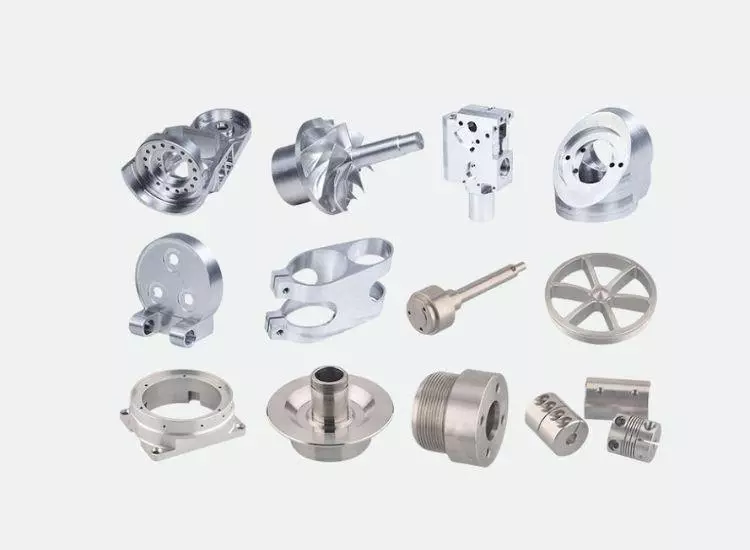
Some of the most expensive CNC features are created before the part reaches the machine.
A designer may add a deep narrow pocket because it is easy to create in CAD. The machinist then has to find a tool long enough to reach the bottom without excessive deflection.
A designer may specify a very small internal radius. The machinist may need a small-diameter cutter and additional finishing passes.
A designer may apply ±0.01 mm to every dimension. The manufacturer then has to determine which dimensions can actually be produced and inspected at that level.
These decisions are not necessarily wrong. Some may be required by the product.
The problem occurs when the manufacturing requirement is not connected to the function of the component.
A CNC-friendly design usually considers tool access, cutter geometry, workholding, machining direction, wall stiffness, hole depth, internal radii, and functional tolerances during design development.
CNC Machining Is Not Simply About Machine Accuracy
One of the more important points for buyers and engineers is that the machine’s advertised positioning accuracy does not represent the final tolerance of every machined feature.
The finished part is affected by the complete manufacturing system.
For example:
Machine → Tool → Fixture → Material → Cutting Parameters → Machining Sequence → Inspection
A high-end machine cannot compensate for poor workholding.
A good cutting tool cannot eliminate deformation caused by an overly thin wall.
A precise CNC program cannot make an inaccessible feature reachable.
And a tight drawing tolerance does not automatically make the part more functional.
This is why experienced machining suppliers spend time reviewing the drawing and geometry before production rather than treating CNC machining as a simple “upload CAD and cut” process.
How to Evaluate a CNC Machining Project
Before selecting CNC machining, look at the part from several practical angles.
Start with the material. Is it aluminum, stainless steel, titanium, plastic, or another material? Does the material condition or hardness affect machining?
Then examine the geometry. Can the required surfaces be reached with practical tooling? Are there deep pockets, thin walls, undercuts, or small internal radii?
Next consider tolerances. Which dimensions affect assembly, sealing, movement, or structural performance? Those are the dimensions that deserve closer attention.
Then consider quantity. A prototype and a recurring production order should not necessarily use the same manufacturing strategy.
Finally, review secondary requirements such as anodizing, plating, polishing, heat treatment, dimensional inspection, CMM inspection, or material certification.
At the quotation stage, providing this information together with the drawing or 3D model gives a manufacturer much more useful information than providing dimensions alone.
Conclusion
The advantages of CNC machining are not simply that it is “accurate,” “fast,” or “flexible.” Those descriptions are too broad to help someone decide how a real component should be manufactured.
The more meaningful advantages are its ability to produce functional geometries directly from engineering data, work with many engineering materials, support design changes, and handle prototypes and many lower-volume production requirements without the same type of dedicated tooling investment associated with some other processes.
Its limitations are equally physical and practical: cutting tools need access, deep and thin features can be difficult to stabilize, multiple setups add process complexity, difficult materials increase machining demands, and high production volumes can change the cost calculation.
For engineers and purchasing teams, the better question is not simply “What are the advantages and disadvantages of CNC machining?”
It is:
“Given this part’s geometry, material, tolerances, quantity, and functional requirements, does CNC machining make sense?”
That question leads to a much more useful manufacturing decision.