Introduction: Understanding CNC Machining Costs in Global Manufacturing
When companies source precision CNC machined components, the first comparison is often the quoted unit price. A part manufactured in China may receive a very different quotation from the same part produced in the United States, Germany, Japan, or other established manufacturing regions.
However, CNC machining cost is not determined simply by the country where the part is produced. The final price reflects the entire manufacturing process behind the component, including engineering preparation, machining time, material selection, quality requirements, secondary processing, and production volume.
China has become an important CNC machining sourcing location because of its large manufacturing base and mature industrial supply chains. Companies looking for a complete manufacturing partner often evaluate suppliers based on their ability to support everything from prototype development to repeat production through CNC machining services.Many regions in China have developed complete ecosystems around machining, including raw material suppliers, tooling companies, surface treatment providers, heat treatment facilities, and inspection services. This allows manufacturers to support projects ranging from prototypes to repeat production runs.
At the same time, other countries continue to play an important role in precision manufacturing. The United States has strong capabilities in aerospace, medical, and highly regulated industries. Germany and Japan have long-standing reputations for precision engineering, automation, and advanced manufacturing processes.
Therefore, the question for global buyers is not simply whether China is cheaper. The more important question is:
How does China’s CNC machining cost structure compare with other manufacturing regions, and when does international sourcing create a real cost advantage?
China CNC Machining Cost Compared With Other Precision Manufacturing Regions
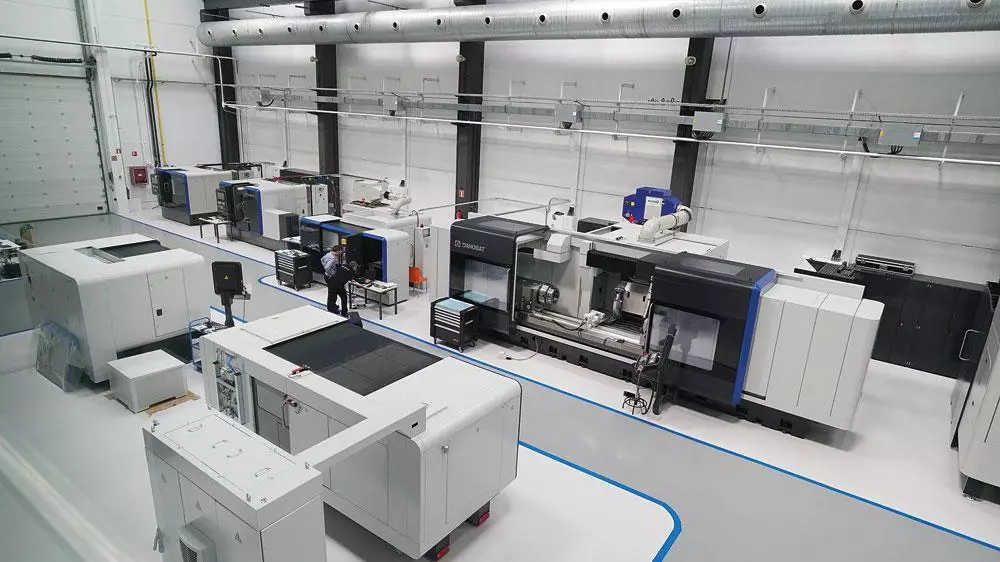
The cost difference between China, the United States, Europe, and Japan comes from different manufacturing structures rather than one single factor.
In the United States, CNC machining costs are strongly influenced by skilled labor expenses, facility costs, insurance, compliance requirements, and operating overhead. American machining companies often provide advantages in rapid communication, local engineering support, and industries requiring strict regulatory control.
For aerospace, medical, and defense-related components, many US manufacturers compete through technical expertise, certifications, and process control rather than low-cost production.
Western Europe follows a similar pattern. Countries such as Germany, Switzerland, and Italy have strong precision manufacturing capabilities, particularly in automotive, industrial equipment, and high-accuracy components. However, higher labor costs, energy expenses, and regulatory requirements contribute to higher operating costs.
Japan also maintains a strong position in precision machining, especially in industries requiring advanced manufacturing discipline, automation, and long-term supplier relationships. Japanese manufacturers are often selected for their consistency and process reliability.
China’s competitive position comes from a different manufacturing model.
The advantage is not only lower labor costs. It comes from the combination of manufacturing scale, supplier density, production experience, and the availability of supporting industries.
For example, a CNC machined aluminum enclosure may require machining, anodizing, laser marking, and inspection before shipment. In a mature manufacturing cluster in China, these processes can often be coordinated through nearby suppliers. This reduces production coordination time and allows manufacturers to handle different stages of the project efficiently.
Industry references commonly show that CNC machining hourly rates in China are generally lower than comparable shops in the US and Western Europe, although the actual difference depends heavily on machine type, supplier capability, part complexity, and quality requirements. Some market guides estimate general CNC machining rates around the range of $20–$60/hour in China, compared with roughly $60–$150/hour or higher in the US and Western Europe for comparable work. These figures are only reference ranges, because precision machining quotations are normally calculated based on the actual part requirements rather than hourly rates alone.
The important point is that lower machine rates do not automatically mean lower total cost. International buyers need to consider the complete manufacturing cost, including logistics, inspection requirements, communication efficiency, and potential quality risks.
What Actually Determines the Cost of a CNC Machined Part
A CNC machining quotation represents much more than the time a machine spends cutting metal.The machining process itself, including milling operations, turning operations, and multi-axis manufacturing strategies, has a direct impact on cycle time and final part cost.
Before production starts, manufacturers need to analyze the drawing, determine machining methods, create CNC programs, select tools, prepare fixtures, and verify the first production piece. These activities require engineering resources regardless of whether the order contains one part or several hundred parts.
This is why prototype machining is often expensive.
A prototype part may only require five pieces, but the supplier still needs to complete the same preparation work required for larger production. Programming, setup, and process planning costs are distributed across a much smaller quantity.
For example, imagine a new CNC project requires $800 in programming and setup costs. The machining cost is $30 per part.
For a 10-piece order:
$800 ÷ 10 + $30 = $110 per part
For a 500-piece order:
$800 ÷ 500 + $30 = $31.60 per part
The machining operation itself has not changed. The difference comes from spreading the initial preparation cost across more units.
However, setup cost is only one part of CNC pricing.
For many precision components, machining cycle time is the largest cost factor. A part requiring two hours of machining will usually cost significantly more than a similar-sized part requiring 20 minutes, even if both use the same material.
This is why part geometry often matters more than physical size.
A small titanium component with tight tolerances may cost more than a larger aluminum bracket because titanium requires slower machining speeds, specialized tooling, and more careful process control.
Similarly, a component requiring multiple setups can become expensive because each repositioning operation adds preparation time and increases the possibility of dimensional variation.
Material also affects cost, but not always in the way buyers expect.
For many CNC projects, raw material represents only a portion of the finished cost. A small aluminum block may only cost a few dollars, while the machining process may require hours of production time.
For example, 6061-T6 aluminum is widely used because it combines good machinability and mechanical properties. Stainless steel and titanium alloys usually increase machining costs because they require different cutting strategies and create higher tool wear.
Why 500-Piece Orders Can Reduce Unit Costs by Around 25%
The relationship between quantity and CNC pricing is mainly about production economics.
When a manufacturer produces a small quantity, fixed preparation costs represent a significant percentage of the final price. As production volume increases, those costs become less important on a per-part basis.
For example, a prototype order may include:
- Engineering review
- CNC programming
- Fixture preparation
- First article inspection
These activities may cost several hundred dollars, but they are completed only once.
When the order increases from a prototype quantity to several hundred pieces, the supplier does not repeat these preparation activities for every part. The same CNC program, tooling strategy, and production setup can be reused.
In addition, larger production runs allow manufacturers to improve efficiency.
Operators become familiar with the process. Cutting parameters can be optimized. Tool changes can be planned more effectively. Production scheduling becomes more stable.
For many simple to medium-complexity CNC components, moving from prototype quantities to several hundred pieces can reduce unit cost significantly. A reduction of around 25% can occur in certain production scenarios, especially when setup and engineering costs represent a meaningful portion of the original price.
However, the percentage reduction varies greatly.
For a simple aluminum bracket, the cost reduction may be larger because preparation costs represent a high percentage of the total price.
For a complex five-axis aerospace component made from titanium, the reduction may be smaller because most of the cost comes from machining time, tooling consumption, and inspection requirements.
Therefore, the real benefit of a 500-piece order is not a fixed discount. It is the ability to transform a project from prototype manufacturing into a more efficient production process.
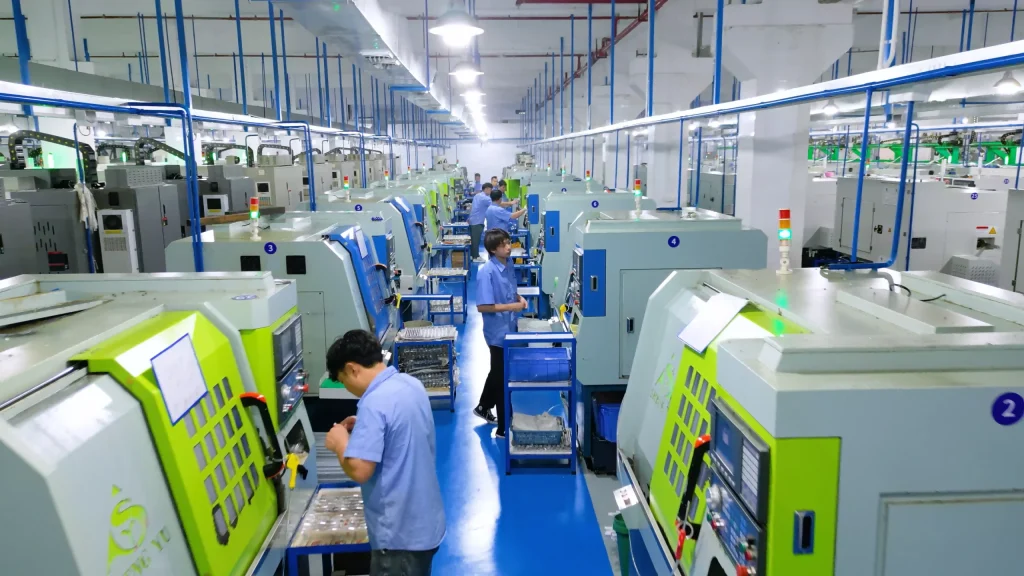
Why Some CNC Parts Remain Expensive Even at Higher Volumes
Increasing quantity does not automatically make every CNC component inexpensive.
Some parts remain costly because their manufacturing requirements are difficult to optimize.
Complex geometries are one example.
A component with deep internal pockets, thin walls, curved surfaces, or difficult access areas may require specialized machining strategies even when produced in larger quantities.
Five-axis machining is another example. A five-axis machine can reduce setups and improve accuracy for complex parts, but the equipment investment, programming requirements, and operator expertise increase manufacturing costs.
Material selection can also limit cost reduction.
Titanium alloys, Inconel, hardened steels, and other difficult-to-machine materials require slower cutting speeds and more frequent tool replacement. Increasing quantity helps distribute setup costs, but it does not remove the fundamental machining difficulty.
Quality requirements create another limitation.
A component requiring CMM inspection reports, traceability documents, or strict dimensional controls will require additional inspection time regardless of production quantity.
This is why professional buyers evaluate CNC costs based on the entire manufacturing process rather than expecting volume alone to solve every pricing challenge.
When China CNC Machining Makes Economic Sense
China CNC machining is often considered by international buyers when the project requires a combination of competitive pricing, production capability, and manufacturing flexibility.
The strongest cost advantage usually appears in repeat production and low-to-medium volume manufacturing.
For example, a company producing hundreds or thousands of custom aluminum parts may benefit from China’s manufacturing ecosystem because engineering preparation, machining, finishing, and supplier coordination can be optimized over multiple production cycles.
China is also attractive for components requiring multiple manufacturing steps.
A project involving CNC machining, anodizing, surface treatment, and inspection may benefit from having these processes coordinated within one manufacturing region.
However, local manufacturing can still be the better option for certain situations.
Urgent replacement parts, extremely early prototypes requiring daily engineering discussions, or projects with strict local compliance requirements may benefit from working with a nearby supplier.
The best sourcing decision depends on balancing:
- Part complexity
- Production quantity
- Lead time requirements
- Quality expectations
- Total landed cost
How Companies Reduce CNC Machining Costs Without Sacrificing Quality
The most effective cost reduction strategies usually happen before production begins.
Design decisions have a major influence on machining cost.
For example, applying unnecessarily tight tolerances to every dimension increases inspection requirements and may slow machining processes. A better approach is to identify which dimensions are functionally critical and apply tighter controls only where needed.
Material selection also matters.
Choosing a material based on actual performance requirements rather than excessive specifications can reduce machining difficulty and material cost.
Manufacturing communication is another important factor.
Providing complete drawings, 3D models, tolerance requirements, surface finish specifications, and production expectations allows suppliers to develop a more efficient process.
The goal is not simply to find the lowest quotation. It is to create a manufacturing process that produces consistent parts at a reasonable total cost.
How to Evaluate a China CNC Machining Quote
A competitive CNC quotation should be evaluated beyond the final unit price.
A lower price may result from a more efficient process, but it may also exclude important requirements such as inspection, finishing, or quality documentation.
A professional evaluation should consider whether the supplier understands:
- How the part will be manufactured
- What tolerances are realistically achievable
- How quality will be controlled
- How production consistency will be maintained
For international buyers, China CNC machining can provide significant cost advantages, especially for repeat production and custom industrial components. However, the strongest results come from understanding how CNC costs are created and selecting suppliers based on manufacturing capability rather than price alone.
The most valuable CNC supplier is not always the one offering the lowest initial quotation. It is the one that can produce reliable parts efficiently over the entire production lifecycle.
The Role of Production Volume in International CNC Sourcing Decisions
Production quantity is one of the most important factors when companies decide whether to manufacture locally or source internationally.
For a one-time prototype or a very small quantity order, the difference between regions may not always justify international sourcing. Shipping time, communication effort, and supplier coordination can offset part of the manufacturing cost advantage.
However, as production volume increases, the cost structure changes.
For example, a company developing a new industrial machine may initially require only five prototype components for testing. At this stage, engineering flexibility and fast design changes are often more important than unit price.
After validation, the same company may require several hundred replacement parts or production components. At this stage, manufacturing efficiency becomes more important because the same design, tooling, and production process can be repeated.
This is where international CNC sourcing, including China-based suppliers, often becomes more economically attractive.
The reason is not only the lower machining cost. It is the ability to amortize engineering preparation, optimize production processes, and maintain stable repeat manufacturing.
A supplier producing a part repeatedly can improve the process over time. Tool paths can be refined, fixtures can be optimized, and production planning becomes more predictable. These improvements reduce unnecessary machining time and improve consistency.
This production learning effect exists in every manufacturing region, but regions with a large CNC machining ecosystem can often support a wider range of processes and supplier cooperation.
China CNC Machining Cost vs Total Manufacturing Cost
One common mistake in international sourcing is comparing only the CNC machining quotation.
A lower unit price does not always mean a lower final cost.
For overseas buyers, the actual cost includes the entire supply chain:
The machining price is only one part.
Shipping, customs, communication, quality management, and supplier coordination also influence the final result.
For example, a local supplier in the United States may have a higher machining price, but the buyer benefits from faster communication, shorter transportation distance, and easier on-site support.
A Chinese supplier may offer a lower manufacturing cost, but the buyer needs to consider international logistics, lead time planning, and supplier qualification.
Therefore, professional buyers usually evaluate total landed cost rather than simply comparing factory quotations.
For repeat production, the manufacturing cost difference can become significant because the part price represents the majority of the total cost. For urgent prototypes, the advantage may be smaller because delivery speed and engineering interaction become more important.
This is why there is no universal answer to whether China CNC machining is always the lowest-cost option. The economic advantage depends on the type of project.
How Engineering Decisions Influence CNC Machining Cost

Many CNC machining costs are determined before the supplier even starts production.
The design itself has a major influence on manufacturing difficulty.Early design review and manufacturability analysis can help identify potential cost reductions before production begins.
A component designed with unnecessary complexity may require additional setups, specialized tooling, longer machining time, and more inspection.
For example, a part requiring every dimension to maintain a very tight tolerance may increase production requirements even when some dimensions do not affect the final function.
A more manufacturing-focused approach is to identify critical dimensions and maintain tighter control only where performance requires it.
This principle is commonly known as Design for Manufacturability (DFM).
DFM does not mean reducing quality. It means designing the component so that the required quality can be achieved efficiently.
Material choice is another important factor.
Engineers sometimes select materials based on maximum performance requirements, but the manufacturing process should also be considered.
For example, aluminum alloys are widely used in CNC machining because they offer good machinability, strength, and weight advantages. Materials such as titanium or Inconel provide excellent performance in demanding environments, but they also require more complex machining strategies.
Selecting the right material for the application can significantly influence production cost without affecting functional requirements.
The Importance of Supplier Capability in CNC Cost Control
When sourcing CNC machining internationally, the supplier’s manufacturing capability directly affects the final cost.
A supplier with strong process planning capability can often reduce unnecessary operations before production begins.
For example, an experienced CNC manufacturer may identify that a component does not require multiple setups or suggest a machining method that reduces handling time.
This type of engineering support can create more value than simply offering a lower initial quotation.
In precision manufacturing, the cheapest quotation is not always the most economical choice.
A supplier that cannot maintain consistent dimensions may create additional costs through rejected parts, production delays, and repeated inspections.
For international buyers, supplier evaluation should include manufacturing experience, inspection capability, communication efficiency, and the ability to support future production requirements.
Conclusion: Understanding China CNC Machining Costs Through a Global Perspective
China CNC machining has become an important option in global manufacturing because of its combination of production capacity, supply chain integration, and experience supporting international customers.
However, the cost advantage does not come from one single factor. It comes from the interaction between manufacturing scale, supplier networks, engineering efficiency, and production volume.
Compared with precision machining markets such as the United States, Germany, and Japan, China offers a different manufacturing cost structure. Western countries often compete through advanced engineering capability, automation, and specialized industries, while China is particularly competitive for many custom components, repeat production projects, and applications requiring a combination of machining and secondary processes.
The impact of production volume is equally important. A 500-piece order can reduce unit cost significantly in many CNC machining scenarios because setup and engineering costs are distributed across more parts. However, the actual reduction depends on part complexity, material, machining time, and quality requirements.
For companies evaluating CNC machining suppliers, the most effective approach is not to search for the lowest price alone. A better strategy is to understand how the cost is created, compare manufacturing approaches, and select a supplier that can deliver consistent parts at a sustainable production cost.
For international OEMs, the decision to source CNC machining from China is usually based on more than the initial part price. Factors such as production volume, component complexity, quality requirements, and supply chain coordination all influence the overall manufacturing cost. When these factors are aligned, China can provide a practical solution for companies looking to balance machining capability, production efficiency, and long-term supply stability.