CNC stands for Computer Numerical Control. CNC machining is a subtractive manufacturing process that uses computer-controlled machine tools to remove material from a workpiece and produce a finished part. Depending on the machine and tooling, CNC machining can create holes, pockets, slots, threads, contours, and complex multi-sided features.
CNC machining is used for prototypes, low-volume production, and repeat manufacturing because programmed toolpaths can be reproduced across production runs. CNC milling is commonly used for prismatic and complex parts, while CNC turning is suited to cylindrical components such as shafts, pins, and bushings.
This guide explains what CNC means, how CNC machines work, the main types of CNC machines, commonly machined materials, achievable tolerances, and the factors that affect machining accuracy.
The video below shows a CNC machining operation and how programmed toolpaths control material removal.
What Does CNC Stand For?
CNC Stands for Computer Numerical Control
CNC stands for Computer Numerical Control. In manufacturing, CNC refers to the use of computer-controlled instructions to control the movement and operation of machine tools.
A CNC controller interprets programmed instructions and coordinates machine axes, spindle speed, feed rate, tool changes, and other machining functions. This allows machines such as mills, lathes, routers, and grinders to perform repeatable operations with limited manual intervention.
Why Is CNC Machining Used in Manufacturing?
CNC machining is widely used because a programmed machining process can be reproduced across multiple parts and production runs. Its main advantages include:
- Repeatability — The same programmed process can be reproduced across multiple parts.
- Dimensional control — CNC machines can maintain tight tolerances when the machine, tooling, material, and process are properly controlled.
- Complex geometry — CNC machining can produce pockets, threads, contours, holes, and three-dimensional features.
- Production flexibility — CNC machining can be used for prototypes, low-volume batches, and repeat production.
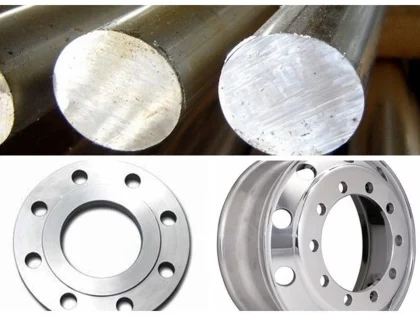
- Material flexibility — CNC machines can process aluminum, stainless steel, brass, copper, titanium, engineering plastics, and other machinable materials.
These characteristics make CNC machining suitable for components where dimensional accuracy, repeatability, and controlled geometry are important.
What Is CNC Machining?
CNC machining is a subtractive manufacturing process in which a cutting tool removes material from a solid workpiece according to a programmed toolpath. The workpiece may be held in a vise, fixture, chuck, or other workholding system while the cutting tool moves along one or more machine axes.
CNC machining is different from the broader term CNC. CNC describes the computer-based control system, while CNC machining describes the manufacturing process performed by a CNC-controlled machine tool.
Depending on the machine type, CNC machining can create external and internal profiles, holes, pockets, slots, threads, bores, angled surfaces, and complex three-dimensional geometry.
How Does a CNC Machine Work?
A CNC machine is a machine tool controlled by programmed instructions. The controller interprets the machining program and coordinates axis movement, spindle rotation, feed rates, and auxiliary functions to produce the required part geometry.
Core components of a CNC machine
To better understand how the machine operates, it helps to know its main components:
- CNC controller — interprets G-code and sends motion commands
- Spindle — rotates cutting tools at controlled speeds
- Tooling system — includes end mills, drills, inserts, taps, and special cutters
- Workholding / fixturing — vises, clamps, soft jaws, and custom fixtures secure the part
- Servo motors and drives — move the machine along multiple axes with precision
- Machine axes — Linear and rotary axes determine how the cutting tool and workpiece can move relative to each other.
- Coolant system — Coolant can help control cutting temperature, remove chips, and improve tool life and surface finish.
How Does the CNC Machining Process Work?
To create a precision part, the CNC machining process typically follows these steps:
CAD Design
The process starts with a 3D CAD model and, when required, a 2D engineering drawing. The model defines the part geometry, while the drawing may specify dimensions, tolerances, surface finish, material, threads, and GD&T requirements.
CAM Programming
CAM software converts the CAD geometry into machining toolpaths. The programmer selects cutting tools, machining strategies, cutting parameters, and the sequence of operations based on the material, geometry, tolerance requirements, and tool access.
G-Code Generation
The CAM system post-processes the toolpaths into machine-specific G-code or other numerical control instructions. These instructions define movements, spindle speeds, feed rates, tool changes, coolant commands, and other machine functions.
Machine Setup
The workpiece is secured using a vise, chuck, fixture, soft jaws, or another workholding method. The machinist installs the required tools, sets work and tool offsets, verifies the program, and checks that the setup provides sufficient tool access and clearance.
Machining Operation
Machining normally begins with roughing to remove bulk material, followed by semi-finishing and finishing operations. Finishing passes control the final geometry, dimensional accuracy, and surface finish of critical features.
Quality Inspection
Finished parts are inspected against the engineering drawing and specified tolerances. Depending on the requirements, inspection may use calipers, micrometers, bore gauges, height gauges, optical measurement systems, or coordinate measuring machines (CMMs).
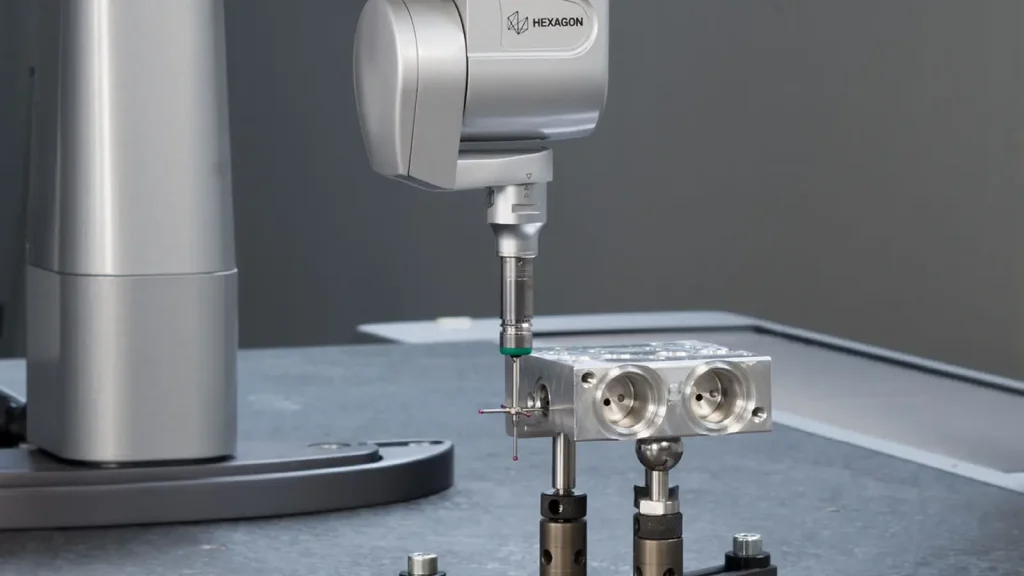
This combination of automation, engineering expertise, and controlled machining ensures precision and consistency across every production run.
What Does a CNC Machinist Do?
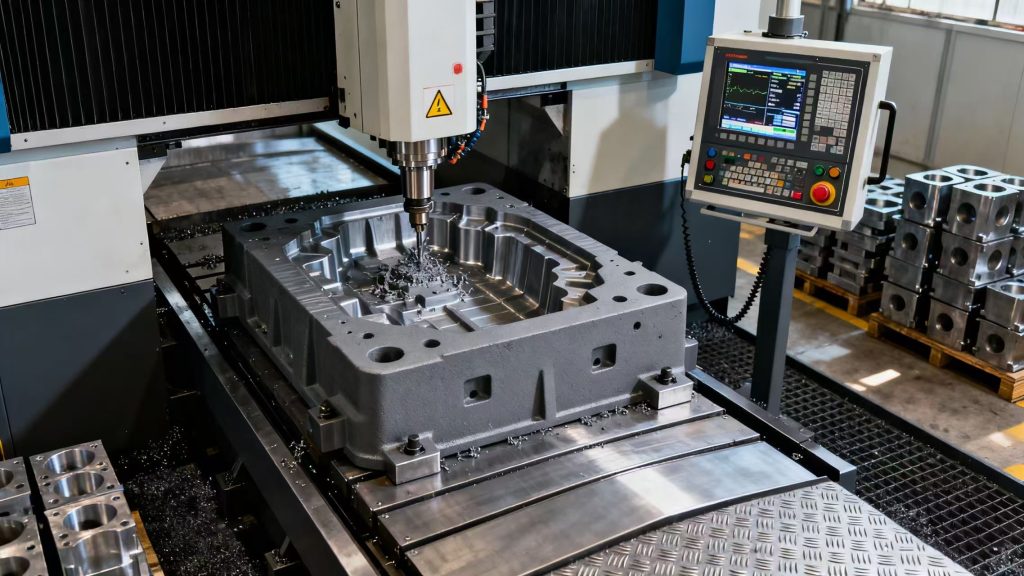
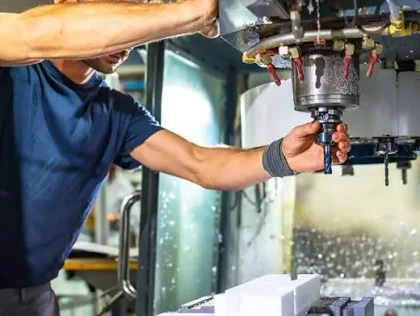
A CNC machinist does more than operate the machine. The machinist interprets engineering drawings, establishes workholding and datums, verifies tooling and offsets, monitors machining conditions, and checks parts during production.Machining accuracy can change during production as cutting tools wear, workpieces heat up, or cutting conditions change. Machinists therefore monitor critical dimensions and adjust offsets or machining parameters when necessary. Proper workholding is also important because part movement or distortion can affect dimensional accuracy and the relationship between features.
Key responsibilities of a CNC machinist
A professional machinist typically:
- Reads and interprets engineering drawings, including GD&T symbols
- Selects and installs tools and fixtures based on material and geometry
- Verifies and fine-tunes G-code before production to ensure safe operation
- Monitors cutting conditions such as feed rate, spindle load, and coolant flow
- Performs in-process inspections to maintain tolerances throughout production
- Collaborates with engineers on DFM (Design for Manufacturability) to optimize part quality
Experienced machinists help prevent tool wear, reduce scrap, and shorten production cycles—contributing significantly to manufacturing efficiency.
Optimizing CNC Machine Programming for Faster Production
Programming optimization is one of the most effective ways to improve machining speed, part quality, and cost efficiency.
How programmers enhance CNC performance
1. Intelligent toolpath strategies
Using techniques such as adaptive clearing, HEM (High Efficiency Milling), and rest machining helps shorten cycle times while improving tool life.
2. Correct cutting parameters
Programmers evaluate:
- Spindle speed (RPM)
- Cutting speed (SFM)
- Feed rate (IPM)
- Stepdown and stepover values
These parameters directly affect surface finish and productivity.
3. Reducing non-cutting time
Minimizing unnecessary tool changes, optimizing approach moves, and reducing repositioning can shorten cycle time. Toolpath strategy also affects tool wear, cutting forces, surface finish, and the stability of the machining process.
4. Performing simulations and collision checks
Simulation ensures safe machining, prevents crashes, and verifies that tools can reach every surface without interference.
Optimized programming can significantly increase throughput while maintaining stable, high-quality output.
What Are the Different Types of CNC Machines?
Manufacturers rely on several types of CNC machines depending on the complexity, size, geometry, material, and machining requirements of the part.
1. CNC Milling Machines
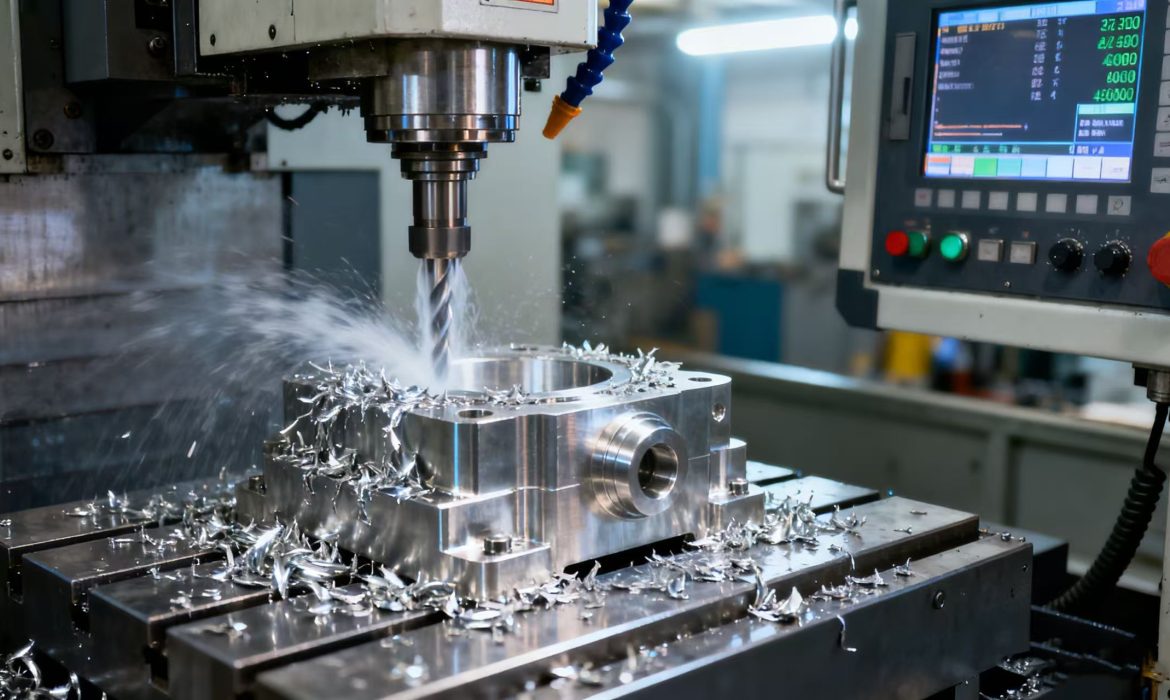
CNC milling machines use rotating cutting tools to remove material from a stationary workpiece. They are commonly used for:
Housings and enclosures
Brackets and frames
Structural components
Plates and mounting components
Complex 3D surfaces
CNC milling can produce pockets, contours, slots, holes, angled surfaces, and other features across multiple axes.
2. CNC Turning Machines
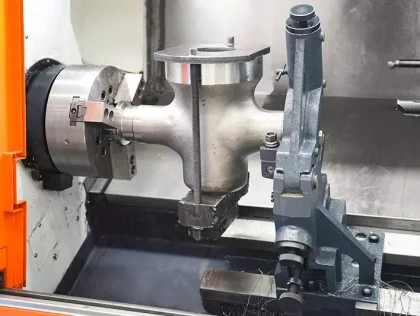
In CNC turning, the workpiece rotates while a cutting tool removes material from its outer diameter, inner diameter, face, or other cylindrical features.
CNC turning is commonly used for:
Shafts
Pins
Bushings
Threaded components
Cylindrical parts
3. 5-Axis CNC Machining
5-axis machining provides additional rotary movement, allowing the cutting tool and/or workpiece to be oriented from multiple directions. It is useful for complex surfaces, angled features, deep cavities, and parts that require machining on several sides.
4. CNC Grinding
CNC grinding is used when tight dimensional tolerances and controlled surface finish are required. Grinding removes small amounts of material using an abrasive wheel rather than a conventional cutting tool.
5. Mill-Turn Machining
Mill-turn machines combine turning and milling operations in a single setup. They are useful for complex parts that contain both cylindrical and milled features and can reduce the number of separate setups required.
6. EDM and Wire EDM
Electrical discharge machining (EDM) uses controlled electrical discharges to remove material. It is useful for hardened materials, mold components, small features, and geometries that are difficult to produce with conventional cutting tools.
What Materials Can CNC Machines Process?
Aluminum
6061-T6 and 7075-T6 are widely used because of their machinability-to-strength balance.
Stainless Steel
304, 316, and 17-4 PH stainless steels are commonly machined for components requiring corrosion resistance or mechanical strength.
Brass and Copper
Brass is relatively easy to machine, while copper requires careful control of tooling and cutting conditions because of its material properties.
Titanium
Titanium alloys offer high strength-to-weight ratios but generally require more controlled cutting conditions because of heat generation and tool wear.
Engineering Plastics
Materials such as POM, PEEK, and nylon can be CNC machined for lightweight or electrically insulating components.
What Tolerances Can CNC Machining Achieve?
CNC machining can achieve tight dimensional tolerances, but the achievable tolerance depends on the machine, material, feature size, geometry, tooling, workholding, thermal conditions, and inspection method.
A tolerance around ±0.01 mm (±0.0004 in) may be achievable on suitable features under controlled machining and inspection conditions. It should not, however, be treated as a universal tolerance for every dimension on a CNC-machined part.
Tight tolerances are normally applied to functional features that require them. Applying unnecessarily tight tolerances to every dimension can increase machining time, inspection requirements, and production cost.
CNC Milling vs. CNC Turning: What Is the Difference?
| Feature | CNC Milling | CNC Turning |
|---|---|---|
| Main movement | Cutting tool moves around the workpiece | Workpiece rotates |
| Typical parts | Brackets, housings, plates, frames | Shafts, pins, bushings |
| Common features | Pockets, holes, slots, contours | Diameters, bores, threads |
| Best suited for | Prismatic and complex geometry | Cylindrical geometry |
| Multi-axis options | 3-, 4-, and 5-axis | Live tooling and mill-turn |
Some components require both processes. Mill-turn machining can combine turning and milling operations to reduce setups and maintain positional relationships between features.
What Factors Affect CNC Machining Accuracy?
Machine Condition
Machine positioning accuracy, repeatability, and mechanical condition influence how closely the machine can follow the programmed toolpath.
Tool Wear
Cutting tools gradually wear during production. Tool wear can change feature dimensions and surface finish, particularly during long production runs.
Tool Deflection
Cutting forces can deflect slender tools, especially when machining deep pockets or using small-diameter cutters.
Workholding
Poor or inconsistent workholding can allow the workpiece to move or deform during machining.
Thermal Effects
Heat generated during machining can cause the machine and workpiece to expand, affecting critical dimensions.
Cutting Parameters
Spindle speed, feed rate, depth of cut, stepover, coolant, and tool selection all influence cutting forces, heat, tool life, and surface finish.
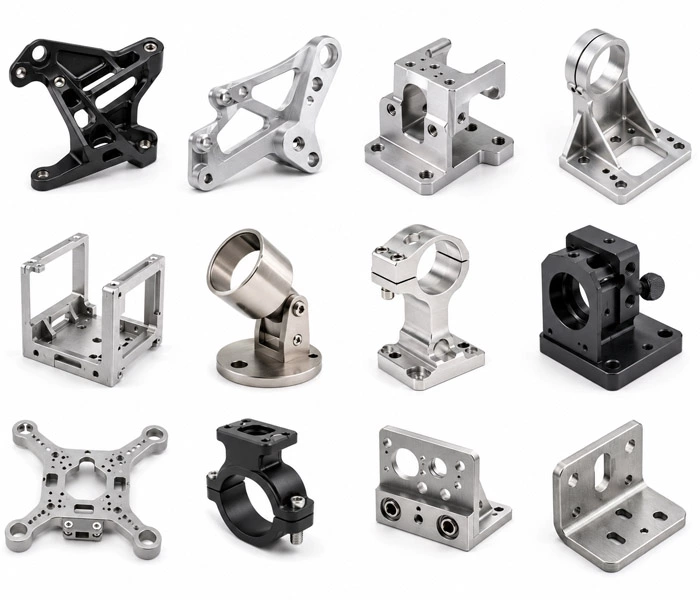
What Is CNC Machining Used For?
Aerospace
Aircraft structural components, brackets, housings, fittings, and other precision components.
Automotive
Engine components, transmission parts, brackets, shafts, fixtures, and prototypes.
Robotics & Automation
Robot joints, mounting plates, housings, brackets, end-effector components, and precision mechanical parts.
Medical
Surgical instruments, equipment components, and certain implant-related components where material and regulatory requirements allow.
Electronics
Housings, heat sinks, mounting components, and mechanical structures.
Semiconductor Equipment
Precision brackets, chambers, fixtures, frames, and other equipment components requiring controlled dimensions and surface finishes.
Oil & Gas
Valves, fittings, connectors, shafts, and replacement components used in demanding operating environments.
Energy
Mechanical components, housings, brackets, shafts, and replacement parts for power generation equipment.
CNC Machining for Prototypes and Production
CNC machining can be used for both prototypes and production parts. For prototypes, CNC machining provides a direct way to produce functional components from a CAD model without creating dedicated production tooling.
For repeat production, process control becomes increasingly important. Tool life, workholding, machining sequence, inspection procedures, and process repeatability all need to be considered to maintain consistent dimensions across production runs.
CNC machining is therefore suitable for one-off prototypes, low-volume production, and higher-volume applications where the process and machine configuration are appropriate.
How to Choose a CNC Machining Service
When selecting a CNC machining supplier, evaluate more than the machine list. The supplier should be able to match the machining process to the part geometry, material, tolerance requirements, surface finish, and production volume.
Important factors include CNC milling and turning capabilities, machine capacity, material availability, inspection equipment, surface finishing options, quality documentation, and experience with similar part geometries.
For tight-tolerance or complex components, DFM feedback before machining can also help identify issues related to tool access, workholding, tolerances, material selection, and machining sequence.
Conclusion
CNC stands for Computer Numerical Control, referring to the computer-based control system used to operate CNC machine tools. CNC machining uses this control system to remove material from a workpiece and produce parts with controlled geometry and dimensions.
The appropriate CNC process depends on the part geometry, material, tolerance requirements, surface finish, and production volume. Depending on these requirements, a component may be produced using CNC milling, CNC turning, 4-axis or 5-axis machining, grinding, EDM, or a combination of processes.