Introduction
The metal fabrication process is the foundation of many industrial products, from machine components and equipment frames to aerospace parts and custom enclosures. Although finished metal parts may appear simple, the manufacturing process behind them often involves multiple operations working together to achieve the required shape, strength, accuracy, and surface quality.
Metal fabrication is not limited to cutting and welding. A complete fabrication process may include material selection, cutting, forming, machining, joining, surface treatment, and inspection. The combination of these processes depends on the part design, material properties, production volume, and functional requirements.
In modern manufacturing, many fabricated components require additional precision machining after the initial fabrication steps. For example, a welded steel structure may have the required strength, but critical mounting surfaces or alignment holes may still need CNC machining to meet dimensional requirements. This is why CNC machining services are often an important part of a complete metal fabrication solution.
Understanding how different fabrication processes work together helps engineers and purchasing teams select suitable manufacturing methods, control costs, and avoid design issues before production begins.
This article explains the key stages of the metal fabrication process and how CNC machining supports the production of accurate and reliable metal components.
Understanding the Metal Fabrication Process and Its Role in Modern Manufacturing
The metal fabrication process refers to the series of manufacturing operations used to transform raw metal materials into finished components or assemblies. Unlike processes such as CNC machining, where material is mainly removed from a solid workpiece, fabrication often focuses on creating overall structures through cutting, forming, and joining.
Raw materials used in fabrication commonly include metal sheets, plates, tubes, bars, and extruded profiles. These materials are selected based on the requirements of the final application, such as load capacity, environmental conditions, weight limitations, and corrosion resistance.
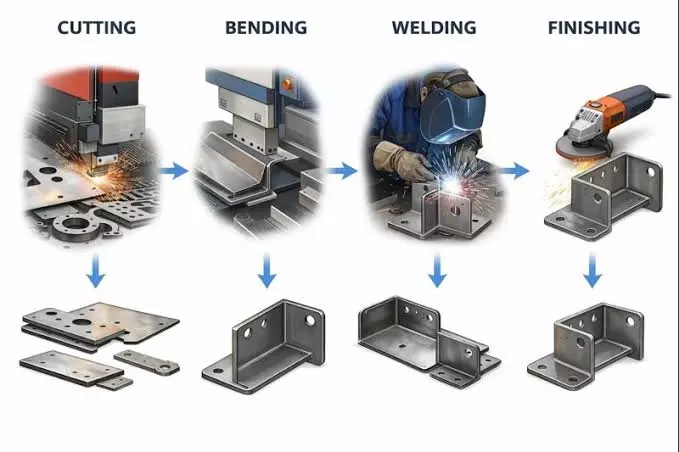
A typical fabrication workflow may include:
Design → Material Selection → Cutting → Forming → Welding/Assembly → CNC Machining → Surface Finishing → Inspection
However, not every project follows the same sequence. The manufacturing route is determined by the part’s function.
For example, a sheet metal enclosure may only require laser cutting, bending, and powder coating. In contrast, a precision machine component may require cutting, welding, stress relief, CNC machining, and inspection before it can be installed.
The main challenge in metal fabrication is not simply creating a physical shape. It is maintaining consistency throughout multiple manufacturing stages. Each operation can influence the next one. Cutting accuracy affects bending results, welding can introduce distortion, and surface treatment can affect final dimensions.
For this reason, experienced manufacturers consider the entire production process during the design stage rather than treating each operation separately.
Material Selection Determines Fabrication Methods, Machining Requirements, and Final Performance
Material selection is one of the most important decisions in the metal fabrication process because it affects nearly every stage of manufacturing. The material determines how easily a part can be cut, formed, welded, machined, and finished.
Choosing a material is not simply about selecting the strongest option. A material that exceeds performance requirements may increase manufacturing costs without providing additional value. On the other hand, selecting a material with poor machinability or insufficient corrosion resistance can create problems during production and operation.
Engineers usually consider several factors when selecting fabrication materials:
- Mechanical strength
- Weight requirements
- Environmental exposure
- Machining characteristics
- Welding performance
- Surface finishing requirements
- Overall production cost
Aluminum for Lightweight and Machinable Components
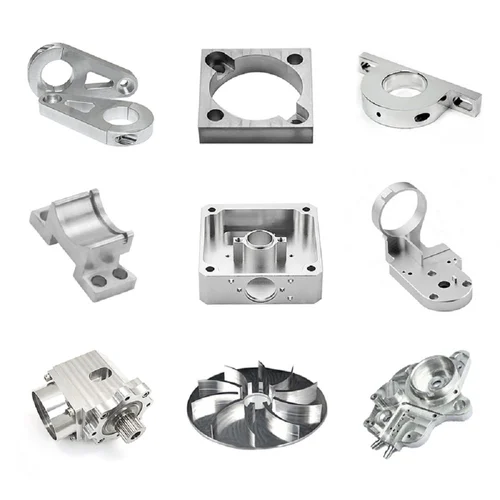
Aluminum is widely used in applications where weight reduction and machining efficiency are important.
Compared with steel, aluminum has a lower density, making it suitable for industries such as aerospace, electronics, automation, and transportation.
From a manufacturing perspective, aluminum offers several advantages:
- Good machinability
- Natural corrosion resistance
- Suitable strength-to-weight ratio
- Compatibility with various surface treatments
For CNC machining applications, aluminum alloys such as 6061 and 7075 are commonly selected because they can achieve accurate dimensions while maintaining good production efficiency.
However, aluminum also requires proper process control. Excessive cutting force or improper tooling selection can affect surface quality, especially for parts requiring tight tolerances or fine finishes.
Stainless Steel for Corrosion-Resistant Applications
Stainless steel is commonly selected when durability and corrosion resistance are required.
Industries such as food processing, medical equipment, chemical processing, and industrial machinery often use stainless steel components because they need to withstand moisture, chemicals, or frequent cleaning.
Compared with aluminum, stainless steel is generally more challenging to machine due to:
- Higher material hardness
- Lower thermal conductivity
- Greater cutting resistance
These characteristics can increase machining time and tool wear, especially for complex CNC components.
Therefore, when stainless steel parts require both fabrication and precision machining, manufacturers need to carefully plan the production sequence to maintain accuracy and control costs.
Carbon Steel for Structural and Industrial Components
Carbon steel remains one of the most widely used materials in industrial fabrication because it provides good strength at a relatively reasonable cost.
It is commonly used for:
- Machine frames
- Structural supports
- Industrial equipment
- Welded assemblies
Carbon steel is generally easier to weld and fabricate compared with many specialty alloys. However, because it is susceptible to corrosion, additional surface protection such as painting, powder coating, or plating may be required.
The choice of carbon steel grade also affects machining performance. Some grades are easier to machine than others, which can influence production efficiency when CNC operations are required.
Titanium for High-Performance Applications
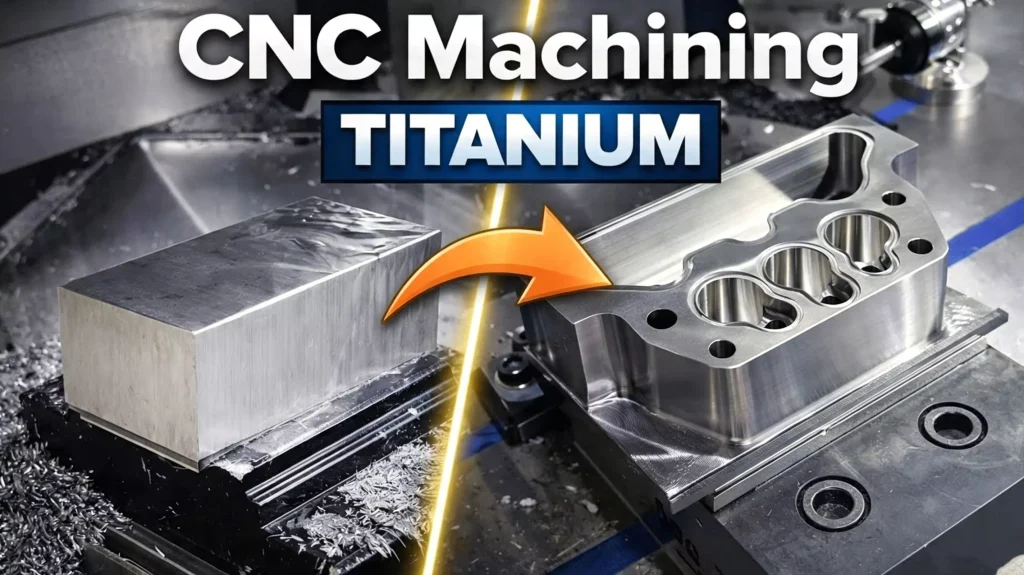
Titanium is selected when high strength, low weight, and corrosion resistance are required.
Although titanium is more expensive and more difficult to process, it provides advantages in demanding applications such as aerospace and medical components.
Manufacturing titanium parts requires careful control because the material has poor thermal conductivity, which can increase heat concentration during machining.
For titanium fabrication projects, manufacturers must consider both material cost and processing requirements during the design stage.
Cutting Operations Create the Foundation of the Metal Fabrication Process
After selecting the appropriate material, cutting is usually the first manufacturing operation used to create the basic shape of a component.
The purpose of cutting is not only to separate material but also to establish the dimensional foundation for later processes. Poor cutting accuracy can create problems during bending, welding, assembly, and machining.
Different cutting methods are selected based on material thickness, geometry, tolerance requirements, and production quantity.
Laser Cutting for Precision Sheet Metal Components
Laser cutting is widely used for sheet metal fabrication because it provides accurate and repeatable results.
The process uses a focused laser beam to remove material along programmed paths. It is suitable for producing complex profiles, holes, and detailed features without requiring custom tooling.
Laser cutting is often preferred when manufacturers need:
- Consistent dimensions
- Complex shapes
- Fast production setup
- Reduced material waste
However, laser cutting is not always the best option for every application. Very thick materials or projects requiring extremely high edge quality may require alternative methods.
Waterjet, Plasma, and Saw Cutting for Different Fabrication Requirements
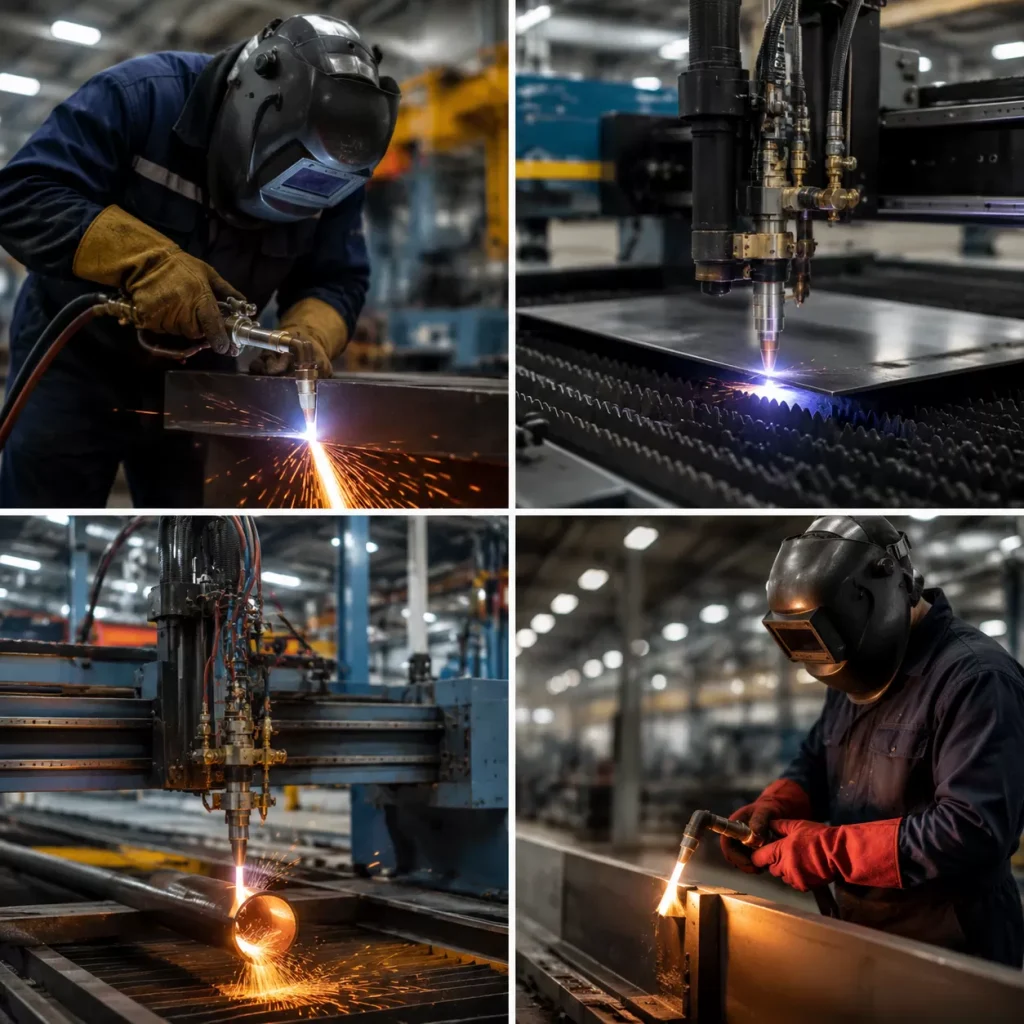
Although laser cutting is widely used for many sheet metal applications, other cutting methods remain important depending on material thickness, project requirements, and production conditions.
Waterjet cutting is often selected when heat distortion needs to be avoided. Unlike laser or plasma cutting, waterjet cutting does not create a significant heat-affected zone, which makes it suitable for materials that may experience changes in properties when exposed to high temperatures.
Typical applications include:
- Thick aluminum plates
- Stainless steel components
- Heat-sensitive alloys
- Large custom parts
The main advantage of waterjet cutting is its ability to cut a wide range of materials while maintaining material integrity. However, cutting speed and operating costs may be higher compared with some thermal cutting methods.
Plasma cutting is commonly used for thicker metal materials, especially in structural fabrication. It provides a practical solution for large steel components where cutting speed and cost efficiency are more important than extremely tight tolerances.
For example, industrial frames, support structures, and heavy equipment components are often produced using plasma cutting before welding and assembly.
Saw cutting is a simpler process but remains an essential part of many fabrication workflows. It is commonly used for preparing raw stock materials such as bars, tubes, and extrusions before CNC machining or welding.
The choice of cutting method depends on balancing several factors:
- Material thickness
- Required accuracy
- Production volume
- Surface quality requirements
- Overall manufacturing cost
Experienced manufacturers consider the entire production sequence rather than selecting a cutting method independently. A process that appears faster at the cutting stage may create additional work during machining or assembly if accuracy is not properly controlled.
Forming Processes Shape Metal Components Without Removing Material
After cutting, many fabricated components require forming operations to achieve their final geometry. Unlike CNC machining, which removes material through cutting tools, forming processes reshape existing material through controlled force.
Forming is commonly used for sheet metal parts, structural components, and enclosures because it allows manufacturers to create complex shapes while maintaining material strength and reducing waste.
The most common forming processes include bending, rolling, stamping, and punching.
Bending and the Importance of Dimensional Control
Bending is one of the most widely used operations in sheet metal fabrication. Using equipment such as press brakes, manufacturers apply controlled force to create specific angles and shapes.
Although bending appears straightforward, achieving accurate results requires careful consideration of several factors:
- Material thickness
- Material type
- Bend radius
- Springback effect
- Tool selection
When metal is bent, it naturally attempts to return partially to its original shape. This phenomenon, known as springback, can affect the final angle and dimensional accuracy.
For simple brackets, minor variation may not create problems. However, for assemblies with multiple connecting parts, inaccurate bending can lead to misalignment during final assembly.
This is why experienced fabricators consider bending tolerances during the design stage and may use CNC machining afterward to achieve critical dimensions.
Rolling for Cylindrical and Curved Components
Rolling is used when flat metal sheets or plates need to be formed into curved shapes.
Common applications include:
- Cylindrical housings
- Tanks
- Pipes
- Pressure-related components
The rolling process requires control over material thickness, bending force, and final radius. Incorrect settings can result in uneven curvature or dimensional inconsistencies.
For large fabricated structures, rolling is often combined with welding and machining to create complete assemblies.
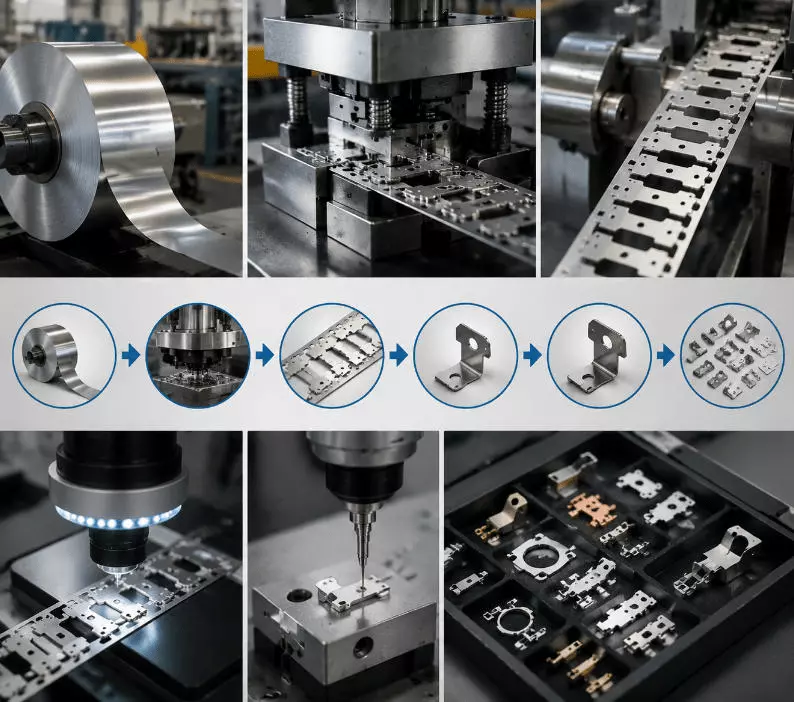
Stamping and Punching for Repeated Production
Stamping and punching are commonly used in higher-volume manufacturing environments.
Stamping uses dies to form metal into specific shapes, while punching creates holes or cutouts through controlled force.
These processes are efficient when producing large quantities of identical components, such as:
- Automotive brackets
- Electrical components
- Sheet metal housings
However, tooling costs and design limitations mean stamping is usually more suitable for larger production runs rather than low-volume custom fabrication.
For prototype and small-batch projects, manufacturers often rely on flexible processes such as laser cutting, bending, and CNC machining.
Why CNC Machining Is a Critical Secondary Process in Metal Fabrication
Many people associate metal fabrication primarily with cutting, bending, and welding. While these processes create the overall structure of a component, they do not always provide the precision required for functional mechanical parts.
This is where CNC machining becomes an important part of the metal fabrication process.
CNC machining is often used as a secondary operation after fabrication to create accurate features that cannot be achieved through traditional fabrication methods.
Examples include:
- Precision mounting holes
- Bearing locations
- Alignment surfaces
- Threaded holes
- Flat reference surfaces
- Complex pockets and contours
Fabrication Creates Structure, CNC Machining Creates Precision
A welded assembly may have excellent structural strength, but welding introduces heat into the material. This heat can cause distortion, shrinkage, or dimensional changes.
For example, a welded machine frame may require precise mounting surfaces where motors, linear guides, or other components will be installed. The welding process alone may not achieve the required flatness or positional accuracy.
CNC machining allows manufacturers to machine these critical areas after fabrication, ensuring proper alignment and assembly performance.
This combination is common in industries such as:
- Industrial automation
- Robotics
- Semiconductor equipment
- Packaging machinery
- Custom manufacturing equipment
CNC Milling for Complex Features and Precision Surfaces
CNC milling is widely used in fabricated components that require additional precision.
A CNC milling machine uses rotating cutting tools to remove material from a workpiece according to programmed instructions.
Common milling operations include:
- Face milling
- Pocket machining
- Hole machining
- Slot cutting
- Contour machining
For fabricated parts, CNC milling is often used to create:
- Accurate mounting surfaces
- Precision interfaces
- Custom mechanical features
This allows manufacturers to combine the efficiency of fabrication with the accuracy of machining.
CNC Turning for Cylindrical Components
CNC turning is used mainly for rotational parts where the workpiece rotates while cutting tools remove material.
Typical CNC turned components include:
- Shafts
- Bushings
- Pins
- Spacers
- Threaded components
When fabricated assemblies require cylindrical components with accurate diameters or threads, CNC turning provides consistent results.
Why CNC Capability Matters When Choosing a Fabrication Supplier
For companies purchasing custom metal parts, working with a supplier that only performs fabrication may create additional coordination challenges.
If cutting, welding, machining, and finishing are handled by different suppliers, customers may need to manage:
- Multiple production schedules
- Different quality standards
- Additional transportation
- Communication between vendors
A supplier with both metal fabrication and CNC machining capabilities can simplify the manufacturing process by handling multiple operations under one production system.
This is particularly valuable for:
- Prototype development
- Low-volume production
- Custom industrial components
- Complex assemblies
Welding and Assembly: Connecting Individual Components Into Functional Structures
Welding is one of the most important joining methods in the metal fabrication process. It allows separate components to become a single structure with the required strength and rigidity.
However, welding is not only about creating a strong connection. The process must also consider dimensional control.
During welding, heat causes the metal to expand and contract. This can result in:
- Warping
- Distortion
- Residual stress
- Dimensional changes
For components requiring precise assembly, these effects must be considered during manufacturing planning.
MIG and TIG Welding Selection
MIG welding is commonly used for general industrial fabrication because it provides good productivity and is suitable for many steel and aluminum applications.
It is often used for:
- Equipment frames
- Structural assemblies
- General industrial components
TIG welding provides greater control and is commonly selected when weld appearance and precision are important.
It is frequently used for:
- Stainless steel components
- Aluminum parts
- Thin materials
- Applications requiring clean weld appearance
The appropriate welding method depends on material type, thickness, production requirements, and final application.
Post-Welding Machining and Finishing
For many precision assemblies, welding is followed by additional machining operations.
A common workflow is:
Cutting → Forming → Welding → Stress Relief (if required) → CNC Machining → Surface Treatment → Inspection
This approach allows manufacturers to first create a strong structure and then machine critical features to final specifications.
Surface Finishing Protects Fabricated Parts Beyond Appearance
Surface finishing is often considered the final stage of the metal fabrication process, but its purpose goes beyond improving appearance. The correct finishing method can significantly influence corrosion resistance, durability, wear performance, and the service life of a component.
Different applications require different surface treatments. A decorative aluminum cover may need a different finish compared with a heavy industrial machine component operating in a harsh environment.
When selecting a surface finish, manufacturers typically consider:
- Base material
- Operating environment
- Required durability
- Appearance requirements
- Dimensional tolerance
It is also important to consider when finishing is applied during production. Some finishes may need to be completed after CNC machining, while others are applied after fabrication and assembly.
Anodizing for Aluminum Components
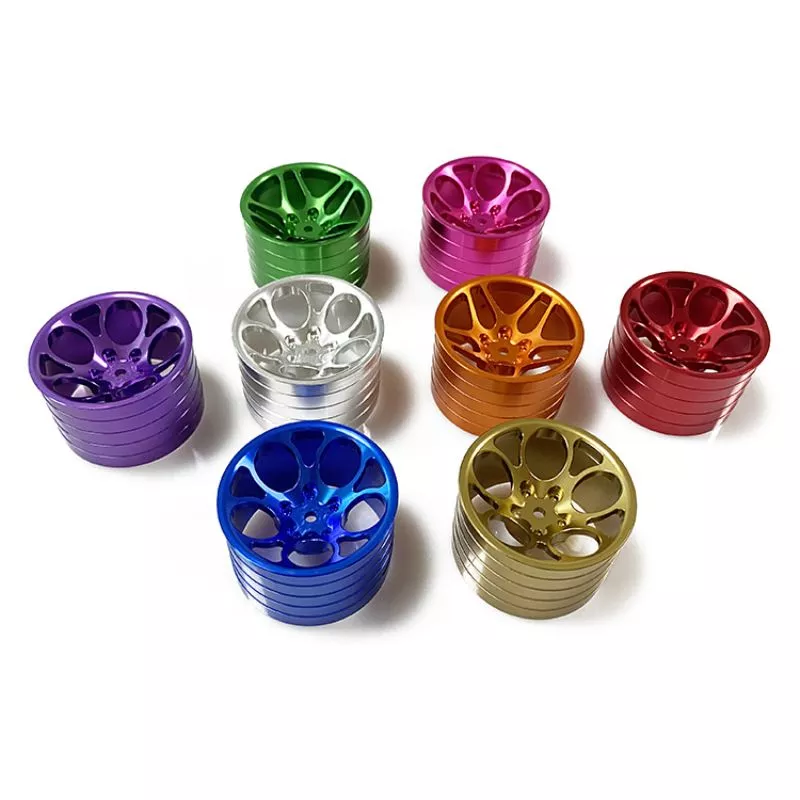
Anodizing is commonly used for aluminum parts because it improves surface hardness and corrosion resistance without adding a separate coating layer.
During anodizing, an oxide layer is created on the aluminum surface through an electrochemical process.
Benefits include:
- Improved corrosion resistance
- Better surface durability
- Consistent appearance
- Compatibility with color finishing
Anodized aluminum is frequently used in applications such as:
- Electronics housings
- Aerospace components
- Automation equipment
- Precision mechanical parts
For CNC machined aluminum components, anodizing is often selected because it maintains the dimensional stability of the part while improving surface performance.
Powder Coating for Industrial Fabricated Parts
Powder coating is widely used for fabricated steel and aluminum components, especially when a durable protective surface is required.
The process involves applying dry powder to the metal surface and curing it under heat to create a strong coating layer.
Common applications include:
- Machine frames
- Equipment enclosures
- Structural components
- Industrial cabinets
Powder coating provides good protection against environmental exposure and is available in different colors and textures.
However, coating thickness should be considered during design because it can affect final dimensions, especially for tightly fitted components.
Passivation and Protective Treatments for Stainless Steel
Stainless steel naturally forms a protective oxide layer, but manufacturing processes such as cutting, welding, and machining can introduce contaminants to the surface.
Passivation removes these contaminants and improves corrosion resistance.
It is commonly used for stainless steel parts in industries where cleanliness and corrosion performance are important, including:
- Medical equipment
- Food processing
- Laboratory equipment
Inspection and Quality Control Ensure Fabricated Parts Meet Design Requirements
Quality control is an essential part of the metal fabrication process because manufacturing involves multiple operations, and each operation can affect final part accuracy.
A component may have the correct overall shape but still fail if critical dimensions, hole positions, flatness, or surface requirements are not achieved.
Effective inspection begins during production planning rather than only after the part is completed.
Dimensional Inspection Throughout Production
Basic measurement tools such as calipers, micrometers, and height gauges are commonly used to verify dimensions during manufacturing.
These measurements help confirm:
- Material thickness
- Hole dimensions
- Part length
- Critical feature locations
For fabricated assemblies, inspection may occur at multiple stages, including after cutting, forming, welding, and machining.
Early inspection helps identify problems before additional processing increases production costs.
CMM Inspection for Precision Components
For components with complex geometries or tight tolerances, Coordinate Measuring Machines (CMM) provide more detailed measurement capability.
A CMM uses a probe system to measure the exact position of features and compare results with the original CAD design.
CMM inspection is commonly used for:
- CNC machined components
- Precision assemblies
- Complex fabricated parts
It is especially valuable when multiple features must maintain accurate relationships with each other.
For example, a mounting plate may require several holes to be positioned within a specific tolerance range. A CMM can verify whether the complete feature pattern meets the design requirement.
Material and Process Documentation
For many industrial customers, quality control also includes documentation such as:
- Material certificates
- Inspection reports
- Process records
- Surface treatment records
These documents provide traceability and help ensure that manufactured parts meet customer specifications.How CNC Machining and Metal Fabrication Work Together for Custom Parts
In many manufacturing projects, the question is not whether to choose fabrication or CNC machining. Instead, the most effective solution often combines both processes.
Metal fabrication is generally efficient for creating larger structures and basic geometries, while CNC machining provides the precision required for functional features.
For example, consider a custom machine base:
- Steel plates are cut to size.
- Components are formed and welded into the required structure.
- Weld distortion is controlled through proper fabrication techniques.
- CNC machining creates accurate mounting surfaces.
- Surface treatment protects the finished assembly.
- Final inspection confirms dimensional requirements.
Each process contributes a different advantage.
Fabrication provides:
- Efficient structural manufacturing
- Strong welded assemblies
- Flexible design options
CNC machining provides:
- Precision dimensions
- Accurate interfaces
- Repeatable production quality
This combined approach is common for custom industrial parts where both structural strength and dimensional accuracy are required.
How to Choose a Reliable Metal Fabrication and CNC Machining Supplier
Choosing a manufacturing partner involves more than comparing machining prices. The supplier’s process capability, engineering support, and quality control methods directly affect the final product.
A suitable supplier should be able to understand the complete manufacturing requirement rather than focusing on only one operation.
Manufacturing Capability and Process Integration
For complex parts, it is beneficial to work with a supplier that can provide multiple processes, including:
- Metal cutting
- Forming
- Welding
- CNC machining
- Surface finishing
- Inspection
Integrated manufacturing reduces communication issues and makes production management easier.
Engineering Support and Design Understanding
A capable supplier should be able to review drawings and identify potential manufacturing challenges.
Common areas where engineering feedback can help include:
- Material selection
- Machining accessibility
- Welding sequence
- Tolerance requirements
- Surface finishing considerations
Design adjustments made before production can often reduce manufacturing difficulty and improve cost efficiency.
Quality Control Capability
Manufacturers should have appropriate inspection equipment and quality procedures to verify parts meet specifications.
Important factors include:
- Measurement equipment
- Inspection processes
- Documentation capability
- Experience with required tolerances
For precision components, quality control should be part of the production process rather than only a final inspection step.
Experience With Different Materials
Different metals require different manufacturing approaches.
A supplier experienced with aluminum, stainless steel, carbon steel, and other alloys will better understand how material properties affect fabrication and machining.
This experience helps avoid common issues such as:
- Excessive machining time
- Surface defects
- Welding distortion
- Incorrect finishing selection
Conclusion
The metal fabrication process involves much more than cutting and welding. Producing reliable metal components requires careful coordination between material selection, fabrication methods, machining operations, finishing processes, and quality inspection.
For many industrial applications, CNC machining plays an important role by adding the precision required for functional features that cannot be achieved through fabrication alone.
A manufacturing partner with both metal fabrication and CNC machining capabilities can help simplify production, improve consistency, and support projects from prototype development through final production.
By understanding how each manufacturing process contributes to the final part, engineers and purchasing teams can make better decisions when selecting materials, designing components, and choosing suppliers.