
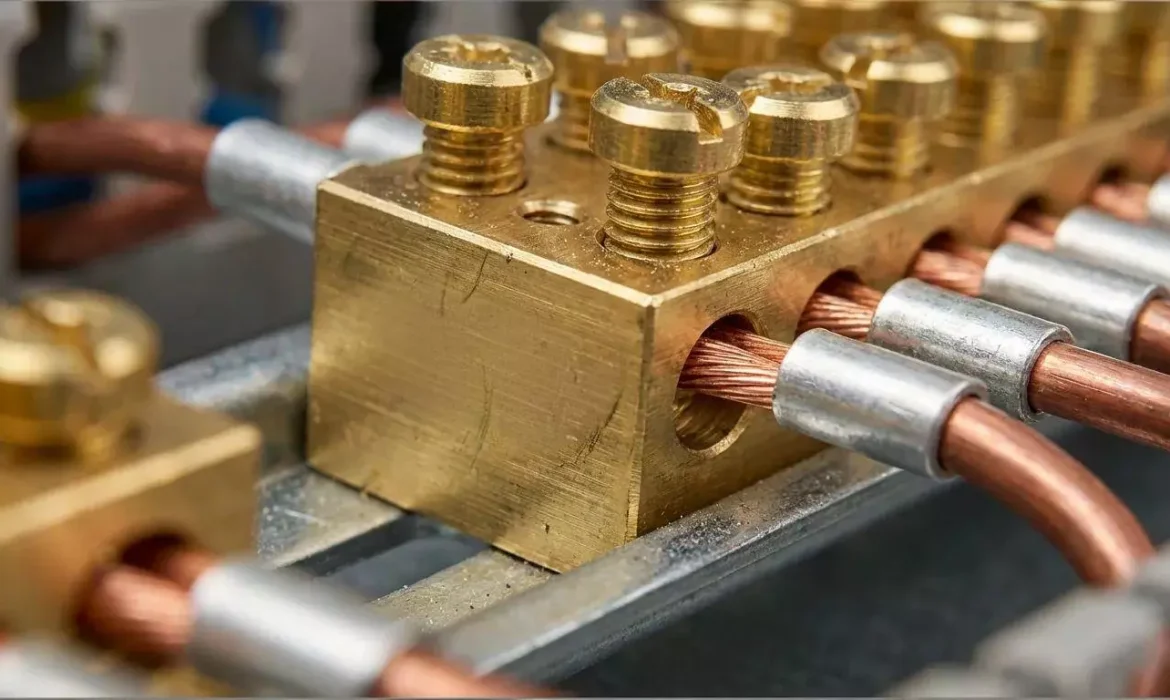
Electrochemical Fundamentals in Conductive Connectors
Understanding the electrochemical fundamentals is crucial when selecting materials like brass and bronze for conductive connectors. These factors influence performance, longevity, and reliability, especially in challenging environments.
Electrical Conductivity and IACS %
Electrical conductivity is a key property in conductive connectors. It’s often measured in percent of International Annealed Copper Standard (IACS %), where pure copper is 100%.
- Higher IACS % means better electrical performance.
- Brass typically has ~28-30% IACS, depending on alloy composition.
- Bronze alloys usually range from 20-30% IACS.
- Implication: Lower conductivity can increase contact resistance, leading to energy loss and heat buildup.
Corrosion Potential, Galvanic Series, and Stability
Materials’ electrochemical stability depends on their position in the galvanic series:
- Brass (copper-zinc alloy) is more prone to dezincification and oxidation.
- Bronze, especially phosphor bronze, offers better corrosion resistance due to its passivation capabilities.
- Electrochemical stability impacts long-term performance; more stable alloys resist corrosion even in humid, salty, or hot environments.
Contact Resistance, Oxidation, and Fretting Corrosion
Over time, surface oxidation can increase contact resistance:
- Oxidation layers hinder electrical flow.
- Fretting corrosion, triggered by vibration or repeated mating cycles, can cause surface degradation.
- Both phenomena are more problematic in humid, saline, or high-vibration settings—and directly impact connector reliability.
- Material choice matters; bronze’s better corrosion resistance often results in more stable contact resistance over time.
Why Electrochemical Behavior Matters in Harsh Environments
In environments with high humidity, salty air (marine conditions), heat, or sustained vibration:
- Corrosion accelerates, degrading connection quality.
- Electrochemical stability determines how long connectors maintain low contact resistance.
- Material selection influences the lifespan and safety of electrical systems under these conditions.
In short, understanding the electrochemical behavior of brass versus bronze helps engineers predict long-term performance, especially in demanding applications.
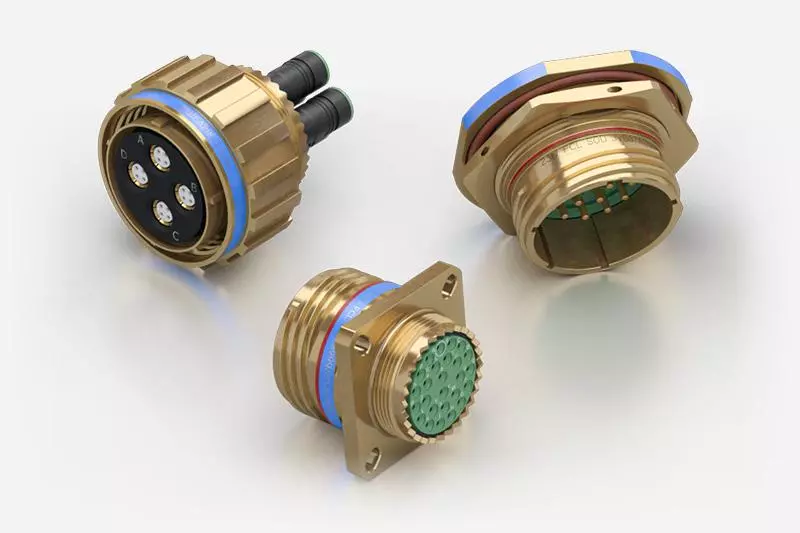
Brass Breakdown
Common brass alloys used in conductive connectors
Brass alloys are a popular choice for conductive connectors thanks to their good electrical conductivity and ease of machining. The most common alloys include CW617N (free-cutting brass), C26000 (high copper), and C36000 (free-machining brass). These alloys combine different ratios of copper and zinc to meet specific mechanical and electrical requirements.
Copper-zinc composition and how it affects performance
Brass is mainly a copper-zinc alloy, typically containing 60-70% copper and 30-40% zinc. The zinc content governs the alloy’s strength, ductility, and corrosion resistance. Higher zinc levels often lead to increased strength but can make the alloy more prone to issues like dezincification, especially in saline or humid environments.
Electrical conductivity, strength, and machinability
Compared to other metals, brass has good electrical conductivity—around 28-30% IACS—making it suitable for electrical connectors. It’s also favored for its strength and excellent machinability, which allows for precise CNC machining of complex connector parts. If you’re looking for high-performance connectors, the balance between conductivity and mechanical workability makes brass a go-to choice.
Corrosion behavior, dezincification risk, and oxidation concerns
While brass offers decent corrosion resistance, certain alloys are vulnerable to dezincification—a selective zinc leaching process that weakens the material over time. This problem is especially common in chloride-rich environments like seawater. Brass can also oxidize, forming a surface patina that impacts contact resistance, so protective coatings or passivation are sometimes needed. For harsh environments, choosing alloys with lower dezincification risk or exploring alternative materials like bronze might be better options. You can learn more about corrosion-resistant engineering materials at CNC machining services.
Bronze Breakdown
Common bronze alloys used in conductive connectors
In connector applications, the most common bronze alloys are phosphor bronze and tin bronze. Phosphor bronze, which blends copper, tin, and a small amount of phosphorus, is popular for its excellent mechanical properties and wear resistance. Tin bronze, primarily copper with tin, offers good corrosion resistance and electrical conductivity, making it suitable for electrical contacts. These alloys are often CNC machined into precise shapes to ensure reliable connections, especially in demanding environments like marine or industrial settings.
Electrical conductivity, wear resistance, and mechanical strength
Bronze alloys generally have lower electrical conductivity than copper but are still suitable for many conductive connector roles. Phosphor bronze, for instance, has about 15-20% IACS (International Annealed Copper Standard), providing a solid balance between conductivity and durability. Its high wear resistance and mechanical strength make it ideal for connectors in high-vibration or high-use environments, where durable, stable contact is crucial. You can explore custom CNC machining options for these alloys at MS Machining, which helps improve connection reliability.
Corrosion resistance, passivation, and long-term stability
Bronze’s natural corrosion resistance stems from the formation of a protective oxide layer, especially in phosphor bronze, which passivates under many conditions. This makes bronze an excellent choice for long-term stable contacts, even in humid or slightly salty environments. The passivation process helps prevent surface degradation like oxidation or tarnishing that could increase contact resistance over time. For applications demanding high corrosion resistance, marine-grade bronze alloys are often preferred to ensure long-lasting, reliable connectivity.
Where bronze works best in connector applications
Bronze excels in environments where durability, corrosion resistance, and long-term stability are needed. It works particularly well in marine connectors, outdoor electrical connections, and high-vibration systems where maintaining low contact resistance over time is critical. Because of its excellent wear resistance and passivation qualities, bronze connectors tend to perform better in conditions involving humidity, salt, and temperature fluctuations. For custom connector solutions that demand tight tolerances and high reliability, CNC bronze machining plays a key role in ensuring performance and longevity.
Brass vs. Bronze Electrochemical Performance
When comparing brass and bronze for conductive connectors, their electrochemical performance can vary quite a bit depending on the environment. Conductivity is often a key factor—brass typically has higher electrical conductivity, often around 28-30% IACS, making it a good choice where low contact resistance is essential. Bronze, especially phosphor bronze, usually offers slightly lower conductivity, but it can provide advantages in wear and corrosion resistance.
In terms of corrosion resistance across different conditions—dry, humid, or saline—the performance gap becomes more evident. Brass, being copper-zinc alloy, is prone to dezincification, especially in salty environments, which can weaken its structure and compromise conductivity over time. Bronze, with its copper-tin or copper-phosphorus composition, generally resists corrosion better, especially in marine or outdoor settings. It tends to form a stable oxide layer that helps prevent surface degradation and oxidation, thus supporting long-term reliability.
Contact resistance stability is critical for maintaining good electrical performance over the lifespan of a connector. Brass’s higher tendency to oxidize or develop surface tarnish can cause contact resistance to increase, particularly under high-vibration or humid conditions. Bronze alloys, especially phosphor bronze, tend to maintain more stable contact resistance because their surface passivation resists oxidation and surface wear effectively.
Galvanic corrosion risk in mixed-metal assemblies is a common concern. Brass and bronze are close relatives in the copper alloy family, but mixing them with other metals in a device can lead to galvanic effects. Brass tends to be more susceptible if paired with more noble metals, while bronze’s more stable oxide layers help mitigate some galvanic issues.
Finally, oxidation and surface degradation are ongoing challenges. Brass’s tendency to tarnish and Dezincify can lead to surface issues and reduce long-term reliability in aggressive environments. Bronze, especially those with phosphorus additions, generally outperforms brass in resisting oxidation and surface degradation, making it preferable for connectors exposed to marine, automotive, or industrial conditions.
In , while brass offers better initial conductivity and ease of machining, bronze provides a more durable and corrosion-resistant profile for long-term connector reliability. The performance gap in real-world use can be significant, especially in harsh environments, impacting everything from electrical stability to mechanical integrity.
Test Data and Real-World Benchmarks
Salt spray tests are a common way to evaluate how well brass and bronze resist corrosion in harsh environments. These tests expose materials to a salty mist to simulate conditions like marine or industrial settings. Typically, bronze alloys tend to show better resistance to corrosion and oxidation, especially after long-term exposure. For example, marine-grade bronzes often outperform brass in salt spray results, indicating higher electrochemical stability in salty conditions.
Similarly, industry standards like ASTM benchmarks provide a solid comparison point. They help us understand how each alloy performs under controlled, aggressive corrosion challenges. In most scenarios, bronze alloys such as phosphor bronze demonstrate longer-lasting performance in outdoor, marine, and industrial environments compared to brass. This is because bronze’s passivation layers tend to be more resistant to oxidation and dezincification, which can compromise brass connectors over time.
In practical terms, failure patterns caused by corrosion often show up as increased contact resistance, surface degradation, or even connector breakdowns. When connectors are used in humid, salty, or high-vibration settings—like in marine applications or automotive assemblies—these issues become more pronounced. The difference between brass and bronze in such environments can indeed be significant, affecting reliability and lifespan. For example, in outdoor or marine settings, bronze connectors generally maintain their electrical performance longer and are less prone to galvanic corrosion compared to brass.
Overall, the real-world benchmarks indicate that the electrochemical performance gap between brass and bronze in conductive connectors is more than just theoretical—it clearly shows up in longevity and failure modes. Choosing the right alloy depends on the environment and application, but test data strongly suggests that bronze provides superior corrosion resistance and durability where long-term stability is key.
Applications and Material Selection for Conductive Connectors
Choosing between brass and bronze for electrical connectors depends on the specific application and environmental factors. Here’s how each material fits into different use cases:
Brass connectors are often chosen for indoor and less aggressive environments due to their good electrical conductivity, ease of manufacturing, and cost-effectiveness. They work well in general electrical systems, control panels, and appliances where corrosion isn’t a major concern.
Bronze connectors shine in applications demanding superior corrosion resistance and durability. For marine systems, bronze’s passivation and long-term stability make it ideal for salt-heavy environments. Similarly, they’re a good fit for outdoor electrical setups, especially where exposure to moisture or salt spray could cause rapid degradation of other alloys.
In the automotive and EV fields, connector materials need to handle vibration, temperature swings, and long-term reliability. Both brass and bronze can be used, but bronze’s higher strength and corrosion resistance often give it an edge in these demanding settings. You might also consider specific alloys like phosphor bronze for improved wear resistance.
High-vibration and high-reliability connectors benefit from bronze’s tighter surface stability and tougher mechanical properties, reducing contact resistance fluctuations over time. When selecting the right alloy, it’s crucial to match the material’s electrochemical behavior with the operational environment—think about things like humidity, salinity, and vibration levels.
Knowing how each alloy performs under real-world conditions can help avoid failures and ensure long-lasting connections. Whether you’re designing connectors for harsh marine environments or precision electronics, matching the alloy to the job is key to achieving optimal performance and durability.
Beyond Electrochemistry
When choosing between brass and bronze for conductive connectors, considering factors beyond electrochemical performance is crucial. Cost is a significant factor—brass is generally cheaper, making it popular for mass production and less critical applications. However, bronze often provides better durability and corrosion resistance, especially in demanding environments.
Machinability and CNC manufacturing are also key advantages. Brass is easier and faster to machine, which can reduce production costs and lead times, especially for intricate or high-volume parts. You can find precision CNC brass machining options here, which demonstrates how well brass responds to high-accuracy processes. Bronze, though a bit more challenging to machine, offers benefits like improved wear resistance and long-term stability, making it ideal for high-reliability connectors.
Surface finish and tolerance are essential for ensuring optimal electrical contact and longevity. Brass typically yields a smoother surface finish and tighter tolerances more easily than bronze, which can impact the overall performance and reliability of connectors. Manufacturing impact on these factors means that selecting the right alloy can directly influence the durability and effectiveness of your electrical connection over time.
For those seeking higher performance, some copper alloys, such as specific bronze or specialty copper-nickel compositions, can provide enhanced electrical and mechanical properties. These alternatives are often used in specialized applications involving extreme environments or where long-term stability is critical.
Regulatory and compliance considerations, like lead-free standards and environmental regulations, also influence alloy choices. Brass and bronze alloys must meet specific industry standards, especially for consumer-facing or marine connectors. It’s essential to verify material compliance to avoid issues during product approvals and in-service use.
In short, understanding the cost, machinability, surface finish, alternative alloys, and regulatory factors helps in making an informed decision—whether brass or bronze is the better fit depends on your specific application’s demands.
How to Choose the Right Connector Material
Picking the right connector material depends on a balance of performance, cost, and lifespan. Understanding these factors helps ensure you get the best value and reliability for your specific application.
When Brass Is the Better Fit
- Cost-effective and easy to machine for quick production.
- Suitable for indoor, low-corrosion environments.
- Good electrical conductivity (around 28-30% IACS) for general use.
- Ideal when low contact resistance and moderate corrosion resistance** are enough.
- Common in automotive, consumer electronics, and high-vibration applications.
When Bronze Is the Better Fit
- Offers superior corrosion resistance, especially in harsh or marine environments.
- Better for outdoor, marine, or salt-heavy systems.
- Passivates naturally, providing long-term stability.
- Slightly higher cost but better long-term durability.
- Best for marine connectors, high-reliability industrial systems, and high-vibration setups.
Tradeoffs for Engineers, Buyers, and Designers
| Factor | Brass | Bronze |
|---|---|---|
| Cost | Lower | Higher |
| Machinability | Excellent | Good |
| Corrosion Resistance | Moderate | Superior |
| Conductivity | Good | Slightly lower than brass |
| Long-Term Stability | Moderate | Very good |
Practical Selection Checklist
- Assess environment:
- Humid, salty, or marine? Choose bronze.
- Indoor, dry? Brass may suffice.
- Consider electrical demands:
- Does the connector need high conductivity? Brass is reliable.
- Evaluate conditions for corrosion resistance:
- Higher corrosion? Go bronze.
- Budget constraints:
- Brass is more budget-friendly; bronze offers durability.
- Vibration and mechanical stress:
- Bronze’s wear resistance helps in high-vibration setups.
By considering these points, you can select the right alloy that balances performance, longevity, and cost. If you need custom parts or quick prototyping, CNC machining can help you fine-tune your connector for optimal performance.
Custom CNC Machining for Conductive Connectors
Precision CNC machining plays a crucial role in producing high-quality brass and bronze connectors used in electronics and electrical systems. When machining brass connectors, for example, CNC turning ensures tight tolerances and smooth finishes, which directly impact contact resistance and overall reliability. Similarly, precision CNC bronze machining creates durable, wear-resistant parts that hold up well in demanding environments.
Prototyping and production of custom electrical contacts rely heavily on CNC machining to meet specific design and performance requirements. CNC machining brass allows for rapid iteration, reducing lead times and costs, especially when developing specialized connectors for industries like automotive, marine, or industrial automation.
The quality of machining has a direct effect on contact resistance. Poor surface finishes and dimensional inconsistencies can lead to higher contact resistance, resulting in voltage drops and heat buildup. Ensuring high-quality CNC finishes minimizes surface oxidation and surface degradation, which are common failure points over time.
Choosing custom specs through CNC machining means you can tailor connector surfaces and dimensions to optimize electrochemical performance, especially in corrosive or high-vibration settings. Accurate machining not only improves performance but also enhances long-term stability and reduces maintenance needs. This level of customization is vital when selecting between brass and bronze for specific applications, ensuring the connectors deliver reliable, long-lasting electrical connections.