
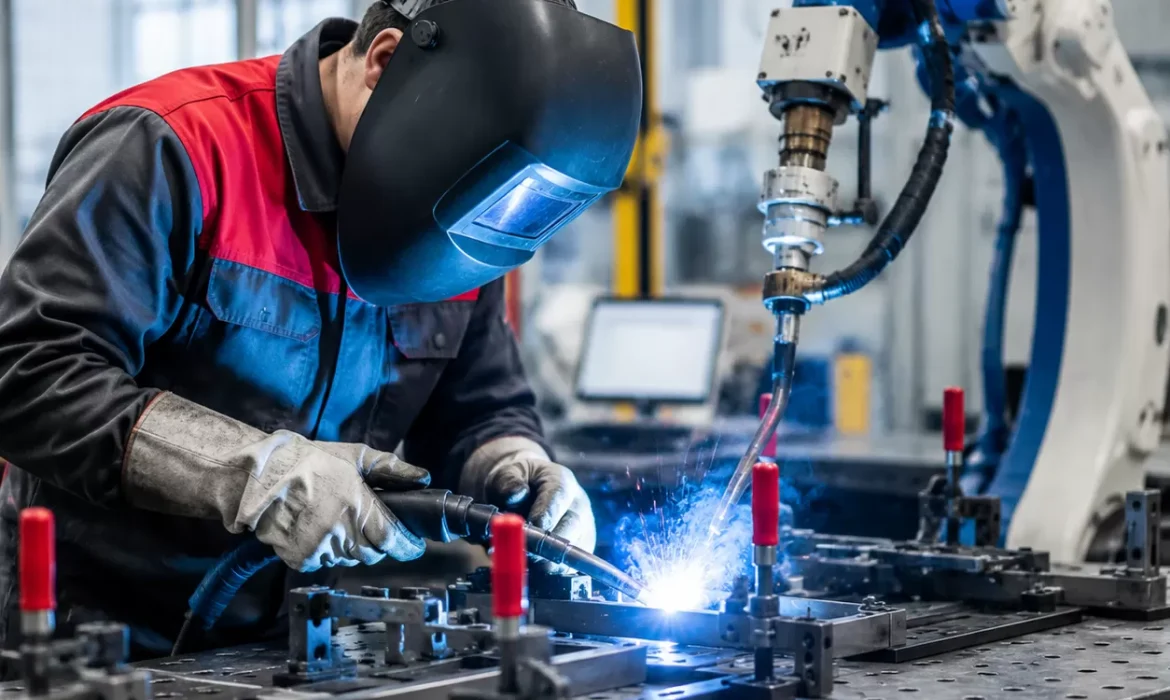
Looking to achieve high-precision results in your manufacturing processes? The choice of welding techniques can make or break the quality, durability, and accuracy of your components. Whether you’re working in aerospace, medical devices, or automotive, selecting the right welding process—from TIG to laser welding—is crucial for maintaining tight tolerance levels and ensuring reliable joints. In this guide, you’ll discover the most effective welding processes used in precision manufacturing, how they fit into your workflow, and what factors to consider for optimal results. Ready to unlock the secrets of high-accuracy welding? Keep reading.
Understanding Precision Manufacturing and Welding Processes
When it comes to high-precision manufacturing, accuracy isn’t just a goal — it’s a necessity. Industries like aerospace, medical devices, electronics, and automotive rely on meticulous craftsmanship to ensure every part meets strict tolerances. Precision manufacturing involves creating components with tight specifications, often at micro or even nano scales, where even small deviations can cause failures or safety issues.
Welding plays a crucial role here. It’s not just about joining parts; it’s about doing so without compromising the precision or integrity of the assembly. In high-precision environments, traditional welding methods often fall short due to challenges like heat distortion, inconsistent weld quality, or difficulty maintaining tight tolerances.
Key Welding Processes Used in Precision Manufacturing
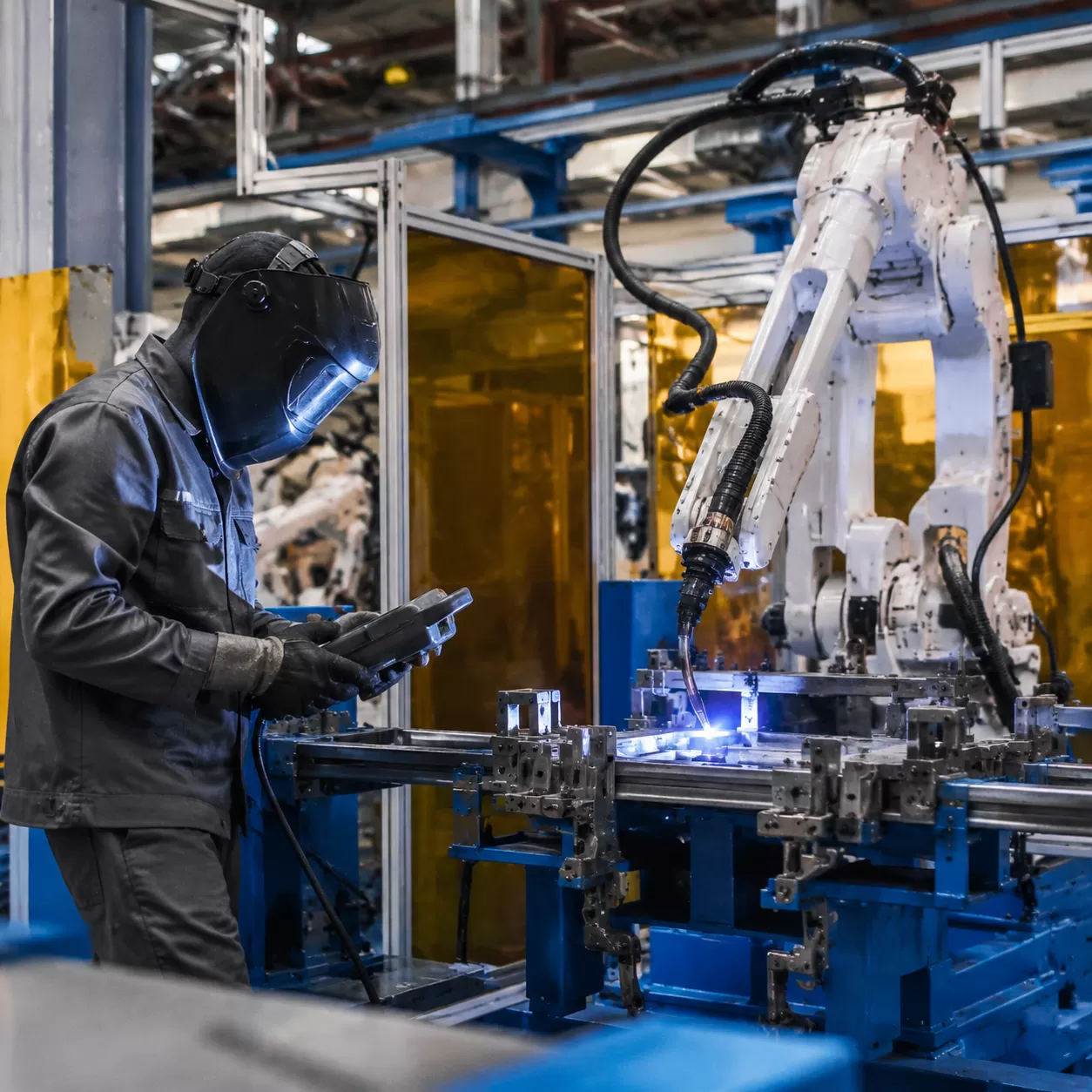
TIG Welding in Precision Manufacturing
Tungsten Inert Gas (TIG) welding is a popular high-precision welding technique, especially for small, detailed parts. It uses a non-consumable tungsten electrode to produce clean, accurate welds. Because of its control and precision, TIG welding is ideal for delicate components made from materials like stainless steel, aluminum, and titanium.
Best materials for TIG precision welding include:
- Stainless steel
- Aluminum
- Titanium
- High-alloy steels
Pros:
- Excellent control for tight tolerances
- Low heat input reduces distortion
- Produces high-quality, clean welds
Cons:
- Slower process compared to other methods
- Requires skilled operators
- Less suitable for high-volume production
Laser Welding for High-Accuracy Components
Laser welding uses a focused laser beam to join small parts with high precision. It delivers minimal heat-affected zones, which helps in maintaining tight tolerances and reducing distortion. This process is perfect for micro-joining tiny components, such as those in medical devices or electronics.
Typical applications include:
- Medical implants
- Microelectronics
- Precision sensor assemblies
Benefits:
- Extremely precise with low distortion
- Suitable for small, complex geometries
- Fast and automated for high-volume runs
Limitations:
- High initial equipment cost
- Material compatibility issues with reflective metals like aluminum and copper
Electron Beam Welding in Precision Manufacturing
Electron beam welding (EBW) works in a vacuum environment, using a focused electron beam to melt and join metals. This process provides deep, narrow welds with minimal heat input, making it ideal for aerospace and high-precision parts.
When to use EBW:
- For joining thick, high-value materials
- In aerospace and defense applications
- When minimal distortion is critical
Trade-offs:
- High setup and equipment costs
- Requires vacuum chambers and specialized skills
Micro Resistance Welding for Tiny Precision Parts
Micro resistance welding involves passing electrical current through tiny contact points to create welds. It’s perfect for small electronic components, such as connectors and battery tabs.
Strengths:
- Fast and efficient for small parts
- Minimal heat-affected zones
- Suitable for automation
Limits:
- Limited to thin materials
- Not ideal for large or thick components
Ultrasonic Welding in Precision Manufacturing
Ultrasonic welding uses high-frequency vibrations to join delicate or non-metal parts, like plastics or thin metals. It’s widely used in medical devices and electronics where heat-sensitive materials are involved.
Where it makes sense:
- Medical implants and surgical instruments
- Electronics assembly
- Small, delicate components
Constraints:
- Not suitable for large or high-strength welds
- Limited to certain materials and geometries
This overview highlights the key welding processes used in precision manufacturing, each with its strengths and ideal applications. Choosing the right process depends on material, part size, tolerance needs, and production volume. For more on how these techniques integrate with CNC machining, check out precision CNC machining.
Comparing Welding Processes for Precision Manufacturing
When selecting the right welding process for precision manufacturing, it’s important to consider the specific application, material, tolerance requirements, and production scale. Different welding methods excel in different areas, so understanding their strengths and limitations helps ensure the best fit for your project.
Best Welding Processes for Micro and Small Components
For tiny or highly detailed parts, micro resistance welding and ultrasonic welding are often the top choices. Micro resistance welding is ideal for joining small metal components, like electronic contacts or tiny medical devices, thanks to its precision and minimal heat input. Ultrasonic welding is perfect for delicate plastics or thin metal sheets, providing strong bonds without distortion. These high-precision welding techniques help meet tight tolerances while avoiding heat-related issues.
Most Efficient Welding Methods for Medium and Large Precision Parts
When working with larger, medium-sized parts, laser welding and electron beam welding stand out. Laser welding offers high speed and accuracy, making it suitable for manufacturing aerospace components or automotive parts where tight tolerances are critical. Electron beam welding, which operates in a vacuum, provides deep, precise welds with minimal distortion—great for high-value, complex assemblies. Both methods deliver excellent results for medium to large parts with demanding precision needs.
Welding Process Comparison by Material Type
Different materials demand specific welding techniques:
- Aluminum: TIG welding is widely used for aluminum due to its clean, precise welds and good control over heat input. It’s suitable for aerospace and automotive aluminum parts. Learn more about TIG welding.
- Stainless Steel and High-Alloy Steels: Tungsten inert gas (TIG) welding and laser welding are common choices. TIG provides excellent control and weld quality, especially for thin stainless steel sheets. Laser welding offers fast, low-distortion joins for thicker or complex stainless steel parts.
- Titanium and Specialty Alloys: Electron beam welding and laser welding are preferred for titanium and other high-performance alloys. These methods deliver deep, clean welds with minimal heat-affected zones, maintaining the material’s strength.
Welding Process Comparison by Tolerance and Distortion
Achieving tight tolerances and low distortion is a key factor in precision manufacturing. Laser welding and electron beam welding lead the pack here, offering the tightest tolerances and minimal heat-affected zones. These processes produce clean, accurate welds with little post-processing needed. In contrast, traditional arc welding may introduce more heat and distortion, making it less ideal for high-precision applications.
Welding Process Comparison by Cost and Scalability
Cost efficiency varies significantly between manual, semi-automatic, and automated welding options. Manual welding is flexible but less scalable and consistent. Semi-automatic systems improve repeatability, while fully automated robotic welding offers the highest throughput and consistency, especially for high-volume production. Initial equipment costs for laser or electron beam welding are higher, but their speed and precision can reduce overall costs in the long run, especially for complex or high-value parts.
Choosing the right welding process depends on balancing application needs, material compatibility, tolerance requirements, and production volume. This ensures your manufacturing process is both precise and cost-effective.
Key Factors When Choosing Welding Processes in Precision Manufacturing
Selecting the right welding process for precision manufacturing depends on several critical factors. First, material compatibility and weld quality are top priorities. Different base materials, like stainless steel, aluminum, or titanium, require specific welding techniques to ensure strong, reliable joints. Using appropriate filler materials and considering how coatings, platings, and surface finishes impact welding are also essential to prevent issues like corrosion or poor adhesion.
Part design, size, and geometry play a big role in process choice. For example, tight clearances or complex geometries might favor laser or electron beam welding, which can access hard-to-reach areas with high precision. When it comes to micro-welding versus conventional welding setups, the scale of the parts and the level of detail needed influence the decision. Micro resistance welding is ideal for tiny electronic components, while traditional methods suit larger, high-precision parts.
Production volume and cycle time are also key. Prototype runs may need flexible, low-cost options, whereas full-scale production demands faster, automated solutions. Balancing precision with throughput is crucial to meet deadlines without sacrificing quality.
Budget constraints, equipment availability, and facility infrastructure influence process choice too. Companies must weigh upfront capital expenses against outsourcing welding work to specialized shops. Shop layout, safety protocols, and the need for clean environments are additional considerations.
Operator skill level, training, and automation potential are vital. Some processes, like robotic welding, can reduce human error and increase consistency, especially for small, complex parts. Knowing when to rely on automated or robotic systems can boost efficiency and precision in high-accuracy manufacturing environments.
In short, choosing the right welding process involves evaluating material needs, part design, production goals, and budget—ensuring that the selected method aligns with the demands of precision manufacturing. For more on how CNC machining integrates with welding, visit metal CNC machines.
Integrating Welding Processes with CNC Machining in Precision Manufacturing
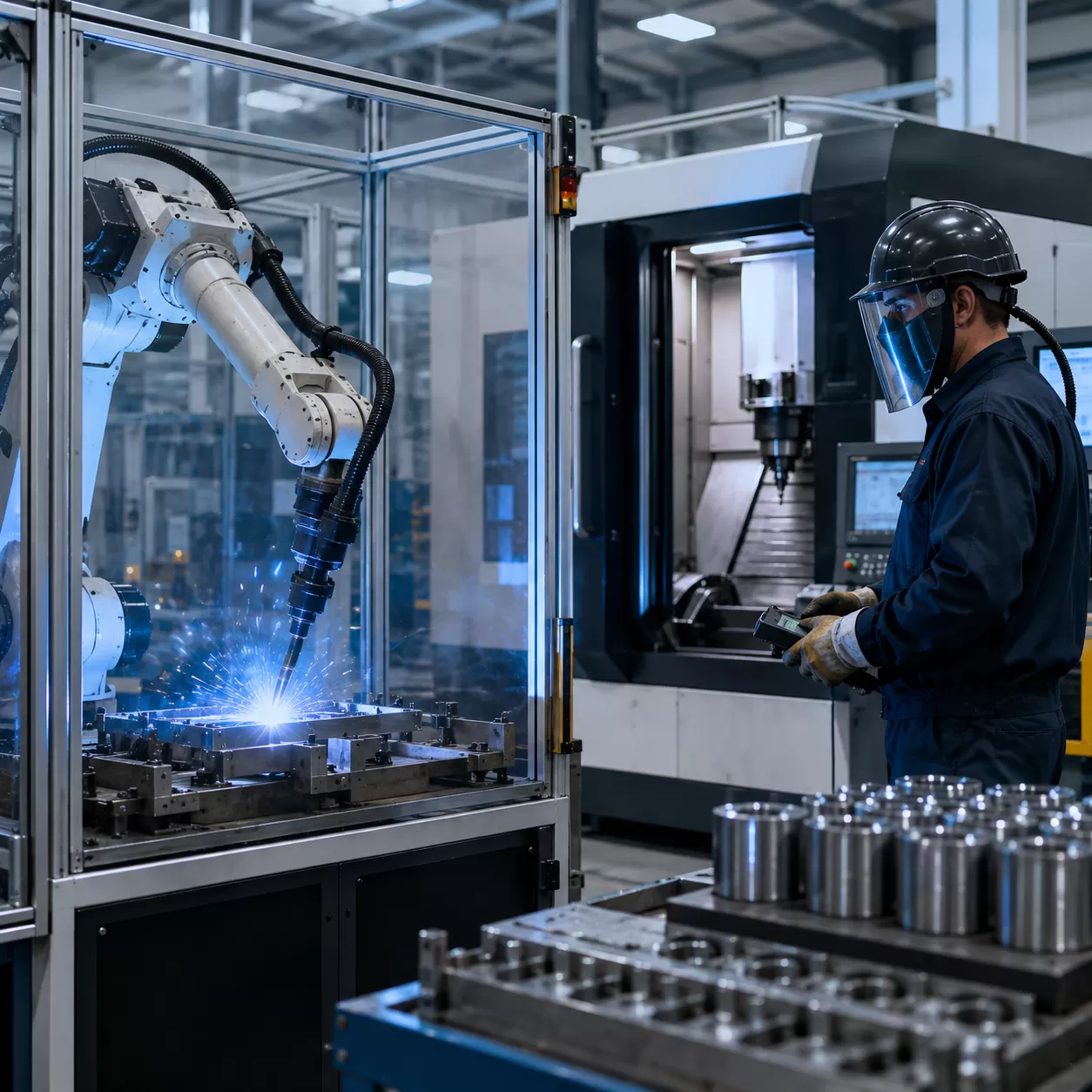
In precision manufacturing, combining welding processes with CNC machining is essential for creating high-quality, tight-tolerance components. The typical workflow starts with CNC machining to shape parts accurately, followed by precision welding to join or assemble components. After welding, additional machining and finishing steps refine the assembly, ensuring it meets exact specifications.
Sequence and fixturing are critical for maintaining accuracy throughout this process. Proper sequencing ensures welding doesn’t distort parts, while effective fixturing keeps components aligned during welding. Designing parts for both CNC machining and precision welding involves considering joint locations, accessibility, and material flow. This “design for manufacturability” approach helps prevent issues like distortion or misalignment.
Tolerancing and datum strategies are also key. They define reference points to control dimensional accuracy, especially when welding introduces heat that can cause distortion. Using specialized welding fixtures for small and complex parts helps secure components firmly, reducing movement and maintaining tight tolerances.
Controlling distortion after welding is vital. Techniques such as preheating, controlled cooling, and the use of precision fixtures help keep parts in alignment. Post-weld machining and finishing steps further refine the assembly, removing any excess material or surface imperfections caused by welding.
Finally, inspection and quality checks—such as visual inspection, measurement, and non-destructive testing—ensure that the finished product meets all standards for precision welding. This integrated approach is what makes high-precision manufacturing reliable and scalable, especially when working with delicate or complex assemblies. For more on designing parts suitable for CNC machining and welding, check out our precision CNC machining and welding integration.
Quality Control in Precision Welding Processes
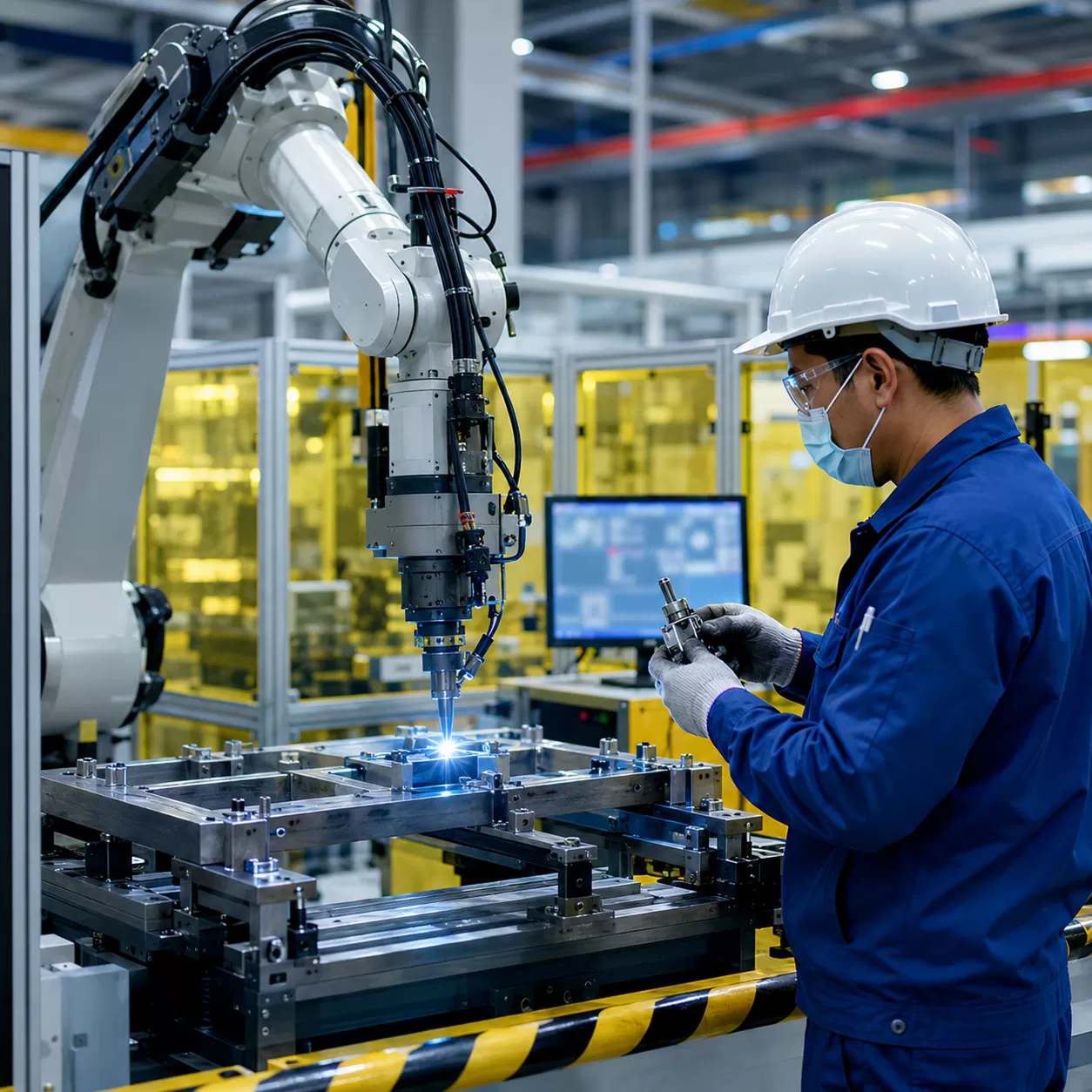
Maintaining high-quality standards is essential for precision welding in manufacturing. This ensures that every weld meets strict specifications, especially in industries like aerospace, medical devices, and electronics, where even tiny defects can cause major issues. Common welding standards and certifications, such as AWS (American Welding Society) and ISO standards, help guarantee that welds are consistent and reliable across different projects and suppliers. Documentation and traceability are also critical—tracking each weld’s parameters and process history makes it easier to identify and fix issues if they arise later.
Inspection methods are key to verifying weld quality. For small, high-precision welds, visual inspection combined with precise measurement tools helps detect surface defects or misalignments. For critical parts, non-destructive testing (NDT) options like ultrasonic, X-ray, or dye penetrant testing are often used to confirm weld integrity without damaging the part. Process control and repeatability are vital, so weld parameter tracking—such as heat input, current, voltage, and travel speed—is regularly validated. Techniques like using sample runs, test coupons, and first-article inspections help ensure that welding processes stay consistent before full-scale production. This rigorous approach to quality control keeps precision welding reliable and repeatable, reducing rework and ensuring customer satisfaction.
Innovations and Future Trends in Precision Welding
The future of precision welding is all about smarter, faster, and more sustainable solutions. Advanced welding technologies are pushing the boundaries of what’s possible in high-precision manufacturing. For example, new developments in laser and hybrid welding are enabling tighter tolerances and cleaner welds on complex parts, making them ideal for industries like aerospace and medical devices.
Electron beam and micro-welding systems are continually improving, offering even greater accuracy for tiny components. These innovations help manufacturers join small, delicate parts with minimal heat-affected zones, reducing distortion and ensuring high-quality results.
Automation plays a huge role too. Robotic welding and cobots are increasingly used for small and complex components, especially in low-volume production. They bring consistency and speed while lowering operator fatigue. Many shops are adopting flexible welding cells that can switch between different tasks seamlessly, boosting efficiency.
Digitalization and AI are transforming precision welding. Real-time monitoring and closed-loop control of welds help detect issues immediately, reducing rework and scrap. AI-assisted parameter optimization and defect detection are making welding processes more reliable and repeatable, even on the most challenging parts.
Sustainability is also gaining importance. Energy-efficient welding methods and equipment are reducing the environmental impact and operational costs. By minimizing waste and rework, manufacturers can produce high-precision assemblies more sustainably, aligning with modern industry standards for greener manufacturing.
Overall, these innovations are shaping a future where precision welding is faster, more accurate, and environmentally friendly—meeting the demands of tomorrow’s high-tech industries.
Real-World Applications of Welding Processes in Precision Manufacturing
Welding plays a crucial role across various industries where precision and reliability are non-negotiable. In aerospace, for example, welding processes used in precision manufacturing are essential for joining thin-wall structures and critical assemblies. Techniques like laser welding and electron beam welding are often used here because they deliver high accuracy with minimal distortion, ensuring parts meet strict tolerances. Managing heat input is vital to prevent fatigue and maintain structural integrity in aerospace components.
In the medical device field, micro welding is key for manufacturing implants and surgical instruments. These tiny welds require material and cleanliness standards that ensure safety and performance. Advanced welding techniques like ultrasonic welding are often employed to join delicate, non-metal parts without compromising their integrity.
When it comes to electronics and battery manufacturing, welding processes such as laser welding and micro resistance welding are widely used for connecting tiny components like sensors, connectors, and battery tabs. These methods provide reliable, high-conductivity joints with tight tolerances, which are critical for device performance and longevity.
In the automotive industry, precision welding is vital for assembling body-in-white structures, powertrain components, and electric vehicle (EV) parts. The challenge here is to balance speed, cost, and precision, especially when welding high-strength materials like aluminum, stainless steel, or titanium. Techniques like TIG welding and laser welding are often chosen for their ability to produce high-quality, low-distortion welds that meet strict safety and durability standards.
Overall, these real-world applications highlight how selecting the right welding process—based on material, part geometry, and application requirements—is key to achieving the high standards demanded in precision manufacturing.