Stainless steel investment casting produces complex, corrosion-resistant parts that come out close to final shape. Compared with machining from bar stock, you usually cut material waste and cycle time. Compared with sand casting, you get a cleaner surface and tighter as-cast accuracy.
This guide walks through the full process used for 304, 316, 17-4PH and related grades: wax tooling, ceramic shell building, dewaxing, pouring, heat treatment, finishing, and inspection. You will also see typical tolerances, design limits, and when this process beats CNC, sand casting, or forging.
If you already have a drawing, skip to the quote notes in this article and send the file for a castability review. If you are still choosing a process, start with the overview below.
What Is Stainless Steel Investment Casting?
Stainless steel investment casting is a lost-wax, ceramic-shell process for making complex metal parts that are already close to the finished shape. We inject a wax pattern, build a ceramic shell around it, melt the wax out, and pour molten stainless steel into that cavity. After the shell comes off, the part is a near-net stainless casting. Sealing faces, threads, and tight datums are usually finished by CNC.
A Short Historical Background
Investment casting started as a jewelry and art method. What made it useful for industrial stainless parts was:
- Reliable ceramic shell systems
- Better control of 304, 316, 17-4PH and duplex alloys
- Tighter inspection demanded by aerospace, medical, and industrial buyers
It is now a standard route for precision stainless parts that would be slow or wasteful to machine from solid.
Basic Lost Wax Principle for Stainless Steel Parts
The flow is consistent:
- Inject wax into a metal die to make the pattern.
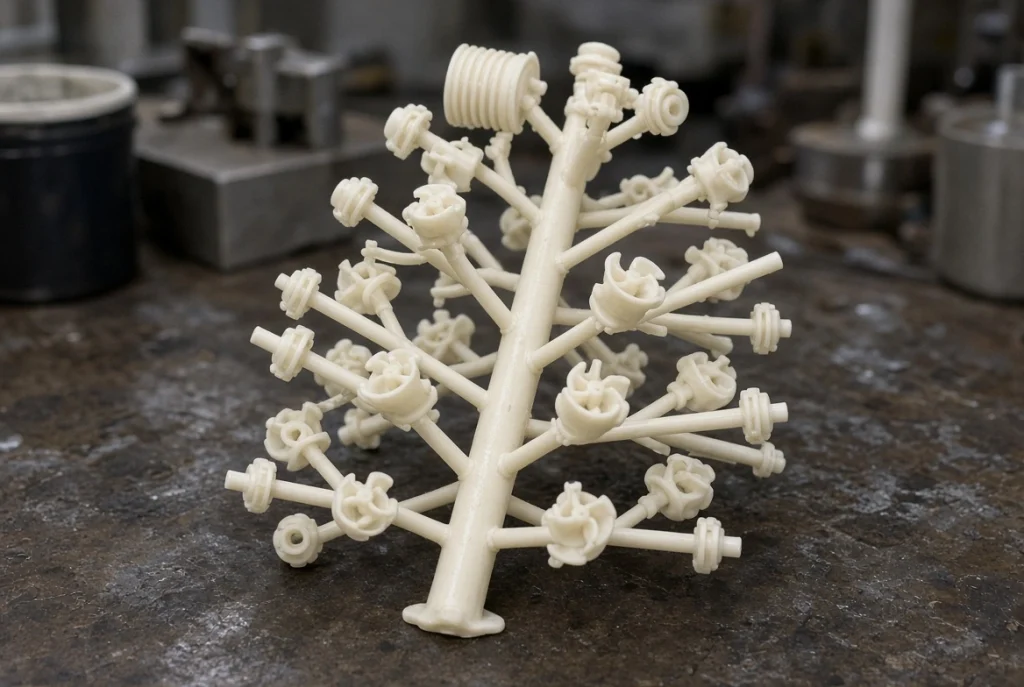
- Assemble patterns onto a central runner to build a tree.
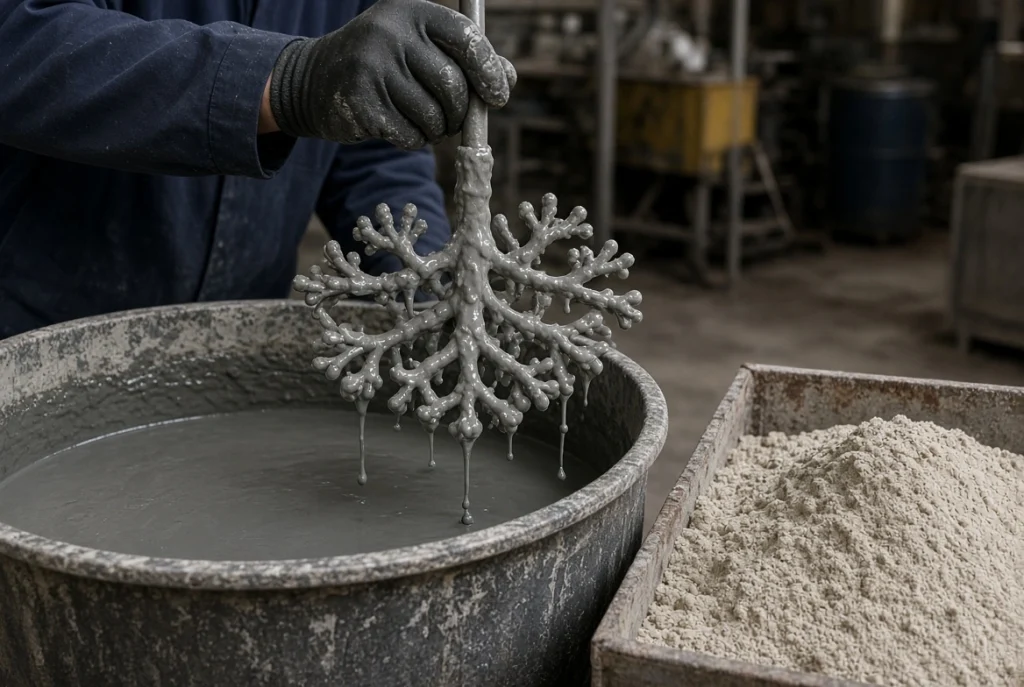
- Dip the tree in ceramic slurry and coat it with stucco to build a shell.
- Dewax the shell in an autoclave or flash-fire furnace.
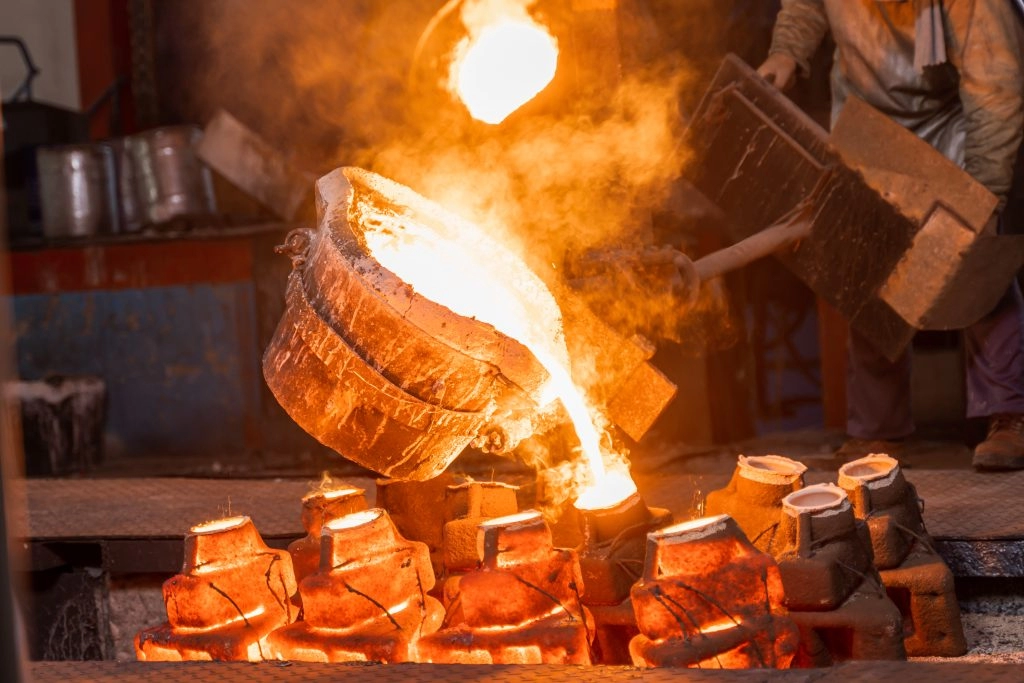
- Preheat the shell and pour molten stainless steel.
- Break the shell, cut off the parts, then finish and inspect.
The principle is the same for many alloys. Stainless steel just needs tighter melt control and the right heat treatment.
Why Stainless Steel Fits Investment Casting So Well
Stainless works well in this process when you need:
- Corrosion resistance from 304 or 316
- Higher strength from 17-4PH after aging
- Less machining because the casting is already close to shape
- Heat and wear performance for energy, process, and aerospace parts
The alloy and the process have to be chosen together. The wrong grade will cost more in heat treatment, machining, or field failures than it saves in tooling.
Common stainless steel grades used in investment casting
Grade choice matters as much as the process. These are the alloys we most often quote for casting and later CNC finishing.
| Grade | Cast equivalent | Best for | Corrosion | Strength after processing | Notes |
|---|---|---|---|---|---|
| 304 / 304L | CF8 / CF3 | Food equipment, general hardware | Good | Medium | Easiest commercial choice |
| 316 / 316L | CF8M / CF3M | Marine, chemical, medical | Better in chlorides | Medium | Molybdenum improves pitting resistance |
| 17-4PH | CB7Cu-1 | Aerospace, fixtures, high-load parts | Good | High after aging | Needs controlled heat treatment |
| 410 / 420 | — | Valves, wear parts | Moderate | High if hardened | Balance hardness against corrosion |
| Duplex 2205 | — | Oil and gas, seawater | Very high | High | Castable, but needs tighter process control |
If the print only says “stainless,” confirm whether the part sees chlorides, welding, or high load. That usually decides 304L vs 316L vs 17-4PH before tooling starts.For grade selection details, see our stainless steel grades for investment casting.
How Stainless Steel Investment Casting Differs
Compared with general investment casting, stainless work needs:
- Tighter melting and pouring control to limit oxidation and inclusions
- Shell materials compatible with stainless chemistry
- Heat-treatment cycles matched to the grade
- Stricter inspection, including NDT on critical parts
It is still lost-wax casting. The difference is process discipline.
Stainless steel investment casting process step by step
The process is a lost-wax, ceramic-shell route. The sequence below is the same for 304L, 316L, or 17-4PH. What changes is melt temperature, shell schedule, and heat treatment.
Process overview
| Step | What happens | What it controls |
|---|---|---|
| 1. Pattern and die | Inject wax into a metal die with shrinkage allowance | Geometry, repeatability, tooling cost |
| 2. Tree assembly | Attach wax patterns to a central sprue | Yield per pour, fill, shrinkage risk |
| 3. Ceramic shell | Dip in slurry and stucco, usually 5–8 coats | Surface finish and shell strength |
| 4. Dewax | Steam autoclave or flash fire to remove wax | Residual wax and gas defects |
| 5. Burnout and preheat | Fire the shell, then hold it hot for pouring | Thin-wall fill and thermal shock |
| 6. Pour | Melt and pour stainless steel into the hot shell | Soundness, inclusions, chemistry |
| 7. Knockout and cut-off | Remove the shell and cut parts from the tree | Distortion and leftover gate stock |
| 8. Finish and inspect | Heat treat, machine datums, blast, NDT | Final drawing requirements |
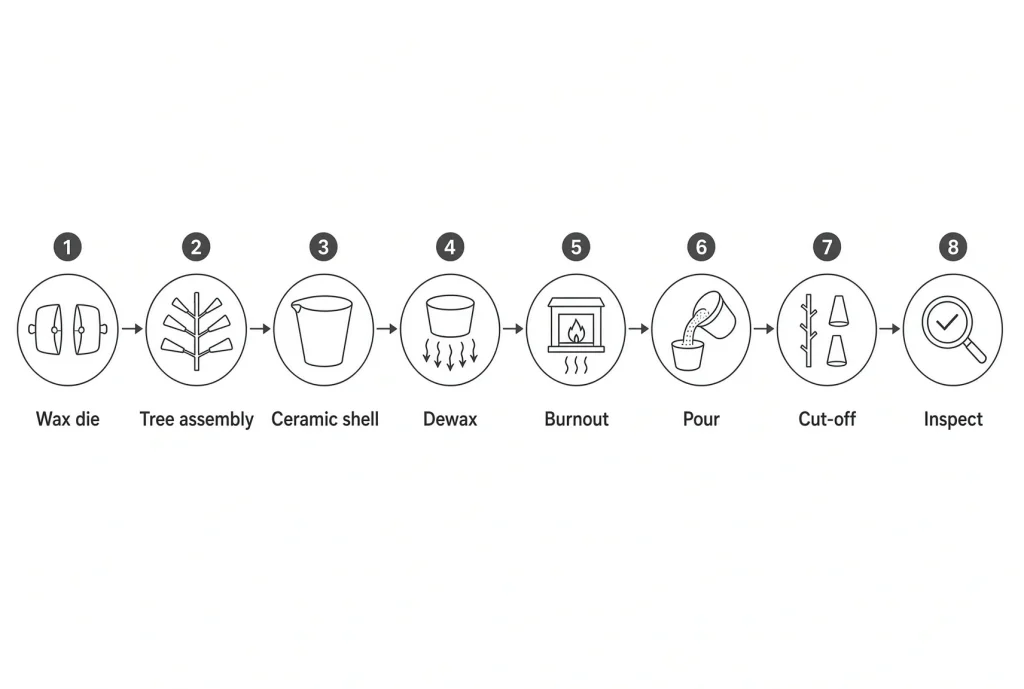
The stainless steel investment casting process is all about repeatable precision. Here’s how we run it, step by step, to get tight tolerances and clean surfaces on complex stainless parts.
Pattern and mold design for stainless steel casting
We start with part and tooling design:
- Add shrinkage allowance and machining stock on critical faces
- Design gates, runners, and vents to limit porosity and misruns
- Plan parting lines and fixturing so the casting is repeatable and easy to inspect
Good front-end design is what keeps later CNC finishing short.
Wax injection and pattern creation
- Heated wax is injected into steel or aluminum dies
- The wax pattern matches the finished geometry plus allowances
- Wax dimensions and surface quality are checked, because defects copy into the shell
This step sets the baseline for as-cast accuracy.
Wax pattern assembly and tree building
- Patterns are welded in wax to the main sprue
- Position and angle are set for flow and feeding
- Multiple parts per tree improve yield and lower piece cost
Poor tree design shows up later as shrink, misruns, or warped parts.
Ceramic shell building with slurry and stucco
- Fine slurry on the first coats to capture detail
- Coarser stucco to build thickness and strength
- Controlled drying between dips to avoid shell cracks
This shell is the mold.
Dewaxing process in stainless steel lost wax casting
- Autoclave dewaxing melts the wax quickly with less shell stress
- Flash fire or furnace dewaxing clears residual wax
Incomplete dewaxing leaves gas defects and dirty surfaces.
Shell preheating and burnout
- Preheating removes moisture and leftover organics
- High-temperature burnout sinters the shell
A clean, hot shell fills thin sections more reliably.
Pouring molten stainless steel
- 304, 316, 316L, 17-4PH, duplex and related grades are melted under control
- Superheat and pour temperature are matched to section thickness
- Ladle practice is set to limit turbulence and inclusions
Temperature and pour method decide porosity more often than the drawing does.
Cooling, shell removal, and cut-off
- Trees cool under controlled conditions
- The shell is removed by knockout or vibration
- Parts are cut from the tree
At this point the parts are near-net castings, not finished components.
Finishing operations for stainless steel castings
- Gate and runner removal
- Shot blast, bead blast, or tumble
- Local blending and deburring
These steps set the as-cast appearance and prepare machining datums.
Heat treatment and post-processing
- Solution annealing for austenitic grades such as 304 and 316
- Aging for 17-4PH and other PH grades
- Straightening, machining, passivation, or polishing when the print requires it
Heat treatment is where strength, hardness, and corrosion resistance are locked in.
Inspection, testing, and quality assurance
- Dimensional checks against the agreed tolerances
- Visual checks on gates, grind quality, and surface defects
- X-ray, dye penetrant, or ultrasonic testing on critical parts
- Chemical and mechanical tests with material certs and heat traceability
Already have a 304, 316, or 17-4PH drawing?
Send the 2D/3D file. We will check draft, wall thickness, machining stock, and whether casting is cheaper than machining the whole part.
What results to expect from stainless steel investment casting
Numbers vary with size, geometry, and alloy. These are the ranges we use when reviewing drawings:
| Item | Typical range | What to watch |
|---|---|---|
| Linear tolerance | About ±0.08–0.15 mm per 25 mm; tighter on small features after machining | Do not put tight datums on as-cast surfaces unless they are tooled that way |
| Surface finish | About Ra 3.2–6.3 μm as-cast | Sealing faces and bearing bores still need machining |
| Wall thickness | Design 2–4 mm when possible; local 1.5 mm needs review | Very thin walls raise miss-run and distortion risk |
| Volume | Often 50–10,000 pieces per year | Tooling pays off faster as quantity rises |
| Lead time | First samples often 4–8 weeks after tooling; repeats often 3–5 weeks, plus CNC if required | First article is longer than repeat production |
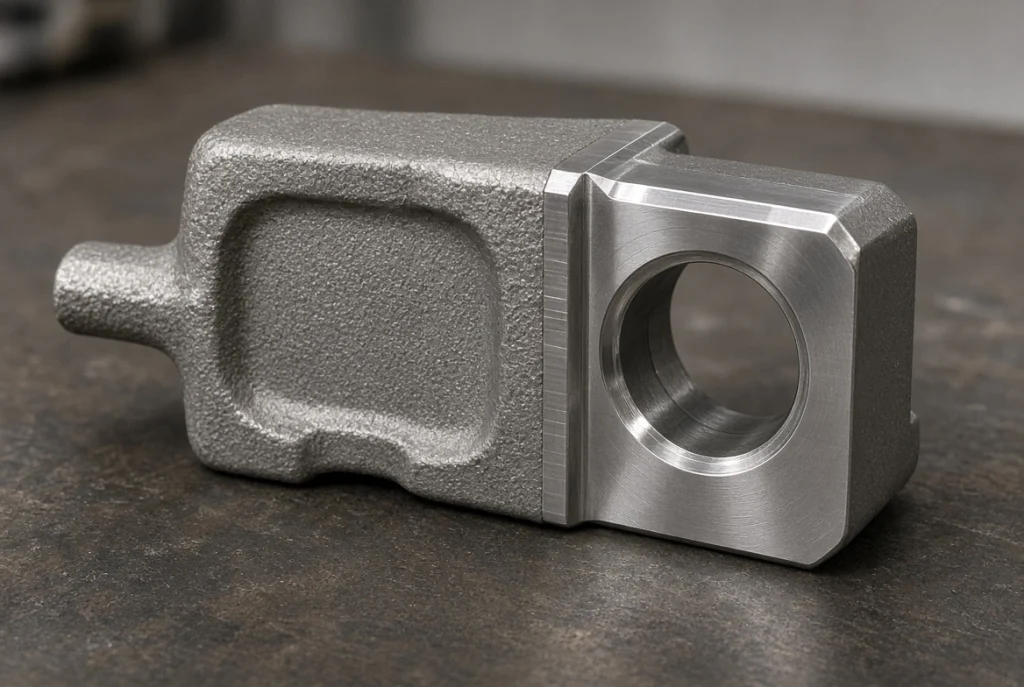
Example: a 316 valve body around 2 kg, mid-volume production. Machining the whole shape from stock wasted material and tied up CNC hours. After switching the body to investment casting, only sealing faces and a few datums were machined. Cycle time and piece cost both dropped. That is the usual reason buyers look at this process instead of full CNC.
Key Advantages of the Stainless Steel Investment Casting Process
This process is useful when you need a complex stainless part without machining it from a solid block.
Cast complex shapes and thin walls
- Thin walls down to about 1.5–2 mm, depending on size and feed
- Internal channels, slots, logos, and some undercuts
- Bosses, lugs, and flanges combined in one part instead of a weldment
That 3D freedom is the main design reason to choose investment casting.
High dimensional accuracy and tight tolerances
- A common starting point is about ±0.08–0.13 mm per 25 mm
- Critical fits can be tighter after CNC
This is tighter than sand casting, so fewer faces need machining.
Superior surface finish and near net shape
- As-cast surfaces often land around Ra 3.2–6.3 μm
- Many faces only need blasting or light polishing
You are not paying to remove large amounts of stainless later.
Material savings and less machining
On parts converted from bar or plate, it is common to:
- Cut raw material use
- Shorten CNC cycle time and tooling wear
The saving shows up in total cost, not just the casting piece price.
Flexible for low–medium volumes and multiple grades
The process fits:
- A few dozen to a few thousand parts per year
- 304, 316, 316L, 17-4PH, duplex, and related grades from the same route
- Complex geometry without die-casting-level tooling cost
Limitations and Challenges in the Stainless Steel Investment Casting Process
The process is not automatic. These are the constraints to check before you cut a wax die.
Tooling Cost and Lead Time
- Wax dies cost more up front than a simple CNC setup
- New tooling often takes 4–8+ weeks to design, machine, and prove
- Geometry changes after the die is cut add cost and time
If you only need a handful of parts and the design is still moving, machine them first.
Size, Weight, and Geometry Limits
- Best for small to medium parts, from a few ounces up to about 75 lb
- Very thick sections raise shrink risk
- Long, thin features and deep blind pockets are high risk
- Complex undercuts may need soluble wax or assemblies
Very large or very heavy parts usually belong in sand casting.
Common Stainless Steel Casting Defects
- Gas or shrink porosity
- Inclusions from slag, shell, or oxide
- Misruns and cold shuts on thin or long flow paths
- Hot tears and cracks from poor gating or uneven sections
- Distortion on thin-wall precision parts
Process Controls and Defect Prevention
Defect rate depends on:
- Wax accuracy and tree design
- Slurry, stucco, and shell thickness control
- Melt and pour temperature
- Gating designed for the specific grade
- NDT and dimensional checks before parts leave the foundry
When the print needs machining-level accuracy, we cast near-net and machine only the critical faces.
Cost Comparison vs Other Processes
- Versus sand casting: higher tooling and piece price, better finish and tighter tolerance. Sand wins on large, rough parts.
- Versus die casting: die casting is for aluminum, zinc, and magnesium at very high volume. Stainless investment casting wins when you actually need stainless.
- Versus forging: forging is stronger on simple high-load shapes. Casting wins on complex geometry and internal features.
- Versus CNC from bar stock: CNC wins on very low quantity or unstable designs. Once volume rises and the design freezes, casting plus light machining usually lowers total cost.
If you are unsure, send the 3D model and annual volume and compare both paths.
Design Guidelines for Stainless Steel Investment Casting
Fix the geometry before the die is cut.
Recommended Wall Thickness & Transitions
- Typical walls: 2–4 mm
- Local minimum: about 1.5 mm in short, well-fed areas
- Avoid isolated masses over about 19–25 mm unless feeding is redesigned
Use gradual tapers. Step from thin to thick over at least 3–5 times the wall thickness.
Fillet Radii, Undercuts & Draft
- Internal corners: 1.5 mm radius or more
- External corners: 0.8 mm or more where possible
- Keep undercuts only when they save real machining or assembly
- About 1° draft is usually enough on wax tools; 1–3° helps on complex features
Realistic Tolerances for Stainless Investment Casting
- General linear tolerance: about ±0.13–0.25 mm, depending on size
- Tight features: often cast near ±0.08–0.13 mm, then machined
- Holes and threads: cast near-net, then drill, ream, or tap
Do not put a full machining tolerance on every as-cast surface.
Surface Finish (Ra) & Post-Processing
- As-cast: typically Ra 3.2–6.3 μm
- Cosmetic or sealing faces may need blast, vibratory finish, or machined Ra 1.6 μm or better
Mark which faces can stay as-cast. “Machine everything” erases the cost advantage.
Design for Manufacturability (DFM)
- Keep parting lines simple
- Group critical features on one side when possible
- Avoid deep blind pockets
- Combine weldments into one casting only when it actually cuts cost
Have the foundry review the model before you freeze it.
Optimizing a Machined Design for Investment Casting
When converting a CNC part:
- Replace sharp corners with fillets
- Thin walls that only exist because the part started as bar stock
- Add bosses or features that would otherwise need extra ops
- Keep bores, threads, and sealing faces as cast-plus-machine zones
Applications of Stainless Steel Investment Casting
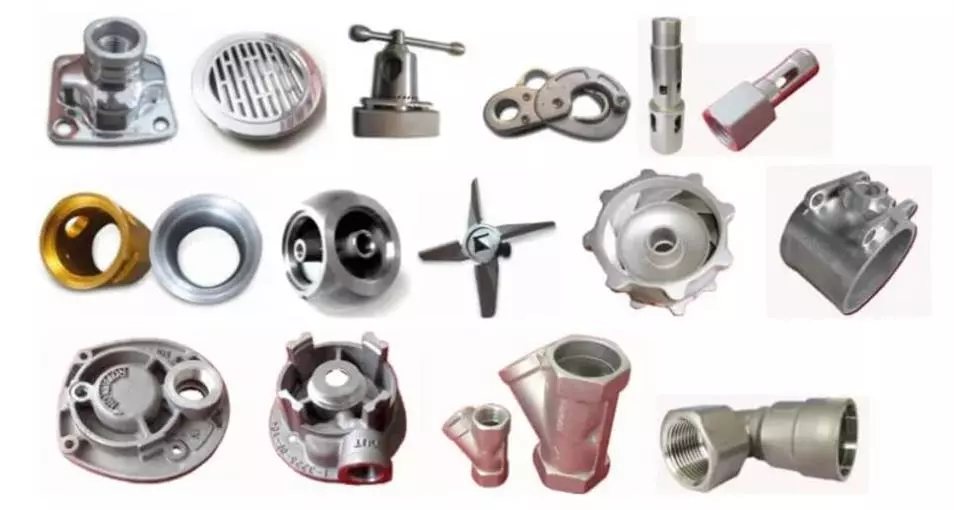
This process is used when the part needs corrosion resistance, complex shape, and repeatable dimensions.
Aerospace and Defense Components
- Brackets, hinges, and fittings
- Engine-adjacent hardware
- UAV and weapon-system parts
17-4PH and 15-5PH are common when strength and fatigue matter. Critical faces are finished by CNC.These parts are often finished with CNC after casting. See stainless steel casting and CNC machining applications.
Medical and Pharmaceutical Parts
316L is common for:
- Surgical instrument components
- Pump, valve, and housing parts
- Hardware that must clean and resist corrosion
Design for smooth surfaces and fewer crevices.
Oil, Gas, Marine, and Chemical Processing
316L and duplex grades are used for:
- Valve bodies, pump housings, and impellers
- Manifold and marine hardware
These alloys handle chlorides better than 304.
Food Processing, Automotive, and Industrial
304 and 316 work well for:
- Food-grade fittings and nozzles
- Brackets and housings
- Clamps, couplings, and machine parts
Custom Hardware and Complex Shapes
Useful when one casting can replace several machined or welded pieces: handles, levers, locks, gears, and linkage parts.
Quality control and standards in stainless steel investment casting
Repeatability matters more than a single good sample.
ASTM and ISO standards for stainless steel castings
Common specs include:
- ASTM A351 / A743 / A744 for austenitic corrosion-resistant castings
- ASTM A890 / A995 for duplex
- ASTM A747, A564, A703 for PH and high-strength grades
- ISO 4990 and ISO 8062 for general casting and tolerance language
The drawing should name the spec, grade, and required tests.
Material certification and traceability
- Mill certs for incoming alloy
- Heat numbers on each lot
- 3.1 or 3.2 certificates when required
- Chemical and mechanical reports stored with the job
Non destructive testing (NDT) for stainless cast parts
- X-ray for internal shrink, porosity, and inclusions
- Dye penetrant for surface cracks
- Ultrasonic testing on selected sections
Acceptance levels should follow the spec and the drawing.
Dimensional inspection and gauge control
- CMM on critical features
- Gauges and fixtures on repeat production
- SPC on key dimensions when volume justifies it
Thin-wall parts need fixturing planned around distortion, not only around the CAD model.
Controlling microstructure and properties with heat treatment
- Solution anneal for austenitic and duplex grades
- Age 17-4PH and other PH grades
- Control furnace uniformity, soak, and cooling
- Verify with hardness, microstructure, and corrosion tests when specified
Stainless steel investment casting vs other processes
Stainless steel investment casting vs sand casting
Investment casting usually wins on:
- Surface finish around Ra 3.2–6.3 μm versus much coarser sand surfaces
- Tighter as-cast tolerance and less machining
- Thinner walls and finer detail
Sand casting still wins on very large, rough, low-precision parts.
Stainless steel investment casting vs die casting
Die casting is for high-volume aluminum, zinc, and magnesium. It is rarely practical for stainless. Use investment casting when you need real 304, 316, or 17-4PH at low to medium volume.
Stainless steel investment casting vs forging
Forging wins on simple, high-load shapes. Investment casting wins on complex geometry, internal features, and near-net shape.
Stainless steel investment casting vs CNC machining from bar stock
CNC wins for prototypes, unstable designs, and simple blocks. Casting wins when the shape is complex, the alloy is expensive, and the quantity can spread tooling cost. A common production route is: cast the shape, then machine only the critical faces.
How to choose the right process for a stainless steel component
- Large, rough, low-precision part → sand casting
- Complex geometry, decent finish, medium volume → stainless steel investment casting
- Very high volume in non-stainless alloys → die casting
- Simple shape, highest strength → forging
- Prototype or simple tight-tolerance part → CNC from bar stock
Start from annual volume, size, complexity, tolerance, and required properties. Then compare cost, risk, and lead time.
If the part is complex, corrosion-resistant, and mid-volume, casting plus light CNC is often the lower total-cost route. If the part is simple and the quantity is low, straight CNC may still win.
FAQs About the Stainless Steel Investment Casting Process
Need a DFM review before you cut a wax die?
Share the drawing, alloy, annual quantity, and critical tolerances. You will get a clear note on what can stay as-cast and what should be machined.
What tolerances can stainless steel investment casting hold?
Many parts hold about ±0.08–0.15 mm per 25 mm as a starting point. Small, well-tooled features can be tighter. Threads, sealing faces, and tight GD&T datums are usually finished by CNC.
What is the minimum wall thickness?
A practical target is 2–3 mm, with local walls down to about 1.5 mm in short, well-fed areas. Going thinner raises misrun risk and cost.
304 vs 316: which grade should I spec?
Use 304/304L for general indoor or mildly corrosive duty. Use 316/316L when the part sees chlorides, seawater, chemical washdown, or medical/food duty. If the print only says stainless, confirm the environment before tooling.
Is stainless steel investment casting cheaper than CNC?
It is cheaper when the shape is complex, the alloy is expensive, and the quantity can spread tooling cost. It is not automatically cheaper for a simple block or a 5-piece prototype. Compare material + tooling + casting + heat treatment + remaining CNC hours.
Can I use this process for prototypes?
Yes, if you want a production-intent casting or you plan to go to volume. For 1–5 pieces with no follow-on order, CNC from bar stock is often cheaper. 3D-printed patterns can support an early look; production accuracy still comes from a metal wax die.
What are typical lead time and order quantity?
New tooling plus first samples often take 4–8 weeks. Repeat lots often take 3–5 weeks, plus machining if needed. The process fits low-to-medium volumes, commonly 50–10,000 pieces per year. Below about 20 pieces per year, compare total cost against machining.
Do stainless investment castings need heat treatment?
Often yes. Austenitic grades may need solution treatment. 17-4PH needs aging to reach the specified strength. Skip heat treatment only when the drawing and alloy allow it.
Silica sol or water glass for stainless steel?
Silica sol is the usual choice when you need better surface finish and tighter as-cast accuracy. Water glass can be lower cost, but the surface and detail are typically coarser. For most precision 304/316/17-4PH work, silica sol is the default.
How do pattern changes affect tooling and cost?
A small radius or logo change may be a tool rework. Moving walls, holes, or adding features can mean a partial rebuild or a new die. Freeze the design after a machined or printed prototype when you can.
How do I estimate cost?
Send a STEP/IGES model, annual volume, alloy, tolerances, surface requirements, and any NDT. Cost splits into tooling/NRE and piece price. Piece price is driven by weight, complexity, heat treatment, machining, and inspection.