Understanding the Core Differences Between CNC Turning and 5-Axis Simultaneous Milling
CNC turning and 5-axis simultaneous milling are both essential machining processes, but they serve different purposes and have distinct capabilities.
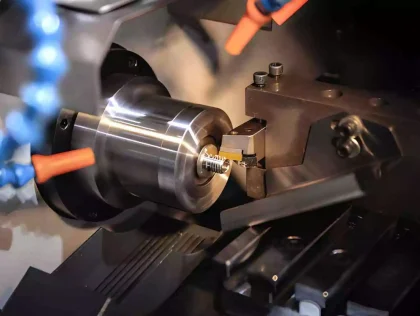
CNC Turning: Basic Rotational Machining for Cylindrical Parts
- Primarily designed for cylindrical and rotational parts.
- Uses a rotating workpiece and a stationary cutting tool.
- Ideal for parts like shafts, pins, and bushings.
- Usually faster and more cost-effective for simple, repetitive shapes.
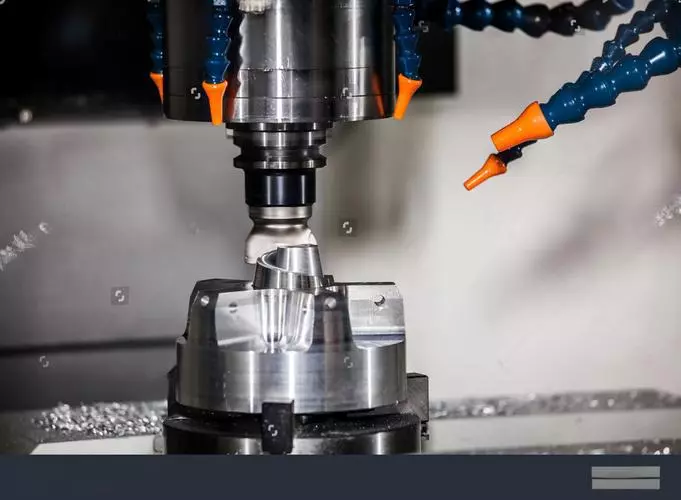
5-Axis Simultaneous Milling: Multi-Faced Complex Contouring Capabilities
- Moves a cutting tool along five axes simultaneously.
- Suitable for complex geometries, undercuts, and intricate features.
- Enables high-precision, high-quality finishes on complex parts.
- Often used for aerospace, medical, and advanced engineering components.
Truly Simultaneous 5-Axis vs. 3+2 Positioning
| Aspect | True 5-Axis Simultaneous | 3+2 Positioning (indexing) |
|---|---|---|
| Movement | All five axes move simultaneously | Axes move in fixed positions, then lock |
| Flexibility | Capable of complex contouring | Limited to specific angles |
| Complexity | More complex programming | Simpler, less demanding software |
In essence, fully simultaneous 5-axis machining is more flexible, but also more demanding to program and operate.
Part Examples: Turning vs. 5-Axis Milling
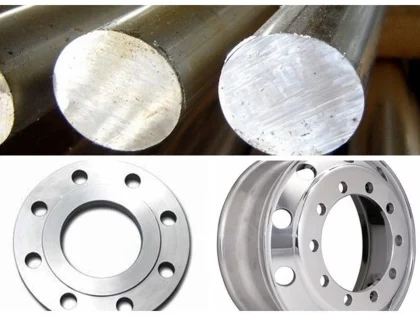
- Turning suits:
- Cylindrical rods
- Simple shafts
- Routine parts with rotational symmetry
- 5-Axis Milling fits:
- Parts with undercuts
- Complex aerospace components
- Medical implants with intricate surfaces
By understanding these core differences, manufacturers can choose the right process for their specific needs, optimizing quality and efficiency.
Equipment and Infrastructure Barriers to 5-Axis Milling

One of the biggest reasons many factories can perform CNC turning but struggle with true 5-axis simultaneous CNC milling is the high level of investment needed upfront. Advanced 5-axis machining centers are expensive—often significantly more than standard CNC lathes or 3-axis mills. Plus, setting up and calibrating these machines requires a careful, detailed process to ensure all rotary axes work smoothly together. It’s not just a matter of buying the machine; you need the right infrastructure to support it.
The workspace also needs to be large enough to accommodate these complex machines and their tooling. Unlike turning centers that primarily require a lathe and basic fixtures, 5-axis machines need specialized tooling setups and fixtures, which can take up more room and add to costs. Additionally, ongoing maintenance and calibration are critical for maintaining precision. If calibration drifts or mechanical issues occur, it can lead to inaccuracies in complex contouring or high-precision milling, making consistent output a challenge.
For shops thinking about taking on complex geometries with high accuracy, investing in 5-axis CNC machinery means not only spending on equipment but also on the supporting infrastructure, which is a barrier many smaller or traditional shops cannot easily overcome. You can learn how advanced CNC high-precision machining helps engineers meet these demanding challenges.
Programming Challenges in Multi-Axis Machining

One big reason some factories can do CNC turning but struggle with true 5-axis simultaneous CNC milling is the programming complexity. Unlike basic CNC turning, which mainly involves rotating a part around a single axis, 5-axis machining requires advanced software and CAM strategies to control multiple axes at once. Precision and tool paths become critical, especially for complex geometries and tight tolerances.
Collision detection and avoidance are also major hurdles. With more axes moving simultaneously, the chance of tools or fixtures colliding with the part or machine increases significantly. It’s vital to simulate every step virtually to prevent costly errors or even machine crashes. This process demands specialized software and skilled programmers who understand the nuances of multi-axis machining.
Additionally, error checking becomes trickier since the number of variables doubles or triples. Ensuring that the tool doesn’t gouge or miss any intricate features takes a lot of experience and careful planning. Many shops lack the in-house expertise or dedicated training in programming for 5-axis CNC milling, which is essential for producing complex parts efficiently and accurately.
If your shop isn’t familiar with advanced CAM software or doesn’t have the resources to thoroughly simulate and verify toolpaths, it becomes risky and impractical to venture into true 5-axis machining. For firms looking to bridge this gap, partnering with experienced providers like MS Machining can help you navigate these programming challenges more confidently.
Skill and Workforce Limitations
One of the main reasons many factories can perform CNC turning but struggle with true 5-axis simultaneous milling is the skill and workforce challenge. Operating and programming 5-axis CNC machines require specialized training that goes beyond basic CNC operation. Workers need to understand complex software, multi-axis movements, and collision avoidance techniques, making skilled labor essential.
Finding staff proficient in 5-axis CNC programming is not easy — talent shortages mean shops often lack the experienced operators needed for these advanced machines. Upskilling existing workers takes time and investment, which many companies may not have budgeted. Plus, managing a complex multi-axis setup involves thorough calibration, maintenance, and risk management, which adds more layers of expertise.
In essence, even if a factory has the right equipment, without properly trained staff, it’s challenging to fully leverage the capabilities of true 5-axis simultaneous machining. That’s why some shops stick mainly to CNC turning, which demands less specialized skill compared to the multi-faceted skills needed for advanced 5-axis milling.
Economic and Operational Factors
One major reason many factories can perform CNC turning but struggle with true 5-axis simultaneous CNC milling is the cost difference. CNC turning with a lathe is generally less expensive to buy and maintain, making it a more accessible option for many shops. In contrast, 5-axis CNC machines come with a premium price tag due to their advanced capabilities, which can be a significant investment for smaller or mid-sized companies.
When it comes to ROI (return on investment), the decision often depends on part complexity and production volume. For simple, cylindrical parts produced in high volume, turning offers quick setups and lower costs, providing faster ROI. But when parts demand complex geometries, undercuts, or tight tolerances, 5-axis milling can reduce the need for multiple setups and tooling. That said, the initial investment is high, and shops need to carefully weigh whether the added precision and flexibility justify the cost.
Production speed and setup times also play a big role. Turning usually involves faster cycle times and simpler setups, which make it more suitable for high-volume runs. 5-axis milling, on the other hand, may require longer setup times and slower cycles, especially if the shop lacks experience with multi-axis programming.
Finally, many factories debate whether to handle complex parts in-house or outsource. Shops with existing CNC turning capabilities often find it easier and more cost-effective to outsource complex 5-axis machining to specialized providers. Partnering with a provider like MS Machining can give you access to advanced multi-axis capabilities without the heavy investment and training needed for in-house 5-axis milling.
When Does a Part Require True 5-Axis Simultaneous Milling?
Determining if a part truly needs 5-axis simultaneous CNC milling depends on its complexity and design features. Indicators like undercuts, intricate geometries, or tight tolerances often call for the extra versatility that only true 5-axis machining can provide. For example, manufacturing aerospace components or medical implants frequently involves complex shapes that can’t be achieved with simpler methods. If you spot features that can’t be machined with basic 3-axis setups or 3+2 indexing, it’s a sign that true 5-axis is the way to go.
But it’s not always necessary! Many parts with straightforward shapes can be made efficiently with alternatives like mill-turn centers or multi-axis setups that only index the tools for certain angles. These options save cost and setup time when their capabilities meet your needs.
To avoid spending extra on complex equipment when it’s not needed, it’s helpful to use a decision-making framework. First, assess the part’s geometry: Does it include undercuts or complex curves? Are tight tolerances required? If yes, then true 5-axis simultaneous milling might be the best option. Otherwise, simpler methods could be enough, shortening production times and reducing costs. For a detailed overview on making this assessment, consider consulting advanced CAM software solutions, which help visualize and plan the best approach for complex parts.
How MS Machining Bridges the Gap
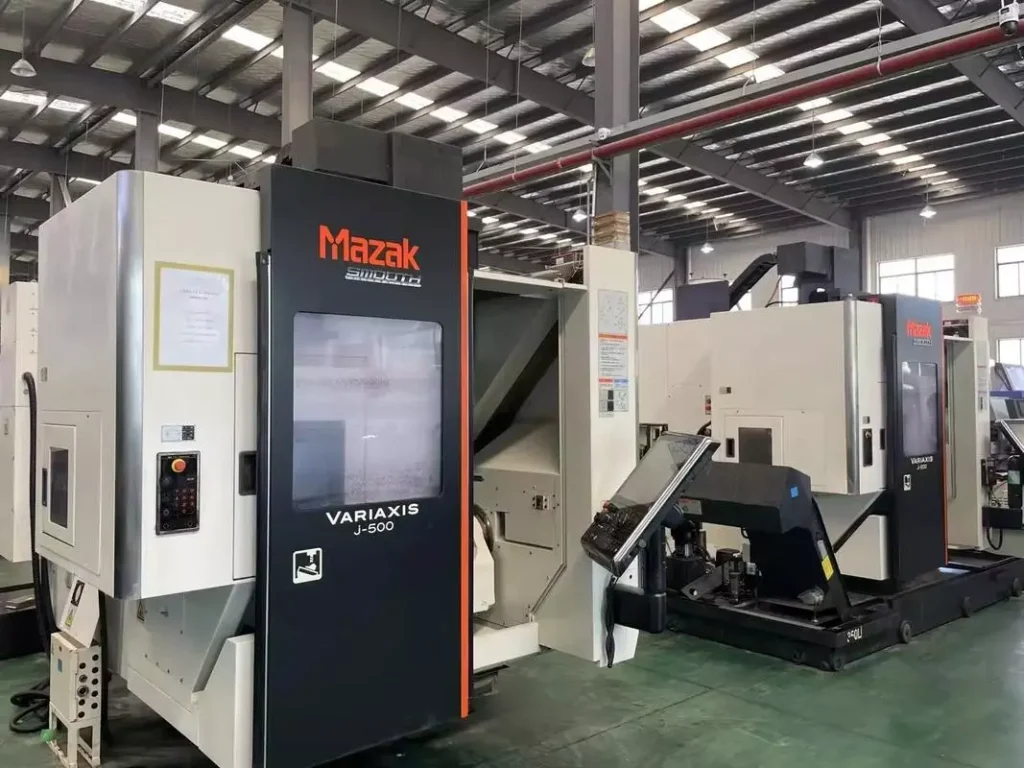
At MS Machining, we understand that many factories can handle basic CNC turning but struggle with true 5-axis simultaneous CNC milling. That’s where we step in. We combine full CNC turning with advanced 5-axis machining to meet complex manufacturing needs better than most.
Our dedicated team of highly skilled operators and programmers specialize in multi-axis machining, using advanced software and state-of-the-art equipment. This setup helps us reduce the number of setups needed, which not only speeds up production but also boosts accuracy — essential for complex parts with tight tolerances.
We also focus on reducing the common barriers in 5-axis machining, like high initial investment and intricate programming challenges. Our expertise ensures smooth, precise milling, even on parts with undercuts or contours that simpler tools can’t handle.
To prove our capabilities, we have successful case studies of complex components like gear plates and high-precision aerospace parts. These projects highlight how combining CNC turning and 5-axis milling can deliver superior quality and efficiency, especially for parts that require complex geometry or tight tolerances.
Partnering with MS Machining means you get a one-stop shop for both turning and five-axis milling, backed by the right skills, equipment, and experience. This approach helps clients cut costs, reduce lead times, and handle complex projects that other shops might turn away.
Final Takeaways
Many factories can handle CNC turning quite well because it’s simpler, less expensive, and requires less specialized skill and equipment. Turning machines, like CNC lathes, are more common and straightforward, making them accessible for most shops. However, when it comes to true 5-axis simultaneous CNC milling, the complexity and cost often become barriers. Only shops with advanced equipment, sophisticated software, and highly trained staff can successfully perform this type of multi-axis machining.
This is why partnering with versatile providers like MS Machining can make a real difference. We combine full CNC turning and 5-axis simultaneous milling capabilities, reducing setups and boosting precision on complex parts. This allows us to meet demanding project needs that typical factories might struggle with or avoid altogether.
In the end, understanding the importance of equipment, software, and skilled operators helps manufacturers decide when to invest in or collaborate for true 5-axis machining. It’s not just about doing the job — it’s about doing it efficiently and accurately for the best outcomes.