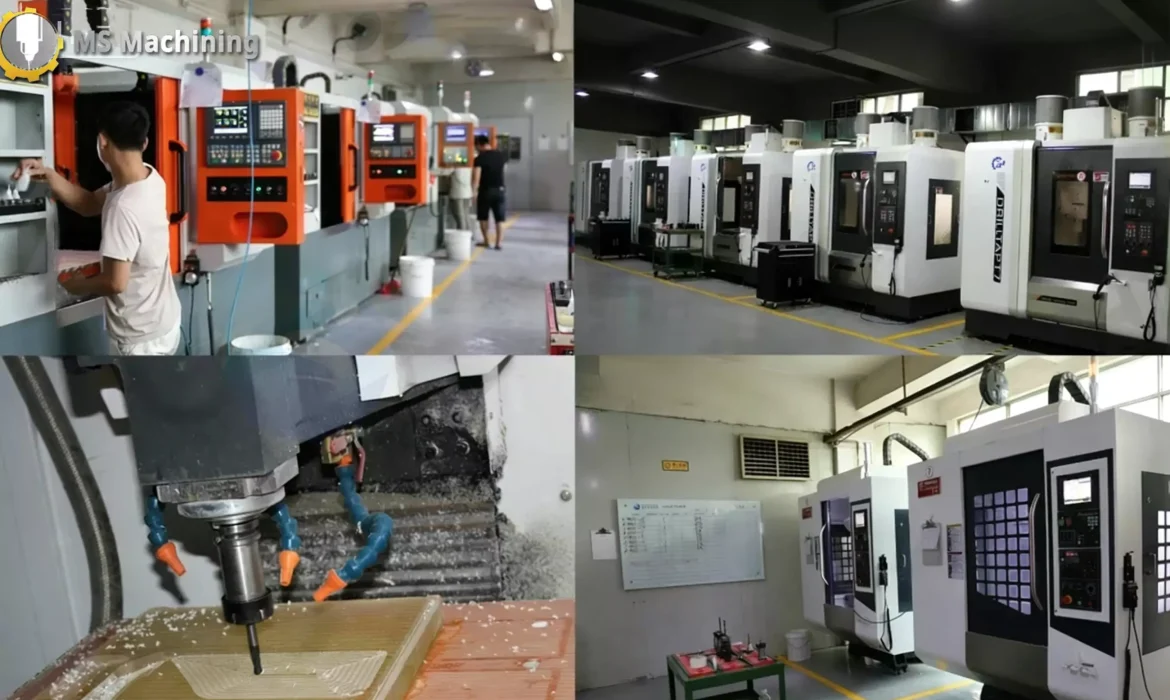
In the high-precision manufacturing landscape, selecting the appropriate CNC machining center configuration is a strategic decision that dictates part integrity, cycle efficiency, and total cost of ownership. Modern machining centers have transcended basic material removal; they are now sophisticated, multi-axis integration platforms capable of consolidating milling, drilling, and boring into a single, automated process.
For sectors such as aerospace, medical robotics, and UAV development, understanding the kinematic advantages of Vertical Machining Centers (VMC), CNC Turning Centers, and 5-axis CNC machining centers is essential for optimizing production for components with tolerances as tight as ±0.005mm.
Vertical Machining Center (VMC): The Pillar of Prismatic Milling
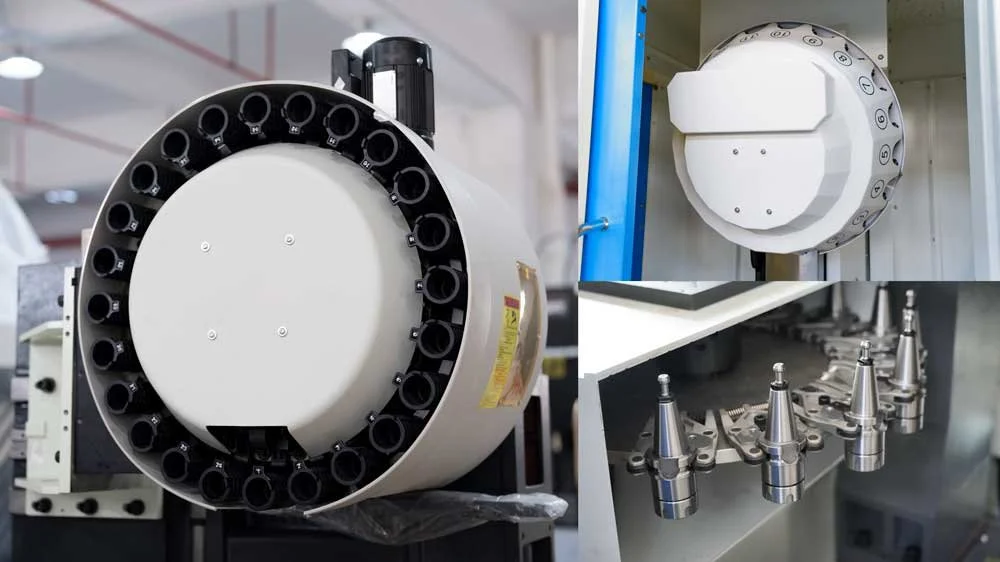
The Vertical Machining Center (VMC) remains the workhorse of the CNC machining industry. Defined by its vertical spindle orientation, the VMC approaches the workpiece—typically secured to a horizontal table—from a stable vertical position.
Technical Architecture and Rigidity
Modern VMCs are engineered with high-rigidity cast iron frames (such as Meehanite) to dampen harmonic vibrations during aggressive metal removal.
- Structural Stability: The vertical alignment utilizes gravity to assist in workpiece seating, which is ideal for maintaining flatness and parallelism across large surfaces.
- High-Torque Performance: VMCs are particularly effective for heavy-duty face milling and deep-hole drilling where downward axial force is paramount for tool stability.
Ideal Components and Applications
- Prismatic & Plate Components: Engine blocks, manifolds, hydraulic valve bodies, and large-format base plates.
- Electronic Enclosures: Aluminum 6061-T6 housings for telecommunications and heat sinks requiring high-speed pocketing.
- Precision Tooling: Die sets and mold bases that require extensive 2.5D machining and high-accuracy hole patterns.
CNC Turning Centers: Achieving Absolute Concentricity
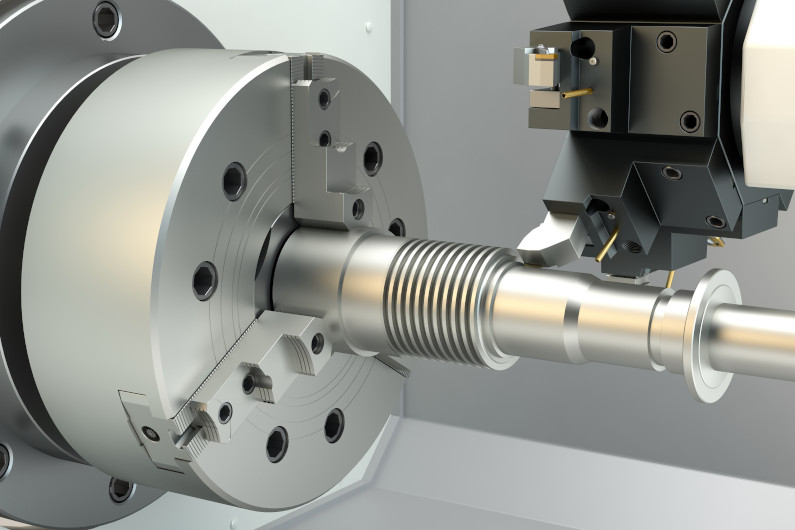
While a traditional lathe focuses on rotational symmetry, a modern CNC turning center is a multi-tasking powerhouse. By integrating “Live Tooling” and independent Y-axis motion, these centers eliminate the need for secondary milling operations on separate machines.
Kinematics and Process Consolidation
In a professional machining environment, the ability to perform milling, cross-drilling, and tapping while the part is held in the chuck is a significant competitive advantage.
- Concentricity Excellence: Because the part remains in a single chucking system, all turned diameters, threads, and bores share a common centerline, which is critical for high-speed rotating assemblies.
- Setup Reduction: Utilizing a sub-spindle allows for the automatic transfer of parts for back-side machining, achieving a “Done-in-One” workflow that eliminates human-induced positioning errors.
Ideal Components and Applications
- Complex Shafts: Motor rotors, drive shafts, and geared spindles with integrated keyways or cross-holes.
- Fluid Power Fittings: Specialized hydraulic connectors and high-pressure nozzles requiring precise thread-to-bore alignment.
- Robotic Joints: Precision bushings and pivot pins for robotic arms where coaxiality is non-negotiable for smooth motion.
5-Axis CNC Machining Center: Mastering Complex Geometries
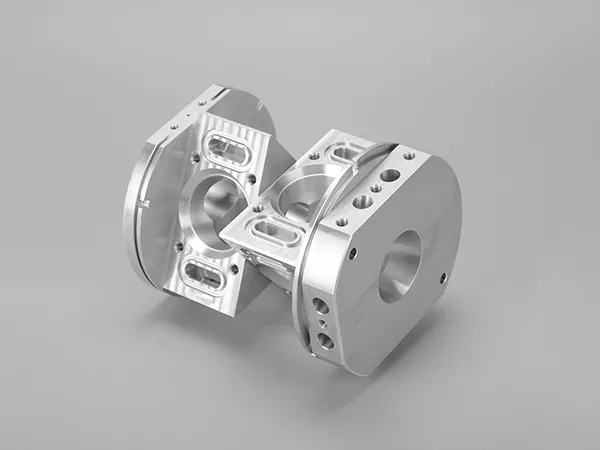
For components requiring simultaneous movement across five axes (X, Y, Z, plus rotation around two of those), the 5-axis CNC machining center represents the pinnacle of CNC machining capability.
Geometric Freedom and Surface Finish
Unlike 3-axis systems, 5-axis machines eliminate “blind spots” by tilting the tool or the workpiece to maintain optimal contact.
- Superior Surface Finish (Ra): The controller maintains the ideal “attack angle” between the cutter and the surface, significantly reducing scallops and manual polishing time.
- Rigidity via Short Tooling: By tilting the part toward the spindle, we can utilize shorter, more rigid end mills. This minimizes tool deflection and chatter, allowing us to achieve superior dimensional stability in deep-cavity aerospace components.
Ideal Components and Applications
- Aerospace & UAV Structures: Lightweight airframes, impellers, and blisks (bladed disks) with complex curved surfaces.
- Medical Implants: Anatomically correct orthopedic joints, titanium bone plates, and dental abutments.
- Turbomachinery: Complex flow-path components where traditional 3-axis tool paths cannot reach the required undercut geometries.
Technical Factors Influencing Engineering Precision
Achieving repeatable accuracy in a high-precision CNC machining center depends on several critical engineering variables managed by our facility:
- Thermal Displacement Control: We employ active thermal compensation and oil-jacketed spindles to ensure that dimensional drift is minimized over long production cycles.
- Material-Specific Machinability: Whether cutting Grade 5 Titanium or 6061-T6 Aluminum, the spindle torque curves and high-pressure through-spindle coolant (TSC) must be synchronized to prevent work-hardening or burrs.
- In-Process Metrology: Utilizing infrared probing systems allows for real-time verification of critical dimensions in situ before un-clamping, ensuring zero-defect delivery.
Conclusion: Engineering-Driven Manufacturing Strategy
The choice between a VMC, a Turning Center, or a 5-Axis system is dictated by the part’s geometric complexity, required tolerances, and production volume. By matching the specific kinematic strengths of each CNC machining center with the project’s engineering constraints, we deliver high-performance components that meet the most stringent global standards while optimizing the cost-per-part.
In modern machining, success is defined by the synergy between advanced multi-axis hardware and the engineering expertise required to master them.