Introduction
CNC turning precision parts are turned components held to a stated tolerance and surface finish—not just “round metal from a lathe.”
Buyers usually mean shafts, pins, bushings, valve stems, connectors, rollers, flanges, and threaded fittings. A typical production callout is ±0.01 mm. Critical diameters, shoulders, or seal journals can go to ±0.0002″ (±0.005 mm) when the geometry, material, and inspection plan allow it.
This page is a spec guide: what those numbers mean, which materials are common, and how to read a turning drawing. For capacity, machines, and a quote, use our CNC turning services page.
Typical specs for CNC turning precision parts
| Item | Typical production | Tighter when required |
|---|---|---|
| Diameter / length tolerance | ±0.01 mm | ±0.005 mm (±0.0002″) on critical features |
| Surface finish | Ra 1.6–3.2 μm as-turned | Ra 0.8 μm or better with finish pass |
| Part types | Shafts, pins, bushings, valve stems, connectors, rollers, flanges, threads | Swiss / mill-turn features on the same part |
| Materials | Al 6061/7075, SS 303/304/316/17-4PH, carbon & alloy steel, brass, copper, Ti, Inconel/Hastelloy/Monel, POM/PEEK/nylon | Same list; heat-resistant alloys need extra process time |
| Prototype lead time | 3–7 days | Drawing + material availability |
| Production lead time | 2–6 weeks | Material + secondary finish |
These are planning numbers, not a promise on every feature. Final tolerance depends on diameter, aspect ratio, material, and how the part is held and inspected.
If the print calls out ±0.005 mm across many features, send the drawing and we will confirm what can be held in volume. Contact us.
What Is CNC Turning?
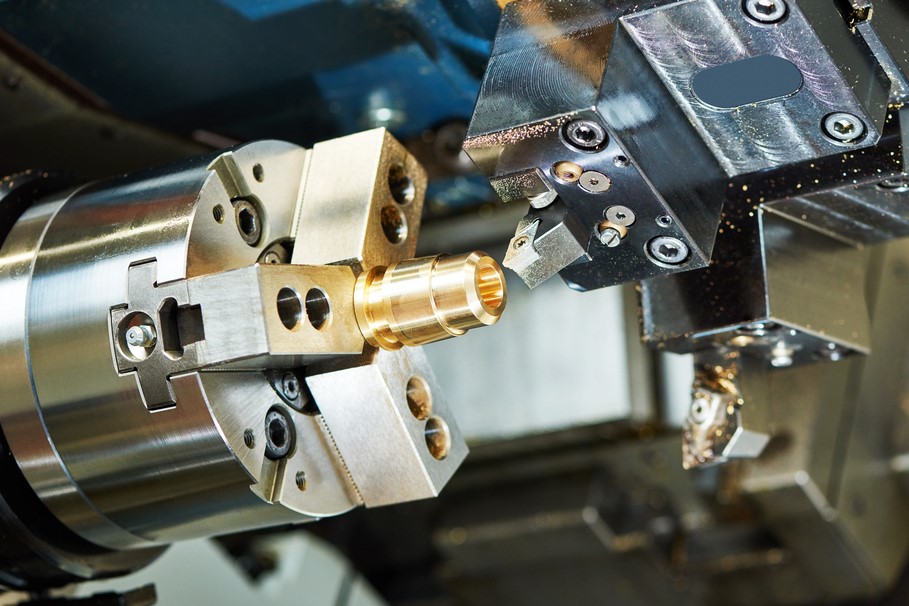
CNC turning is a subtractive manufacturing process where a rotating workpiece is shaped by a stationary cutting tool. This method removes material from a cylindrical part to create precise shapes, dimensions, and surface finishes. Unlike CNC milling—where the cutting tool rotates around a fixed workpiece—in CNC turning, it’s the workpiece itself that spins while the tool remains still.
The process has evolved significantly over time. It started with manual lathes, where operators controlled the cutting tools by hand, requiring extensive skill and experience. Today, CNC turning uses computer-controlled lathes, allowing for higher precision, consistency, and automation. This technological evolution enables the production of complex parts with tight tolerances and repeatable quality.
In short, CNC turning is essential for manufacturing precision CNC turned components, especially when working with cylindrical or symmetrical parts like shafts, bushings, and custom CNC turning parts. Its unique setup—spinning the workpiece instead of the tool—makes it ideal for these applications, setting it apart from other machining technologies.
How CNC Turning Works
CNC turning starts with a detailed CAD design of the part to be made. This digital model guides every step of the process. Next, CAM software converts the design into G-code—a set of instructions the CNC lathe uses to control movements and cutting actions precisely.
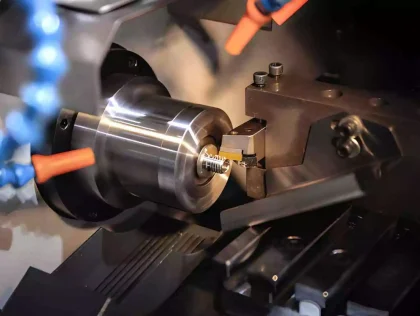
The workpiece, usually cylindrical, is securely clamped and set to rotate inside the CNC turning center. While the material spins, a stationary cutting tool moves along programmed paths to remove material layer by layer. This controlled subtraction shapes the workpiece into the desired form, whether it’s simple cylindrical parts or complex contours.
Key factors in the CNC turning process include accurate workpiece setup, proper tool alignment, and selecting the right speeds and feeds. These ensure smooth material removal, dimensional accuracy, and optimal surface finish. Using this process, precision CNC turning can produce parts that meet tight tolerances consistently, making it ideal for everything from prototypes to high-volume production runs like custom CNC turning parts. For working with materials like aluminum, leveraging specialized CAM programming helps optimize cutting conditions, enhancing both efficiency and finish quality.
For more on CNC machining services and machining materials, check out our expert CNC engineering services and insights on aluminum alloy die castings to see how we tailor setups for different material types.
The Fundamentals and Evolution of CNC Turning
CNC turning operates on a core principle: the workpiece is secured in a spindle and rotates at high speed while computer-controlled tools follow programmed paths to remove material. Advanced CAD/CAM software converts 3D models directly into machining code, enabling seamless design-to-production workflows.
A significant milestone in this evolution is the Swiss-style CNC lathe (Swiss Lathe). It uses a guide bushing to support the workpiece close to the cutting tool, minimizing deflection and vibration—ideal for long, slender, and small-diameter parts. Today’s leading CNC turning processes can consistently achieve tolerances as tight as ±0.0002 inches (±0.005 mm). Furthermore, multi-axis turning-milling composite machining allows complex features to be completed in a single setup, dramatically expanding design possibilities.
Key Advantages of CNC Turned Parts
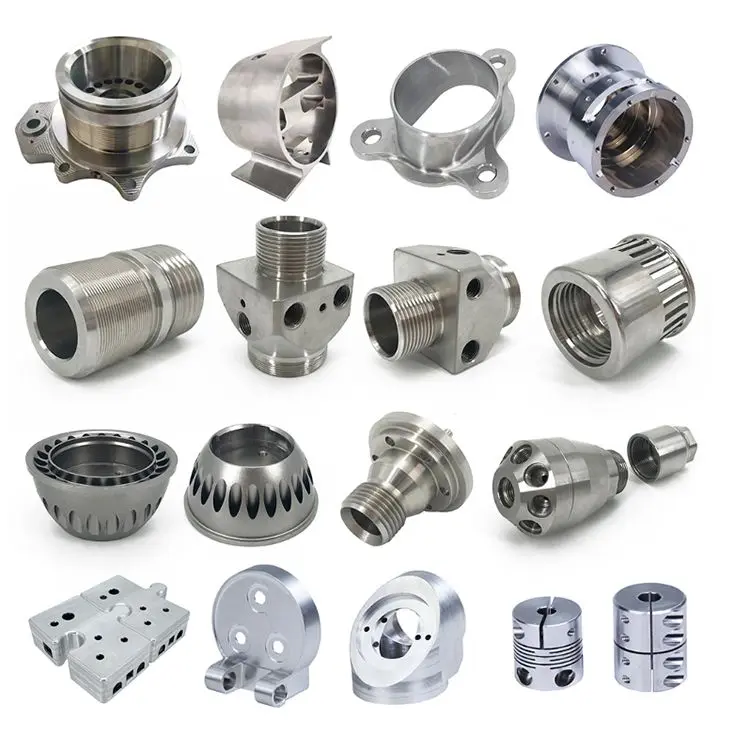
1. Superior Precision and Complex Geometry Capability CNC turning delivers exceptional repeatability and the ability to machine intricate designs. Advanced systems handle fine details, multiple steps, threads, and thin-walled structures with minimal error.
This results in reduced secondary operations, lower assembly tolerances, and improved end-product performance. In high-stakes sectors like medical and aerospace, such precision is invaluable.
2. Broad Material Compatibility CNC turning is highly versatile across materials, including aluminum alloys, stainless steel, carbon steel, brass, titanium, Hastelloy, Monel, and high-temperature alloys, as well as engineering plastics like ABS, PEEK, and nylon. It performs particularly well with stainless steel and exotic metals, maintaining excellent surface finish and dimensional stability even under challenging conditions.
This flexibility gives engineers greater freedom in material selection while ensuring optimal performance in extreme environments such as high temperature, pressure, or corrosive settings.
3. Flexibility from Prototyping to High-Volume Production Modern CNC turning providers seamlessly support the full production lifecycle—from single-piece prototypes for design validation to thousands of consistent production parts. Rapid prototyping accelerates iteration, while automated and lean manufacturing systems ensure efficient scaling.
Multi-facility operations and optimized processes significantly shorten lead times, enabling faster time-to-market in competitive industries.
4. Cost Efficiency and Sustainability High precision directly reduces scrap rates and material waste. Automation minimizes manual intervention, boosting overall efficiency. While initial programming requires investment, per-part costs decrease substantially with volume. Additionally, fewer downstream finishing operations help optimize total supply chain expenses.
5. Integrated Secondary Operations and One-Stop Delivery Top-tier providers combine turning with drilling, milling, threading, knurling, grinding, deburring, and surface treatments. Customers receive near-final parts, reducing the need for multiple vendors and improving quality consistency across the supply chain.
Typical Applications and Industry Case Studies
CNC turned parts are critical across numerous demanding sectors:
- Aerospace: Landing gear components, pneumatic valves, sensor housings, and blade connectors that must withstand extreme temperatures and vibration.
- Medical Devices: Surgical tool shafts, implantable components, and fluid delivery systems requiring biocompatibility and ultra-clean finishes.
- Automotive & EV: Motor shafts, sensor bodies, braking system parts, and fuel injection components.
- Defense & Military: Communication equipment parts and system components meeting strict ITAR and AS9100D standards.
- Oil & Gas / Heavy Machinery: Valve stems, pump shafts, and corrosion-resistant sealing parts.
Case Example: A medical device manufacturer developing a new minimally invasive surgical tool faced challenges with shaft tolerances and surface finish. By implementing Swiss-style CNC turning, they improved part tolerance from ±0.02 mm to ±0.005 mm, achieving a yield rate above 99.5%. This accelerated product launch and reduced overall project costs.
How to Choose a Professional CNC Turning Service Provider
Selecting the right partner is crucial for project success. Key evaluation criteria include:
- Technical Capabilities: Access to Swiss lathes, multi-axis turning-milling centers, and proven ±0.0002″ tolerance performance.
- Certifications: ISO 9001, AS9100D (aerospace), and ITAR registration for defense/aerospace projects.
- Material & Size Range: Strong coverage of metals, alloys, plastics, and appropriate diameter capabilities (especially for small, high-precision parts).
- Production Flexibility: Rapid prototyping response and reliable high-volume capacity.
- Quality Control: Rigorous inspection protocols, data security, and defect prevention systems.
- Value-Added Services: Design for Manufacturability (DFM) support, secondary machining, and surface finishing.
Experienced providers with comprehensive capabilities typically offer the best balance of quality, cost, and delivery performance.
Conclusion and Next Steps
CNC turned parts, with their outstanding precision, consistency, material versatility, and production efficiency, are reshaping modern precision manufacturing. As industries push toward higher performance, lightweighting, and faster innovation cycles, advanced CNC turning has become a strategic choice for leading companies.
Whether your project is in the prototyping phase or requires stable high-volume supply, partnering with a capable CNC turning specialist can deliver reliable results. If you have specific part drawings, material requirements, or tolerance specifications, we recommend engaging early with an experienced manufacturer for design optimization and cost-effective solutions.
Take Action Today: Share your part requirements or drawings for a professional manufacturability analysis (DFM) and quotation. Let us help bring your precision components to life efficiently and reliably.