For procurement managers, supply chain directors, and OEM design engineers, setting up a resilient hardware supply chain has become a complex task. In 2026, the global manufacturing landscape presents severe challenges. Sourcing parts from local machine shops in North America or Western Europe often means dealing with high quotes and lead times that delay product launches. On the other hand, exploring newer alternatives in emerging markets frequently reveals a lack of industrial infrastructure, turning what looked like a low-cost option into a cycle of quality issues and shipping delays.
When we look closely at sub-contract manufacturing, choosing China CNC machining services is no longer just about chasing the lowest piece price. Instead, it is about securing a high-density manufacturing ecosystem, rapid engineering iteration, and a reliable path from prototyping to mass production.
This guide avoids marketing hype to look at the shop-floor realities, cost structures, and data-backed engineering reasons why China remains a highly practical and scalable manufacturing choice for global hardware buyers.
1. Unmatched Cost-Effectiveness: Realizing Savings Beyond Labor Alone
A common misconception among overseas corporate buyers is that China’s manufacturing advantages rely entirely on low labor costs. While that was true three decades ago, the 2026 reality is different. Labor is only a small fraction of the total cost breakdown for a precision component.
The true cost efficiency of a premier Chinese machine shop comes from structural optimization, localized raw material sourcing, and minimized manufacturing overhead.
| Cost Drivers | Western Sourcing | China Sourcing |
| Raw Materials | ❌ High Material Markup Sourced from regional distributors with steep middleman margins. |
Direct Mill Sourcing Bulk-purchased directly from primary mills at base market rates. |
| Machine Costs | ❌ High Machine Rates ($90-$250+/hr) Driven up by expensive local overhead, land, and utilities. |
Optimized Machine Rates Minimized through 24/7 continuous shift rotation and automated cells. |
| Supply Chain | ❌ Fragmented Logistics Parts travel miles between separate, distant sub-contractors for plating/heat-treat. |
Hyper-Localized Supply Casting, machining, and surface finishing completed within a 5-mile industrial park. |
| Final Bottom Line | ⚠️ High Unit Price & Delayed Timelines | 🚀 Competitive Cost-Effectiveness & Rapid Turnaround |
The Raw Material Sourcing Disadvantage in the West
In North America and Western Europe, local machine shops rarely buy raw metals directly from primary mills unless they are running automotive-scale contract agreements. Instead, they buy from regional metal service centers and distributors who add significant markups to bar stock, plates, forgings, and castings.
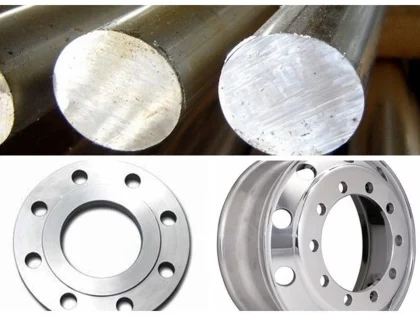
If your design specifies a standard industrial metal—such as Aluminum 6061-T6, 4140 alloy steel, or 316L stainless steel—a Western shop often pays a substantial premium just to get the raw material to their floor.
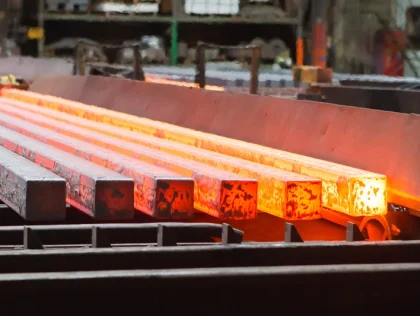
In contrast, major manufacturing hubs in China (like Shenzhen, Dongguan, Ningbo, and Suzhou) sit next to the world’s highest-concentration metal supply networks. Tier 1 Chinese machine shops source raw materials directly from massive, mill-certified domestic producers. Because they purchase in high volumes and have zero cross-border transport duties on raw stock, their base material cost is significantly lower before a single cutting tool touches the metal.
Machine Hourly Rates and Overhead Amortization
The capital expenditure of running a modern machine shop is steep. A high-end 5-axis vertical machining center carries the same base cost whether it sits in Ohio or Zhejiang. However, the cost of running that machine varies dramatically due to regional overhead.
- Western Hourly Rates: A standard 3-axis CNC milling machine in the US or Europe bills out at $75 to $100+ per hour, while a 5-axis mill-turn center can easily command $150 to $250+ per hour. These high rates are driven by expensive industrial real estate, high commercial utility costs, and heavy regulatory compliance burdens.
- Chinese Hourly Rates: By optimizing facility utilization through structured 24/7 shift patterns and taking advantage of localized industrial zone infrastructure, top-tier Chinese facilities can operate identical, high-precision CNC machinery at a fraction of that billable rate.
This reduction in hourly cost directly lowers the unit price of your custom components, especially for parts that require extensive material removal or long cycle times on complex, multi-axis setups.
Sourcing From Emerging Markets: The Hidden Premium
Faced with geopolitical adjustments, some procurement teams have tried shifting orders to newer alternatives in Southeast Asia or parts of Latin America, only to run into the “Imported Supply Chain Premium.”
If a shop in a developing country has to import specialized toolholders, high-performance carbide end mills, and specific steel alloys from abroad, they face shipping delays and import duties. These hidden costs are passed down to the buyer, often making their final quote less competitive than a Chinese supplier who has everything available within a five-mile radius.
2. Technical Expertise and Advanced Tooling Capabilities
There is a big difference between a garage shop running basic 3-axis mills and an industrial partner capable of maintaining true position tolerances of ±0.005mm on complex geometries. Global procurement managers often discover that moving a project to an unverified, low-cost country results in high reject rates because the local workforce lacks the deep engineering experience needed for precision work.
The Reality of Multi-Axis Machining
Modern hardware components—like complex hydraulic manifolds, multi-port pump housings, and thin-walled aerospace brackets—cannot be efficiently manufactured using simple, old-school setups. They feature deep internal cavities, intersecting bores, and compound angled surfaces that require advanced multi-axis capabilities.
- The 3-Axis Machining Method (High Setup Error): Setup 1 (Top) → Manual Flip → Setup 2 (Bottom) → Manual Flip → Setup 3 (Angle). This creates high risks of human error, part misalignment, and tolerance stacking.
- The 5-Axis Machining Method (High Precision): Single Setup → Continuous Tool Rotation & Pallet Interpolation. This ensures minimum human intervention, precise alignment, and excellent surface finish.
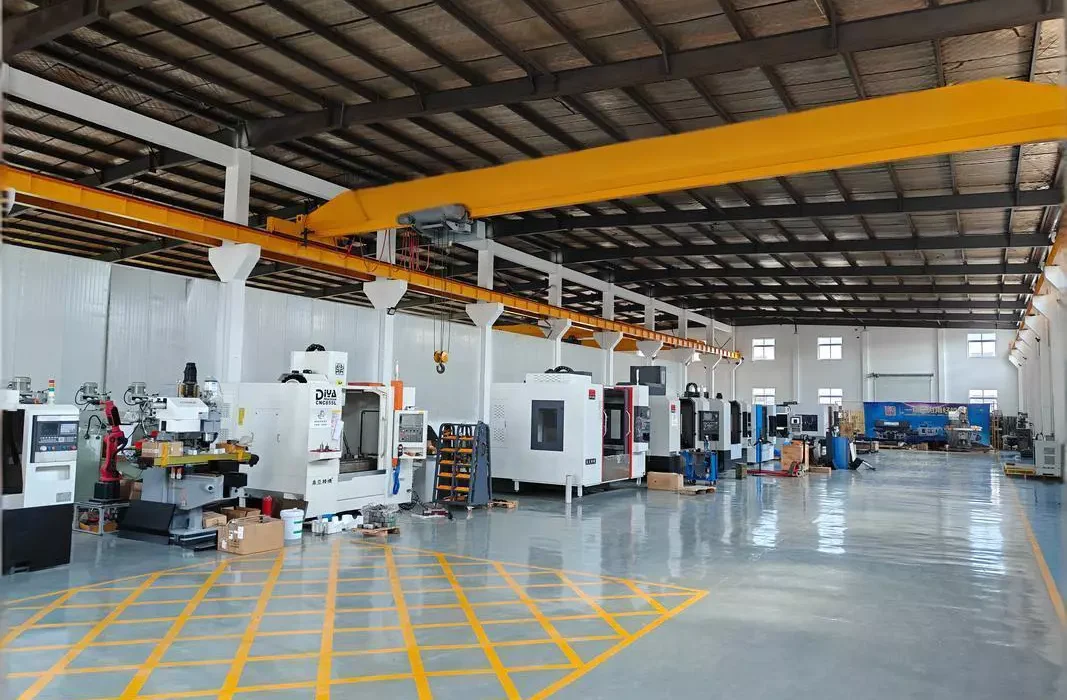
To run these parts successfully, a shop needs a large CNC machine fleet equipped with high-end machinery, including brands like Fanuc, Brother, Mazak, and Haas, or high-precision Taiwanese equivalents like YCM and Leadwell. Tier 1 Chinese manufacturers have invested heavily in these multi-axis setups. More importantly, their engineering teams have spent decades optimizing toolpaths for complex 5-axis CNC machining projects.
| Component Feature | Shop Capability Required |
| Thin-Walled Electronics Enclosures (<0.8mm) | High-speed spindles (20,000+ RPM) to prevent wall deformation and tool chatter. |
| Complex Hydraulic Manifolds & Port Blocks | 5-axis synchronization to eliminate setup errors across multi-angle bores. |
| Deep Internal Splines & Blind Keyways | Integrated precision EDM (Electrical Discharge Machining) and wire-cutting. |
Advanced Tooling and Workholding Innovation
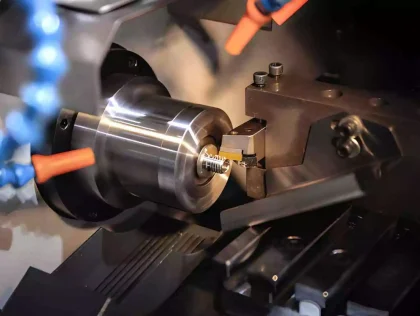
Precision machining relies heavily on how well a part is held and how cleanly it is cut. Top-tier Chinese shops routinely design and build complex custom workholding systems in-house.
By utilizing pneumatic indexing fixtures, hydraulic tombstone arrangements, and custom advanced tooling, they can machine dozens of parts simultaneously with minimal tool-change downtime. If a shop lacks this deep engineering experience, they will struggle with tool chatter, out-of-round bores, and poor surface finishes on complex parts. Chinese manufacturing centers offer a reliable combination of modern machinery and seasoned programming expertise, ensuring that complex parts are made correctly right from the start.
3. Turnaround Times and Infrastructure Speed (Speed to Market)
In hardware development, long delays during the prototyping or production phase can ruin a product launch. A supply chain that moves too slowly is a major risk. One of the most obvious advantages of working with Chinese CNC services is their sheer speed and responsiveness.
The Fragmented Western Supply Chain vs. The Chinese Industrial Cluster
Consider what happens when a procurement manager places an order with a typical domestic shop in a Western country for a parts run that requires casting, heat treatment, precision milling, and hard anodizing:
- Typical Western Sub-Contracting Route: Shop Cuts Metal → Ships to Heat Treater (1 Week Delay) → Returns to Shop for Grinding → Ships to Anodizer (1-2 Week Delay) → Final Delivery (Total: 6-8 Weeks).
Because industrial real estate is spread out and environmental zoning laws are highly restrictive, Western machine shops must rely on a network of distant sub-contractors. Your parts spend days idling in trucks, waiting in queues at separate facilities, and accumulating multiple rounds of shipping costs.
Now consider the infrastructure speed of China’s premier industrial clusters:
- Hyper-Localized Chinese Cluster Route: Direct Mill Stock → 24/7 CNC Machining → Local Heat Treatment → Local Anodizing Lines. All steps completed within a 10-kilometer radius (Total Turnaround Time: 2-3 Weeks).
In places like the Greater Bay Area (Dongguan/Shenzhen), the entire supply chain is hyper-localized. If a Chinese machinist needs a specific type of custom cutting tool, a specialized O-ring, or a particular surface treatment, they can get it delivered to their door within a few hours. Many Tier 1 machine shops even maintain their own in-house post-processing lines for popular finishes like black anodizing, passivation, and sandblasting. This localized infrastructure minimizes transit downtime, allowing them to offer reliable and highly competitive surface finishing services.
24/7 Production Scheduling
While many Western shops close their doors at 5:00 PM and remain dark over the weekend, premier Chinese facilities operate on organized, continuous rotating shifts. Your project’s production scheduling runs around the clock.
This constant momentum means that a complex DFM (Design for Manufacturability) review can be completed overnight, functional prototypes can be shipped out within 3 to 5 days, and full production runs can be completed and on a cargo plane before a slower shop would have even finished modifying their tooling fixtures.
4. Scalability: From Low-Volume to Mass Production
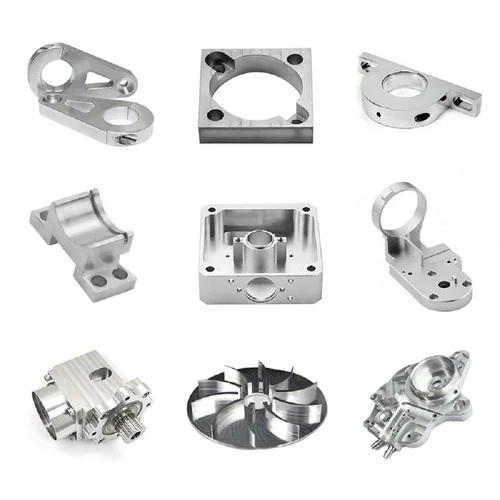
A common issue in global procurement is outgrowing a supplier. It can be frustrating to partner with a boutique local machine shop that does excellent work during prototyping, only to watch their lead times collapse when you issue a purchase order for several thousand units.
| Production Phase | Typical Timeline | Volume Target | Core Manufacturing Focus |
| 1. Design & DFM | 24–48 Hours | 3D Files / Prints | Eliminating machining bottlenecks before cutting metal. |
| 2. CNC Prototyping | 3–5 Days | 1–5 Pcs | Rapid functional testing and independent CMM inspection. |
| 3. Low-Volume Production | 2–3 Weeks | 100–5,000 Pcs | Minimizing CapEx via modular fixture amortization. |
| 4. Mass Scalability | Scheduled | 5,000+ Pcs | Maximizing throughput via automated horizontal CNC cells. |
The Agility of Low-Volume Production
Many modern hardware projects do not start with an order for 100,000 pieces. Instead, they require low-volume production runs of 100 to 2,000 units to support field testing, pilot series, or initial market rollouts. Western shops often dislike these mid-tier orders; they either quote high setup fees to discourage the business or prioritize their larger, long-term legacy clients, leaving smaller orders delayed.
Chinese Tier 1 shops handle this middle ground with high flexibility. They use modular workholding systems and advanced CAM programming to run low-volume production batches quickly and cost-effectively, helping you bridge the gap between initial prototyping and full-scale production.
The Multi-Axis Equipment Base
When your product succeeds in the market and demands surge, a premier Chinese partner can scale up production instantly. If a shop operates dozens of identical, high-precision machining centers, they can duplicate your verified setups across multiple machines overnight. This extensive capacity gives you a highly scalable supply chain, ensuring that a sudden spike in consumer demand won’t leave you waiting on a backordered production queue.
5. Rigid Quality Insurance and CMM Inspection Frameworks
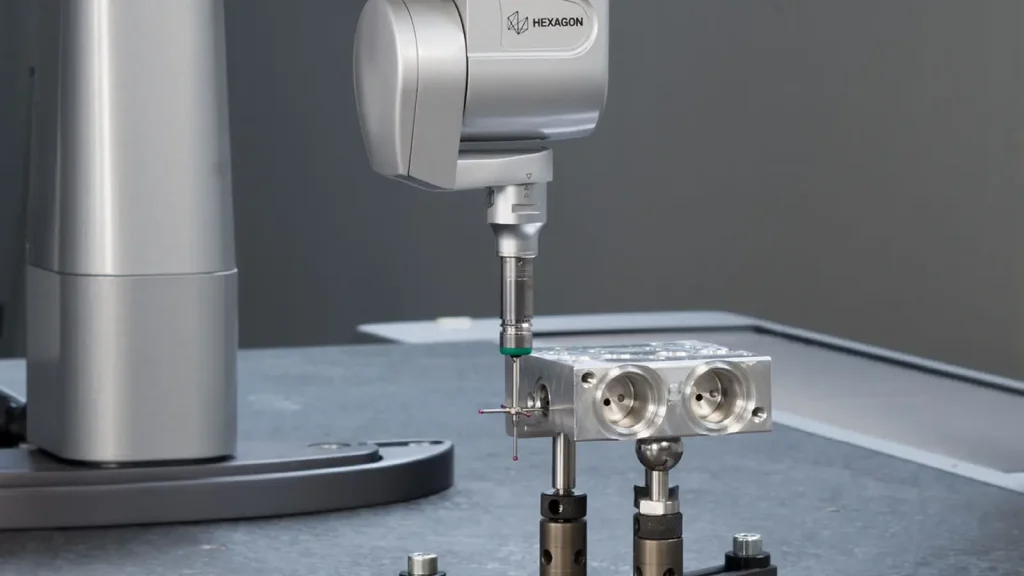
A low unit price means very little if twenty percent of the parts arrive out-of-spec and fail your assembly line checks. In the past, international buyers worried about consistent quality when sourcing from overseas. However, the top-tier Chinese machine shops of 2026 implement highly rigorous, documented quality insurance processes.
- Step 1: Incoming Material Inspection → Verify raw stock heat lots using XRF Spectrometers before release.
- Step 2: In-Process IPQC → Operator manual checks with calibrated micrometers every 10–15 parts to catch tool drift.
- Step 3: Metrology & Final FQC → Climate-controlled laboratory inspection utilizing CMM equipment for full dimensional verification.
Beyond the ISO 9001 Certificate
An ISO 9001 certificate is a standard starting point for international manufacturing, but a truly reliable shop proves its quality right on the workshop floor. Top-tier manufacturers back up their quality claims with an impressive array of advanced metrology equipment:
- Coordinate Measuring Machines (CMM): Vital dimensions, true position metrics, and critical geometric tolerances (like flatness, parallelism, and cylindricity) are verified inside a climate-controlled inspection room using automated CMM inspection systems.
- Optical Comparators & Vision Systems: Used for checking complex thread profiles, chamfers, and external contours where manual micrometers cannot provide precise enough readings.
- XRF Spectrometers: Used to test the chemistry of incoming metal bars, ensuring the material exactly matches international standards before it is released to the machines.
Fully Documented Traceability
When your parts ship out from a high-quality Chinese facility, you receive a full digital quality package. This data package typically includes:
- A traceable Material Test Report (MTR) confirming the raw metal’s chemical composition and heat lot.
- A comprehensive First Article Inspection Report (FAIR) covering all critical-path dimensions.
- Certificate of Conformance (RoHS, REACH, or specific plating thickness readouts where required).
This rigorous focus on quality tracking gives you peace of mind, ensuring that your parts arrive fully verified and ready for immediate assembly.
6. Metal and Plastic Material Selection for Industrial Applications
The structural performance and cosmetic finish of a part depend entirely on the quality of its material. Premium Chinese machine shops source their materials from verified suppliers, avoiding cheap, non-standard metal scraps that can cause stress fractures or uneven finishes during anodizing.
| Material Category | Common International Grades | Primary Industrial Applications |
| Aluminum Alloys | 6061-T6, 7075-T6, 5052 | Structural blocks, aerospace brackets, and electronics enclosures. |
| Stainless Steels | 304, 316L, 17-4 PH | Marine fittings, hydraulic valves, and medical components. |
| Carbon/Alloy Steels | 1045, 4140, 8620 | High-load shafts, heavy gears, and industrial structural pins. |
| Engineering Plastics | PEEK, POM (Delrin), Nylon | Electrical isolators, wear strips, and medical prototypes. |
Material Quality Control
When machining high-stress parts like hydraulic cylinders or heavy-duty solar tracker components, using certified alloys is critical. Reliable Chinese shops implement strict material segregation protocols, ensuring that carbon steels never contaminate your precision stainless steel machining runs, and providing full material traceability for every project.
7. Optimizing Part Design: How DFM Feedback Cuts Sourcing Costs
The most direct way to lower your manufacturing expenses is to optimize your part designs for subtractive machining before production begins. A professional, experienced Chinese machine shop won’t simply cut a flawed drawing and bill you for the extra time; their engineering team will provide actionable DFM feedback to simplify setups and minimize production costs.
The Corner Radius and Deep Pocket Dilemma
Because CNC cutting tools are round, designing sharp internal 90-degree corners forces a shop to use slow, secondary operations like wire EDM or plunging cuts. Similarly, designing extra-deep pockets with small internal radiuses requires long, fragile cutting tools that must be run at significantly reduced speeds to prevent breakage.
The Golden Rule: Keep your pocket depth under 3 times the tool diameter.
By allowing generous corner radiuses in your drawings, you enable the shop to use rigid, high-feed cutters, which drastically cuts machine cycle times and lowers your billable costs. Read our complete guide on design for manufacturability (DFM) to optimize your CAD files before exporting.
Setting Practical Tolerances
It can be tempting to apply a tight global tolerance of ±0.01mm (±0.0004 in.) on every single dimension on a part drawing. However, if a feature is just an open clearance hole or a cosmetic outer edge, strict tolerances add unnecessary cost.
Tight tolerances require specialized finishing passes, frequent tool changes, and slow, climate-controlled inspections. For non-critical dimensions, defaulting to international standards like ISO 2768-m allows the shop to run at maximum efficiency, passing the direct cost savings on to you.
8. Making an Objective Decision: The 3D Comparison Matrix
To summarize the global manufacturing landscape for your team’s next procurement review, here is a direct comparison of how different sourcing regions perform across key manufacturing metrics:
| Sourcing Performance Metric | China (Tier 1 Precision Facilities) | North America / Western Europe | Emerging Markets (Alternative Regions) |
| Hourly Machine Rates | Highly optimized and competitive | High ($90 – $250+ per hour) | Moderate, but offset by slow cycle speeds |
| Raw Material Availability | Instant access; direct mill pricing | Higher domestic markups | Limited; relies on imported metal stock |
| Engineering Response Speed | Fast 24/7 DFM turnarounds | Thorough but slower office feedback | Variable; limited engineering depth |
| Supply Chain Integration | Complete (Casting to anodizing locally) | Fragmented regional sub-contractors | Low; relies on cross-border processing |
| Scalability (Prototype to Mass) | Seamless; large, flexible machinery pools | Limited capacity in local boutique shops | Difficult; unstable output at high volumes |
| Quality Tracking | Full CMM reports and traceable material certifications | Documented, but expensive administration | Inconsistent; limited metrology labs |
Conclusion & Actionable Next Steps
Sourcing precision CNC machining services from China in 2026 is an effective way to optimize your hardware supply chain. It is a strategic choice focused on engineering transparency, verified quality control metrics, and localized infrastructure speed.
By partnering with an experienced, communication-focused Chinese manufacturer, you protect your production timelines from unexpected delays, lower your total cost of ownership, and ensure your custom components arrive exactly to specification.
Ready to streamline your manufacturing pipeline for your upcoming projects? Skip the generic sales pitches and consult directly with our workshop engineering team. Upload your STEP/IGS files today to receive a detailed DFM review and a transparent technical quote within 24 hours.