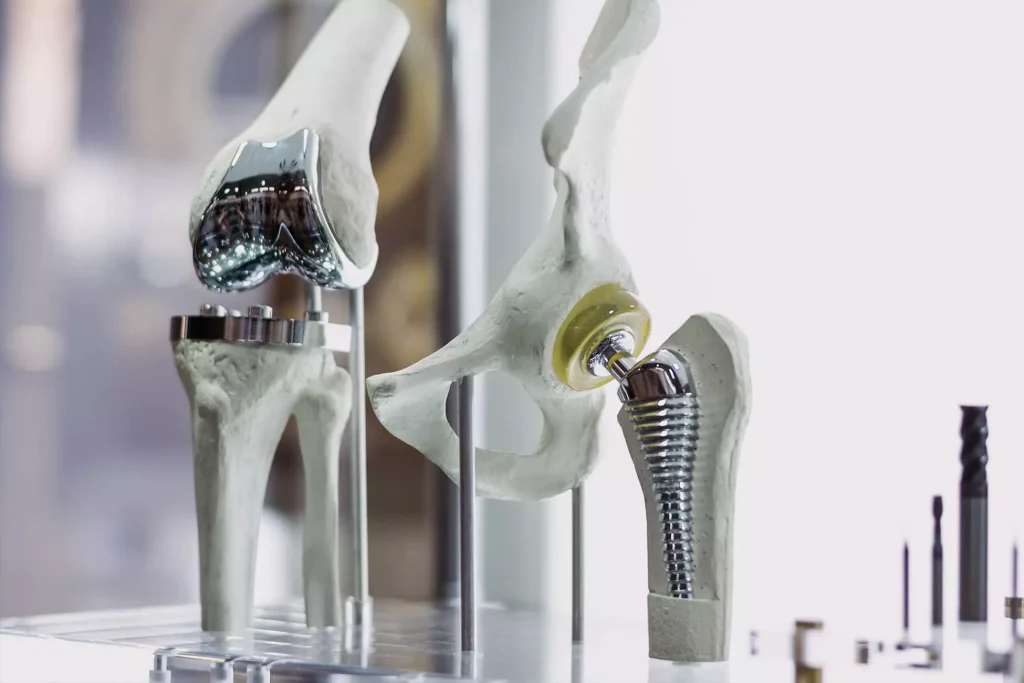
In the world of medical device manufacturing, a +/- 0.005mm (5-micron) tolerance is not a theoretical goal—it is often a strict functional requirement. Whether it is a dental abutment, a bone screw interface, or a complex cardiovascular housing, these dimensions dictate the success of the surgical assembly and the long-term safety of the patient.
However, for a procurement engineer or a project manager, the challenge isn’t finding a shop that claims they can hit 5 microns. The challenge is finding a partner who can hit that number consistently across a batch of 5,000 parts without skyrocketing costs or suffering from “tolerance drift” mid-production.
1. The Engineering Reality of Titanium (Ti-6Al-4V ELI)
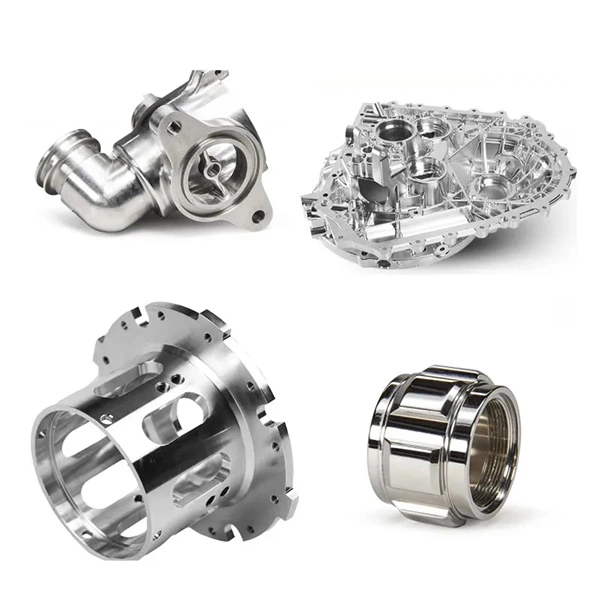
Most machine shops can mill aluminum to tight tolerances. Titanium is a different animal. As a B2B buyer, you need to know that the material’s inherent properties—low thermal conductivity and high elasticity—work against the +/- 0.005mm requirement.
When we machine Grade 23 (ELI) titanium, the heat doesn’t dissipate through the chip; it stays at the cutting edge. This leads to tool deformation and thermal expansion of the workpiece. If the shop doesn’t account for the residual stress released during the removal of material, the part may measure perfectly on the machine but fail inspection 24 hours later after the internal stresses have “settled.”
2. DFM: Balancing Precision and Production Costs
High precision usually implies high cost. However, through Design for Manufacturing (DFM) collaboration, we often find that “over-tolerancing” is the primary driver of unnecessary expense.
During the technical review of a RFQ, our role is to identify which dimensions are truly “critical to function” (CTF). Maintaining a 5-micron tolerance on a non-mating surface increases the scrap rate and cycle time without adding value to the implant.
Cost Drivers in High-Tolerance Titanium Machining
| Variable | Impact on ±0.005mm Tolerance | Cost Mitigation Strategy |
| Cycle Time | High precision requires slower finishing passes to manage heat. | Use high-efficiency milling (HEM) for roughing to save time for precision finishing. |
| Tooling | Titanium is abrasive; tool wear causes dimensional drift. | Implement automated tool-life management and laser breakage detection. |
| Workholding | Mechanical deformation from clamping can exceed 5 microns. | Utilize zero-point clamping systems and vacuum fixtures where applicable. |
| Scrap Rate | Tight tolerances naturally increase risk of out-of-spec parts. | In-process probing and SPC (Statistical Process Control) monitoring. |
3. Solving the “Tolerance Drift” in Mass Production
Hitting a 5-micron target on a prototype is a matter of skill. Hitting it on the 1,000th part requires a controlled ecosystem. To prevent drift, three pillars must be synchronized:
A. Thermal Stability of the Environment
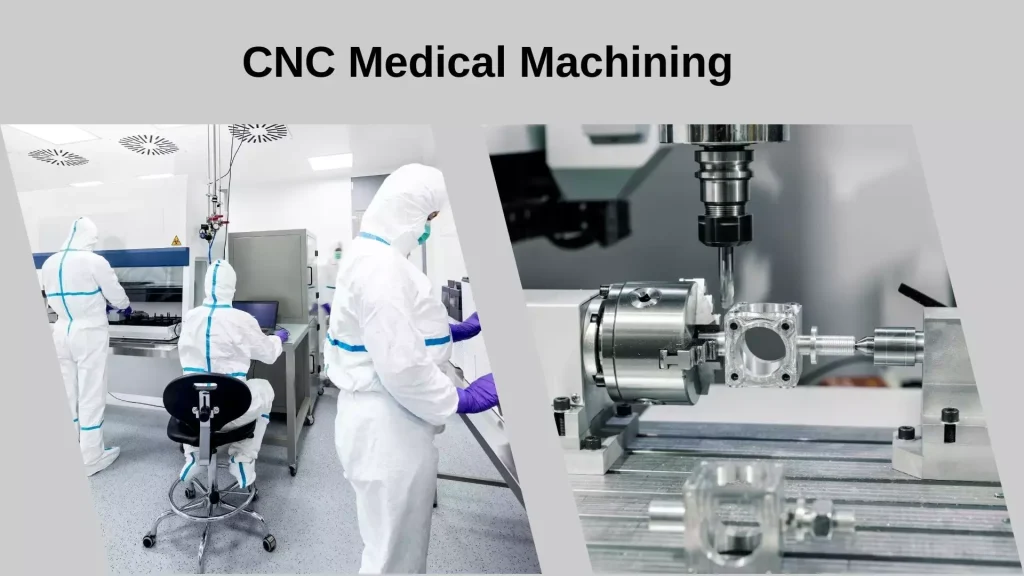
A 1°C change in ambient shop temperature can cause a machine’s spindle or the titanium workpiece to expand by several microns. For medical implants, we operate in climate-controlled environments where the temperature is regulated 24/7. This ensures that the “zero point” of the machine remains constant from the first shift to the third.
B. High-End 5-Axis Platforms
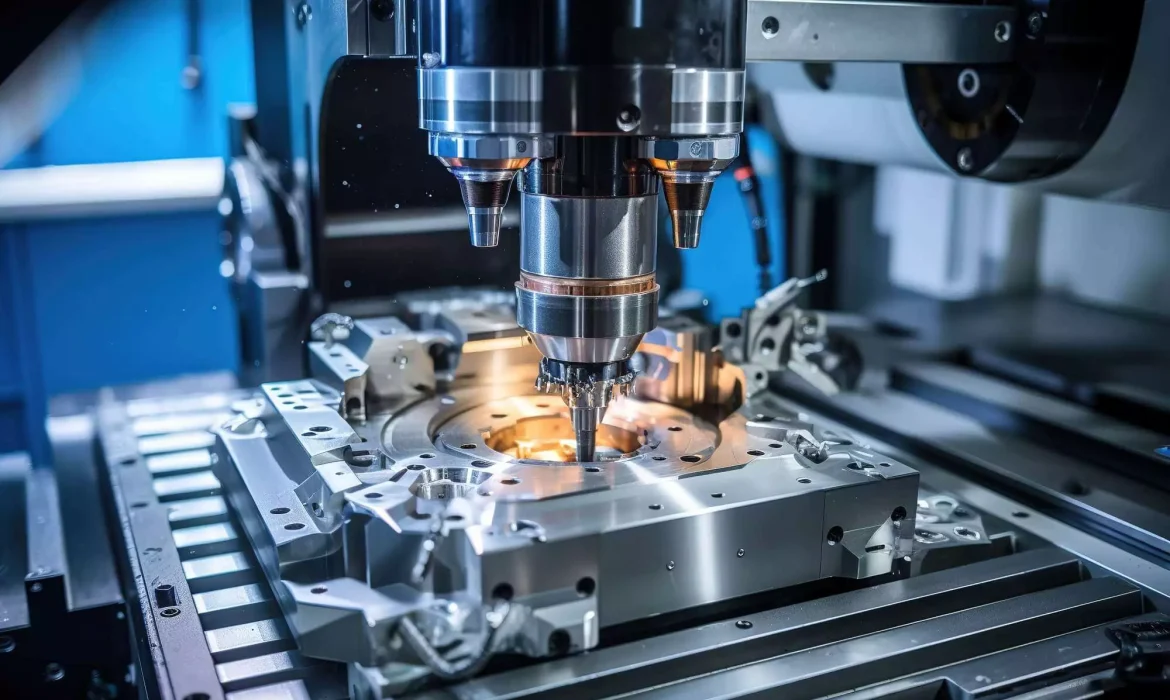
Standard CNC lathes or 3-axis mills often lack the rigidity required for sub-10-micron work. We utilize high-end 5-axis platforms (such as Kern or Willemin-Macodel style precision) that feature:
- Liquid-cooled spindles to negate thermal growth.
- Glass scales on all axes for direct position feedback, bypassing the errors of ball screw thermal expansion.
- High-frequency vibration monitoring to ensure tool chatter doesn’t ruin the surface finish (Ra) or the dimensional accuracy.
C. Tooling Geometry and Coating
We don’t use “general purpose” end mills. For medical titanium, we select tools with specific rake angles to reduce cutting force and coatings like AlTiN (Aluminum Titanium Nitride) that provide a thermal barrier. This preserves the sharp edge longer, ensuring the final finishing pass is identical across the entire lot.
4. Quality Assurance: Beyond the “Passed” Label
For a procurement manager, the “Passed” stamp on a QC report is only as good as the data behind it. In medical manufacturing, we prioritize metrology alignment. If our CMM (Coordinate Measuring Machine) measures+/- 0.005mm but your incoming inspection measures +/- 0.007mm, the project stalls.
We align our measurement protocols with yours before the first production run. This includes:
- Gage R&R Studies: Ensuring that the measurement system is repeatable and reproducible.
- In-Process Probing: Using infrared probes to check dimensions before the part leaves the fixture.
- CMM Verification: Using Zeiss-level scanning to verify complex geometries that manual micrometers cannot capture.
Medical Implant Quality & Compliance Checklist
| Requirement | Description | Deliverable to Customer |
| Material Traceability | Verification of Ti-6Al-4V ELI chemistry and mechanical properties. | Raw Material MTR (Material Test Report). |
| Process Validation | Proof that the process is stable and capable (Cpk > 1.33). | IQ/OQ/PQ Validation Protocols. |
| Surface Integrity | Ensuring no “Alpha Case” or surface burning occurred during machining. | Surface Roughness (Ra) Reports & Cytotoxicity clean-room logs. |
| Contamination Control | Removal of all machining oils and metallic cross-contamination. | Ultrasonic Cleaning & Citric Acid Passivation records. |
5. Managing the Risk of Post-Machining Processes
A common mistake in medical procurement is ignoring what happens after the CNC machine stops. Titanium implants often require secondary operations:
- Anodization: Can change the dimensions by 1–2 microns.
- Passivation: Essential for biocompatibility but can slightly etch the surface.
- Sterile Packaging: Requires parts to be handled in a way that prevents microscopic nicks or scratches.
We calculate these “process offsets” into our initial machining. If a part needs Type II anodization, we machine it to the lower end of the tolerance band so that the finished product lands exactly in the “sweet spot” of your +/- 0.005mm requirement.
6. Communication: The “Shop-Floor” Authority
We understand that as a project manager, you are the bridge between your R&D engineers and your finance department. You need a supplier who speaks both languages.
When we encounter a design that is “unmanufacturable” at the 5-micron level, we don’t just send a rejection. We provide a technical alternative. For example, if a deep internal bore has a +/- 0.005mm requirement, we might suggest a change in the corner radius to allow for a more rigid boring bar, reducing tool deflection and ensuring the tolerance is actually achievable in mass production.
Conclusion: Partnership Over Procurement
Achieving $\pm 0.005$mm in titanium is not about a “secret” machine or a “magic” tool. It is about the rigorous application of engineering principles, environmental control, and transparent quality data.
In the medical industry, the cost of a failed component far exceeds the price of the part itself. By focusing on Process Capability (Cpk) and Risk Mitigation, we ensure that your project moves from the drawing board to the surgical suite without the headaches of rejected batches or assembly failures.
Are you facing a challenge with a complex titanium implant? Let’s skip the marketing pitch. Send us your STEP file and your GD&T requirements, and let’s discuss the tool paths, cooling strategies, and measurement protocols required to make your project a success.