
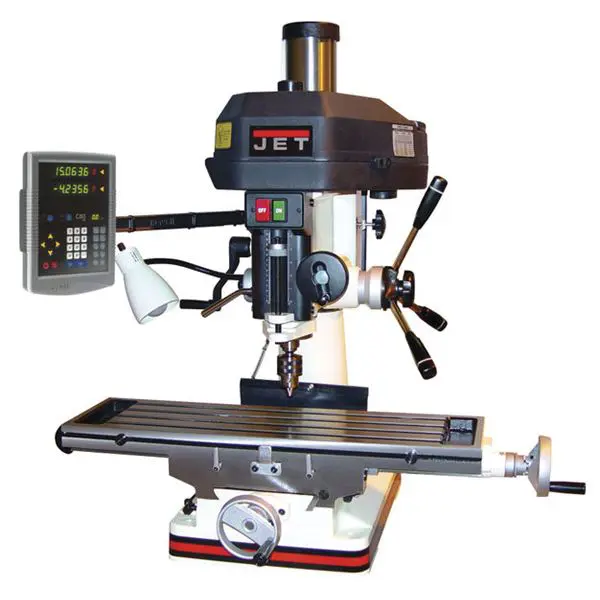
If you’ve ever wondered what is CNC milling and why it’s essential in modern manufacturing, you’re in the right place. CNC milling is a precise, computer-controlled process used to shape metal, plastic, and other materials into complex parts with incredible accuracy. Whether you’re a student, engineer, or business owner, understanding how CNC milling works and its advantages can open the door to smarter design and production choices. In this guide, you’ll get a clear, straightforward explanation of the CNC milling process, its key machines, common applications, and why it continues to dominate precision manufacturing in 2025. Let’s dive in!
CNC Milling Definition – What Exactly Is It?
CNC milling is a precision machining process where a computer-controlled cutting tool removes material from a solid block (called a workpiece) to create a specific shape or part. The acronym CNC stands for Computer Numerical Control, meaning the machine follows coded instructions to perform precise cuts automatically.
Technical Definition
In technical terms, CNC milling uses rotating multi-axis cutting tools guided by data from G-code — a language that tells the machine exact movements. The process transforms digital designs into physical parts with tight tolerances and smooth finishes.
Conventional Milling vs. CNC Milling
| Aspect | Conventional Milling | CNC Milling |
|---|---|---|
| Control | Manual by operator | Automated via computer program |
| Precision | Operator-dependent | Highly precise & repeatable |
| Complexity | Limited to simpler shapes | Handles complex geometries |
| Speed | Slower, less efficient | Faster and more consistent |
| Setup | Time-consuming, manual | Streamlined via CAD/CAM software |
Role of G-code and CAD/CAM Software
- CAD (Computer-Aided Design): Used to create 3D digital models of the part.
- CAM (Computer-Aided Manufacturing): Converts CAD models into toolpaths, generating G-code.
- G-code: A set of instructions that tells the CNC machine exactly how to move tools, at what speed, and where to cut.
At MS Machining, we leverage advanced CAD/CAM workflows and precise G-code programming to deliver consistent, high-quality CNC milling parts tailored to your exact specifications.
How CNC Milling Works: Step-by-Step Process

CNC milling starts with a detailed design, usually created as a 3D model in CAD (Computer-Aided Design) software. This digital blueprint lays out every detail needed for the part.
Next, the design is imported into CAM (Computer-Aided Manufacturing) software, where programmers generate the toolpaths and write the G-code – the instructions the CNC milling machine follows to cut the material.
Once the program is ready, the machine setup begins. This involves securing the workpiece with proper workholding devices and loading the cutting tools needed for the job. Proper setup is crucial for accuracy and safety.
The machine then runs the program, performing automated machining where the cutting tools move precisely to shape the material layer by layer without manual intervention.
After machining, the final step is quality inspection. Parts are measured using tools like calipers, micrometers, or CMM (Coordinate Measuring Machines) to ensure they meet specified tolerances before moving on to any post-processing or assembly.
For a deeper dive into CNC machining for aerospace or other industries, check out our detailed guide on CNC machine shop for the aircraft industry.
Main Types of CNC Milling Machines
CNC milling machines come in several types, tailored for different levels of complexity and production needs.
3-axis CNC mills: These are the most common and widely used machines. They move the cutting tool along three axes (X, Y, and Z), ideal for simple to moderately complex parts. Most shops rely on these for precision and cost-effective milling.
4-axis and 5-axis milling: Adding a fourth or fifth axis allows the tool or the part to rotate, making it possible to machine more complex geometries in a single setup. Five-axis milling is especially useful for aerospace and medical components where intricate shapes and tight tolerances matter.
Vertical Machining Centers (VMC) vs. Horizontal Machining Centers (HMC):
- VMCs have a vertically oriented spindle and are versatile for a wide range of parts. They are common in most manufacturing facilities.
- HMCs have a horizontal spindle, which enables better chip evacuation and is often preferred for heavier, deeper cuts and larger workpieces.
Desktop mills vs. industrial gantry routers:
- Desktop mills are smaller, affordable, and suited for prototyping, hobbyists, or light-duty production.
- Industrial gantry routers handle large panels and heavy-duty materials typical in automotive, aerospace, or large-scale manufacturing.
Choosing the right CNC milling machine depends on your part complexity, production volume, and material needs. For specialized metals like brass, MS Machining offers expert brass CNC machining services optimized for precision and quality.
Common CNC Milling Operations
CNC milling covers a range of machining tasks, each suited for different shapes and features. Here are the most common operations:
Face Milling: This is used to create flat surfaces or smooth a rough surface. The cutting tool moves across the workpiece’s face, quickly removing material to prepare it for further machining or finishing.
Pocket Milling: This operation mills recesses or cavities into the part. It’s often used to clear out areas for components or reduce weight inside solid parts.
Slot Milling: Slot milling cuts straight or curved slots through the material, useful for keyways, grooves, or channels in mechanical parts.
Profile/Contour Milling: This follows the perimeter or complex edges of the part to shape profiles or contours, often used for detailed finishing or complex shapes.
Drilling, Tapping, Boring: Beyond milling, CNC machines also perform drilling holes, tapping threads, and boring to enlarge holes, enabling multi-functional machining in one setup.
High-Speed Machining (HSM): HSM employs faster spindle speeds and feed rates for improved surface finish and reduced cycle times, ideal for small, precise parts and lightweight materials.
These operations make CNC milling incredibly versatile, allowing manufacturers across aerospace, automotive, and medical industries to produce parts with precision and efficiency. For top-notch machining, companies often combine these processes to optimize both quality and production time.
For more on precision machining and metalwork, check out our detailed stainless steel CNC machining services.
Materials Suitable for CNC Milling
CNC milling works well with a wide range of materials, making it a versatile choice for many industries. Common metals like aluminum (including 6061, 7075, and MIC-6) are popular for their lightweight and machinability. Steel and stainless steel offer durability and strength for tougher parts, while titanium is favored in aerospace and medical fields for its strength-to-weight ratio.
For conductive components, brass and copper are often milled with precision; you can find specialized machining options for these metals at providers focused on custom metal parts like brass. Engineering plastics such as PEEK, Delrin, and Nylon also machine well, offering lightweight and corrosion-resistant alternatives. Finally, exotic alloys like Inconel and Hastelloy serve highly specialized needs in extreme environments, although they require advanced CNC milling setups due to their hardness.
Choosing the right material depends on your project’s requirements for strength, weight, and finish. For example, custom metal fabrication services often handle everything from aluminum prototypes to exotic alloy production with ease.
CNC Milling vs CNC Turning – Key Differences
CNC milling and CNC turning are two core machining processes, but they work differently and serve distinct purposes. Here’s a quick comparison to help you understand the key differences:
| Feature | CNC Milling | CNC Turning |
|---|---|---|
| Process | Removes material by rotating a cutting tool around a stationary part | Rotates the workpiece while a stationary tool cuts |
| Geometry | Creates complex 3D shapes, pockets, slots, contours | Best for cylindrical parts like shafts, bushings, threads |
| Typical Parts | Engine blocks, aerospace components, molds | Shafts, pins, pulleys, threaded parts |
| Tooling | Multiple tools, often automated tool changers | Single or few cutting tools, typically turning tools and drills |
| Axes Movement | Usually 3 to 5 axes for complex shapes | Mainly 2 axes (spindle and tool post), some multi-axis turning possible |
| Workpiece Shape | Shapes with flat, angled, or curved surfaces | Round or tubular shapes |
| Setup Time | Generally longer due to complex programming | Faster setup for simple round parts |
| Material Waste | More, due to subtractive milling of bulk material | Less, as turning removes material radially |
| Typical Industries | Aerospace, automotive, medical implants | Automotive shafts, plumbing fittings, fasteners |
Selecting between CNC milling and turning depends on the part design, geometry, and production volume. Milling shines with complex parts like those used in aerospace manufacturing (see our aerospace machining components page for examples), while turning is perfect for precision round components.
Understanding these differences can save time and costs in your manufacturing process.
Advantages and Limitations of CNC Milling
Advantages
- Extremely high precision: CNC milling machines can achieve tolerances as tight as ±0.0005″, making them ideal for precision parts.
- Excellent repeatability: Once programmed, the machine consistently produces the same quality part with minimal variation.
- Complex geometries in one setup: Advanced 5-axis CNC mills allow for machining intricate shapes and undercuts without repositioning the workpiece, saving time and reducing errors.
- Reduced labor cost: Automation means fewer manual operations and less hands-on work, lowering overall production costs.
Limitations
- Higher initial programming time: Setting up the CAD/CAM models and writing the G-code can be time-consuming before machining begins.
- Material waste compared to additive methods: Since CNC milling is subtractive, excess material is removed as chips, which may lead to higher raw material costs versus 3D printing.
- Tool wear on hard materials: Milling tough metals like titanium or exotic alloys accelerates tool wear, requiring frequent tool changes or advanced tooling to maintain efficiency.
Understanding these pros and cons can help you decide if CNC milling is the right fit for your manufacturing needs or when to consider alternative methods. For precise parts made with complex features, precision CNC milling services often provide the best balance of quality and cost. See how MS Machining’s precision CNC milling services can meet demanding specifications.
Real-World Applications of CNC Milling
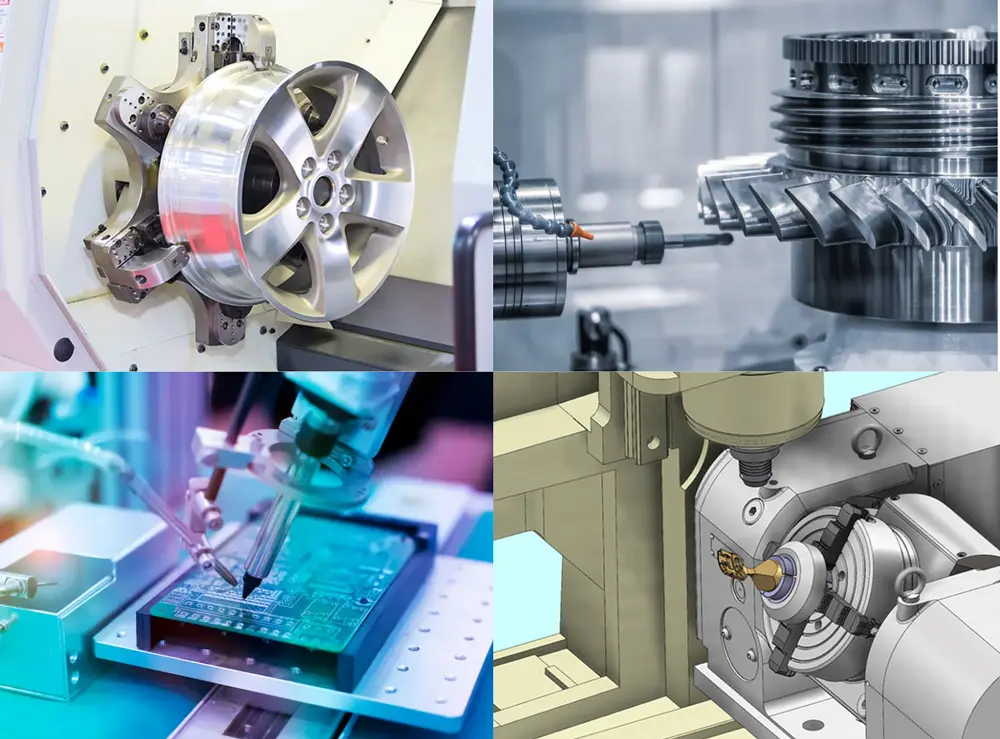
CNC milling plays a crucial role across many industries in the U.S., thanks to its precision and versatility. In aerospace, it’s used to create turbine blades and structural components that must meet strict safety and performance standards. The automotive sector relies on CNC milling for engine blocks, transmission parts, and other components that demand tight tolerances and durability.
In the medical field, CNC milling helps produce implants and surgical instruments with high precision, ensuring patient safety and effectiveness. Consumer electronics manufacturers use CNC milling to machine enclosures, heat sinks, and intricate parts that require fine detail and excellent surface finish.
Defense and firearms industries count on CNC milling for reliable, precise parts essential to safety and function. Finally, prototyping and low-volume production benefit greatly from CNC milling’s flexibility, allowing quick iterations and complex designs without large upfront tooling costs.
For high-precision CNC machining services tailored to diverse needs, including aerospace and medical parts, MS Machining’s expertise can be a valuable resource.
Achieving Tight Tolerances and Surface Finish

At MS Machining, we consistently achieve tight tolerances to ensure your parts meet exact specifications. Our standard tolerance is ±0.001″, but for high-precision needs, we can hold tolerances as tight as ±0.0002″ upon request. This level of precision is critical for applications in aerospace, medical devices, and other industries where every fraction of an inch counts.
Several factors affect the accuracy of CNC milling parts, including:
- Machine calibration and rigidity
- Tool condition and selection
- Thermal expansion during machining
- Workholding stability
- Programming accuracy in CAD/CAM software
To further improve surface finish and part performance, post-processing treatments are commonly applied, such as:
- Anodizing to enhance corrosion resistance and surface hardness
- Heat treatment to improve material strength
- Polishing for a smooth, clean appearance and optimal functionality
Selecting the right combination of machining precision and post-processing helps ensure you get parts that fit perfectly and perform reliably in their intended environment. For a deeper dive into the CNC milling process and how we maintain such precision, check out our detailed guide on what is CNC machining and what does CNC stand for.
How to Choose a CNC Milling Partner in 2026
Picking the right CNC milling partner is key to getting reliable, high-quality parts on time and on budget. Here’s what to look for:
| Factor | What to Check | Why It Matters |
|---|---|---|
| Certifications | ISO 9001, AS9100 (especially for aerospace) | Ensures quality systems and industry standards |
| Machine Capabilities | Access to 3-axis, 4-axis, and 5-axis mills | More complex geometries and precision options |
| Material Expertise | Experience with your material (aluminum, titanium, exotic alloys) | Saves time, avoids issues, ensures proper handling |
| Inventory & Supply | Stock of raw materials and reliable suppliers | Reduces lead times, avoids delays |
| Lead Time & Pricing | Transparent quotes and realistic delivery schedules | Helps meet project timelines and budget goals |
| Quality Reports | First Article Inspection (FAI), Coordinate Measuring Machine (CMM) inspections, material certifications | Confirms parts meet specs before full production |
Choosing a partner familiar with your part type and material, like precision CNC milling services, streamlines the process and reduces risks. Look for a shop that shares clear quality control info and adapts to your schedule.
In 2026, don’t just pick the cheapest or fastest option — pick the CNC milling provider who guarantees accuracy, transparency, and expertise for your project’s success.