

Traditional CNC machining used to be a battle of friction and mechanical wear. Not anymore.
In 2026, laser for CNC cutting has moved the shop floor away from “contact” tools toward a high-speed, non-contact science. If you are an engineer or procurement manager, you know that the difference between a successful prototype and a scrap pile often comes down to precision tolerances and managing the Heat-Affected Zone (HAZ).
At MS Machining, we’ve moved past the hobbyist “add-on” phase. We’re talking about fiber laser technology capable of ±0.005mm accuracy and burr-free edges on everything from stainless steel to complex medical-grade polymers.
This guide cuts through the marketing fluff to deliver the raw technical data on kerf width, material thickness capacity, and CAD/CAM workflow optimization.
Let’s dive in.
Understanding the Hardware: Fiber vs. CO2 vs. Diode
Choosing the right laser for CNC cutting determines your edge quality, production speed, and material compatibility. On our shop floor, we don’t look at “all-purpose” machines; we look at wavelength and beam delivery to ensure precision tolerances.
Fiber Lasers: The “Gold Standard” for Metals
Fiber laser cutting is the powerhouse of modern sheet metal fabrication. These systems use a solid-state laser source that is highly absorbed by reflective metals. If your project involves stainless steel laser cutting or aluminum, fiber is the only logical choice.
- Wavelength: Roughly 1.06 micrometers, allowing for a focused, high-density spot.
- Efficiency: Up to 3x more energy-efficient than CO2 systems.
- Best For: Thin to medium-gauge carbon steel, stainless, and non-ferrous metals like copper and brass.
- Edge Quality: Delivers burr-free edges on high-speed runs.
CO2 Lasers: The Versatile Workhorse for Non-Metals
While fiber wins on metal, CO2 laser technology remains the standard for organic materials and thicker non-metals. It relies on a gas mixture (Carbon Dioxide, Helium, and Nitrogen) stimulated by electricity.
- Material Versatility: Ideal for wood, acrylic, glass, and certain technical plastics.
- Finish: Produces a polished, “flame-cut” look on thick acrylics that fiber cannot replicate.
- Constraint: Poor performance on reflective metals due to the 10.6-micrometer wavelength being reflected rather than absorbed.
Diode Lasers: Hobbyist Add-ons vs. Industrial Production
You will often see CNC laser engraver kits using diode technology. While they have improved, there is a massive gap between a desktop diode and industrial-grade hardware.
- Hobbyist Use: Great for marking wood or cutting very thin paper and cardboard.
- Industrial Reality: Generally lack the laser power (Watts) required for high-volume manufacturing or thick material thickness capacity.
- Production Role: Mostly relegated to secondary marking or low-speed prototyping where rapid prototyping speed isn’t the primary KPI.
Hardware Comparison Table
| Feature | Fiber Laser | CO2 Laser | Diode Laser |
|---|---|---|---|
| Primary Material | Metals (Steel, Alum, Brass) | Non-Metals (Wood, Plastic) | Thin Organics/Engraving |
| Cutting Speed | Extremely High | Moderate | Low |
| Maintenance | Low (Solid State) | High (Gas/Mirrors) | Low |
| Power Range | 1kW – 20kW+ | 40W – 8kW | 5W – 40W |
| Operating Cost | Low | High | Minimal |
Material Science: What Can a CNC Laser Actually Cut?
Choosing the right laser for CNC cutting starts with understanding how different light wavelengths interact with your material. We don’t just “burn” through parts; we match the laser type to the specific atomic structure of your workpiece to ensure burr-free edges and maximum efficiency.
Ferrous and Non-Ferrous Metals (Copper and Brass)
For the heavy hitters of sheet metal fabrication, fiber lasers are the clear winner. They have a shorter wavelength that absorbs into metals much better than older CO2 systems. This is critical for stainless steel laser cutting, where maintaining corrosion resistance and a clean finish is paramount.
When handling non-ferrous metals like copper and brass, reflectivity is the biggest hurdle. A high-wattage fiber laser cutting system safely penetrates these materials without damaging the machine’s optics. Our expertise in processing these alloys often complements projects requiring custom cnc machining bronze services for specialized industrial components.
Technical Plastics: PEEK, ABS, and POM
Not all plastics are created equal. While CO2 laser technology is the standard for most non-metals, choosing the wrong technical plastic can lead to melting or toxic off-gassing.
- PEEK: Requires high-energy precision for medical and aerospace parts.
- ABS: Cuts fast but can leave a slightly charred edge if not tuned correctly.
- POM (Acetal): Known for incredibly clean, smooth cuts with minimal kerf.
Thickness vs. Quality: How Wattage Dictates the Clean Cut
The material thickness capacity of our shop is directly tied to the laser’s power (Watts). More power doesn’t just mean cutting thicker platea Laser for CNC Cutting Can Actually Handle
Choosing the right laser for CNC cutting depends entirely on the atomic structure and thermal conductivity of your material. We categorize our capabilities into specific laser types to ensure burr-free edges and maintain tight precision tolerances.
| Material Category | Common Examples | Recommended Laser Technology |
|---|---|---|
| Ferrous Metals | Stainless Steel, Carbon Steel, Alloy Steel | Fiber Laser Cutting |
| Non-Ferrous | Copper, Brass, Bronze, Aluminum | Fiber Laser (High Peak Power) |
| Technical Plastics | PEEK, ABS, POM (Delrin), Acrylic | CO2 Laser |
| Organic Solids | Wood, Plywood, Leather, Cardboard | CO2 Laser |
Ferrous & Non-Ferrous Metals (Copper and Brass)
For stainless steel laser cutting, we rely on fiber lasers because their wavelength is absorbed rapidly by metallic surfaces. This efficiency is vital for sheet metal fabrication, especially when producing high-performance components like those described in our guide on gear plate functions, types, and applications.
Non-ferrous metals like copper and brass are “yellow metals” that reflect standard laser beams, which can damage equipment. We use high-wattage fiber systems to punch through this reflectivity. For projects requiring these materials, our custom CNC machining bronze services ensure that even the most reflective alloys are cut with extreme accuracy and minimal waste.
Technical Plastics: PEEK, ABS, and POM
Not all materials play well with fiber. Technical plastics like PEEK, ABS, and POM (Delrin) require CO2 laser technology. The longer wavelength of a CO2 laser is absorbed by the plastic’s molecular bonds, allowing the material to vaporize instantly. This process is essential for:
- PEEK: Maintaining chemical resistance in medical and aerospace parts.
- POM (Delrin): Achieving a glass-like edge finish for mechanical gears.
- ABS: Fast rapid prototyping for housing and enclosures.
Thickness vs. Quality: How Laser Power (Watts) Dictates the Clean Cut
Laser power (Watts) is the engine behind your material thickness capacity. If the wattage is too low for the thickness, the beam struggles to eject molten material, resulting in heavy dross (slag). If it’s too high on thin material, the Heat-Affected Zone (HAZ) expands, warping the part.
- 1kW – 3kW Systems: Ideal for thin-gauge electronics and precision shims.
- 4kW – 8kW Systems: The industrial “sweet spot” for 0.5″ stainless steel plates with a smooth finish.
- 12kW+ Systems: Reserved for heavy industry and thick plate steel where speed and penetration are the only priorities.
Technical Specs for Laser for CNC Cutting
When we dive into high-level production, the technical details determine whether a part is “good enough” or world-class. Getting a laser for CNC cutting to perform at its peak requires mastering the relationship between beam physics and material response.
Precision Tolerances and Accuracy
In our shop, we don’t just aim for “close”; we aim for exact. Achieving precision tolerances of ±0.005mm is possible with high-end fiber systems, but it requires a stable environment and perfectly calibrated optics. This level of detail is a cornerstone of what is CNC machining excellence, ensuring that even the most complex interlocking parts fit perfectly every time.
The Kerf Factor: Managing Cut Width
The kerf width is the actual thickness of the material removed by the laser beam. It is never zero. If your CAD/CAM integration doesn’t account for the kerf, your finished parts will be undersized.
| Material Type | Typical Kerf Width (mm) | Impact on CAD Design |
|---|---|---|
| Thin Sheet Metal | 0.1mm – 0.2mm | Minimal offset required |
| Stainless Steel | 0.2mm – 0.3mm | Critical for press-fit parts |
| Thick Plate Steel | 0.4mm+ | Requires significant offset |
Managing the Heat-Affected Zone (HAZ)
The Heat-Affected Zone (HAZ) is the area near the cut edge where the material’s microstructure changes due to intense heat. While fiber laser cutting typically has a smaller HAZ than CO2, it still requires management to avoid brittle edges.
- Gas Pressure: We use high-pressure nitrogen to “blow” heat away, resulting in burr-free edges.
- Pulse Frequency: Adjusting how the laser pulses prevents heat soak in delicate corners.
- Speed Control: Faster travel speeds reduce the time heat spends on the material, preserving the integrity of stainless steel laser cutting projects.
By focusing on these specs, we ensure that every cut is clean, every dimension is spot-on, and the material’s structural integrity remains uncompromised.
From CAD to Cut: The Software Workflow
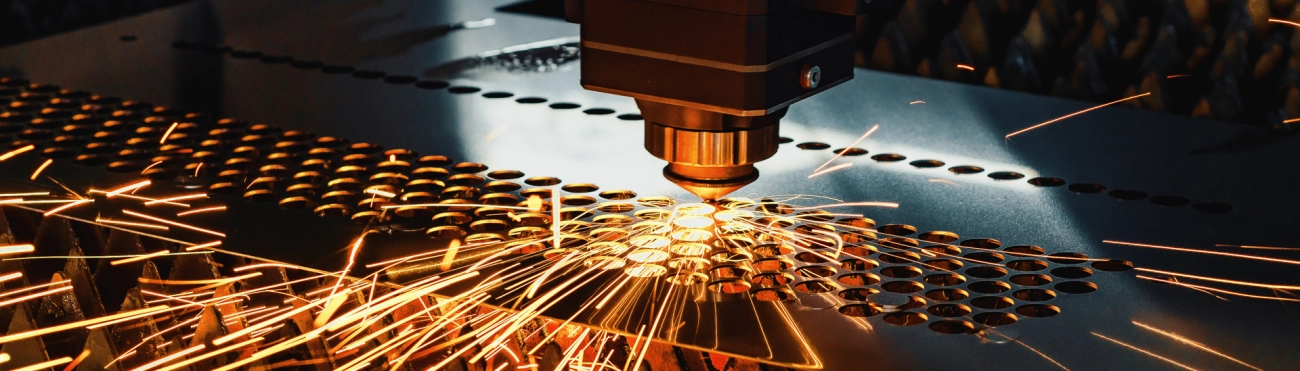
We’ve streamlined our laser for CNC cutting process by focusing on the digital-to-physical bridge. Our workflow starts with deep CAD/CAM integration, ensuring your design data translates flawlessly into the cutting path. We prioritize clean DXF/STEP file compatibility, working with DXF, STEP, and IGES formats to eliminate geometry errors and maintain high-precision tolerances from the very first spark.
Optimizing Files and Maximizing Material
To keep your project cost-efficient, we don’t just cut—we optimize. We use advanced nesting software to strategically arrange parts across the sheet metal. This process is essential for sheet metal fabrication because it significantly reduces scrap and lowers your per-unit cost by squeezing the most value out of every square inch of material.
Beyond the Laser: Secondary Operations
A clean, burr-free cut is often just the beginning. Our facility handles the entire lifecycle of your part, integrating the laser process with essential post-processing steps:
- CNC Milling: For parts requiring complex vertical geometries or threaded holes, we seamlessly integrate CNC milling into the production flow.
- Surface Finishing: We offer anodizing, powder coating, and bead blasting for a durable, professional finish.
- Assembly: We can take your laser-cut components and provide full assembly services, delivering a ready-to-use product.
Selecting the right substrate is critical for these multi-stage processes. You can review our CNC machining materials list to see which metals and technical plastics best suit your specific secondary operation needs.
Outsourcing vs. Buying: The Real Value of Laser for CNC Cutting
Buying a machine for laser for cnc cutting seems like a logical step for growth, but the reality of ownership often outweighs the benefits for many businesses. At MS Machining, we provide high-tier industrial laser services that eliminate the massive capital expenditure and technical headaches of running your own shop.
When you outsource your sheet metal fabrication to us, you aren’t just paying for machine time—you’re paying for a refined workflow that guarantees precision tolerances and burr-free edges without the overhead.
The Hidden Costs of Machine Ownership
Owning a high-wattage fiber laser cutting system or CO2 laser technology involves more than just the sticker price. The “hidden” operational costs can quickly drain a project’s budget:
- Consumables and Gas: High-purity Nitrogen and Oxygen for clean cuts aren’t cheap.
- Maintenance: Lasers require constant calibration, lens cleaning, and source replacement to maintain material thickness capacity.
- Specialized Labor: You need experienced operators who understand CAD/CAM integration and how to manage the Heat-Affected Zone (HAZ).
- Facility Requirements: High power consumption and specialized ventilation systems for smoke and fume extraction.
| Expense Category | In-House Ownership | Outsourcing to MS Machining |
|---|---|---|
| Capital Investment | $150k – $500k+ | $0 |
| Maintenance & Repair | 100% Internal Responsibility | Handled by us |
| Gas & Power Costs | Variable & High | Included in part price |
| Labor & Training | Continuous Overhead | Expert team included |
Scalability: From Rapid Prototyping to 10,000 Units
One of the biggest advantages of working with us is the ability to scale on demand. Whether you need a single component for rapid prototyping or a production run of 10,000 units, our facility is equipped to handle it.
We work directly with your DXF/STEP file compatibility requirements, ensuring a seamless transition from your design software to our cutting beds. This flexibility allows you to pivot quickly without worrying about machine downtime or capacity limits. We optimize every nest to maximize material usage, directly lowering your cost per part.
Quality Assurance and ISO 9001:2015 Standards
At MS Machining, quality isn’t an afterthought. Our facility operates under strict ISO 9001:2015 standards, ensuring every part that leaves our floor meets your exact specifications. Our deep understanding of metrology and guide to precision in manufacturing allows us to maintain consistent quality across different materials, from stainless steel laser cutting to complex alloys.
Our Quality Commitment Includes:
- First-Article Inspection: Ensuring the first piece is perfect before the full run begins.
- Kerf Width Management: Constant monitoring to ensure dimensional accuracy.
- Material Certification: Full traceability for all metals used in your project.
- Finishing: Delivering parts that are ready for assembly, often requiring zero secondary deburring.
Future Trends in Laser for CNC Cutting
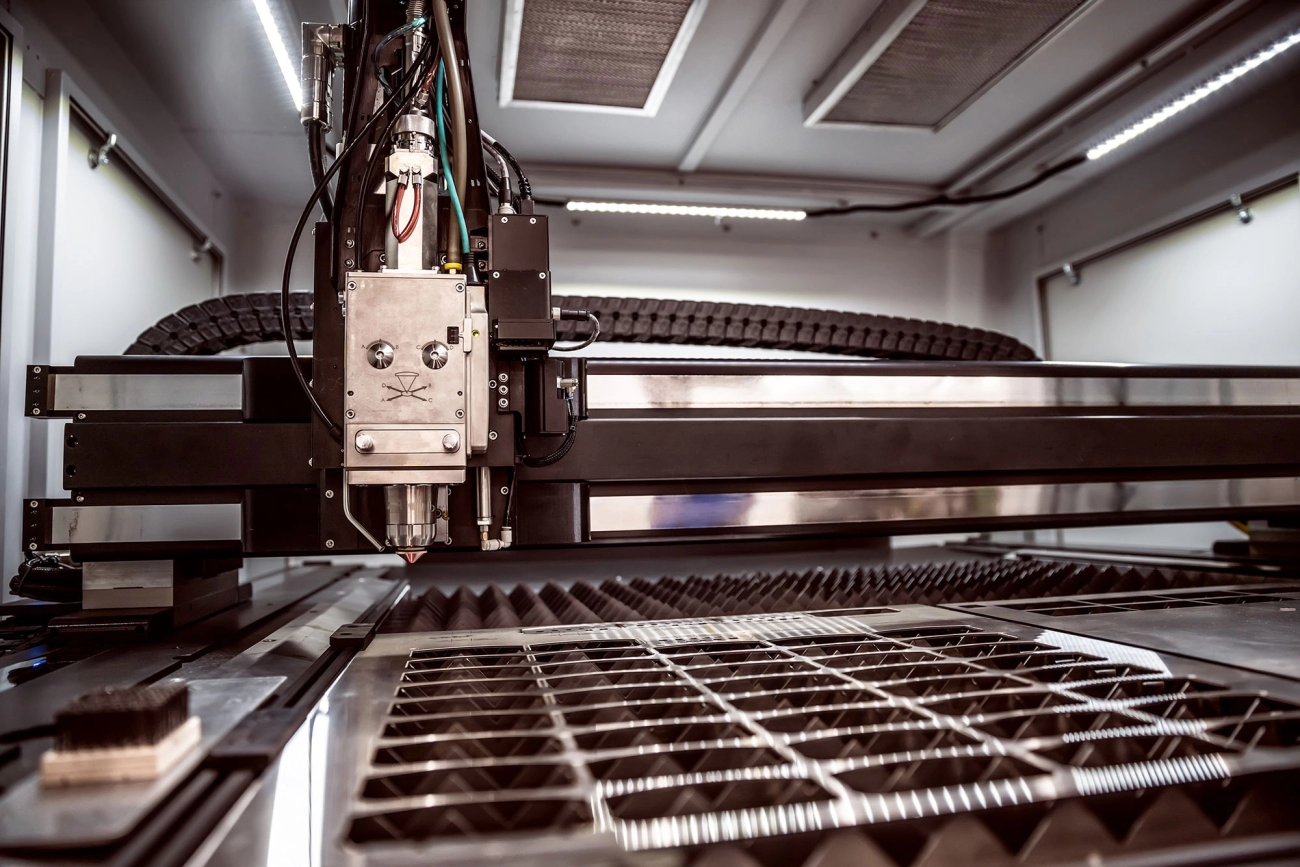
The landscape of laser for CNC cutting is shifting toward total autonomy. We are seeing a massive integration of AI-driven sensors that perform real-time beam adjustment. This technology allows the machine to sense variations in material density and tweak the laser power (Watts) on the fly, preventing slag and ensuring burr-free edges even on complex geometries.
Automation and AI: Real-time Beam Adjustment
- Active Kerf Monitoring: AI sensors measure the kerf width during the cut, adjusting the focus automatically to maintain consistency.
- Nozzle Health Sensing: Systems now detect beam misalignment or nozzle wear before they ruin a part, maintaining precision tolerances.
- Smart Path Optimization: Advanced algorithms reduce “head-down” time, speeding up sheet metal fabrication by finding the most efficient travel path.
Higher Wattage Systems for Heavy Industry
We’ve moved past the era where lasers were reserved for thin gauge materials. Modern industrial laser services now utilize ultra-high-power systems—reaching 30kW and 40kW—that drastically increase material thickness capacity. These high-wattage units allow for stainless steel laser cutting at speeds that were previously impossible, often replacing traditional plasma cutting for heavy-duty applications.
| Technology Trend | Key Benefit for the Customer |
|---|---|
| Ultra-High Power Fiber | Cuts thicker plate steel with a much smaller Heat-Affected Zone (HAZ). |
| Automated Nozzle Changers | Allows for 24/7 lights-out manufacturing and faster rapid prototyping. |
| Advanced CAD/CAM Integration | Faster processing of DXF/STEP file compatibility for instant production. |
The evolution of fiber laser cutting means parts are getting cheaper, cleaner, and more accurate. By utilizing a professional CNC laser cutter service, you gain access to these multi-million dollar technology leaps without the overhead of machine maintenance and gas costs. We focus on these trends so your production stays ahead of the curve.
FAQs: Common Questions About Laser for CNC Cutting
I get asked these questions constantly by clients looking to optimize their sheet metal fabrication. Here is the straight talk on what you need to know about using a laser for CNC cutting.
What is the difference between laser cutting and CNC milling?
The main difference is the method of material removal. Laser cutting is a non-contact, thermal process that uses a focused beam to melt or vaporize material. It is unbeatable for speed on thin sheets and achieving tight kerf widths.
In contrast, CNC milling is a mechanical process using rotary cutters. While our 5-axis CNC machining services are better for complex 3D shapes and heavy material removal, fiber laser cutting is the go-to for flat parts with precision tolerances and burr-free edges.
Can I add a laser to my existing CNC router?
Yes, you can, but there are caveats. Most “add-on” kits use diode lasers, which are great for a CNC laser engraver setup but lack the laser power (Watts) for industrial production. If you want to cut thick stainless steel laser cutting jobs, a dedicated industrial fiber or CO2 laser technology system is necessary for the rigidity and gas assist required.
What materials cannot be cut with a CNC laser?
Not every material plays nice with high-density light. We avoid these due to safety and quality issues:
- PVC (Polyvinyl Chloride): Releases toxic chlorine gas that ruins the machine and your lungs.
- Polycarbonate: Absorbs infrared poorly and usually catches fire or discolors badly.
- Highly Reflective Metals: Without a proper fiber laser, copper and brass can reflect the beam back and destroy the optics.
How do I reduce the Heat-Affected Zone (HAZ)?
The Heat-Affected Zone (HAZ) is the area where the metal’s properties change due to the laser’s heat. To keep this zone small and ensure high-quality rapid prototyping, we focus on three things:
- Increase Cutting Speed: Spend less time heating the edge.
- Optimize Gas Assist: Use high-pressure nitrogen to blow away molten material instantly.
- Adjust Pulse Settings: Use a pulsed beam rather than a continuous wave to allow the material to cool between peaks.
| Feature | Laser Cutting | CNC Milling |
|---|---|---|
| Tooling | No physical tools (Lower cost) | Physical end mills (Wear & Tear) |
| Material Thickness | Best for < 25mm | Can handle very thick blocks |
| Edge Quality | Very smooth/polished | High precision but may have tool marks |
| Complexity | Best for 2D/2.5D | Best for complex 3D geometries |
When preparing your DXF/STEP file compatibility checks, always account for the specific material thickness capacity of the machine to ensure the cleanest possible cut.