
Choosing between investment casting vs CNC machining can make or break your metal part project’s budget, timeline, and performance. Spend $80k on CNC when casting could have cost $18k—and that’s just one costly example. Both processes serve specific roles, but knowing when to use each is crucial for engineers, designers, and procurement pros working in aerospace, medical, automotive, and more.
In this guide, you’ll get a clear, no-nonsense roadmap to decide which method fits your part’s complexity, volume, material, tolerance, and cost—so you avoid expensive pitfalls and nail your manufacturing strategy the first time. Let’s get right into when investment casting shines, when CNC machining rules, and how to pick the best path forward.
Process Overview – How Each Actually Works
Understanding how investment casting and CNC machining work is the first step to choosing the right method for your project. Both start with a design but take radically different paths from there.
Investment Casting (Lost-Wax) in 6 Stages
Investment casting, often called lost-wax casting, is perfect for complex parts with fine details. Here’s how it unfolds:
- Pattern Creation: A wax replica of the final part is made using an injection mold or 3D printing.
- Assembly: Multiple wax patterns can be attached to a wax sprue to form a tree, maximizing production efficiency.
- Shell Building: The wax assembly is repeatedly dipped in ceramic slurry and coated with fine sand, creating a hard shell.
- Wax Removal: The ceramic shell is heated to melt and “lose” the wax inside, leaving a hollow mold.
- Metal Pouring: Molten metal is poured into the preheated ceramic shell, filling every cavity.
- Finishing: After cooling, the shell is broken away, sprues removed, and the casting undergoes finishing like machining or polishing.
CNC Machining (Mill + Lathe) in 5 Stages
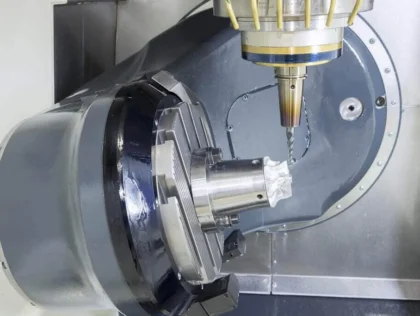
CNC machining is a subtractive process where material is removed from a solid block (called a billet or bar stock). It excels at precision and tight tolerances:
- CAD/CAM Programming: The design file is translated into machine code via CAM software for milling or turning.
- Setup: The raw material is secured to the machine table or lathe chuck.
- Machining: Multiple passes with rotating cutting tools remove material to form the final shape.
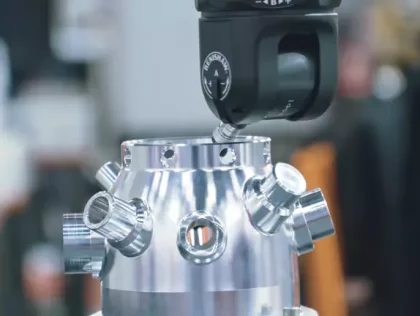
- Inspection: Dimensions and tolerances are checked with measuring instruments midway and after machining.
- Secondary Operations: Additional steps like threading, heat treating, or polishing finalize the part.
Key Equipment Differences
- Investment Casting: Relies heavily on wax injection machines, ceramic shell-making stations, and furnaces for wax burnout and metal casting.
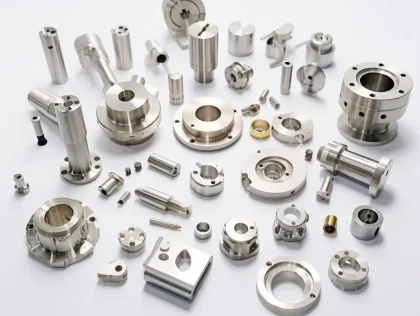
- CNC Machining: Uses multi-axis mills and lathes equipped with cutting tools, tool changers, and precision fixtures.
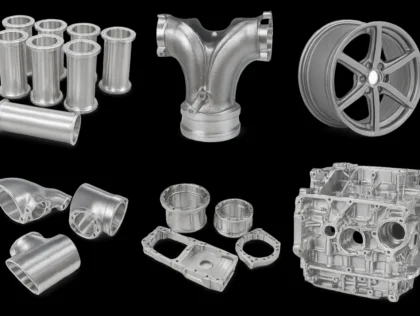
In short, investment casting builds parts layer by layer inside a mold, ideal for complex shapes and large volumes. CNC machining carves parts out from solid stock, perfect for precision, flexibility, and shorter runs. Both have their place, depending on your design, volume, and timeline needs.
Head-to-Head Comparison: Investment Casting vs CNC Machining
Here’s a quick comparison of investment casting vs machining across 15+ key factors to help decide which process fits your project best:
| Criteria | Investment Casting | CNC Machining |
|---|---|---|
| Design Complexity | Excellent for complex shapes & undercuts | Limited by tool access and axis movement |
| Geometric Freedom | High (near net shape, internal cavities) | Moderate to low (no internal undercuts) |
| Tolerances (± mm) | ±0.05 mm (±0.002″) typical | Tight: ±0.005 mm (±0.0002″) achievable |
| Surface Finish (Ra µin) | 32–63 µin (0.8–1.6 µm) | 8–32 µin (0.2–0.8 µm) |
| Material Options | Wide (stainless, Inconel, titanium, others) | Very wide (ferrous & non-ferrous metals) |
| Part Size Range | Small to medium (0.1 – 10+ lbs typical) | Very small to very large (>600 mm parts) |
| Tooling / NRE Cost | High upfront (wax molds, patterns) | Low to moderate (CAD programming, tooling) |
| Per-Piece Cost vs Quantity | Lower unit cost at high volumes (200+ pcs) | Cost-effective for low runs (1–100 pcs) |
| Lead Time (Prototype) | Weeks (pattern + mold prep) | Days to weeks (program + setup) |
| Lead Time (Production) | Weeks (tooling & batch casting) | Days (continuous machining) |
| Minimum Order Quantity | Typically 50+ pcs | As low as 1 part |
| Material Waste | Low (near net shape) | High (subtractive process) |
| Post-Processing Needs | Often required (heat treat, finishing) | Often minimal (finishing or inspection) |
| Weight Reduction Potential | High (thin walls, hollow sections) | Limited by machining constraints |
| Design Changes | Expensive (new tooling needed) | Easy and cheap (update CAD/CAM program) |
Investment casting really shines when you need complex geometry, thin walls, and high-volume consistent parts. CNC machining is your go-to for tight tolerance, quick prototype runs, and large or one-off parts.
For complex metal parts made from exotic alloys or tight spec stainless steel, you might also find our detailed guide on machined metal parts materials helpful in picking the right process.
Cost Breakdown – When One Becomes Dramatically Cheaper
Understanding the costs behind investment casting vs CNC machining is key to picking the right method for your project. Each has its own price drivers that can swing the total cost depending on part complexity and quantity.
CNC Machining Cost Drivers
- Material Waste: CNC cutting often starts from solid blocks, so leftover chips and offcuts add up, especially with larger or complex parts.
- Cycle Time: More detailed or multi-axis machining setups take longer, increasing labor and machine hours.
- Multi-Axis Setup: Advanced machines (5-axis and beyond) for complex shapes boost costs due to programming and slower runs.
Investment Casting Cost Drivers
- Wax Pattern Creation: Each part needs a precise wax model; complex designs raise this cost.
- Shell Mold and Ceramic Coating: Building the ceramic mold around the wax pattern adds both material and labor expenses.
- Tooling Amortization: Creating durable tooling for wax injection is upfront-heavy but spreads over many parts, lowering per-piece cost as volume grows.
Break-Even Quantity Insight
- Low Volume (<50 pcs): CNC machining tends to be cheaper because it avoids costly tooling and mold prep.
- Mid Volume (200–1,000 pcs): Investment casting begins to catch up as its tooling costs spread out.
- High Volume (10,000+ pcs): Investment casting becomes dramatically cheaper per piece, ideal for mass production.
Hidden Costs to Watch For
- Secondary Operations: Both methods can require finishing like machining, polishing, or heat-treating, impacting final cost.
- Scrap and Rejection Rates: More complex parts or exotic materials can increase those costs, especially if quality control is strict.
- Inspection and Certification: Aerospace or medical parts often add expensive tests to ensure compliance, influencing the total price regardless of method.
Properly evaluating these factors helps U.S.-based manufacturers decide when investment casting vs machining is the smarter, more economical choice. For example, learn how CNC machining investment cast parts postprocessing can balance cost and quality in real-world applications.
When to Choose Investment Casting (Top 8 Scenarios)
Investment casting shines in specific situations where other processes struggle or get pricey. Here are the top 8 scenarios where picking investment casting over CNC machining makes the most sense:
| Scenario | Why Investment Casting? |
|---|---|
| Complex internal geometries & undercuts | Lost-wax casting handles intricate shapes easily, including internal cavities and undercuts that machining can’t reach without multiple setups or special tools. |
| Thin walls (<1.5 mm) | Investment casting reliably produces thin walls with uniformity, which is tough to machine without warping or breaking. |
| High-volume production (200+ parts) | The upfront tooling cost pays off as per-piece cost drops significantly for mid- to high-volume runs. |
| Excellent as-cast surface finish needed | Investment casting delivers smooth surfaces (low Ra) straight-off, reducing or even skipping post-machining. For example, stainless steel investment casting can produce superior finishes for close-to-finish parts. Learn more about stainless steel investment casting. |
| Exotic alloys (Inconel, titanium, stainless 316) | Some advanced alloys are difficult or costly to machine, but can be cast effectively, especially using specially designed molds. |
| Weight reduction is critical | Near net shape casting creates parts close to final shape, cutting extra machining that adds weight back on or wastes material. |
| Multiple parts consolidated into one casting | Combine several components into a single complex casting that reduces assembly time and cost. |
| Cosmetic or aerodynamic surfaces | Investment casting can produce smooth, complex flowing surfaces ideal for aesthetics or airflow, saving finishing time. |
Choosing investment casting in these cases lets you take advantage of near-net-shape production, material efficiency, and fantastic detail—especially for stainless steel or other specialty alloys. For more insight on raw materials and finishes, check out detailed info about stainless steel investment castings.
When to Choose CNC Machining (Top 8 Scenarios)
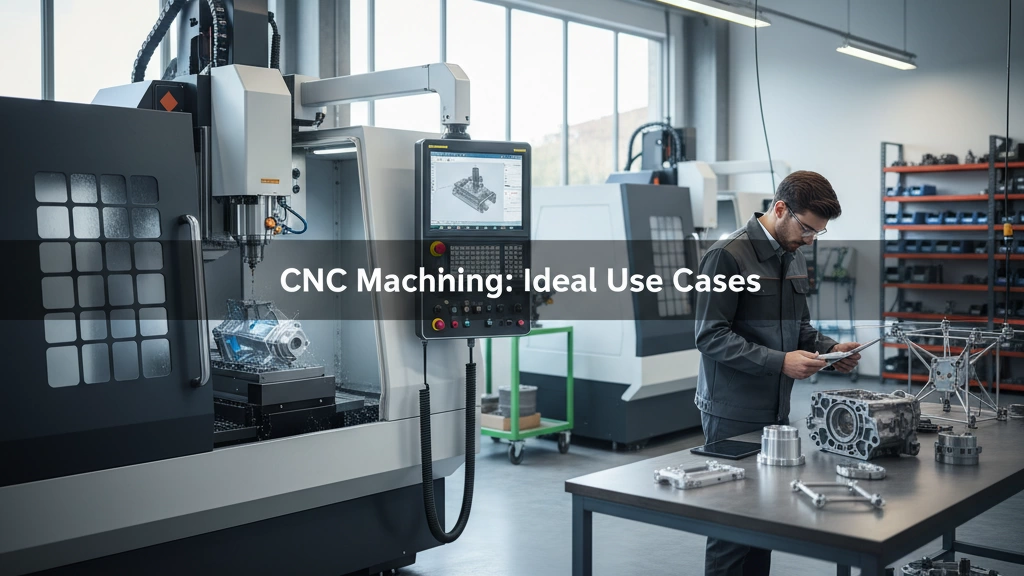
CNC machining shines in specific cases where investment casting falls short. Here are the top 8 scenarios when you should pick CNC over casting:
| Scenario | Why CNC Machining? |
|---|---|
| Low volume or prototypes (1–100 pcs) | Quick setup and no expensive tooling needed. Great for small runs or testing designs. |
| Extremely tight tolerances (±0.005 mm / ±0.0002″) | CNC offers precision milling and turning to hit ultra-fine specs CNC can’t match with casting. |
| Frequent design changes | No fixed molds—easy to update CAD files and start new runs fast without costly retooling. |
| Very large parts (>600 mm) | Large castings are expensive, but CNC handles big workpieces easily with milling/turning centers. |
| Materials difficult to cast | Some aluminum alloys, copper, and magnesium don’t cast well but machine fine on CNC. See more about aluminum CNC machining services. |
| Need for threaded features or sharp inside corners | Machining creates clean threads and sharp corners that casting can’t replicate without extra steps. |
| Fastest possible lead time (days, not weeks) | CNC shops can turn around parts quickly since no molds or shells are needed. Great for urgent jobs. |
| Regulatory need for full material traceability with mill certs only | CNC stock comes with mill certifications, important for aerospace, medical, and defense industries. |
If your project fits most of these points, CNC machining is likely the smarter, faster, and more cost-effective choice. For part sizes, materials, and precision, CNC often wins when you need quality and speed with flexible volume.
Learn more about material options and finishes for your parts on our detailed CNC machining materials list.
Hybrid Approach – Combining CNC Machining and Investment Casting
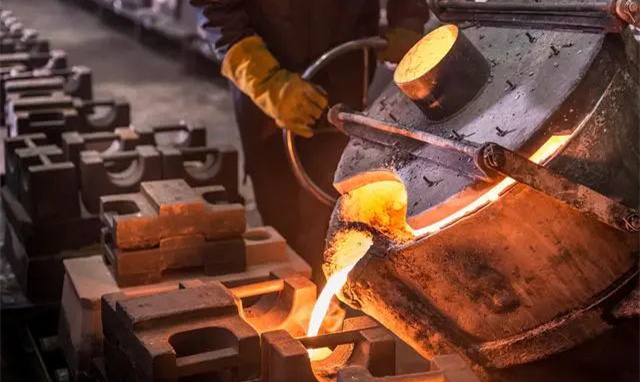
Many manufacturers find the best solution is using both investment casting and CNC machining together to get the most out of each process. A common approach is to use CNC machining for prototypes and low-volume runs, then switch to investment casting for high-volume production. This lets you test designs quickly and keep costs low early on, before investing in casting tooling.
Another popular method is producing a cast blank close to the final shape (near-net-shape), then finishing critical features with CNC machining. This “hog-out” strategy minimizes material waste and reduces machining time, improving overall efficiency. It’s especially useful for parts where tight tolerances or threaded holes are needed on complex cast bodies.
Real-world examples show this hybrid approach works well in aerospace brackets, which require both complex internal channels and precise mounting features, and medical implant housings, where strength and surface finish must meet strict standards. For those industries, the combination of casting’s geometric freedom and CNC’s precision is invaluable.
For more insights on CNC processes that complement casting, check out our overview of special CNC machining processes.
Material Compatibility Comparison
Choosing between investment casting vs CNC machining often comes down to which materials work best for each process. Some alloys are great for casting but tricky for machining, while others machine easily but don’t cast well.
Here’s a quick reference table showing common metals and how they fare in each method:
| Alloy | Investment Casting | CNC Machining | Notes |
|---|---|---|---|
| Stainless Steel 316 | Excellent | Excellent | Widely used, good surface finish by casting and machining |
| Inconel (Nickel Alloy) | Excellent | Fair | Hard to machine, ideal for casting |
| Titanium | Excellent | Good | High strength; tricky to machine but castable |
| Aluminum 6061 | Good | Excellent | Easy to machine, moderate casting quality |
| Aluminum 7075 | Poor | Excellent | Difficult to cast, better machined |
| Copper | Fair | Excellent | Excellent conductivity, tough to cast defect-free |
| Magnesium | Poor | Excellent | Flammable casting hazards, machines well |
| Carbon Steel | Good | Excellent | Common in both, machining gives tight tolerances |
| Tool Steel | Fair | Excellent | Hard casting, easier to machine |
| Brass | Excellent | Excellent | Great for complex shapes and machining |
| Bronze | Excellent | Good | Good casting, machining can be tough |
| Monel | Excellent | Fair | Corrosion resistant, easier to cast |
Quick Takeaways
- Castings excel with complex shapes and exotic alloys like Inconel and Titanium.
- CNC machining works best with high-precision parts, aluminum 7075, and magnesium that are hard to cast.
- For common materials like stainless steel and brass, both processes perform well.
- When material traceability or certifications are critical, CNC machining often has the edge, especially for aerospace parts.
If you want to machine specialty alloys or need high-quality surface finish on aluminum parts, check out our alloy CNC machining services for tailored solutions.
Industry-Specific Recommendations
Choosing between investment casting vs CNC machining often depends on the industry and its unique demands. Here’s a quick breakdown tailored to key sectors:
Aerospace & Defense
Both processes are crucial here. Investment casting handles complex, high-strength parts like turbine blades or brackets with intricate geometries. CNC machining shines for precision components requiring tight tolerances and traceability. For example, aerospace brackets often start with casting and finish with CNC. For more on machining in this sector, see our detailed CNC machine shop for the aircraft industry.
Medical Devices & Implants
Medical parts demand biocompatibility, tight tolerances, and smooth finishes. Investment casting is well suited for stainless steel or cobalt chrome implants with complex shapes, while CNC machining is preferred for prototypes or parts needing rapid design iterations. You can find more specialized info on manufacturing for this field in our medical devices and equipment manufacturing resource.
Automotive & Electric Vehicles (EV)
Automakers often use investment casting for lightweight, high-volume components like housings and suspension parts, especially when thin walls and complex shapes matter. CNC machining is common for prototypes, tooling, and low-volume custom parts.
Oil & Gas / Pumps & Valves
Durability and corrosion resistance make investment casting ideal for valves and pump bodies, often in exotic alloys. CNC machining is favored for precise sealing surfaces or threaded parts. Our manufacturing solutions for oil and gas equipment cover this well.
Consumer Electronics
Small, detailed components with tight tolerances usually call for CNC machining, especially in low volume or prototype stages. Investment casting is less common here unless complex metal housings are needed in volume.
Robotics & Industrial
Complex, high-strength parts with internal cavities often benefit from investment casting, while CNC machining supports custom parts with tight specs or fast turnaround needs.
In short, industries with high volume and complex geometry lean toward investment casting, while those needing tight tolerances and flexibility often rely on CNC machining. Understanding these nuances helps you pick the right method for your project’s success.
Decision Checklist: Which Process Suits Your Project?
Choosing between investment casting vs CNC machining can be tricky, but a clear checklist helps simplify your decision. To make it easy, here’s a 10-question guide you can quickly fill out. Answering these will guide you to the best manufacturing process for your metal parts, whether you need prototypes or mass production.
Quick Questions to Decide:
What’s your production volume?
Low (<100), medium (200–1,000), or high (10,000+)?
Do your parts have complex internal features or undercuts?
Yes or No.
How tight are your tolerance requirements?
±0.005 mm (±0.0002”) or wider?
Are you using exotic alloys like Inconel or titanium?
Yes or No.
Will you need multiple design changes or frequent updates?
Yes or No.
Is surface finish critical (cosmetic or aerodynamic)?
Yes or No.
Do you require threaded features or sharp inside corners?
Yes or No.
What is your typical part size?
Small (<300 mm), medium, or very large (>600 mm)?
Is material traceability with a mill certificate mandatory?
Yes or No.
How fast do you need prototypes or parts?
Days, weeks, or longer?
How to Use This Checklist
- Mostly Yes on volume, complex shapes, and exotic alloys? Investment casting fits best.
- Mostly Yes on tight tolerance, quick lead times, or frequent design changes? CNC machining is your go-to.
- Large parts or parts requiring threading lean strongly toward CNC.
Download our full Decision Checklist PDF to fill in these questions and get an instant recommendation tailored to your specific needs. It’s a practical tool to avoid costly mistakes and speed up your metal part manufacturing decisions.
For more on precision metalworking options, check out our guide on what is a CNC milling machine to understand machining capabilities better.