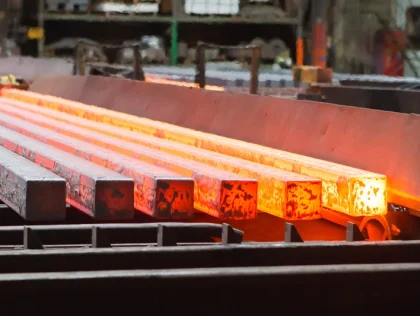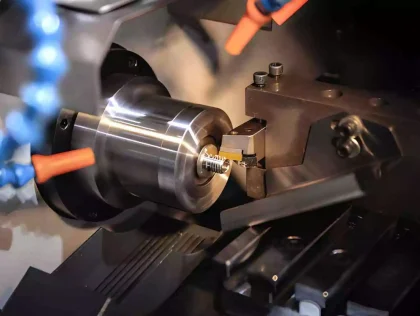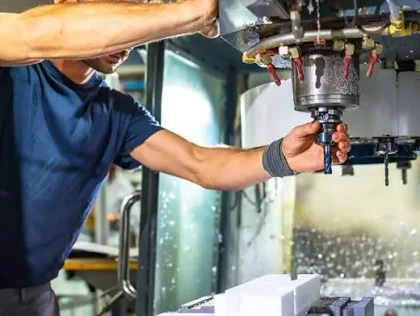

In modern industrial manufacturing, outsourcing precision part production to an overseas partner is a strategic lever for cost optimization, mitigating overhead, and achieving rapid scalability. When looking for a reliable and high-quality cnc machining service china, global procurement teams, technical product managers, and advanced engineering departments often face a complex, multi-layered web of technical, logistical, regulatory, and cross-cultural communication challenges.
While the cost benefits of manufacturing in China are mathematically undeniable, achieving consistent, micro-precision results requires a comprehensive, deep-dive understanding of the overseas manufacturing ecosystem. This ultimate industrial guide breaks down everything you need to know before placing an order for custom machined parts—from technological multi-axis capabilities and advanced metallurgy to rigorous quality control frameworks, IP protection, and supply chain logistics.
1. The Dynamic Landscape of CNC Machining in China
The rapid industrial evolution of China’s manufacturing sector over the past few decades has systematically transformed its production base. It has shifted from a low-cost, high-volume rudimentary workshop into an ultra-high-tech ecosystem capable of handling micro-precision engineering projects for critical industries like aerospace, robotics, and medical devices. Today, hundreds of thousands of machine shops populate major manufacturing provinces, but they are far from uniform in terms of capability, equipment quality, and quality management systems.
Regional Manufacturing Hubs & Clusters
Most high-tier CNC machine shops in China targeting Western export markets are clustered into three primary geographic zones. Understanding the unique specialization of these regions helps project managers strategically align their logistics, logistics providers, and supplier sourcing frameworks:
- The Pearl River Delta (Shenzhen, Dongguan, Guangzhou): This region is the absolute global epicenter for rapid prototyping, electronics hardware integration, and high-mix, low-volume (HMLV) agile manufacturing. Machine shops in Shenzhen are legendary for their speed, often delivering complex rapid prototyping runs within 48 to 72 hours due to an incredibly dense, localized electronic and mechanical supply chain component matrix.
- The Yangtze River Delta (Shanghai, Suzhou, Ningbo, Wuxi): Renowned globally for heavy industrial manufacturing, automotive supply chains, tier-1 sub-assemblies, and massive high-volume production runs. Machine shops here feature extensive automated setups, horizontal machining centers, and large-scale industrial infrastructure tailored for long-term production contracts.
- The Bohai Economic Rim (Tianjin, Qingdao, Dalian): This territory specializes in heavy machinery, marine engineering, aerospace components, and medical equipment manufacturing. The region is heavily supported by strong state technical universities and metallurgy research institutes, making it a hotspot for complex alloy processing.
Classification of Service Providers
When navigating the market for a Chinese manufacturing partner, procurement agents will encounter three distinct categories of entities. Selecting the wrong type can severely compromise your project budget or timeline:
- Direct Tier-2/Tier-3 Machine Shops (Factories): These facilities actually own, maintain, and operate the physical CNC machinery on their shop floors. They offer the most competitive raw piece-part pricing because there are no middleman markups. However, they may occasionally lack dedicated English-speaking account managers, transparent digital interfaces, or comprehensive design feedback systems. They are ideal for straightforward production prints where the design is 100% finalized and verified.
- Digital Manufacturing Platforms (On-Demand Cloud Vendors): These companies act as intelligent storefronts backed by an extensively audited network of third-party partner shops. They leverage proprietary software to provide instant online quoting, automated Design for Manufacturability (DFM) analysis, and standardized Western-style customer service. They are excellent for individual engineers who need fast, self-serve prototyping without navigating complex cultural nuances.
- Specialist B2B Engineering Contractors: These premium firms bridge the operational gap by providing dedicated engineering consultancies alongside their internal manufacturing capacities. They excel at highly complex, multi-year projects requiring collaborative design iteration, advanced multi-axis tooling, specialized aerospace or medical certifications, and multi-tier quality reporting.
2. Advanced Technical Capabilities & Machine Tool Architecture
To ensure your prospective manufacturing partner can execute your intricate engineering designs without compromising structural integrity, dimensional accuracy, or surface aesthetics, you must conduct a thorough audit of their production floor assets. Multi-axis computer numerical control machining has transitioned from a premium offering to the absolute baseline standard for competitive Chinese export manufacturers.
Subtractive Manufacturing Machine Configurations
A top-tier machine shop should offer a diverse, complementary array of subtractive manufacturing equipment to match different part geometries with maximum structural and cost efficiency:
- 3-Axis CNC Milling: The workpiece remains firmly stationary via magnetic or mechanical workholding vises while the cutting tool moves along the linear X, Y, and Z axes. This remains the most cost-effective method for flat profiles, deep pockets, slots, and simple prismatic geometries where tool access is straightforward.
- 4-Axis CNC Machining: Introduces a crucial rotational axis (typically denoted as the A-axis) around the X-axis. This allows the machine to rotate the part dynamically to cut features along a cylindrical surface or access multiple faces without breaking the initial setup. Implementing 4-axis setups systematically reduces manual intervention and eliminates structural positioning errors.
- 5-Axis CNC Milling : The cutting tool moves across the X, Y, and Z linear axes while the machine bed or tool spindle head simultaneously rotates on two additional rotational axes (typically B and C). This configuration is mathematically indispensable for complex, organically curved surfaces found in aerospace impellers, turbine blades, automotive manifolds, and multi-faceted medical orthopedic implants. It completely eliminates stacked tolerances resulting from multiple manual setups. If your part requires complex contours, you should explicitly source a provider with verified 5-axis cnc machining capabilities.
- CNC Turning and Turn-Mill Centers: Live tooling configurations on modern CNC lathes allow for concurrent turning (rotational cutting) and milling (stationary cutting) operations in a single operational cycle. This configuration guarantees absolute concentricity for cylindrical parts that require off-axis cross-holes, flats, or complex milled slots, saving massive amounts of cycle time.
Cutting-Edge Precision and Tolerance Benchmarks
When evaluating an export vendor’s machine list, look for high-end international hardware brands (such as Mazak, DMG Mori, Haas, Makino, or Hermle) alongside high-quality domestic brands (like Beijing No. 1, Haitian, or Ka Ming). Advanced Chinese machine shops regularly hold linear tolerances of ±0.005 mm (±0.0002 inches) and geometric tolerances down to ±0.002 mm for critical bores, bearing journals, and highly precise mating faces.
3. Comprehensive Material Selection & Metallurgy Guide
Material selection is a critical driver that directly impacts tool wear, feed rates, spindle speeds, cycle times, and ultimately, your final piece-part cost. A massive operational advantage of utilizing a Chinese CNC service is their direct, immediate access to local, certified raw material mills, which significantly drives down raw material lead times and bulk costs.
Metallic Alloys and Superalloys
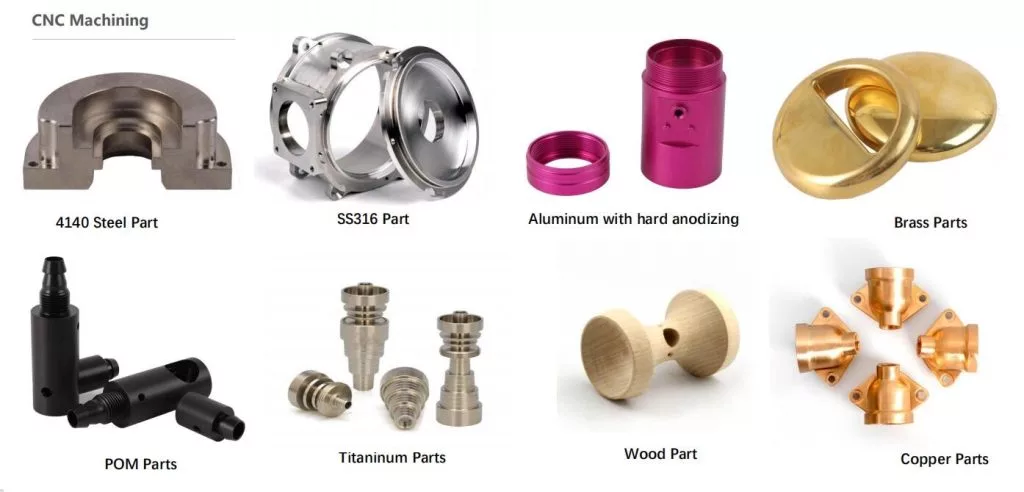
The table below covers the most common metallic materials processed by export manufacturers, highlighting their engineering traits and typical B2B applications:
| Material Group | Common Grades (US/ISO Equivalent) | Core Engineering Properties | Typical B2B Applications |
|---|---|---|---|
| Aluminum | Al 6061-T6, Al 7075-T6, Al 5052 | High strength-to-weight ratio, excellent thermal/electrical conductivity, highly machinable, responds beautifully to anodizing. | UAV chassis, electronic enclosures, robotic arms, automotive brackets. |
| Stainless Steel | SS304, SS316L, 17-4 PH, 416 | Exceptional corrosion resistance, high tensile strength, maintains structural integrity at elevated temperatures. | Medical surgical instruments, marine hardware, chemical processing equipment. |
| Carbon & Alloy Steel | 1018, 4140, 8620, O1 Tool Steel | High toughness, excellent wear resistance when case-hardened, highly cost-effective for structural components. | Industrial gears, high-torque drive shafts, custom workholding fixtures, heavy machinery. |
| Titanium | Grade 2, Grade 5 (Ti-6Al-4V) | Extreme strength-to-weight ratio, completely biocompatible, superb fatigue resistance, highly challenging to machine. | Orthopedic bone screws, aerospace structural frames, deep-sea exploration vessels. |
| Copper & Brass | C360 Brass, C101 Copper, C36000 | Superior electrical and thermal conductivity, low friction coefficient, highly cosmetic natural finish. | Electrical terminals, RF shielding blocks, bushings, heat exchanger manifolds. |
Engineering Plastics and High-Performance Polymers
For lightweight structural elements, weight reduction projects, or electrical insulation, ensure the machine shop is experienced in managing thermal expansion, internal stress relief, and optical chip clearing for high-performance polymers:
- POM (Delrin/Acetal): The gold standard for plastic machining. It features excellent dimensional stability, high stiffness, a very low coefficient of friction, and negligible moisture absorption. Commonly specified for precision gears, wear strips, valve components, and slide blocks.
- PEEK (Polyetheretherketone): An ultra-performance thermoplastic capable of replacing metal components in harsh, high-stress environments. It withstands continuous operating temperatures up to 250°C and is highly resistant to chemical degradation. Popular in aerospace wiring manifolds, downhole oil-and-gas tools, and medical implants.
- PTFE (Teflon): Celebrated for its near-zero friction coefficient and complete chemical inertness. It requires specialized, ultra-sharp tooling and high spindle speeds to prevent plastic deformation or tearing during high-speed cutting.
- Polycarbonate (PC) & PMMA (Acrylic): Utilized when optical clarity or impact resistance is mandatory. Post-machining processes like vapor polishing, flame polishing, or optical buffing are required to fully restore transparency after tool path marks are cut into the surface.
Procurement Safeguard regarding Material Certifications: Always explicitly state in your initial RFQ that raw materials must be accompanied by official Mill Test Reports (MTRs) and compliance certificates such as RoHS (Restriction of Hazardous Substances) and REACH. This strictly prevents the substitution of inferior local scrap grades that can lead to premature mechanical part failure or sudden customs impoundment.
4. Bridging the Engineering Communication Gap: Technical Specifications
Miscommunication of technical specifications and unstated design assumptions represent the single largest cause of defective, out-of-spec parts when dealing with overseas vendors. Your engineering design files must be absolutely explicit, leaving zero room for interpretation or guesswork by the machine programmer.
The Anatomy of a Flawless RFQ Package
To receive an accurate, highly competitive, and rapid quote from a Chinese CNC supplier, your Request for Quote (RFQ) package must strictly decouple volumetric data from tolerance criteria by including two critical file types:
- 3D CAD Files (STEP, IGES, or Parasolid): These files provide the raw volumetric and geometric data used by Computer-Aided Manufacturing (CAM) software to generate tool paths, select stepovers, and calculate roughing cycles. The STEP (
.stp) format is universally preferred due to its geometric stability across different CAD platforms like SolidWorks, Autodesk Inventor, and PTC Creo. - 2D Engineering Drawings (PDF format): Never rely solely on a 3D CAD model if your part contains tight tolerances or critical fits. The 2D drawing is the legally binding document that defines the quality criteria. It must explicitly state:
- Linear and geometric tolerances (GD&T tracking datums, flatness, concentricity, parallelism, perpendicularity).
- Thread pitches, tapped hole depths, and specific helicoil installation requirements.
- Surface roughness requirements ($R_a$ values) for specific structural faces.
- Material grade, temper, and secondary heat treatment specifications (e.g., Hardness Rockwell C scale).
- Inspection Critical-to-Quality (CTQ) dimensions marked clearly with a star or delta symbol.
Mastering GD&T in an International Supply Chain
Geometric Dimensioning and Tolerancing (GD&T) uses a standardized global symbolic language to define the allowable variation of geometric features. Ensure your partner’s engineering team is fully fluent in either ISO 1101 or ASME Y14.5 standards. Using clear, logical datum reference frames prevents the factory from measuring a critical feature from an unstable, unmachined cast face, which is a common cause of assembly interference and component misalignment during final product integration.
5. Design for Manufacturability (DFM) Optimizations for Drastic Cost Reduction
One of the most valuable aspects of a professional manufacturing service is the DFM feedback loop. Smart manufacturing engineers can analyze your 3D models and identify geometric features that exponentially drive up production costs without adding functional value to the end product. Implementing these crucial structural adjustments before finalizing your design for production can lower your CNC costs by up to 50%:
Internal Vertical Corner Radii
Because CNC milling tools are circular rotating cylinders, they cannot physically cut a perfectly sharp, 90-degree internal vertical corner.
- The Problem: Designing a sharp internal corner forces the factory to use slow, expensive secondary operations like EDM (Electrical Discharge Machining) wire cutting.
- The Optimization: Always design internal vertical corners with a radius that is at least 110% of the radius of the cutting tool you expect to use. For example, if a pocket is 10 mm deep, add an internal corner radius of at least 4 mm, allowing a standard 6 mm end mill to sweep through the corner quickly at high feed rates without vibrating, chattering, or breaking.
Pocket Depth-to-Width Ratios
Deep, narrow cavities require long, slender end mills that are highly prone to deflection, tool chatter, and premature catastrophic breakage.
- The Principle: As a general engineering rule, the depth of an internal milled cavity should not exceed 4x its width.
- The Optimization: If your design strictly requires deep pockets, consider transitioning to a modular assembly where the deep component is split into two simpler, bolted parts, or allow for a larger internal corner radius to accommodate a thicker, stiffer cutting tool.
Minimum Wall Thickness Parameters
Thin walls are highly susceptible to severe deformation or warping caused by the intense cutting forces exerted by the CNC tool bit, especially in highly conductive, ductile metals like Aluminum 6061-T6 or Copper.
- Minimum Thresholds: Maintain a minimum wall thickness of 0.8 mm for metals and 1.5 mm for engineering plastics.
- The Risks: Anything thinner will cause the wall to bow outward during machining, resulting in inconsistent thicknesses across the part profile, a high scrap rate, and terrible surface finishes.
Standardized Thread Pitches & Depths
Custom thread designs require specialized custom tooling, custom taps, or single-point threading cycles, which adds thousands of dollars to your setup costs and cycle times.
- The Optimization: Always stick to standard metric threads (e.g., M3, M4, M5, M8) or standard Unified Coarse/Fine (UNC/UNF) threads. Furthermore, design your blind tapped holes to be no deeper than 2.5x the thread diameter. Most mechanical holding power is achieved in the first 3 to 4 threads; tapping deeper simply increases the risk of the tap snapping off inside a nearly completed part.
6. Industrial Surface Finishing & Post-Processing Solutions
A high-quality export machine shop should provide a complete turnkey solution that includes secondary surface finishing. This eliminates the massive logistical headache of shipping semi-finished parts between multiple independent sub-contractors.
Here is a breakdown of the industrial surface treatments available for custom CNC components:
- As-Machined (Raw) Finish: Parts are delivered exactly as they come off the machine tool bed. The surface will show visible, concentric tool path marks, typically with a surface roughness value of $R_a$ 3.2 μm or $R_a$ 1.6 μm. This is the most economical option for internal structural brackets, fixtures, or components where cosmetic appearance is irrelevant.
- Bead Blasting: The raw parts are placed inside an automated abrasive chamber and sprayed with fine glass beads or silicon carbide particles under high pressure. This process removes tool marks, micro-burrs, and scratches, leaving a completely uniform, non-reflective matte finish. Bead blasting is also the mandatory surface preparation step before premium anodizing.
- Anodizing (Type II & Type III): An electrochemical process exclusive to aluminum and titanium that converts the metal surface into a durable, corrosion-resistant anodic oxide layer.
- Type II Anodizing (Decorative/Sulfuric): Creates a porous oxide layer that can readily absorb organic dyes, giving you vibrant colors (black, blue, red, gold, green). It offers modest wear resistance and is typically 5 to 25 microns thick. For consumer-facing hardware, clear or color anodizing aluminum is the gold standard.
- Type III Anodizing (Hardcoat): Performed at lower temperatures with higher electrical currents, producing a dense oxide layer between 25 and 100 microns thick. It provides extreme surface hardness (up to 65 Rockwell C), exceptional wear resistance, and high dielectric insulation. Ideal for aerospace gears, sliding pistons, and outdoor military hardware.
- Chemical Conversion Coatings (Alodine/Film): Also known as chromate conversion coating, this treatment provides excellent corrosion protection for aluminum while maintaining electrical conductivity, unlike anodizing which acts as an electrical insulator. It is a vital choice for RF shielding covers, electronic ground points, and aerospace avionics chassis.
- Electroplating (Nickel, Chrome, Zinc): Deposits a thin layer of a secondary metal onto the substrate via an electric current. Electroless nickel plating is highly favored for complex steel parts because it deposits a perfectly uniform thickness across internal threads and deep blind bores, providing superior wear and corrosion resistance.

7. Rigorous Quality Assurance Frameworks & Metrology
A low unit price means absolutely nothing if 20% of the shipment arrives out of spec or structurally compromised. When sourcing from China, verification of the vendor’s quality management system (QMS) must be built directly into your contract.
Foundational Certifications
Never partner with a shop that lacks a current, independently audited ISO 9001:2015 certification. For specialized vertical markets, verify these additional regulatory credentials:
- AS9100D: Mandatory for aerospace and defense components. Requires strict material traceability, risk management protocols, and configuration control.
- ISO 13485: The international standard for medical device manufacturing. Demands extensive process validation, cleanroom capabilities, and comprehensive lot tracking.
- IATF 16949: Required for automotive supply chain components, emphasizing defect prevention and continuous reduction of variation.
Advanced Metrology Instrumentation
A reliable machine shop must have a dedicated, climate-controlled inspection lab equipped with calibrated inspection tools to verify your part geometries:
- Coordinate Measuring Machines (CMM): Uses a highly sensitive physical touch probe to map the 3D coordinates of a part’s surface against the golden 3D CAD model, checking complex geometric tolerances like true position, cylindricity, and profile runout.
- Optical Measuring Machines (OMM): Uses high-resolution digital cameras and edge-detection software to inspect small, delicate, or flexible features without applying physical force that could distort the part during measurement.
- Non-Destructive Testing (NDT): For critical structural components, ensure access to ultrasonic, X-ray, or liquid penetrant inspection to detect hidden internal voids or micro-fissures within raw billets or forged stock.
Deliverable Inspection Documentation
When placing your order, explicitly state that final payment is contingent upon the delivery of the following quality assurance documentation:
- First Article Inspection (FAI) Report: A comprehensive dimensional layout of the very first part produced from a new setup, ensuring the machine configuration is flawless before greenlighting mass production.
- Material Test Certificates (MTR): Sourced directly from the raw material mill to verify chemical composition and mechanical properties (tensile strength, yield strength, hardness).
- Final Inspection Report (CoC – Certificate of Conformance): A statistical sampling report (typically matching AQL 1.0 or AQL 2.5 standards) listing the actual measured values of critical dimensions across the entire production batch.
8. Navigating Supply Chain Logistics, Tariffs, and Incoterms
Successfully buying custom machined parts from China requires clear agreement on shipping terms and an accurate accounting of landing costs.
International Commercial Terms (Incoterms)
Your purchase order must specify an exact Incoterm to determine precisely when financial liability and logistical risk transfer from the factory to your organization. The most common arrangements in international CNC sourcing include:
- EXW (Ex Works): The seller makes the goods available at their factory floor. The buyer assumes all costs, risks, and transport arrangements from that point forward. This provides maximum control over shipping carriers but requires an experienced internal logistics team.
- FOB (Free On Board): The factory pays for domestic transit, custom clearance export document handling, and loads the freight onto the vessel at a designated Chinese port (e.g., FOB Shenzhen, FOB Shanghai). This is highly recommended for sea freight because it utilizes the factory’s local logistics network while leaving international shipping lanes to the buyer.
- DDP (Delivered Duty Paid): The seller handles everything: international transport, import customs clearance, local duties, and final delivery directly to your facility door. This is highly convenient for small prototyping orders shipped via express couriers like DHL, FedEx, or UPS, as it eliminates surprise border fees.
Packaging Engineering for Precision Mechanical Parts
Heavy, high-precision machined parts can easily destroy themselves during rough maritime transport if poorly packaged. Insist on the following packing protocols:
- Individual Component Wrapping: Each part must be individually sealed in anti-static, anti-oxidation plastic bags or bubble wrap sleeves to prevent metal-on-metal scratching.
- Desiccant Gel Packs: Moisture levels inside shipping containers can spike during ocean transit, causing raw steel components to rust. Silica gel packets must be included in every box to absorb ambient humidity.
- Custom Foam Trays & Palletization: Heavy or highly cosmetic components must be seated securely in custom-molded polyethylene foam cutouts, packed into sturdy double-wall corrugated master cartons, and bound securely onto heavy-duty wooden or plastic pallets.
9. IP Protection and Safeguarding Trade Secrets
Protecting your proprietary intellectual property (IP) is a critical step when manufacturing abroad. While concerns about IP security exist, taking proactive steps can safeguard your trade secrets effectively.
Multi-Layered Security Protocols
To mitigate IP risks, implement a comprehensive, multi-step protection framework:
- Execute an Enforceable NNN Agreement: Before sending any proprietary 3D CAD files or project documentation, require the prospective vendor to sign a bilingual Non-Disclosure, Non-Circumvention, and Non-Evaporation (NNN) Agreement. Unlike a generic Western NDA, a properly structured NNN agreement is written under Chinese law, names Chinese courts as the venue for dispute resolution, and levies immediate financial penalties for unauthorized usage or direct circumvention.
- Part Fragmentation Strategy: If you are manufacturing a highly disruptive, proprietary consumer product or industrial assembly, avoid sourcing the entire system from a single vendor. Component modularity allows you to source structural brackets from Vendor A, internal enclosures from Vendor B, and electronic sub-assemblies from Vendor C, keeping final assembly and programming in-house. This ensures no single supplier possesses the full blueprint for your product ecosystem.
- Watermarked Design Iterations: Apply secure digital tracking or embedded watermarks into distributed STEP files, enabling simple tracking and origin mapping of your design files across global sourcing platforms.
10. Summary Checklist for Sourcing Success
Navigating an overseas industrial manufacturing project requires balancing multiple moving parts. Use this scannable pre-order checklist to audit your RFQ package and vendor selection framework before finalizing your purchase order:
- [ ] Comprehensive File Sets Provided: Included clean 3D STEP models alongside fully detailed 2D engineering PDFs containing explicit tolerances and GD&T annotations.
- [ ] DFM Rules Applied: Verified that all internal vertical corner radii match cutting tool diameters and checked that wall thicknesses exceed 0.8 mm for metal parts.
- [ ] Regulatory Credentials Checked: Confirmed that the chosen factory holds valid ISO 9001, AS9100D, or ISO 13485 certifications corresponding to your industry requirements.
- [ ] Material Traceability Mandated: Required Mill Test Reports and RoHS compliance data sheets to be delivered with the final invoice.
- [ ] Quality Assurance Standards Defined: Set clear inspection criteria and required an FAI report along with a final dimensional inspection data sheets based on standard AQL sampling.
- [ ] Logistics and Incoterms Established: Explicitly agreed upon shipping terms (EXW, FOB, or DDP) and verified custom foam packaging configurations to safeguard parts during transit.
- [ ] Legal Protections Finalized: Secured an executed, enforceable bilingual NNN agreement before releasing core production prints.
By understanding these core manufacturing principles, engineering terms, and supply chain strategies, your product development team can utilize a cnc machining service china to deliver high-quality, high-precision components on budget and on schedule. Taking the time to properly set up your project parameters turns overseas manufacturing into a predictable, highly scalable asset for your business.