
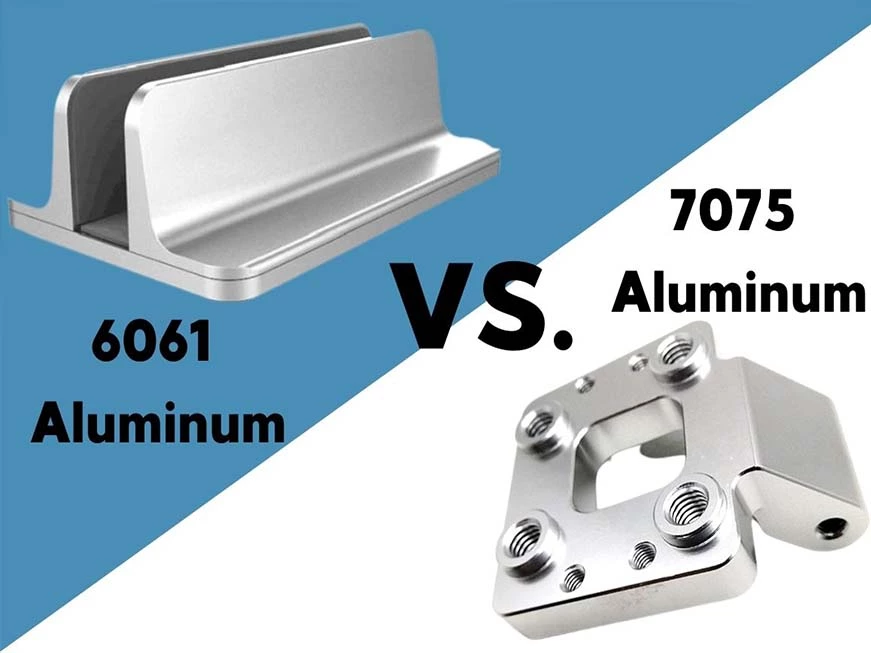
When sourcing precision CNC parts, the choice between Aluminum 6061 and 7075 isn’t just a technical spec—it’s a strategic business decision. Choosing 7075 when 6061 suffices can inflate your budget by 40%, while choosing 6061 for a high-stress application could lead to catastrophic part failure.
At MS Machining, we process tons of both alloys every month. Here is the “no-nonsense” breakdown of how these materials impact your costs, lead times, and final product performance.
1. The Engineering Trade-off: Strength vs. Machinability
In the machine shop, these two alloys behave very differently, and that difference shows up on your invoice.
6061-T6: The Versatile Workhorse
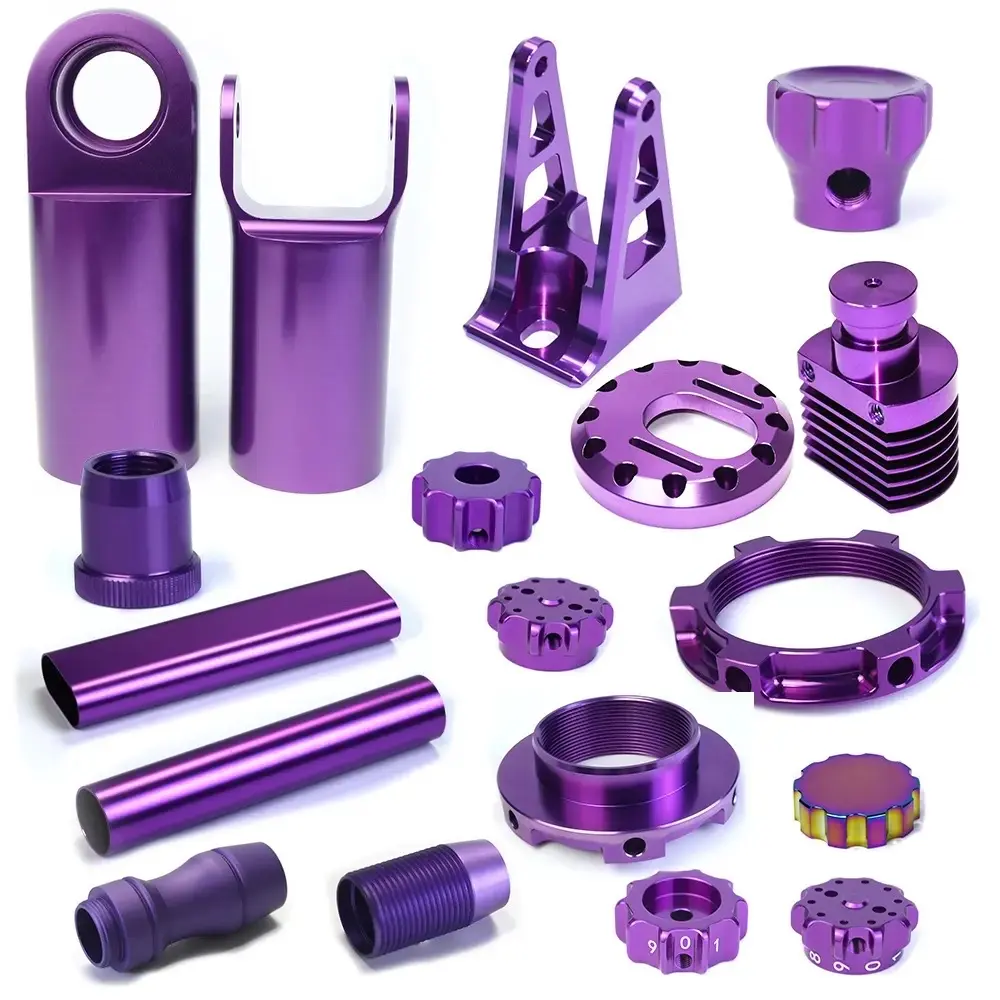
Often called “Architectural Aluminum,” 6061 is the most common alloy for a reason. It’s alloyed with magnesium and silicon, making it exceptionally easy to machine.
- The Advantage: It chips beautifully and maintains structural integrity even with complex thin-wall designs.
- The Surface: If your parts are customer-facing, 6061 takes Type II Decorative Anodizing much more consistently than 7075.
7075-T6: The Aerospace Powerhouse
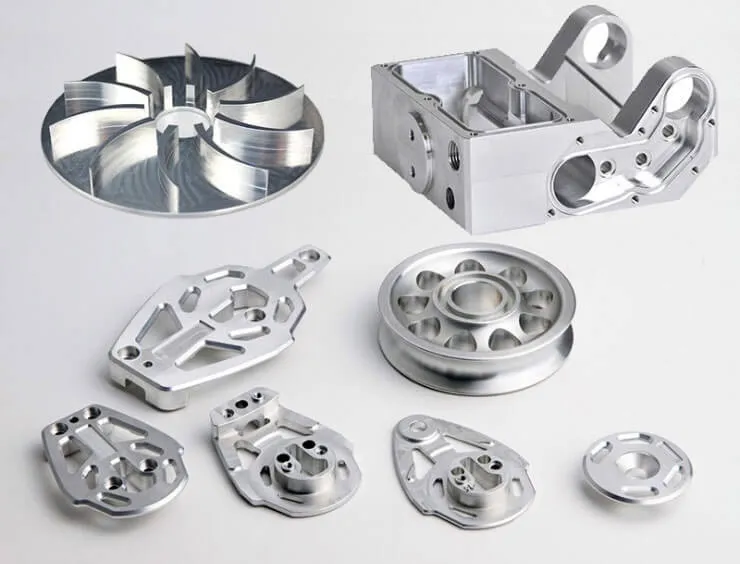
Alloyed primarily with zinc, 7075 is a different beast. It’s nearly as strong as some steels but at a third of the weight.
- The Strength: Its yield strength is nearly double that of 6061. This is why it’s non-negotiable for aerospace wing structures and high-performance racing gears.
- The Challenge: It is harder and more brittle. Machining 7075 requires specialized tooling and slower feeds to prevent tool breakage and ensure surface crispness.
2. The Procurement Perspective: Cost and Lead Times
As an operations-focused partner, we want you to understand the ROI (Return on Investment) of your material choice.
| Cost Factor | Aluminum 6061 | Aluminum 7075 |
| Raw Material Price | Baseline (Economic) | 40% – 60% Higher |
| Tooling Wear | Low (Extended tool life) | Moderate (Requires carbide inserts) |
| Machining Speed | Fast (High-speed milling) | Moderate (Controlled cycles) |
| Total Project Cost | $ | $$$ |
Operational Tip: If your project involves a high volume (1,000+ pieces), the price gap between 6061 and 7075 becomes exponential. For prototypes, the difference may be negligible, but for production runs, 6061 is the clear winner for cost-sensitive applications.
3. Surface Finishing: Don’t Ruin Your Parts at the Last Step
A common mistake we see in RFQs is ignoring how the material reacts to post-processing.
- 6061: Excellent for both Type II (Color) and Type III (Hardcoat) anodizing. The results are uniform and professional.
- 7075: Due to its high zinc content, 7075 can sometimes appear “splotchy” after clear anodizing. If aesthetics are critical for your 7075 parts, we recommend a Hardcoat (Type III) or a specialized powder coating to ensure a premium look.
4. Why Partner with an Internationally Optimized Service?
Whether you are an engineering firm in San Francisco, a medical startup in Boston, or an industrial giant in Germany, your CNC partner must bridge the geographical gap.
- Geographical Agility: We align our production shifts to ensure that while you are sleeping in North America or Europe, our spindles are turning. You receive your DFM (Design for Manufacturing) feedback within 12 hours.
- Logistics Transparency: We don’t just “ship” parts. We manage the entire supply chain—from certified material sourcing to customs-cleared air freight—ensuring your 7075 aerospace components arrive in days, not weeks.
- Compliance: We provide full MTRs (Material Test Reports) and CoCs (Certificates of Conformance). In industries like defense and medical, the paperwork is as important as the part itself.
5. The Verdict: Which Should You Choose?
- Go with 6061 if: You need a cost-effective, corrosion-resistant part for automotive, consumer electronics, or general industrial use.
- Go with 7075 if: You are pushing the limits of weight and strength—specifically for UAV frames, aerospace components, or high-stress robotics joints.
Ready for a Professional Assessment?
Don’t guess on your material specs. Upload your STEP files today for a free DFM analysis. Our engineers will tell you exactly which alloy provides the best balance of performance and price for your specific design.