
If you’re exploring CNC and Swiss CNC machining, understanding their fundamental differences can save you time and money. Whether you’re a manufacturer, engineer, or business owner, knowing when to use each technology makes all the difference in achieving precision, efficiency, and cost-effectiveness. In this guide, you’ll discover what sets Swiss CNC apart from standard CNC machines, so you can make an informed choice for your next project. Let’s cut through the confusion and get to the core of these powerful manufacturing tools.
What Is CNC Machining?
Definition of CNC Machining
CNC (Computer Numerical Control) machining is a manufacturing process that uses computer-controlled tools to cut, shape, and finish metal, plastic, and other hard materials. Unlike manual machining, CNC machining offers high precision, repeatability, and automation, making it ideal for producing complex and detailed parts.
How CNC Machines Work
CNC machines operate through a computer program that guides the movement of the machine’s tools. The process involves:
- Programming the design into software
- Transferring code to the CNC machine
- Automated tool movement along multiple axes
- Precise cutting based on digital instructions
This setup allows for consistent production of identical parts with tight tolerances.
Common CNC Machine Types
- Milling Machines: Remove material with rotary cutters, suitable for complex geometries.
- Lathes: Rotate the material while cutting to produce symmetrical parts.
- Routers: Work on softer materials like plastic and wood.
- EDM (Electrical Discharge Machines): Use electrical discharges for detailed, hard-to-cut materials.
Materials CNC Can Machine
CNC machining is versatile and can handle:
- Metals: Aluminum, steel, titanium, brass
- Plastics: ABS, polycarbonate, nylon
- Composites and other materials depending on application needs
Main Industries Using CNC Machining
CNC machining services are crucial across various sectors, including:
- Aerospace: High-precision parts for aircraft
- Medical devices: Tiny, complex components for implants
- Automotive: Engine parts and custom fixtures
- Electronics: Connectors and housings
- Industrial machinery: Custom tooling and parts
CNC Machining Benefits
- High Accuracy & Precision: Consistent, tight tolerances.
- Repeatability: Perfect for mass production.
- Speed & Efficiency: Faster than manual processes.
- Complex Geometries: Capable of manufacturing intricate parts.
- Flexibility: Easily switch between different projects.
CNC Machining Limits
Despite its advantages, CNC machining has boundaries:
- High Initial Setup Cost: Programming and tooling can be expensive initially.
- Material Restrictions: Not suitable for some soft or very hard materials.
- Limited for Larger Parts: Larger, heavy components may be challenging.
- Production Speed for Small Runs: Less economical for very small quantities compared to other methods.
Understanding these basics of CNC machining sets the stage for comparing it with Swiss CNC machining and helps identify the best process for your specific needs.
What Is Swiss CNC Machining?
Swiss CNC machining is a specialized form of precision CNC machining designed for manufacturing small, highly detailed parts. It’s often used to produce tiny, complex components with tight tolerances, making it ideal for industries like medical devices, electronics, and watchmaking. If you’re looking for precision CNC solutions that require intricate features and superior accuracy, Swiss CNC might be the right choice.
How Swiss CNC Works
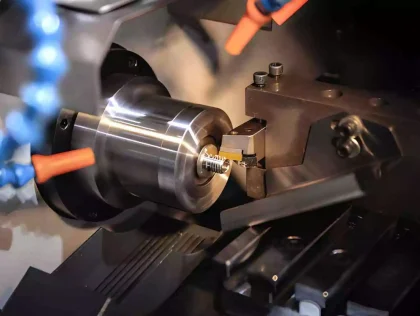
Unlike traditional CNC machines, Swiss CNC machines use a sliding headstock and guide bushing system that allows the tool to stay close to the part as it machines. This setup results in incredibly precise cuts, especially on long, slender parts. The workpiece is held in a rotating headstock, and the cutting tools move along the part’s length, providing high stability and accuracy.
Sliding Headstock and Guide Bushing
The key feature that sets Swiss CNC apart is the sliding headstock and guide bushing. The guide bushing supports the workpiece right near the cutting zone, reducing vibrations and allowing for very fine, detailed work. This system also enables the machine to produce parts with extremely tight tolerances—even greater than standard CNC machining.
Where Swiss CNC Came From
Swiss CNC machining originates from traditional Swiss watchmaking, where precision and tiny components are critical. Over time, the technology evolved into high-precision CNC machining, capable of producing complex, small parts for various industries. Today, Swiss CNC technology is recognized worldwide for its ability to manufacture small, intricate components efficiently.
Common Swiss CNC Machine Types
Some typical Swiss CNC machine types include multi-axis lathes, single-spindle Swiss screws, and multi-spindle setups. These machines can handle a wide variety of materials and produce parts with complex geometries. They are often found in shops specializing in tiny, precision parts.
Materials Swiss CNC Can Machine
Swiss CNC machines can work with a wide range of materials, including stainless steel, brass, aluminum, titanium, and specialized alloys. This versatility makes Swiss CNC machining suitable for tough, durable components in industries such as aerospace, medical, and electronics.
Main Industries Using Swiss CNC Machining
Swiss CNC machining is heavily used in medical device manufacturing, electronics, telecommunications, and high-precision industries like aerospace. Its ability to produce small, complex, and high-quality parts makes it indispensable for industries where precision machining is non-negotiable.
Swiss CNC Benefits
Some key benefits of Swiss CNC machining include high accuracy, excellent surface finishes, and the ability to produce long, slender parts without deformation. Additionally, Swiss CNC can handle complex geometries and tight tolerances, leading to high-quality, reliable components with minimal secondary finishing—saving time and costs.
Swiss CNC Limits
Despite its advantages, Swiss CNC machining may not be ideal for large parts or high-volume production of big components. The setup and operation can also be more expensive compared to traditional CNC, especially for simpler projects. Moreover, the machine’s complexity requires specialized skills to operate and maintain.
In , Swiss CNC machining offers unmatched precision and is tailored for small, complex parts, primarily for high-end, detail-driven applications. For those needing tiny parts with tight tolerances, Swiss CNC is often the go-to choice.
CNC vs Swiss CNC: Machine Design Differences

When comparing CNC and Swiss CNC machining, the biggest difference starts with their design. CNC machines are generally larger, more versatile, and suited for a wide range of parts. In contrast, Swiss CNC machines are compact and specifically built for small, high-precision parts.
How Each Machine Moves and Cuts
CNC machines use rotary tools to move along three, four, or five axes, cutting material from various directions. Swiss CNC machines have a sliding headstock that enables the workpiece to move while the tool stays stationary, allowing for tighter tolerances and better control on small parts. This design makes Swiss CNC machines especially good at machining complex, tiny parts where precision is critical.
Precision and Tolerance Differences
Swiss CNC machining is known for its exceptional accuracy and tight tolerance capabilities—often within just a few microns. Standard CNC machining still delivers high precision, but it’s generally better suited for larger parts or those with less demanding tolerance requirements. If precision is your top priority, Swiss CNC offers a clear advantage.
Part Size and Shape Differences
With CNC machining, you can produce a wide variety of sizes and shapes, but parts tend to be larger and more straightforward. Swiss CNC excels at manufacturing small, slender parts with complex geometries, like medical devices or intricate electronics components. The machine’s ability to handle long, slender parts without bending or deforming is a big plus in industries that require tiny, detailed parts.
Long, Slender Part Machining
Swiss CNC machines are especially designed for long, thin components, which are difficult to produce on traditional CNC machines due to stability issues. Their guide bushing supports the part, preventing deflection and ensuring precision.
Complex Part Machining
Both CNC and Swiss CNC can handle complex parts, but Swiss CNC’s cutting tool setup and guide bushing system are better suited for intricate designs. This makes Swiss CNC ideal for complex, small components where fine features matter.
Production Speed and Efficiency
CNC machining is typically faster when producing larger parts or higher volume without specialized precision needs. Swiss CNC, on the other hand, shines when it comes to small-batch or highly detailed parts, though setup times can be longer initially. Swiss CNC can be more efficient for high-volume, small parts because of its automated and precise operation.
Setup Time Differences
Standard CNC machines generally require less setup time, especially for simpler parts. Swiss CNC machines might take longer to set up because of their specialized tooling and tight tolerances, but once running, they produce parts quickly and accurately.
Tooling and Operation Differences
In CNC machining, a broad range of tools can be used to cut various materials. Swiss CNC machines use specialized tooling optimized for tiny, precise cuts. Their operation also involves more detailed programming to handle the tight tolerances and complex geometries.
Cost Differences
Generally, Swiss CNC machines are more expensive upfront due to their specialized design and capabilities, but their high precision can save costs in small-batch and complex part production. Standard CNC machines tend to be more cost-effective for larger or less complex parts.
Best Applications for Each Process
- CNC machining is best suited for larger parts, simple shapes, and high-volume production where speed and cost are key.
- Swiss CNC machining is ideal for tiny, complex, and high-precision parts, especially in industries like medical devices, aerospace, and electronics.
Next, I’ll cover when to choose each process based on your project needs.
When To Use CNC vs Swiss CNC

Knowing whether to choose standard CNC or Swiss CNC machining depends on your specific project needs.
Best Cases for Standard CNC
Standard CNC machining is ideal for larger parts, complex shapes, or higher-volume production where speed and versatility matter. It’s perfect for machining thicker materials and parts that don’t require extremely tight tolerances. If your project involves creating larger components or prototypes with moderate precision, standard CNC offers great value and flexibility.
Best Cases for Swiss CNC
Swiss CNC machining shines when it comes to small, highly precise parts. It’s widely used in medical device manufacturing, electronics, and aerospace industries. If you need tiny, intricate parts with tight tolerances and excellent surface finishes, Swiss CNC is the way to go. It’s especially good for machining long, slender, or delicate parts that can be challenging with traditional CNC.
Choosing by Part Size
- Large parts: Stick with standard CNC machines, as they’re better suited for bigger components.
- Small or micro parts: Swiss CNC is typically the best choice, offering precision on tiny parts that need detailed features.
Choosing by Precision Needs
- For parts with very tight tolerances—often in the thousandths of an inch or less—Swiss CNC offers superior accuracy.
- For less critical tolerances, standard CNC is usually sufficient and more cost-effective.
Choosing by Production Volume
- High-volume production: Both CNC and Swiss CNC can be efficient, but Swiss CNC often reduces cycle times for small parts, making it more cost-effective at scale.
- Low-volume or prototyping: Standard CNC is commonly used for quick setups and smaller batch runs.
Choosing by Budget
- Generally, Swiss CNC machining can be more expensive due to its specialized tooling and setup but offers exceptional precision.
- Standard CNC machining tends to be more budget-friendly for larger parts or general applications.
Choosing by Material and Geometry
- Swiss CNC handles small, intricate parts made from a variety of materials, including metals and plastics.
- For larger or less complex materials, standard CNC is usually more suitable.
Real-world Project Examples
For example, in medical device manufacturing, Swiss CNC is often used for tiny implants or surgical tools requiring precise machining. Conversely, a construction company might choose standard CNC for manufacturing larger metal brackets or structural components. Understanding these differences helps ensure you’re selecting the right machining process for your project’s success.
Precision Machining Services
Whether you need standard CNC machining or specialized Swiss CNC machining services, finding the right partner is key to ensuring your project meets quality and accuracy standards. High-precision CNC solutions allow for tight tolerances and complex parts, essential in industries like aerospace, medical devices, and electronics.
Custom machining support is often necessary to adapt to unique part requirements and achieve the best results. Experienced providers understand how to optimize tooling and processes for maximum efficiency while maintaining strict quality controls.
Choosing the right machining partner involves evaluating their expertise, equipment capabilities, and commitment to quality. Expert guidance in selecting the right technologies—such as CNC or Swiss CNC—can save you time and costs while delivering parts that meet your specifications.
For precision CNC components, look for a supplier familiar with various materials and capable of producing small, intricate parts with high accuracy. This ensures your final products perform reliably and meet industry standards. If you’re working on projects requiring tight tolerances and complex geometries, partnering with a team that offers comprehensive CNC machining services—including Swiss CNC machining—is essential for success.