What Is CNC Milling?
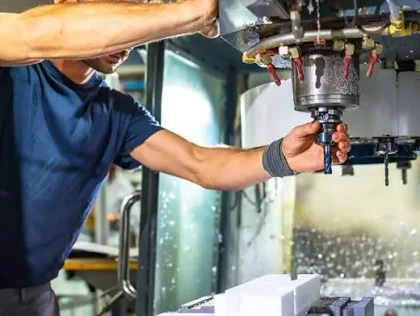
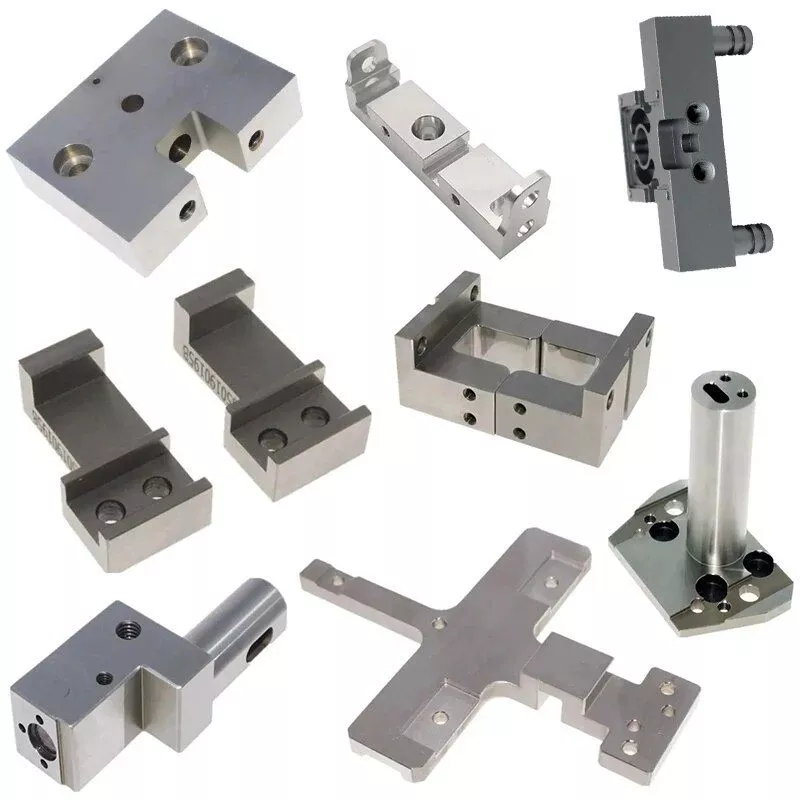
CNC milling is a subtractive manufacturing process where a rotating cutting tool removes material from a stationary workpiece to create precise shapes and features. Unlike turning, CNC milling uses various cutting tools—such as end mills, drills, and face mills—that move along multiple axes, typically X, Y, and Z, to shape the part.
Detailed Process and Tooling
The milling machine directs the cutting tool to follow programmed paths, allowing complex cuts and contours. Tools in CNC milling vary in type and size depending on the material and desired finish:
- End mills for standard cuts and shapes
- Face mills for broad surface finishing
- Ball mills for curved surfaces
- Drill bits for holes
Modern CNC mills often feature multi-axis capabilities, enabling undercuts and intricate details that were difficult or impossible to achieve manually.
Materials and Capabilities
CNC milling can handle a wide range of materials, including:
- Metals (aluminum, steel, titanium)
- Plastics (ABS, nylon, polycarbonate)
- Composites and wood
Its versatility makes CNC milling ideal for producing complex parts with tight CNC tolerances and excellent surface finish. Whether prototyping or full production, milling supports precision machining for various industries—from aerospace to automotive and medical.
In , CNC milling excel at parts requiring detailed contours, slots, pockets, and flat surfaces, relying on a rotating tool to sculpt the workpiece meticulously.
What Is CNC Turning? Process Overview and Tool/Workpiece Interaction
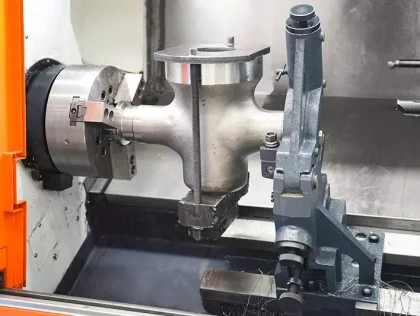
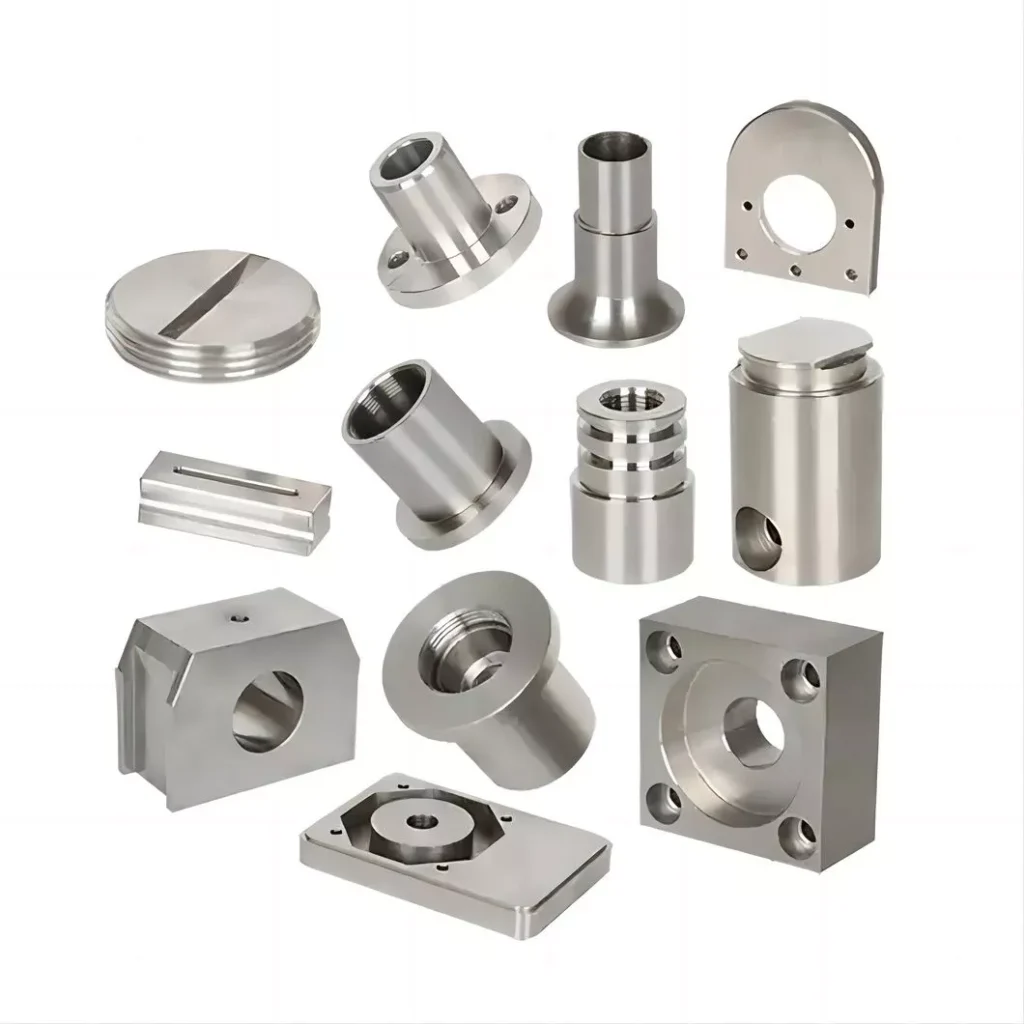
CNC turning is a subtractive manufacturing process where the workpiece spins on a rotating axis while cutting tools shape it. Unlike CNC milling, which uses a rotating tool, turning relies on a rotating workpiece and a stationary or moving cutting tool. This makes CNC turning ideal for creating cylindrical parts, such as shafts, pins, and sleeves, where symmetry around the axis is key.
In this process, the cutting tool moves linearly along the workpiece’s surface, removing material to form precise diameters, grooves, threads, or tapers. The setup typically involves a CNC lathe, which automates these lathe operations, enabling high precision and repeatability.
Materials commonly machined through CNC turning include metals like aluminum, steel, stainless steel, and brass, as well as some plastics. These materials are shaped efficiently into round or tubular components, often used in industries like automotive, aerospace, and oil and gas.
Typical parts produced by CNC turning include automotive shafts, pipeline fittings, bushings, and fasteners—components where concentricity and smooth finishes are crucial. For example, precision CNC turning helps create tight-tolerance parts needed in automotive manufacturing, ensuring consistent performance on engines and drivetrains.
For in-depth applications on cylindrical parts and precise components, check out our pipeline fittings guide and automotive CNC machining services to see turning’s role in industry-specific production.
Core Differences Between CNC Milling and CNC Turning
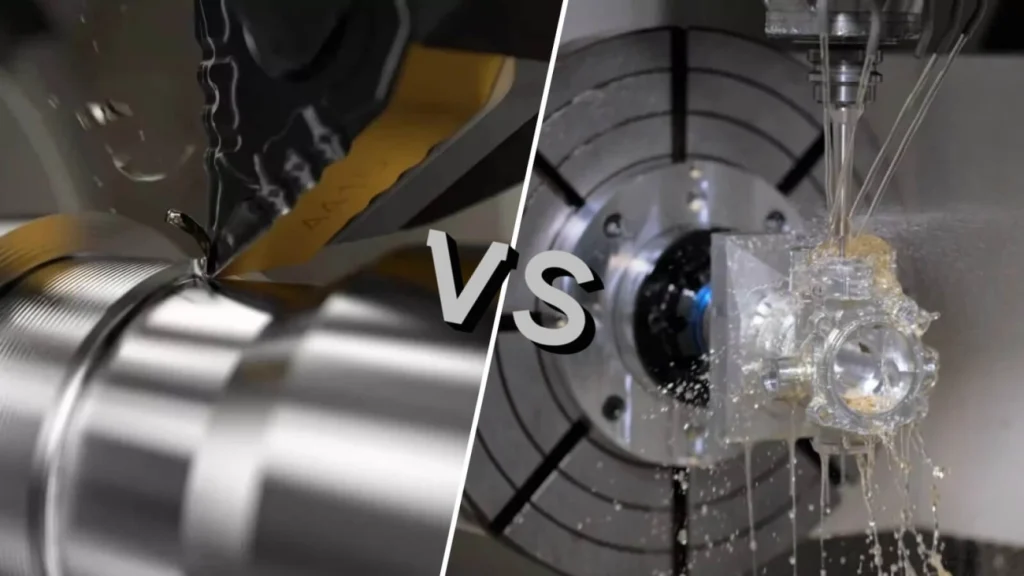
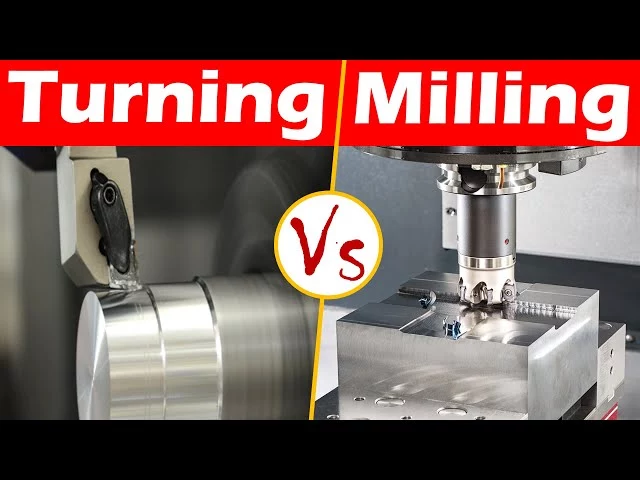
Understanding the core differences between CNC milling and CNC turning helps you pick the right process for your project. Here’s a quick breakdown focusing on workpiece and tool motions, suitable geometries, axes involved, material removal, and cycle times.
| Aspect | CNC Milling | CNC Turning |
|---|---|---|
| Workpiece Motion | Usually fixed in place | Rotates around a horizontal axis |
| Tool Motion | Rotates and moves along multiple axes (X, Y, Z, sometimes more) | Stationary or moves linearly to cut |
| Suitable Geometries | Complex shapes, flat surfaces, pockets, slots | Cylindrical, round, and symmetric parts |
| Axes Involved | Multi-axis (3 to 5+ axes for complex work) | Mainly 2 axes (rotational + linear) |
| Material Removal | Removing material with rotating cutting tools | Removing material by turning away workpiece surface |
| Cycle Time | Can be longer due to complex tool paths | Generally faster for simple cylindrical parts |
- CNC Milling operates with a rotating cutting tool moving over a fixed workpiece, making it ideal for complex shapes requiring multiple cutting directions.
- CNC Turning involves rotating the workpiece against a stationary or linearly moving tool, making it best for cylindrical shapes like shafts or bushings.
Each method excels with different geometries and material removal strategies. Cycle times vary depending on complexity, with turning often faster for simple forms.
For projects requiring detailed precision or heavy component work, like those involved in large heavy component machining, understanding these basic differences helps optimize manufacturing choices.
When to Use CNC Milling vs. CNC Turning
Choosing between CNC milling and CNC turning largely depends on the part geometry and specific features you need. Milling is ideal for parts with complex shapes, multiple surfaces, and intricate details because it uses a rotating cutting tool to remove material from a stationary workpiece. Turning, on the other hand, is best suited for cylindrical parts where the workpiece rotates against a stationary cutting tool, making it efficient for creating round shapes like shafts, bushings, and pins.
For parts combining both complex geometries and cylindrical features, hybrid mill-turn centers offer a powerful solution by integrating both processes in a single setup. These advanced CNC machining processes reduce handling time and improve accuracy, especially in industries like aerospace, automotive, and medical device manufacturing.
For example, aerospace components with critical tolerances and mixed features often benefit from mill-turn machining, while high-volume production of cylindrical parts like hydraulic fittings is more cost-effective with CNC turning. Understanding your part’s detailed design and volume needs will help you select the right approach to optimize both quality and cost.
For more on designing parts that suit machinability and selecting the ideal machining process, check out this guide on design for machining. Also, a direct comparison between CNC lathe vs. mill offers valuable insights tailored for practical decision-making.
Advantages and Limitations of CNC Milling and CNC Turning
When deciding between CNC milling and CNC turning, understanding their key advantages and limitations helps in choosing the right process based on your design needs.
Pros and Cons of CNC Milling
Advantages:
- Versatile Tooling: CNC milling uses rotating cutting tools to work on flat, irregular, or complex 3D surfaces, making it ideal for intricate part geometries.
- Multi-axis Control: Advanced multi-axis milling machines can produce highly detailed parts with tight CNC tolerances and superior surface finish.
- Wide Material Range: Suitable for plastics, metals, composites—great for prototypes and production alike.
Limitations:
- Longer Cycle Times: Complex tooling paths and multiple setups can increase material removal time.
- Higher Cost for Simple Shapes: Milling can be less efficient for simple round or cylindrical parts compared to turning.
Pros and Cons of CNC Turning
Advantages:
- Efficient Cylindrical Machining: CNC turning excels at producing round parts fast, using a rotating workpiece against stationary cutting tools.
- Faster Material Removal Rate: Ideal for high-volume runs of round components like shafts, pins, and bushings.
- Cost-Effective for Symmetrical Parts: Lower tooling and setup times for parts with simple rotational symmetry.
Limitations:
- Limited to Rotation-Friendly Geometries: Difficult to manufacture complex shapes that aren’t cylindrical or conical.
- Less Flexible for Multi-Surface Machining: Usually requires additional operations if multiple faces or features need milling.
Choosing Based on Design Needs
- Opt for CNC milling when your part has complex geometries, multiple surfaces, or requires precision multi-axis machining.
- Choose CNC turning for efficient, high-precision cylindrical parts with faster cycle times and lower costs.
- For parts combining both types, consider hybrid mill-turn centers that merge the strengths of both processes, enabling more complex and efficient production.
Understanding these trade-offs helps you select the best CNC machining process to match part geometry, material, tolerances, and production volume demands.
For industry-specific applications, such as precision aerospace components, our CNC aerospace machining capabilities combine these processes to optimize both design and manufacturing efficiency.
Factors to Consider When Choosing Between Milling and Turning
When deciding between CNC milling and CNC turning, several key factors come into play that impact your part design, production volume, and overall budget.
Part Design and Volume Considerations
- Milling is best for complex geometries with multiple features and contours, especially when using multi-axis milling.
- Turning excels at producing cylindrical parts and is often faster for high-volume runs due to efficient material removal rates.
- Prototyping may favor milling for flexibility, while production machining might benefit from the speed of turning.
Tolerance and Surface Finish Implications
- CNC turning typically achieves tighter tolerances on round parts and offers excellent surface finishes on cylindrical surfaces.
- Milling can reach high precision too but may require additional operations for certain finishes, especially on flat or irregular surfaces.
Material and Budget Factors
- Both processes handle a wide range of materials, but some harder materials may be easier to machine with turning, which uses constant cutting forces on a rotating workpiece.
- Milling setups can be more expensive due to tooling and machine complexity, particularly with advanced 5-axis milling machines like those used for fluid vacuum components.
- Turning often results in lower costs for simple cylindrical parts with repetitive features.
Design for Manufacturability Tips
- Design parts with machining in mind: minimize complex features where possible and balance detail with tool access.
- Consider hybrid CNC machining solutions like mill-turn centers that combine both processes for complex parts, reducing cycle time and setups.
- Work with your machinist early to optimize designs for cost-effective manufacture, keeping tolerances realistic to avoid unnecessary expenses.
Choosing the right CNC machining process means evaluating your part’s geometry, production needs, and finish requirements carefully. The goal is to find a balance between precision, speed, and cost that fits your specific project. For detailed multi-axis capabilities, check out advanced options available with 5-axis CNC milling machines, which can sometimes bridge the gap between milling and turning.
Real-World Applications and Case Studies
CNC milling and CNC turning each bring unique strengths to real-world manufacturing challenges, especially when precision and scalability matter.
For example, CNC milling excels in producing complex parts with multiple features, like intricate cavities or flat surfaces. Industries such as aerospace and medical device manufacturing rely on multi-axis milling to achieve highly detailed components with tight tolerances. Milling also shines in prototyping, where fast material removal rates and flexible tooling help develop new designs quickly.
On the other hand, CNC turning is ideal for cylindrical parts like shafts, bushings, and threaded components. It offers efficient material removal by rotating the workpiece against stationary cutting tools, which reduces cycle times for high-volume production runs. Automotive and oilfield equipment sectors frequently use CNC turning to manufacture durable parts with excellent surface finishes and repeatable precision. For insight into critical parts made with turning, check out examples in our detailed overview of CNC machining critical components.
Hybrid mill-turn centers now combine the best of both worlds, offering the precision and versatility of milling alongside the quick throughput of turning. This integration benefits industries requiring complex geometries on turned parts without moving processes between machines.
These case studies and applications highlight how choosing the right CNC machining process—whether milling, turning, or a hybrid solution—ensures the optimal balance of accuracy, cost, and production speed to meet specific project needs.