

What Is Part Consolidation and Why Does It Matter?
Part consolidation involves redesigning an assembly by combining multiple components into fewer, more complex parts without simply reducing the part count arbitrarily. Unlike basic part reduction, which might remove unnecessary items, consolidation focuses on intelligently integrating functions to improve performance, simplify manufacturing, and reduce overall complexity. This approach goes beyond traditional Design for Assembly (DFA) principles that primarily aim to minimize assembly steps; it now harnesses modern Design for Additive Manufacturing (DfAM) methods alongside CNC machining and hybrid manufacturing technologies.
Historically, DFA set the foundation by promoting fewer parts and easier assembly. Today, part consolidation evolves that thinking by exploiting advances in design software, additive manufacturing, and precision CNC machining to create integrated parts with optimized geometries and embedded functionalities—such as internal channels or multi-feature surfaces—that weren’t feasible before.
Several key drivers propel part consolidation in today’s manufacturing landscape:
- Sustainability: Reducing material waste and enabling lightweighting supports energy-efficient products.
- Faster Time-to-Market: Simplified supply chains and shorter production cycles accelerate delivery.
- Cost Efficiency: Fewer components lower tooling, labor, and logistics expenses.
Part consolidation fits naturally across various manufacturing processes. CNC machining offers unmatched precision for consolidated parts that require tight tolerances or superior surface finishes. Hybrid manufacturing—combining additive and subtractive methods—allows full consolidation of complex features with secondary machining for finishing touches. This synergy between techniques unlocks opportunities for engineering robust, high-performance components that serve multiple functions within a single, manufacturable unit.
In short, part consolidation matters because it transforms how assemblies are designed, made, and maintained, aligning innovation with practical benefits in cost, quality, and sustainability.
Key Benefits of Part Consolidation
Part consolidation delivers clear advantages across cost, performance, and supply chain efficiency. Here’s a quick breakdown:
| Benefit Area | What It Means | Impact Highlights |
|---|---|---|
| Cost Reduction | Saves material and cuts tooling, fixtures, and assembly labor costs. Also simplifies inventory and supplier management. | Up to 85% cost savings in targeted applications. |
| Weight & Performance | Optimizes geometry with integrated features like internal channels. Reduces leak points and weak joints. | Weight drops between 25-60%, boosting efficiency. |
| Reliability & Quality | Fewer failure modes and better structural integrity simplify quality control efforts. | Improved durability and consistent output quality. |
| Supply Chain Efficiency | Reduces SKUs, shortens lead times, and makes maintenance or end-of-life recovery easier when designed properly. | Streamlined operations and faster delivery. |
| Environmental Benefits | Less waste production and opportunities for lightweighting reduce energy use. | Supports sustainability goals and lowers carbon footprint. |
These benefits come from smart design guided by Design for Assembly (DFA) and often leverage CNC machining for consolidated parts to achieve tight tolerances and repeatability. This combination ensures parts are not only cost-effective but also high performing and easier to manage.
For manufacturers aiming for operational excellence, part consolidation isn’t just about cutting parts—it’s about optimizing the entire product lifecycle for better efficiency and sustainability. If you want to see how this applies in precision production, take a look at our CNC mass production capabilities to understand how it supports part consolidation goals.
When and Where Part Consolidation Makes Sense

Part consolidation is most effective in assemblies with a high part count that include redundant fasteners, complex interfaces, or tolerance stack-up challenges. These conditions often lead to increased assembly time, higher costs, and potential quality issues, making them prime candidates for consolidation.
Different industries see unique opportunities for part consolidation:
- Aerospace: Fuel nozzles and other critical components benefit from reducing multiple parts into one, improving reliability and cutting weight.
- Automotive: Engine components, brackets, and assemblies where reducing part count enhances performance and simplifies supply chains.
- Medical Devices: Precision parts where fewer components improve sterilization and reduce failure points.
- Industrial Equipment: Complex assemblies where consolidated parts reduce downtime and simplify maintenance.
- Consumer Products: Cases where lightweighting and faster assembly offer competitive advantages.
Evaluating whether part consolidation makes sense involves:
- Functional Requirements: Ensuring the consolidated part meets all performance and safety standards.
- Production Volume: High-volume parts often justify upfront redesign investments better than low volumes.
- Material Compatibility: Assessing if materials can deliver required strength and machinability when combined.
- Lifecycle Considerations: Including manufacturability, ease of service or repair, and disassembly needs.
Be cautious when consolidation risks compromising maintenance access, increases redesign complexity without a clear return on investment, or limits the ability to upgrade or service parts. In such cases, sticking to multi-part assemblies may be wiser. Balancing these factors ensures part consolidation delivers real operational and cost benefits without unintended drawbacks.
Strategies and Best Practices for Successful Part Consolidation
To get the most from part consolidation, start with a clear redesign process:
- Analyze functions and interfaces: Break down each part’s role and how it connects with others to spot overlap or redundancy.
- Identify consolidation opportunities: Look for parts that can merge without losing critical features or performance.
- Apply generative design or FEA tools: Use simulation and optimization software to explore efficient geometries and validate the new design’s strength and function.
- Validate performance: Prototype and test thoroughly to ensure reliability before full production.
Integrating part consolidation with CNC machining is key. Precision subtractive methods help achieve the tight tolerances and smooth finishes needed, especially when complex features can’t be fully realized additively or in one step. Hybrid workflows—where consolidated blanks go through secondary machining—offer the best of both worlds.
Keep design principles front and center:
- Functional integration to combine features logically
- Topology optimization to minimize material while keeping strength
- Material selection tuned to both performance and machinability
- Awareness of manufacturing limits, tooling, and assembly constraints
Tools like Design for Assembly (DFA) guidelines, simulation software, and collaborative engineering reviews bring structure to the process, helping cross-functional teams align on the best approach.
At MS Machining, we specialize in turning consolidated concepts into precision CNC-machined parts with consistent tight tolerances and repeatability. Our expertise ensures designs not only consolidate parts but are also manufacturable and reliable in real-world use. For insights on machining complex parts, check out our detailed CNC milling machine parts resources.
Challenges and How to Overcome Them
Part consolidation brings clear benefits, but it’s not without challenges. One key hurdle is design complexity. Combining multiple parts into one means careful validation to make sure the new design meets all functional and performance requirements. This often requires advanced simulation, testing, and iterative redesign.
Material and process limitations can also hold back consolidation efforts. For example, some additive manufacturing (AM) parts show anisotropy, meaning strength varies by direction, which complicates reliability. Machining consolidated blanks can be tricky, too, since certain geometries may be hard to access or finish with traditional CNC machining methods. Understanding these boundaries early helps avoid costly rework.
Maintenance and repair are other important considerations. Consolidated parts might restrict access to internal components or make field servicing more difficult. This can impact serviceability and lifecycle costs, so it’s crucial to balance consolidation benefits with practical maintenance needs.
Another barrier is the upfront engineering investment. Redesigning parts for consolidation demands time and resources before you see long-term savings in assembly, material use, or supply chain simplification. This means organizations must plan for initial costs and recognize the payoff over the product’s life.
To overcome these challenges, we recommend a phased implementation approach:
- Start small with prototypes and pilot runs to validate consolidated designs.
- Use cross-functional teams—engineers, manufacturing experts, and supply chain partners—to evaluate feasibility from different angles.
- Leverage advanced tools like generative design and topology optimization for functionally integrated, manufacturable parts.
- Partner with experienced manufacturers like MS Machining, who specialize in translating complex consolidated parts into high-quality, CNC-machined components with tight tolerances and repeatability.
MS Machining also supports hybrid manufacturing workflows, combining additive and subtractive processes to tackle difficult features effectively. Our expertise in outsourcing CNC machining enables seamless integration of consolidated designs, helping you reduce risk while maximizing production efficiency.
Real-World Case Studies and Examples
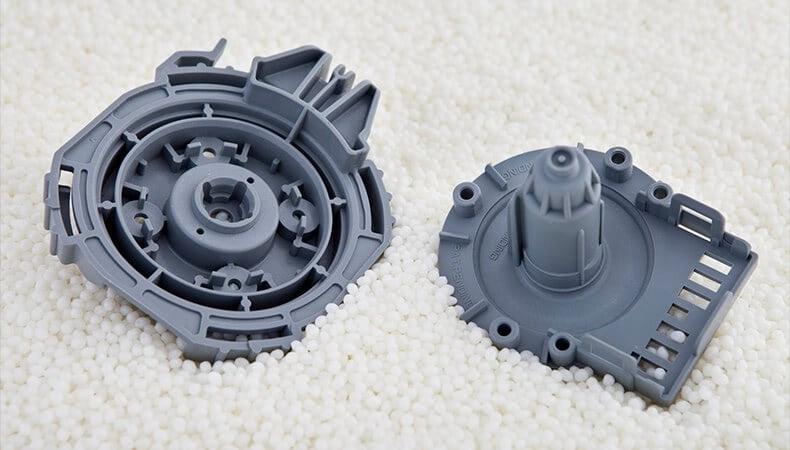
Part consolidation delivers impressive results across industries, with some standout successes driving significant impact. Take aerospace, for example—a fuel nozzle once made from 20 separate parts was consolidated into a single, precision-machined component. This shift not only slashed the weight dramatically but also trimmed costs and eliminated numerous failure points.
Beyond aerospace, part consolidation shines in sheet metal fabrication, metal injection molding (MIM), and CNC machining assemblies. These industries see benefits like reduced assembly time, fewer suppliers to manage, and simplified inventory. At MS Machining, we’ve helped clients optimize their designs through consolidated CNC machining, cutting costs and improving quality by merging multiple components into one precisely manufactured part.
In one anonymized MS Machining project, a complex multi-part assembly was reduced by over 50% in part count. This led to a 40% weight reduction, 30% lower production cost, and assembly time cut in half. By combining design for assembly (DFA) principles with advanced CNC machining techniques, we ensured tight tolerances and consistent repeatability throughout the process.
Key lessons from these projects include:
- Start with a clear understanding of functional requirements to avoid over-complex designs
- Use iterative prototyping and validation to catch issues early
- Collaborate cross-functionally to balance manufacturability with performance
- Rely on proven processes like topology optimization and hybrid manufacturing for the best results
These real-world examples underscore how effective part consolidation can streamline manufacturing, boost performance, and provide measurable savings. For detailed guidance on CNC machining for such consolidated parts, check out MS Machining’s expertise in automotive CNC machining and precision CNC machining.
How MS Machining Supports Your Part Consolidation Goals
At MS Machining, we specialize in CNC machining that handles the precision features required for complex, consolidated parts. Our deep expertise ensures your part consolidation efforts deliver tight tolerances and consistent quality every time.
What We Offer
| Service Aspect | How It Helps Your Part Consolidation |
|---|---|
| Design for Manufacturability (DFM) feedback | Early-stage insights to optimize your design for CNC machining and assembly |
| Prototyping | Fast, reliable prototypes help validate consolidated designs quickly |
| Production scaling | Seamless transition from prototype to full-scale manufacturing |
| Custom CNC machining bronze services | Specialized capabilities for durable, high-performance consolidated parts (learn more) |
Why Partner With Us?
- Reduced Risk: We anticipate manufacturing challenges early to avoid costly redesigns.
- Faster Iteration: Quick turnaround on prototypes and revisions accelerates your time-to-market.
- Consistent Quality: Proven processes backed by modern CNC equipment mean reliable output.
- Tailored Solutions: Whether hybrid machining or full consolidation, we adapt to your unique geometry and material needs.
Our collaborative approach fits well with the latest trends in assembly consolidation and topology optimization, ensuring your parts are lightweight, performant, and easier to produce.
Ready to advance your part consolidation project? Contact us today for a consultation or a detailed design for manufacturability (DFM) review. Let’s turn your multi-part assembly into a streamlined, manufacturable solution that saves time and cost.