I. The Evolution of Prototype CNC Machining in 2026: A Market Overview
The manufacturing landscape has shifted dramatically. In 2026, prototype CNC machining is no longer just a stepping stone; it is a high-velocity bridge between digital design and physical reality. We are witnessing a market where the lines between prototyping and production are blurring, driven by intelligent systems that prioritize speed without sacrificing material integrity.
1.1 Beyond Traditional Speed: The Era of 24-Hour Functional Prototyping
Speed is the currency of modern R&D. We have moved beyond the “rapid prototyping” of the past decade, which often delivered cosmetic models with limited structural value. Today, the standard is 24-hour functional prototyping. This means delivering engineering-grade metal and plastic parts—machined from aluminum, titanium, or PEEK—that are ready for rigorous stress testing the next day.
This acceleration is powered by:
- Automated CAM Logic: Algorithms that generate toolpaths instantly upon CAD upload.
- Lights-Out Operations: Machines running autonomously overnight to maximize uptime.
- Digital Inventory: Instant access to raw material stock data to prevent lead-time delays.
1.2 How AI and Automation Are Redefining Tolerance Standards (±0.005mm)
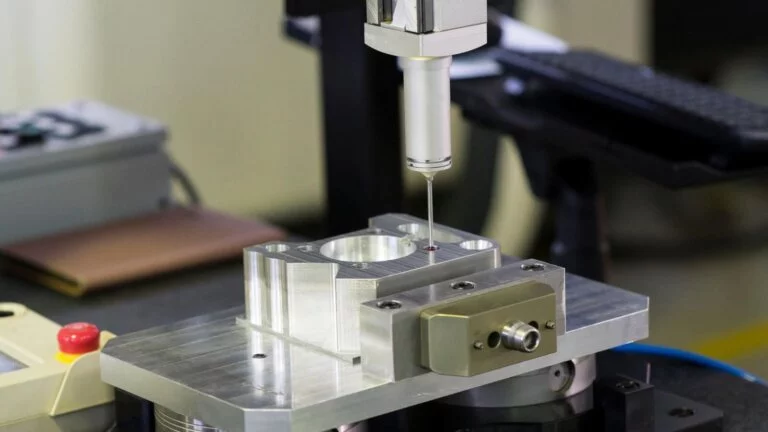
Precision is no longer dependent on the steady hand of a single operator. Artificial Intelligence and robotic automation have redefined what is possible, making ±0.005mm the new baseline for critical components. In our facilities, AI-driven adaptive control systems monitor spindle load and tool wear in real-time, making micro-adjustments faster than any human could react.
Key advancements driving this precision include:
- Thermal Compensation: AI models predict and counteract machine expansion caused by heat generation.
- In-Process Metrology: Automated probes verify dimensions during the machining cycle, not just after.
- Predictive Maintenance: Systems alert operators to potential axis calibration issues before they impact part quality.
By removing human variability, we ensure that the first prototype is as precise as the ten-thousandth production unit.
II. Cost Drivers for CNC Machining in 2026: Analysis and Benchmarks
When we break down the costs for prototype cnc machining, we aren’t just looking at a raw price tag. We are looking at a mix of machine time, material scarcity, and the engineering hours required to get a job running. In 2026, understanding these levers is the only way to keep your R&D budget from exploding.
2.1 Understanding Machine Hour Rates: 3-Axis vs. 5-Axis Systems
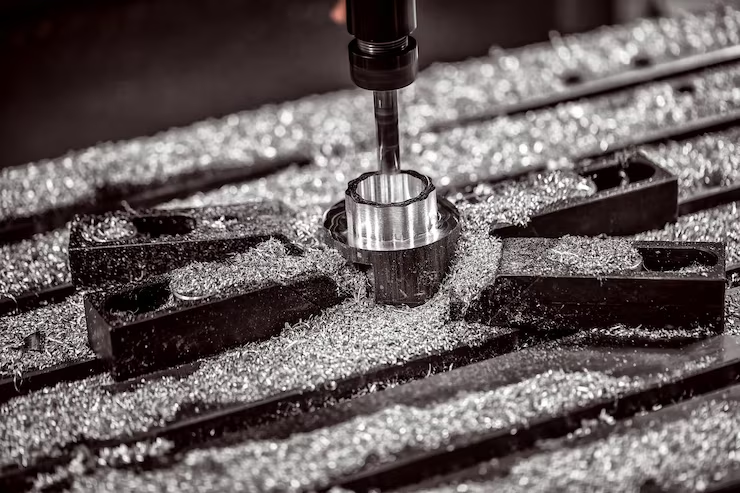
The hourly rate of the machine is often the biggest line item on your quote. In our shop, we see a distinct split between standard 3-axis work and complex 5-axis milling.
- 3-Axis Machining: This is the workhorse. It’s significantly cheaper per hour and perfect for parts with simple geometries or planar features. If your design allows for it, sticking to 3-axis is the easiest way to lower costs.
- 5-Axis Machining: While the hourly rate is higher—often 30% to 50% more than 3-axis—it offers efficiency that cheaper machines can’t match. Because 5-axis machines can reach five sides of a part in a single setup, we reduce the need for manual flipping and re-fixturing.
For projects requiring rapid turnaround, utilizing fast CNC machining capabilities on 5-axis systems can actually be cheaper overall because the total run time drops, even if the hourly rate is higher.
2.2 Material Price Volatility: Managing Costs for Aluminum, Titanium, and PEEK
Material selection in 2026 isn’t just about mechanical properties; it’s about supply chain stability. We have seen fluctuations that make quoting difficult if you aren’t locking in stock.
- Aluminum (6061/7075): Still the king of prototyping. It machines fast and doesn’t destroy tools, keeping the “cost per part” low.
- Titanium & Superalloys: These are necessary for aerospace and medical applications but come with a premium. The cost isn’t just the raw bar stock; it’s the slower machining speeds and increased tool wear. This is similar to the challenges we face when machining Hastelloy steel parts, where specialized tooling is non-negotiable.
- PEEK: As a high-performance plastic, PEEK often costs more than metal. The material itself is expensive, and it requires precise temperature control during machining to avoid stress fractures.
2.3 The Hidden Impact of Setup Fees and How Digital Twins Reduce Them
For low-volume prototypes, setup fees can sometimes cost more than the actual machining time. If you order one part, you are paying for the programmer to write the code, the operator to load the tools, and the time spent calibrating the fixture.
To combat this, we are leaning heavily on Digital Twins. By simulating the entire machining process in a virtual environment before we even cut a chip, we can:
- Verify Tool Paths: Catch crashes virtually, preventing costly machine damage.
- Optimize Feeds/Speeds: Reduce the actual run time on the floor.
- Slash Setup Time: Operators load a pre-verified program, drastically cutting the “non-cutting” billable hours.
III. Strategies for Cost Optimization Without Compromising Precision
3.1 Design for Manufacturing (DFM) 2.0: AI-Powered Geometry Optimization
Optimizing your CAD files before they hit the shop floor is the most effective way to control costs. We encourage engineers to focus on standardizing hole sizes and avoiding deep, narrow pockets that require specialized tooling or EDM processes. By simplifying complex geometries that don’t add functional value, you significantly reduce machining run times.
When you require tight tolerances, apply them only to critical features like mating surfaces rather than the entire part. Our what is CNC precision machining guide explains how selective tolerancing maintains functionality while keeping costs down. We accept STEP, IGES, and STL files to quickly identify potential manufacturing bottlenecks.
Key DFM Tips:
- Internal Radii: Use the largest possible radius for internal corners to allow for standard end mills.
- Wall Thickness: Avoid walls thinner than 0.8mm to prevent warping and reduce the need for slow, careful machining.
- Tapped Holes: Stick to standard thread sizes to eliminate the need for custom taps.
3.2 Batch Prototyping: Achieving Scale Economies in Low-Volume Runs
While we offer a strict “No Minimum Order Quantity” (MOQ) policy, ordering a small batch often yields a better price per unit than a single one-off prototype. A significant portion of CNC machining cost comes from setup time—programming the machine, fixturing the part, and calibrating tools.
When you move from a single unit to a low-volume run of 10 or 20 parts, that setup cost is amortized across the entire batch. This approach is particularly cost-effective when working with harder materials that require longer cycle times, such as in steel CNC machining. We seamlessly transition projects from initial prototyping to low-volume production, ensuring you get the best value without sacrificing the ISO 9001:2015 quality standards we adhere to.
3.3 Leveraging Instant Quoting Platforms for Real-Time Budget Control
Speed and transparency are critical for modern R&D cycles. Our instant quote system allows you to upload your CAD design and receive pricing feedback rapidly, often within 24 hours. This immediacy lets you see exactly how design changes impact the bottom line before we cut any metal.
You can experiment with different parameters in real-time to fit your budget. For instance, switching a non-critical part from 7075 Aluminum to 6061, or opting for a standard “as-machined” finish instead of bead blasting or anodizing, can lower costs instantly. This data-driven approach puts you in control, ensuring your prototype CNC machining project stays on schedule and within budget.
IV. Emerging Technologies Transforming the 2026 Machine Shop
4.1 Hybrid Manufacturing: Combining Metal 3D Printing with CNC Finishing
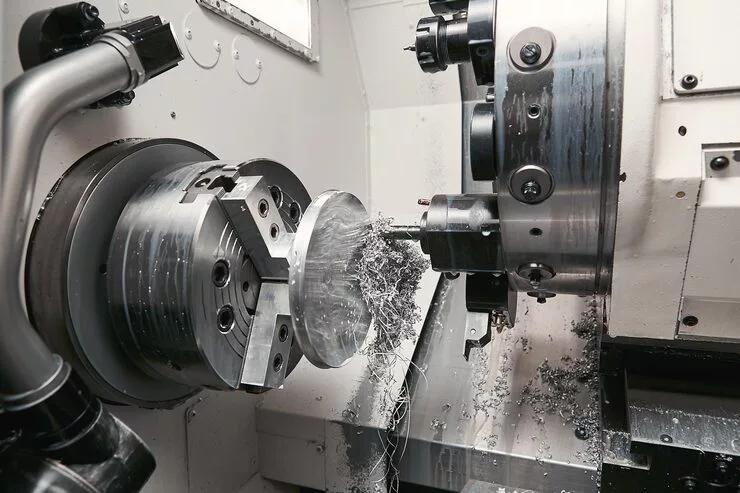
We are moving past the debate of “additive vs. subtractive.” In 2026, the most effective workflow utilizes hybrid manufacturing. We use metal 3D printing (like DMLS) to build complex near-net shapes, including internal geometries that traditional tools can’t reach. Then, we switch to prototype CNC machining to finish the critical surfaces that require tight tolerances and superior surface finishes.
This combination offers distinct advantages:
- Reduced Material Waste: We don’t machine away 80% of a titanium block; we only cut the necessary interfaces.
- Complex Geometries: You get the design freedom of printing with the precision of machining.
- Speed: It significantly reduces the roughing time required for hard metals.
4.2 Real-Time Sensor Feedback: Eliminating Human Error in Precision Machining
We no longer rely solely on an operator’s intuition to catch errors. Modern CNC centers are equipped with advanced IoT sensors that monitor spindle vibration, thermal expansion, and tool wear in real-time. If the machine detects that a drill bit is dulling or the temperature is shifting the axis, it auto-corrects the parameters instantly.
This “closed-loop” system drastically reduces scrap and ensures the first part is just as accurate as the last. It removes the guesswork from tight-tolerance work. To understand how we validate these strict dimensions after machining, our metrology and guide to precision in manufacturing breaks down the verification process.
4.3 Sustainable Machining: Carbon Footprint Tracking and Green Lubricants
Sustainability is now a core procurement requirement for many US companies. We are seeing a push to track the carbon footprint associated with every single prototype. It is not just about recycling chips anymore; it is about the entire lifecycle of the manufacturing process.
Current sustainability measures include:
- Green Lubricants: Replacing petroleum-based cutting fluids with biodegradable, vegetable-based alternatives.
- Smart Energy Management: Machines that automatically power down non-essential systems during idle times.
- Digital Inventory: Reducing physical stock and waste by relying on on-demand manufacturing.
This ensures that your R&D efforts remain efficient without carrying a heavy environmental cost.
V. Selecting the Right Prototyping Partner in 2026
5.1 Key Performance Indicators (KPIs) Beyond Price: Speed, Quality, and ESG
In the race to launch new products, focusing solely on the lowest piece price often leads to expensive delays later. When evaluating a partner for prototype CNC machining, we prioritize metrics that actually impact your time-to-market. Speed is the first critical KPI—not just spindle time, but administrative speed. We provide 24-hour turnaround for quotes because waiting days for pricing is a bottleneck modern engineering teams can’t afford.
Quality assurance is the second non-negotiable pillar. A fast part is useless if it doesn’t fit. We operate under ISO 9001:2015 certification, ensuring that every project, from complex CNC metal machining to simple plastic housings, meets rigorous standards. We maintain tolerances as tight as +/- 0.005mm and perform 100% inspection before shipment. This reliability reduces waste and ensures that your functional prototypes perform exactly as intended during testing.
Key Evaluation Criteria:
- Response Time: Can they quote and ship rapidly?
- Certification: Is the shop ISO 9001:2015 certified?
- Flexibility: Do they require a Minimum Order Quantity (MOQ)? (We don’t).
- Capabilities: Can they handle 3, 4, and 5-axis work in-house?
5.2 Case Study: How MS Machining Shortens R&D Cycles by 40%
Reducing the R&D cycle isn’t about cutting corners; it’s about eliminating hand-offs. Many delays occur when a prototype has to move from a machine shop to a separate finishing vendor. We solve this by acting as a true one-stop shop. By integrating high-precision CNC milling machines with secondary processes like EDM, grinding, and surface finishing (anodizing, plating, powder coating), we keep the entire production flow under one roof.
Our process is designed for agility. Since we have No Minimum Order Quantity (MOQ), engineers can order a single “one-off” prototype to validate a design without committing to a full production run. This allows for rapid iteration—design, print/machine, test, and refine—without the financial risk of excess inventory. By streamlining material procurement, machining, and finishing into a single workflow, we significantly reduce lead times, helping US-based clients move from a CAD file to a finished, market-ready product faster than traditional multi-vendor supply chains.