
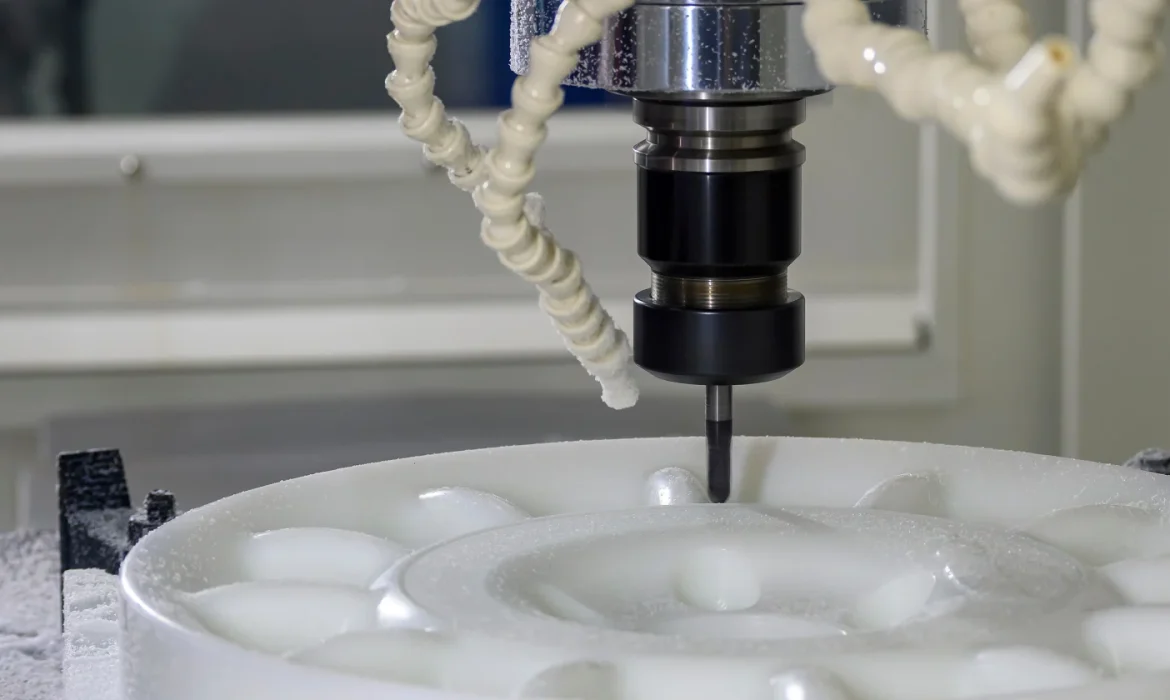
The Fundamentals of CNC Plastic Machining: Process, Tools, and Technology
CNC plastic machining starts with a solid workflow that ensures precision and efficiency from concept to finished part. Here’s the typical step-by-step process:
- CAD Design: Engineers create detailed 3D models using CAD software, laying out every dimension and feature.
- CAM Programming: These designs are translated into machine instructions through CAM software, defining toolpaths and cutting strategies.
- Tooling Setup: The right cutting tools—end mills, drills, or lathe bits—are selected and installed, optimized for plastics to reduce heat and burr formation.
- Machining (Milling/Turning): Depending on the part, milling or turning operations shape the plastic material. 3-axis mills handle simpler geometries, while 5-axis machines access complex angles for intricate parts. Lathes and routers are tuned specifically for plastics to prevent melting or surface defects.
- Quality Inspection: Finally, parts undergo rigorous checks to confirm dimensional accuracy and surface finish standards are met.
Core Equipment Breakdown
- 3-Axis Mills: Best for straightforward parts, offering reliable precision.
- 5-Axis Mills: Ideal for more complex components, allowing multi-angle cutting in a single setup.
- Lathes: Perfect for cylindrical parts, delivering smooth finishes.
- Plastic-Routers: Designed to minimize heat buildup and reduce burrs, crucial for maintaining part integrity.
Key Parameters for Success
- Spindle Speeds: For soft plastics, speeds range between 5,000 and 20,000 RPM.
- Feed Rates: Balanced carefully to avoid overheating or melting.
- Coolants: Strategic use of air or liquid coolants prevents warping, preserves tool life, and ensures clean cuts.
MS Machining Spotlight
At MS Machining, our ISO-certified facility runs over 20 advanced CNC machines dedicated to plastic parts. This setup guarantees micron-level tolerances for prototypes and production runs alike, backed by stringent quality control at every step.
Tackling Common Challenges
Plastic machining isn’t without its quirks. Problems like internal stresses causing warps or difficulties in chip evacuation can stall a project. Our approach involves:
- Optimized chip clearing techniques to avoid tool clogging.
- Controlled cutting parameters to reduce material stress.
- Specialized tooling coatings designed for smoother cuts in plastics.
This combination ensures we deliver precision plastic CNC machining every time while avoiding common pitfalls.
Selecting the Right Plastics: Materials Guide for Optimal Performance
Choosing the right plastic for CNC machining is key to getting parts that perform well and last. Here are the main factors to consider:
- Machinability: How easily the plastic cuts and finishes without defects.
- Mechanical properties: Tensile strength, impact resistance, and flexibility for your application.
- Environmental resistance: How it handles chemicals, UV exposure, and temperature changes.
- Cost: Balancing budget with performance needs.
Top Machinable Plastics Profiles
| Plastic | Heat Deflection Temp (°F) | Hardness (Shore D) | Key Applications | Cost (per in³) | Notes |
|---|---|---|---|---|---|
| ABS | 176 | 75 | Prototypes, enclosures | $0.50 | Easy machining, good toughness |
| Acetal (POM) | 212 | 85 | Gears, bearings, structural | $1.00 | Low friction, wear-resistant |
| Polycarbonate | 280 | 75 | Impact parts, optics, medical | $2.50 | High impact, UV resistant |
| Nylon | 185 | 75 | Functional parts, mechanical | $1.50 | Good strength, moisture sensitive |
| PEEK | 500 | 85 | High-temp aerospace, medical | $5.00 | High strength, chemical resistant |
| HDPE/PTFE | 180 | 55 | Chemical tanks, low friction | $1.00–$2.00 | Low friction, chemical inert |
MS Machining Pro Tip:
Use Finite Element Analysis (FEA) alongside your material choice to predict how parts behave under stress or heat. This helps avoid costly redesigns and ensures the material matches the performance demands.
For specialized machining of diverse materials, you can trust our team with experience in precision plastic milling and custom plastic prototypes. We optimize every job to get the best from plastics like PEEK and ABS.
Getting familiar with material properties early in the design phase is a game-changer for CNC plastic machining projects. Need help selecting the perfect plastic? Ask about our expert design review service to guide you through the best options.
For more on precision applications, you can also check out our insights on fluid vacuum components where plastic choices matter a lot.
Applications Across Industries: Where CNC Plastic Parts Excel
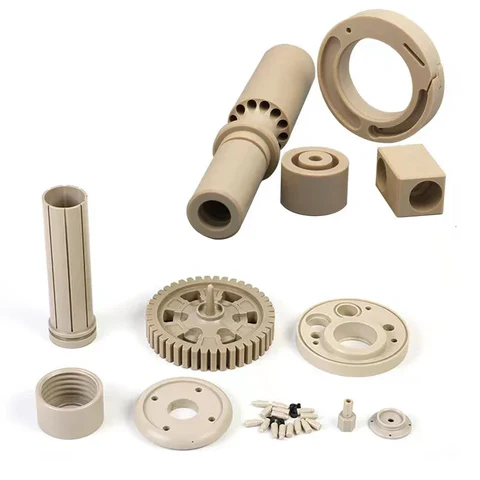
CNC plastic machining serves a wide range of industries with precise, lightweight, and durable parts.
- Automotive: CNC-machined plastic brackets and sensor housings help reduce vehicle weight by up to 40%, improving fuel efficiency without sacrificing strength.
- Medical Devices: Our sterilizable prototypes for surgical tools and diagnostic parts meet strict hygiene standards, ideal for fast product development.
- Electronics: Insulating housings and connectors made with CNC plastic machining provide excellent ESD protection, crucial for sensitive equipment.
- Aerospace: Heat-resistant fittings and non-conductive panels used in UAVs and aircraft components offer reliable performance under extreme conditions.
- Consumer Products: Custom ergonomic grips and enclosures allow brands to bring innovative designs to market quickly and cost-effectively.
- Emerging Trends: The rise of sustainable bioplastics is opening new doors for eco-friendly packaging and robotics components that combine performance with environmental responsibility.
Case Study:
MS Machining recently helped a startup slash lead times by 50% when prototyping a durable plastic valve assembly, applying advanced CNC milling techniques to achieve micron-level precision. This quick turnaround helped them accelerate testing and bring their product to market faster.
For a deeper dive into precision milling services that complement plastic machining, check out our CNC milling machines page.
Design Best Practices: Engineering Parts for Seamless CNC Production

When designing for CNC plastic machining, a few smart practices help avoid delays and extra costs while ensuring top-quality parts.
- Wall Thickness: Keep a minimum of 0.5mm thickness. This balance prevents cracking yet maintains rigidity.
- Feature Considerations: Watch out for tricky elements like undercuts and threaded holes. Maintain tolerances around ±0.005 inches for precise fits. Avoid sharp internal corners to reduce stress concentration and tool wear.
- Toolpath Optimization: Use climb milling over conventional when working with soft plastics to extend tool life and improve surface finish.
- File Preparation: Submit designs in STEP or IGES formats. Keep assemblies straightforward—complex files can slow processing and cause errors.
At MS Machining, we offer a free design for manufacturability (DFM) review to fine-tune your CAD files. This helps spot issues early and optimizes your plastic CNC machining prototype for cost and performance. For detailed custom projects, check out our full range of custom CNC machining services.
Surface Finishes and Post-Processing: Enhancing Functionality and Aesthetics
When it comes to CNC plastic machining, surface finish and post-processing play a big role in both how the part looks and performs. Standard finishes like as-machined surfaces (around Ra 3.2μm) are common for many applications, but options like bead blasting can create a matte texture, while vapor polishing is popular for parts needing optical clarity, such as clear housings or lenses.
For parts that face wear or need extra durability, we offer advanced treatments like electroless nickel plating, which boosts surface hardness without adding bulk. Annealing is another key step to relieve internal stresses caused during machining, preventing warping and improving long-term stability.
The right surface finish can also improve part performance. For example, smoother finishes help fluid flow inside valves, reducing resistance, and in medical devices, polished surfaces reduce bacterial buildup for better hygiene.
At MS Machining, we offer full customization with in-house finishing lines ready to provide textured finishes, custom coloring, and precise laser etching to meet your exact aesthetic or functional needs. This makes your CNC machined plastic parts not just precise but also perfectly suited for their end-use environment.
Explore how our plastic CNC machining services include these finishing options to deliver both form and function.
CNC Plastic Machining vs. Alternatives: When to Choose Each Method
Choosing between CNC plastic machining, 3D printing, and injection molding depends on your project’s needs. Here’s a quick comparison to help you decide:
| Method | Volume | Tolerance | Material Range | Lead Time | Cost per Part |
|---|---|---|---|---|---|
| CNC Machining | Low to medium | ±0.001″ – ±0.005″ | Wide (engineering plastics like PEEK, ABS) | Days to weeks | Moderate |
| 3D Printing | Prototype/low volume | ±0.010″ – ±0.020″ | Limited (mostly polymers) | Hours to days | Low to moderate |
| Injection Molding | High (thousands+) | ±0.001″ – ±0.005″ | Wide, but limited to moldable plastics | Weeks to months | High upfront mold cost, low per part |
When CNC Plastic Machining Wins
- Tight tolerances and complex features: CNC machining hits micron-level accuracy that 3D printing often can’t achieve.
- Hybrid materials or multi-step processes: When parts need a mix of materials or finishes, CNC offers flexibility.
- Iterative prototyping: Quickly update CAD files and get precise machined parts without the high cost of molds.
At MS Machining, we also use hybrid workflows pairing CNC machining with 3D scanning to reverse engineer parts, allowing fast turnaround on upgrades or replacements with precise fit. This makes CNC a smart pick when you want the best accuracy combined with quick iteration.
For projects blending high precision with innovation, our custom plastic prototyping services streamline your path from concept to part.
Cost Factors and Optimization for Budget-Conscious CNC Plastic Machining
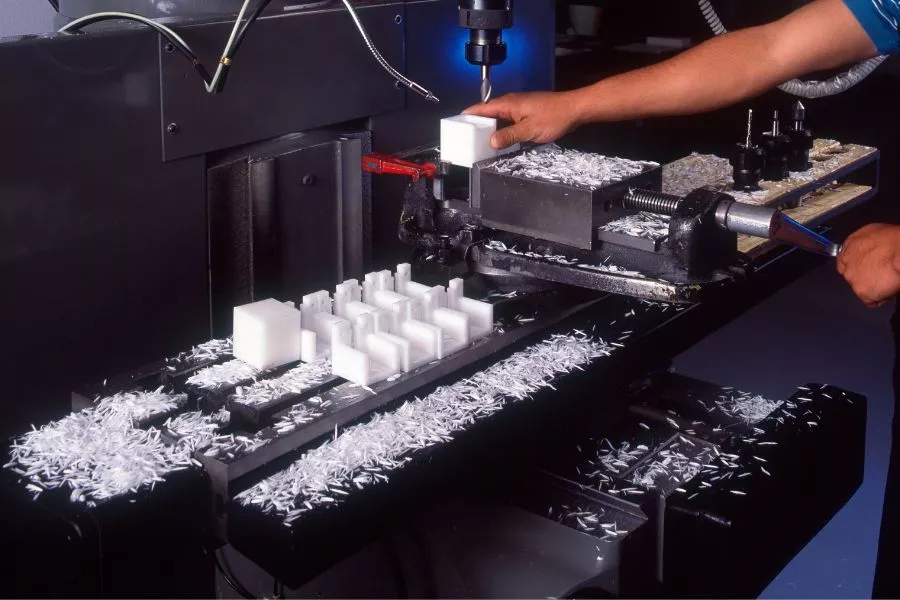
Understanding the cost breakdown helps keep your CNC plastic machining projects on budget. Typically, expenses divide like this:
- Material: About 30% of total cost
- Machine time: Around 50%, depending on complexity and run length
- Setup and post-processing: Roughly 20%
Several factors impact these costs: part complexity, order volume, and material choice play the biggest roles. For example, machining ABS costs roughly $0.50 per cubic inch, while high-performance plastics like PEEK can run up to $5 per cubic inch.
To save without sacrificing quality:
- Opt for batch runs—larger quantities reduce per-piece costs
- Use standardized features to simplify machining and speed up production
- Perform early design for manufacturability (DFM) reviews to avoid costly redesigns
At MS Machining, we provide completely transparent quoting with no hidden fees, offering instant online estimates starting at $100 for prototypes. This approach helps you plan expenses up front and avoid surprises.
If you want to dive deeper into optimizing tooling and setup, check out our detailed resources on tool and die maker services to understand how precise tooling impacts overall costs and quality.
Why Partner with MS Machining: Your Trusted Source for Precision Plastic Solutions
With over 15 years of experience specializing in high-performance plastics, MS Machining has proudly served more than 500 clients across the United States. Our commitment? Delivering precision plastic parts with a 99% on-time delivery rate you can count on.
We follow AS9100-compliant processes that ensure full traceability and rigorous quality inspections at every step. This means your projects meet the highest standards, whether it’s for aerospace, automotive, or medical applications.
Clients often share how working with us reduced the number of prototype iterations and sped up their time-to-market significantly. Our expertise in CNC plastic machining services translates into smoother workflows and cost savings for your business.
Ready to get started? Schedule a free consultation or upload your design today for a quick, transparent quote. Experience the MS Machining difference for your custom plastic parts.
For precision on larger components, check out our large part CNC machining capabilities that maintain quality without compromise.