
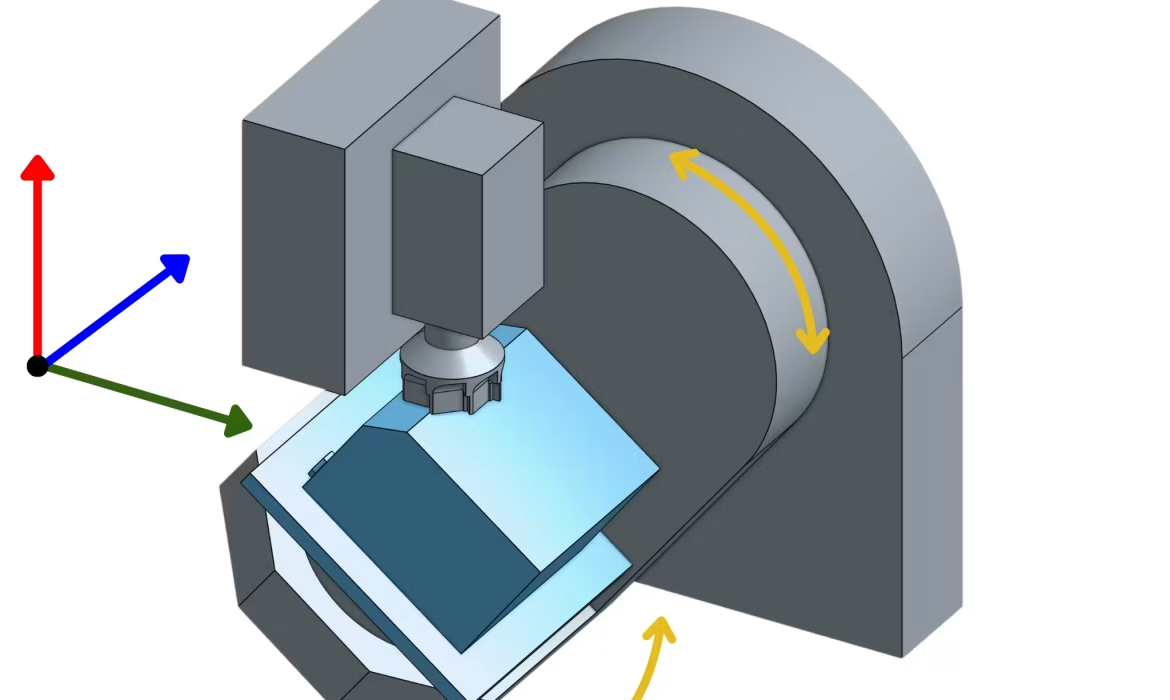
If you’ve ever wondered what is a 5-axis CNC machine and why it’s such a game-changer in manufacturing, you’re in the right place. A 5-axis CNC machine lets you move a cutting tool or part across five different directions at once, unlocking the ability to create complex shapes that simpler machines can’t handle in a single setup. Whether you’re an engineer, a shop owner, or just exploring advanced machining options, understanding how 5-axis works—and why it outperforms 3-axis and 4-axis systems—is essential for making smart decisions in 2025 and beyond. Let’s break down the essentials so you can see if upgrading to 5-axis is the right move for your projects.
What Does “5-Axis” Actually Mean?
When you hear “5-axis” in CNC machining, it refers to a machine’s ability to move a cutting tool or a workpiece along five different axes simultaneously. To break it down:
The Three Linear Axes (X, Y, Z)
- X-axis: Left to right movement
- Y-axis: Front to back movement
- Z-axis: Up and down movement
These three are the foundation of almost all CNC milling machines, allowing basic 3D positioning of tools.
The Two Rotational Axes (A, B, C)
Beyond the three linear motions, 5-axis machines add two rotational movements around those axes:
- A-axis: Rotation around the X-axis (often tilting the tool or table forward/backward)
- B-axis: Rotation around the Y-axis (tilting the tool or table side to side)
- C-axis: Rotation around the Z-axis (typically spinning the workpiece horizontally)
The exact axes used depend on the machine’s design and manufacturer, so naming can vary. For example, some machines use A and C axes, others B and C, depending on which parts rotate and which stay fixed.
Main 5-Axis Configurations
There are three common 5-axis setups based on how the rotary axes are arranged relative to the tool spindle and the table:
- Head/Head: Both rotational axes are in the spindle head, allowing versatile tool tilting.
- Head/Table: One rotary axis is in the spindle head, the other in the worktable; common in trunnion style machines.
- Table/Table: Both rotational axes are in the table itself, often called a trunnion or nutating table; the workpiece tilts for complex angles while the tool remains fixed.
Each configuration offers different advantages in accessibility, rigidity, and part size.
Comparing 3-, 4-, and 5-Axis Movement
| Axis Count | Movement Type | Capabilities |
|---|---|---|
| 3-axis | Linear (X, Y, Z) | Basic milling, limited angles |
| 4-axis | Linear + 1 Rotation | Adds rotation (usually C-axis), better part orientation |
| 5-axis | Linear + 2 Rotations | Complex angles, undercuts, multi-sided machining |
This expanded movement means a 5-axis machine can approach a part from virtually any angle, making complex geometry machining possible with fewer setups and higher precision.
How a 5-Axis CNC Machine Works
A 5-axis CNC machine moves a cutting tool or part along five different axes, combining the three standard linear movements (X, Y, Z) with two additional rotational axes. These rotations let the tool approach the workpiece from nearly any angle.
There are two main types of 5-axis machining: simultaneous and indexed (or 3+2 axis). Simultaneous 5-axis machining means all five axes move at once, allowing complex contours and smooth curves to be cut in a single pass. Indexed 5-axis, often called 3+2 machining, positions the part or tool at a fixed angle using the extra axes, then machines along the 3 linear axes. This method is simpler and great for angled features but doesn’t create the continuous curves possible with simultaneous motion.
The magic behind this is advanced CAM software, which generates precise toolpaths and handles the complex calculations needed to synchronize all five axes. Post-processors then convert these toolpaths into the exact machine code your CNC controller can execute.
Modern 5-axis machines also rely on real-time collision detection to avoid crashes between the tool, part, fixtures, and machine components. This is crucial for keeping production safe and efficient. Toolpath strategies are optimized to reduce machine wear and cycle times while maintaining tight tolerances, making 5-axis CNC machining a powerful choice for complex, high-precision parts.
For professional multi-axis CNC services optimized with the latest technology, companies like MS Machining offer tailored solutions that maximize the benefits of simultaneous 5-axis machining. Learn more about their CNC engineering services to see how 5-axis machining can improve your production.
Key Advantages of 5-Axis Over 3-Axis and 4-Axis Machines

5-axis CNC machines offer several clear benefits compared to their 3-axis and 4-axis counterparts:
- Single Setup, Fewer Fixtures: With 5-axis machining, you can complete complex parts in one setup. This reduces the need for multiple clamps and fixtures, which not only saves time but also improves overall accuracy by minimizing repositioning errors.
- Superior Surface Finish: Continuous 5-axis movement allows the tool to maintain optimal contact angles with the material. This results in smoother surfaces and better detail, especially on curved or angled features.
- Shorter Cycle Times: By machining complex features in one go, total production time drops significantly. You avoid multiple setups, saving valuable machine hours.
- Machining Complex Undercuts and Deep Cavities: The additional rotational axes let the tool access areas that are impossible for 3-axis or simple 4-axis machines. This makes it perfect for parts with deep pockets or intricate undercuts.
- Longer Tool Reach Without Collisions: The 5-axis allows the tool to approach the workpiece from various angles, reducing the need for excessively long tooling—which means fewer vibrations and better tool life.
Here’s a quick comparison table showing average cycle time reductions for typical parts:
| Machine Type | Average Cycle Time | Setup Time | Notes |
|---|---|---|---|
| 3-Axis | 100% | Multiple | Requires several repositionings |
| 4-Axis (3+1) | 75%-85% | Reduced | Indexes rotary axis, less flexible |
| 5-Axis (Simultaneous) | 50%-65% | Minimal | One setup, complex geometry capability |
For manufacturing professionals looking to maximize efficiency and part quality, upgrading from 3-axis to a full 5-axis configuration can be a game changer. Check out our detailed insights on 5-axis CNC milling machines for examples and process improvements.
Common Applications & Industries
5-axis CNC machines are a go-to solution in industries where precision and complex geometry machining are critical. Here’s where they really shine:
- Aerospace: Machining turbine blades, impellers, and structural parts with extreme accuracy is essential. These parts often feature complex curves and tight tolerances that only simultaneous 5-axis machining can handle reliably. For more specialized machining needs, check out our work on impeller polished enhancing performance.
- Medical: Implants and surgical instruments demand fine surface finishes and precise contours. 5-axis CNC machining ensures consistent quality in these high-stakes parts.
- Automotive and Motorsport: From engine components to chassis parts, 5-axis machines help reduce cycle times and produce lightweight, strong parts with complex geometries.
- Die & Mold Making: These applications require undercut machining and deep cavity work, areas where 5-axis CNC excels by minimizing setups and improving accuracy.
- Energy Sector: Valves, pump housings, and other rugged parts benefit from 5-axis machining’s ability to handle complex shapes and improve tool life.
Real case studies and photos demonstrate how these industries leverage 5-axis machines for better performance and efficiency, showcasing the wide range of components from aerospace to medical tools.
Limitations and When NOT to Choose 5-Axis CNC Machining
While 5-axis CNC machines are powerful, they’re not always the best fit. Here’s when you might want to think twice:
- Higher Initial Cost: 5-axis machines are significantly more expensive than 3-axis or 4-axis models. The upfront investment can be a barrier, especially for shops focusing on simpler jobs.
- Programming Complexity: Programming 5-axis CNC machining requires specialized knowledge and advanced CAM software. This can lead to longer setup times and the need for highly skilled operators.
- Overkill for Simple Parts: For straightforward, prismatic parts (like simple blocks or basic holes), 3-axis or 3+2 axis machining usually does the job with less cost and complexity.
- Maintenance and Training: More axes mean more moving parts and higher maintenance needs. Also, your team will need ongoing training to operate and program the machines effectively.
| Factor | 3-Axis/4-Axis | 5-Axis CNC |
|---|---|---|
| Initial machine cost | Lower | Much higher |
| Programming difficulty | Moderate | High |
| Ideal for simple parts | Yes | No (overkill) |
| Tool path complexity | Low | High |
| Maintenance complexity | Lower | Higher |
| Operator skill requirement | Moderate | Advanced |
If your production mainly involves simple shapes or you have a tight budget, sticking with 3-axis or 4-axis machines might be smarter. For more on when CNC machining truly adds value, check out our insights on precision CNC machining services.
Cost Considerations in 2026

When thinking about investing in a 5-axis CNC machine in 2026, it’s important to weigh the costs carefully. Entry-level 5-axis machines typically start around $150,000, while high-end models from top brands can exceed $500,000. The advanced capabilities and precision come at a premium, but the ROI can be significant when you factor in time savings and reduced labor.
For example, a typical ROI calculation might look like this: the ability to complete a complex aerospace or medical part in a single setup reduces fixturing time and errors, saving several hours per job. Over multiple production runs, those hours turn into real savings that often outweigh the initial investment after a year or two.
Comparing cost per part, a 5-axis machine can cut cycle times by 30-50% versus a 3-axis machine, thanks to fewer setups and faster toolpaths. This efficiency not only speeds up delivery but also lowers labor costs and improves part accuracy. For jobs involving tough metals or intricate geometry, such as those found at MS Machining’s CNC machining metal parts, the 5-axis advantage becomes even more clear.
In short, while 5-axis CNC machining demands a higher upfront spend, the ongoing savings in cycle time, tooling, and quality control make it a smart choice for many manufacturers aiming to stay competitive in 2026 and beyond.
How to Choose the Right 5-Axis Solution
Picking the right 5-axis CNC machine depends on your specific needs. Here are the key factors to consider:
| Factor | What to Look For | Why It Matters |
|---|---|---|
| Machine Size & Work Envelope | Choose a machine that fits your largest part size comfortably | Avoid running out of travel or having to break parts into multiple setups |
| Spindle Power & Torque | Higher power for tough materials; torque for slower, precise cuts | Ensures efficient cutting and longer tool life |
| Control System | Popular options: Fanuc, Siemens, Heidenhain | User interface familiarity, compatibility with CAM software, and reliability |
| Service & Support Network | Local reps, fast response times, and proven expertise | Minimizes downtime and keeps projects on track |
Before investing, consider your part complexity and volume. A bigger machine with high spindle power suits aerospace or automotive work, while smaller, more affordable models serve prototyping or simpler productions.
For more details on how 5-axis setups can fit different job types, check out our 5-axis CNC machining services. Quality support and the right machine go hand in hand for top results.
Why MS Machining Excels at 5-Axis CNC Services
At MS Machining, we offer top-tier 5-axis CNC services with our latest 2026–2026 fleet, featuring industry-leading machines from Hermle, DMG MORI, and Haas. This enables us to routinely achieve ultra-precise tolerances down to ±0.0002″ (5 µm), ensuring your complex parts meet the highest quality standards.
We provide free Design for Manufacturing (DFM) reviews to help optimize your parts for efficient 5-axis machining. Plus, our quick 24–48 hour quoting process keeps your projects moving fast.
MS Machining operates under a certified AS9100 and ISO9001 quality system, guaranteeing consistent quality and reliability. This commitment makes us a trusted partner for aerospace, medical, and high-precision industries relying on complex multi-axis CNC work.
For insight into how our expertise ties into advanced CNC metal machining processes, check out our detailed metal CNC machining resource.