
What Sets Prototype Injection Molding Apart?
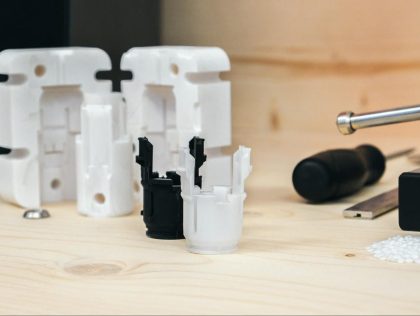
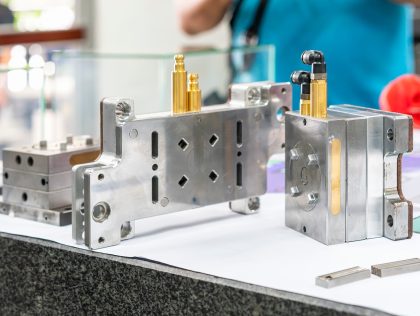
Speed and material accuracy are the biggest hurdles in product development. Prototype injection molding bridges the gap between digital design and mass production by utilizing rapid tooling strategies. Unlike traditional production molds that require months of machining hardened steel, we utilize aluminum prototype molds or soft steels. This approach allows us to leverage our 5-axis CNC machining capabilities to cut mold inserts quickly, significantly reducing lead times while delivering parts that mimic the final product’s mechanical properties.
Prototype vs. Production Injection Molding
For engineering teams deciding between a quick iteration or a full-scale commitment, understanding the trade-offs is vital. Here is how rapid prototype injection molding compares to standard production methods:
| Feature | Prototype Injection Molding | Production Injection Molding |
|---|---|---|
| Tooling Material | Aluminum (7075) or Soft Steel (P20) | Hardened Tool Steel (H13, S7) |
| Lead Times | 1–4 Weeks | 8–16 Weeks |
| Volume Range | 25 – 1,000+ Parts | 100,000 – Millions of Parts |
| Cost Per Part | Higher (due to low volume amortization) | Lowest (economies of scale) |
| Tooling Cost | Low (Bridge Tooling) | High (Capital Investment) |
When to Choose Prototype Tooling Over 3D Printing
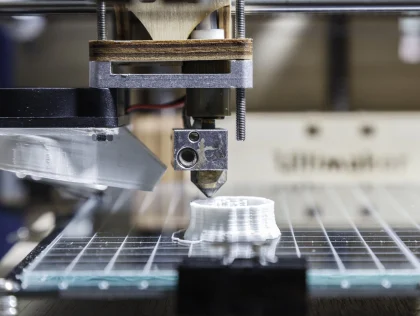
While 3D printing is excellent for concept models, it often lacks the structural integrity required for functional testing. Prototype injection molding is the superior choice when your design features complex geometries, deep undercuts, or thin walls that require the flow dynamics of actual thermoplastics.
Furthermore, low-volume injection molding delivers the exact surface finish and material behavior of the end product. Unlike printed parts, which suffer from layer lines and anisotropic weakness, molded parts offer isotropic strength and precise surface textures. This is critical for validating snap-fits, living hinges, and chemical resistance before investing in expensive production steel.
Key Advantages for Product Development Teams
For product developers, the gap between a CAD model and a physical part is where projects often stall. We bridge that gap by leveraging rapid prototype injection molding to accelerate development cycles and validate designs with certainty. This process offers distinct advantages over 3D printing when accuracy and material properties are non-negotiable.
Speed to Market
In the fast-paced US manufacturing landscape, getting to market first matters. We drastically reduce lead times, delivering parts in days or weeks rather than the months typically required for full production steel tooling. This agility allows your team to iterate designs quickly, keeping your project on schedule.
Functional and Regulatory Testing
Simulating the end-use environment is critical. Unlike brittle 3D printed models, our prototypes use production-grade materials, including high-performance thermoplastics and metals. This allows for rigorous functional testing, ensuring components meet durability standards and regulatory compliance before you commit to mass manufacturing.
Cost Efficiency and Low Volumes
We understand that you don’t always need millions of parts right away. Our process supports low-volume injection molding, with runs as small as 25 to 1,000+ units. By utilizing our precision CNC machining services to cut aluminum or soft steel bridge tooling, we keep upfront costs manageable while retaining the ability to modify the mold for design iterations.
Risk Reduction
Identifying potential failure points early is the best way to protect your investment. Prototype tooling reveals issues that computer simulations might miss, such as:
- Sink marks in thick sections
- Warpage due to uneven cooling
- Material shrinkage affecting tolerances
By catching these defects during the design validation phase, we prevent costly rework and tooling modifications during high-volume production.
Medical and Dental Industry Applications
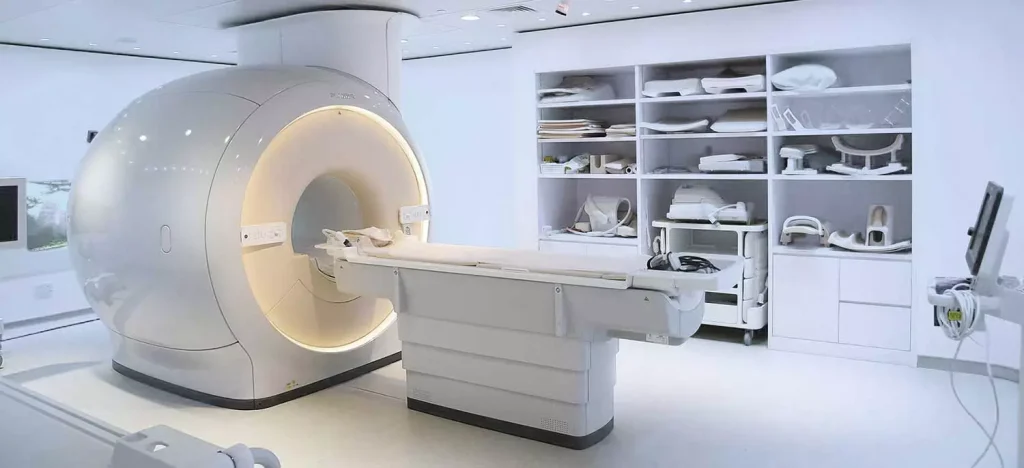
In the medical and dental sectors, the path from concept to clinical use is paved with rigorous testing. We utilize medical device prototyping to bridge the gap between digital design and physical reality, ensuring that every component meets strict regulatory standards before high-volume production begins. This process is critical for validating ergonomics, fit, and function in a risk-free environment.
Our approach supports the development of complex assemblies, including:
- Surgical Instruments: Prototyping handles and internal mechanisms to test grip and maneuverability.
- Diagnostic Device Housings: Creating durable enclosures for sensitive electronics like gas analyzers.
- Endoscopic and Dental Tools: Manufacturing components with intricate internal geometries that demand high precision.
The primary advantage here is the ability to produce biocompatible components that mimic the final production part’s properties. Whether we are utilizing bridge tooling or machining direct prototypes, maintaining tight tolerances is non-negotiable. By leveraging custom CNC machining for high-precision mold inserts, we ensure that complex features—such as thin walls and micro-channels—are replicated with absolute consistency. This level of accuracy allows engineering teams to confidently proceed with functional testing and regulatory validation.
Aerospace and Defense Industry Applications
In the aerospace and defense sectors, precision and reliability are not just goals—they are requirements. We leverage prototype injection molding applications to develop lightweight, high-strength components that meet the rigorous demands of flight and combat environments. This process is critical for validating designs for complex parts like fittings, fuel nozzles, and actuators before full-scale production begins.
Our AS9100D certification ensures that every prototype we support meets the highest quality standards. By utilizing near-net-shape manufacturing principles, we help engineers achieve significant weight reduction and material efficiency, which are crucial for fuel economy and payload optimization.
Key benefits for Aerospace and Defense projects include:
- Functional Validation: Testing aerospace injection molded parts for vibration resistance and thermal stability in extreme operating conditions.
- Complex Geometries: Creating intricate non-structural components that are difficult to machine from solid blocks.
- Risk Mitigation: Identifying potential failure points in fittings and housings early in the design cycle.
We combine our advanced prototyping capabilities with our specialized CNC aerospace machining services to deliver bridge tooling and master patterns that ensure your prototypes are production-ready. whether you need a single test unit or a low-volume run for field testing, we deliver the accuracy required for mission success.
Automotive Industry Applications
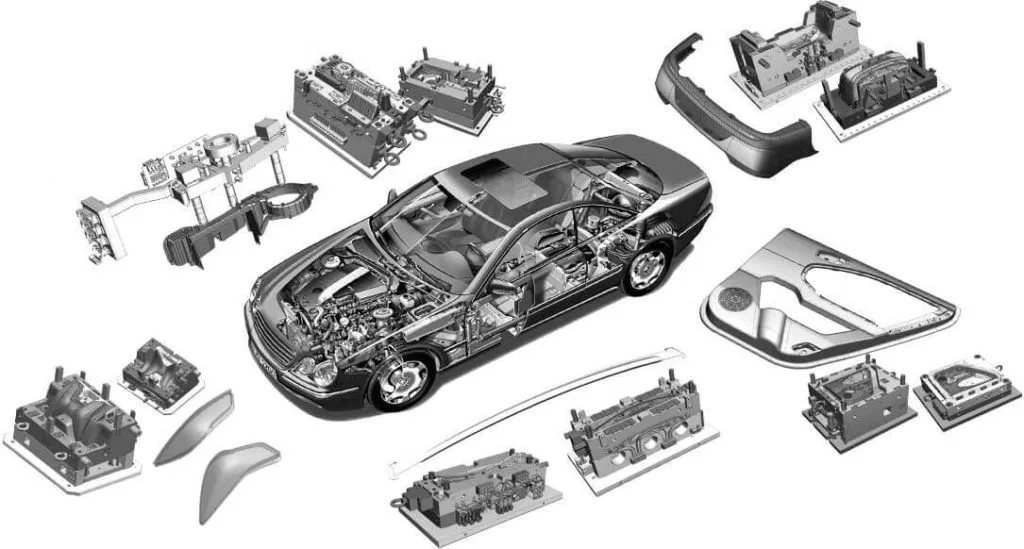
The automotive sector moves fast, and with the rapid shift toward e-mobility, the need for quick, reliable validation is higher than ever. We support engineering teams by producing automotive prototype components that withstand rigorous functional testing before mass production begins. By utilizing bridge tooling and high-precision mold inserts, we allow manufacturers to test engine components, connectors, and sensor housings using production-grade materials.
Our process focuses on validating durability, wear resistance, and assembly fit early in the design phase. This approach leverages the key advantages of rapid prototyping, enabling you to identify potential issues with fuel systems or structural elements in days rather than months.
Key areas where we support automotive validation include:
- Fluid & Engine Systems: Prototyping complex valve bodies and manifolds to verify flow rates and thermal stability.
- E-Mobility Integration: creating lightweight, high-strength housings and connectors for battery management systems.
- Functional Testing: Producing parts capable of enduring vibration and environmental stress tests, ensuring the design is road-ready.
Consumer Electronics and Industrial Equipment Applications
In the fast-paced world of consumer tech, speed and precision are non-negotiable. We support product development teams by delivering consumer electronics molding solutions that address the critical need for miniaturization and thermal management. Whether we are working on next-gen wearables or advanced robotics, the components must fit perfectly and dissipate heat effectively to function correctly.
Our capabilities allow us to produce high-tolerance parts and tooling for:
- Heat sinks and thermal spreaders
- Complex connectors and housings
- Fiber optic components requiring micron-level accuracy
- Enclosures with cosmetic perfection
For industrial applications, the focus shifts to rugged durability. We manufacture industrial equipment prototypes, such as heavy-duty jigs and fixtures, that must withstand rigorous testing environments. Since these parts often require complex geometries to validate the design before mass production, we leverage our 5-axis CNC machining services to create precise bridge tooling and mold inserts that ensure accurate replication.
Aesthetics are just as important as function in the electronics sector. A functional prototype often needs to look exactly like the final product to secure stakeholder buy-in. We apply high-quality surface treatments, including stainless steel polishing services, to ensure that every enclosure and visible component meets strict cosmetic standards while maintaining exact assembly fit.
M&S Machining’s Expertise in Prototype Injection Molding
At M&S Machining, we deliver advanced solutions that bridge the gap between initial design and mass manufacturing. Our capabilities extend into Metal Injection Molding (MIM), allowing us to produce high-precision metal prototypes that offer geometry complexity similar to plastic molding but with superior material properties. This process is ideal for creating small, intricate components that require the mechanical performance of metal.
Precision and CNC Support
We integrate our foundational strength in machining to support the molding process. Our team utilizes CNC machining basics and advanced techniques to create bridge tooling and refine molded parts to exact specifications.
- Tolerances: We achieve precision tolerances typically ranging from ±0.3% to 0.5%.
- Geometry: Our process supports complex designs with thin walls (less than 0.5mm).
- Materials: We work with robust materials, including stainless steel and iron-based alloys.
From Prototype to High-Volume Production
Choosing MIM and metal-based prototyping offers distinct advantages over plastic-only alternatives, specifically providing wrought-alloy strength for demanding functional tests. We structure our services to ensure a seamless transition from low-volume prototyping to high-volume production, capable of scaling up to millions of units. Whether you need precision parts via CNC turning or complex molded assemblies, our engineering support ensures your product is ready for the market.
How to Get Started with Your Prototype Project
Launching a prototype injection molding project requires more than just a CAD file; it starts with a solid strategy to ensure your design is ready for the real world. At M&S Machining, we believe the success of a molded part is determined long before the material enters the mold. We focus on bridging the gap between a digital concept and a physical, functional part through rigorous planning and precision engineering.
Design Considerations for Moldability
To keep costs down and speed up production, your design needs to be optimized for the molding process. This is where Design for Manufacturability (DFM) comes into play. We look at specific geometry adjustments that make the molding process smoother and the final part stronger.
- Uniform Wall Thickness: Keeping walls consistent helps prevent sink marks and warping as the part cools.
- Draft Angles: Adding a slight taper to vertical walls ensures the part ejects cleanly from the mold without dragging or scuffing.
- Radii and Corners: Rounding out sharp corners reduces stress concentrations and improves material flow.
- Gate Placement: We help determine the optimal entry point for the material to minimize cosmetic defects and ensure the mold fills completely.
Avoiding Common Pitfalls
A common mistake in rapid prototyping is rushing to cut tooling without validating the design first. Skipping the DFM review often leads to costly rework later. Another pitfall is selecting a material for the prototype that doesn’t match the mechanical properties of the final production part. We help you select the right thermoplastics or metal alloys to ensure your design validation injection molding yields accurate performance data.
Steps to Partner with MS Machining
Working with us is straightforward. We act as an extension of your engineering team, providing the support needed to navigate complex manufacturing requirements.
- Engineering Review: We analyze your 3D models and prints to identify potential manufacturing issues.
- Tooling Strategy: Depending on your volume and complexity, we determine the best tooling approach. We utilize high-precision CNC machining manufacturing to create mold inserts and master patterns that hold tight tolerances.
- Prototyping: We produce the initial run of parts for your review, testing, and validation.
- Refinement: If design changes are needed based on testing, our 5-axis capabilities allow us to modify tooling quickly.
Consultation and Quoting for Rapid Turnaround
Time is usually the biggest constraint in product development. To get a quote quickly, provide us with your 3D CAD data (STEP or IGES files) and 2D prints specifying critical tolerances and surface finish requirements. Our team leverages advanced 4-axis CNC machining services to accelerate the creation of complex tooling geometry. Because we are AS9100D certified, you can trust that our documentation and quality control processes are rigorous enough for aerospace and defense applications, ensuring your project moves from quote to delivery without unnecessary delays.
Frequently Asked Questions (FAQs)
What is the difference between prototype and production injection molding?
The main difference lies in the tooling life and speed. Prototype injection molding typically uses softer tooling materials, such as aluminum or soft steel, to produce parts rapidly for testing and validation. This allows for low-volume injection molding runs ranging from 25 to a few thousand parts. In contrast, production molding utilizes hardened steel molds designed to withstand millions of cycles, focusing on long-term durability rather than immediate delivery.
How much does a prototype injection mold cost compared to a production mold?
Prototype tooling is significantly more affordable, often costing 50% to 80% less than full-scale production molds. Since we don’t need to engineer the mold for millions of cycles, we can use cost-effective materials and simplified designs. This reduced investment makes bridge tooling injection molding an ideal strategy for startups and engineering teams needing to validate designs without breaking the budget.
Can you use production-grade materials for prototype injection molding?
Absolutely. One of the biggest advantages of this process is the ability to use the exact production-grade materials intended for the final product. Whether you need high-performance thermoplastics like PEEK and Ultem, or standard resins like ABS and Polycarbonate, prototype molding delivers functional prototypes that accurately mimic the mechanical and chemical properties of the end-use part.
What is the typical lead time for a prototype injection molding project?
Speed is the priority here. While production tooling can take months, rapid prototype injection molding can deliver parts in as little as 1 to 4 weeks. We utilize advanced CNC milling machines to cut mold inserts quickly, allowing product development teams to iterate designs and get to market faster.
Is prototype injection molding suitable for metal parts (MIM)?
Yes, Metal Injection Molding (MIM) is used for producing complex metal parts in volume. However, for initial prototyping, creating a MIM mold can still be costly. For strictly low-volume metal prototypes, we often recommend direct CNC machining as a faster, high-precision alternative to validate the geometry before committing to MIM tooling. If the goal is testing the molding process itself, soft tooling can be created to produce small batches of MIM parts for functional evaluation.