
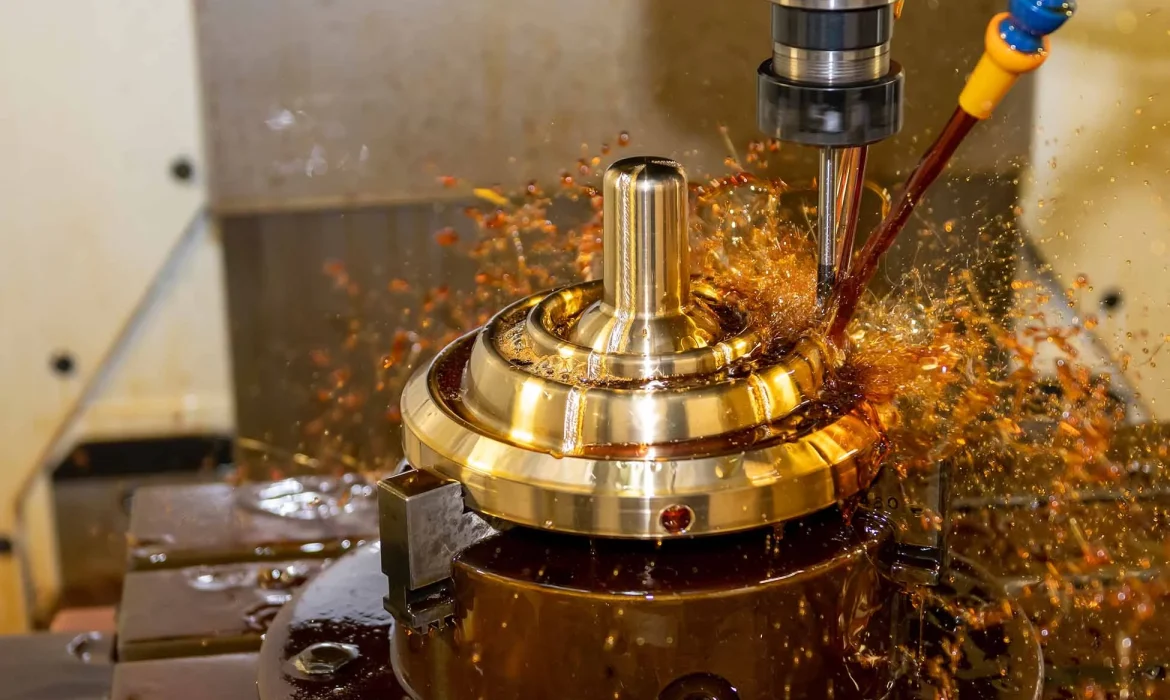
If you’re looking to bring a precise design to life—whether it’s a complex aerospace component or a sleek medical device—custom CNC machining is often the fastest, most reliable way to get parts that meet your exact specifications. Unlike off-the-shelf solutions, custom CNC machining offers the precision and flexibility needed for prototype iterations and low-to-medium volume production runs with tight tolerances and diverse materials.
At MS Machining, with over 15 years of experience, we understand the critical role custom machined components play in accelerating product development and ensuring quality. In this guide, you’ll discover how custom CNC machining works, what capabilities and materials you can expect, how tolerances and finishing come into play, and how we transform your 3D files into precision parts ready for your market or production line. Ready to explore everything about custom CNC machining and why it might be the right manufacturing option for your project? Let’s get started.
What Exactly Is Custom CNC Machining?
Custom CNC machining is a precision manufacturing process where computer-controlled machines cut, shape, and finish parts from metal or plastic stock based on unique customer specifications. Unlike standard CNC machining, which follows fixed, repeatable programs for mass production, custom CNC machining emphasizes flexibility to produce one-off prototypes, complex geometries, or small batches tailored to specific design requirements.
Difference Between Standard and Custom CNC Machining
| Feature | Standard CNC Machining | Custom CNC Machining |
|---|---|---|
| Production Volume | High-volume, repeat orders | Low to mid-volume, tailored jobs |
| Design Flexibility | Limited, standardized designs | High, adaptable to unique specs |
| Programming | Pre-set, fixed programs | Customized, often on-demand |
| Lead Time | Short for mass runs | Variable; can be rapid prototyping or complex setups |
| Cost Efficiency | Economies of scale | Cost influenced by complexity & volume |
Subtractive vs. Additive Manufacturing
| Aspect | Subtractive Manufacturing (CNC Machining) | Additive Manufacturing (3D Printing) |
|---|---|---|
| Process Type | Material removal from solid stock | Layer-by-layer material addition |
| Material Variety | Metals and plastics (wide range) | Limited materials, mostly plastics & select metals |
| Surface Finish | Excellent, ready for most industries | Usually rough, requires post-processing |
| Tolerances | Tight (down to ±0.0002″) | Looser, typically ±0.005″ or more |
| Ideal Uses | Functional, durable parts, tight tolerances | Complex shapes, quick iterations, low strength |
Industries We Serve at MS Machining
At MS Machining, our custom CNC machining expertise supports critical industries across the United States, including:
- Aerospace: High-precision, lightweight metal components meeting strict certifications.
- Medical: Biocompatible materials and micro-tolerance parts for devices and instruments.
- Robotics: Complex assemblies requiring multi-axis machining and exact fit.
- Automotive: Engine components, brackets, and custom tooling parts.
- Consumer Electronics: Small, detailed plastic and metal housings or connectors.
- Defense: Rugged, reliable parts meeting MIL-SPEC and AS9100 standards.
Whether your project demands prototype agility or precision production, our custom CNC capabilities are tailored to your industry’s specific challenges. Reach out to discuss your custom part needs today.
Our Core Custom CNC Capabilities at MS Machining
At MS Machining, we offer a broad range of custom CNC machining services tailored to meet precision and complexity requirements. Our core capabilities include:
- CNC Milling: From 3-axis to advanced 4- and full 5-axis milling, we handle everything from simple cuts to intricate geometries with tight tolerance machining.
- CNC Turning & Swiss-Type Turning: Ideal for producing high-precision round components and complex small parts used in medical, aerospace, and electronics industries.
- Wire EDM & Sinker EDM: These electrical discharge machining processes enable cutting of hard metals and intricate shapes that are difficult to machine conventionally.
- Precision CNC Grinding: We provide surface grinding, outer diameter (OD) and inner diameter (ID) grinding, plus jig grinding to achieve ultra-fine finishes and tolerances.
- Laser Engraving & Marking: For permanent and detailed part identification, logos, and traceability marks on metals and plastics.
- Sheet Metal CNC Bending & Forming: Precise bending and forming capabilities enable us to create custom metal parts and enclosures.
- In-House Tooling & Fixture Building: By designing and producing our own fixtures and tools, we ensure consistent part quality and faster turnaround times.
You can explore our photo gallery featuring recent complex parts that showcase our precision with detailed captions highlighting achieved tolerances and the diverse materials we work with.
For a deep dive into specialized machining, check out our aluminum CNC machining services and how we support medical device manufacturing at MS Machining.
Materials We Machine Every Day
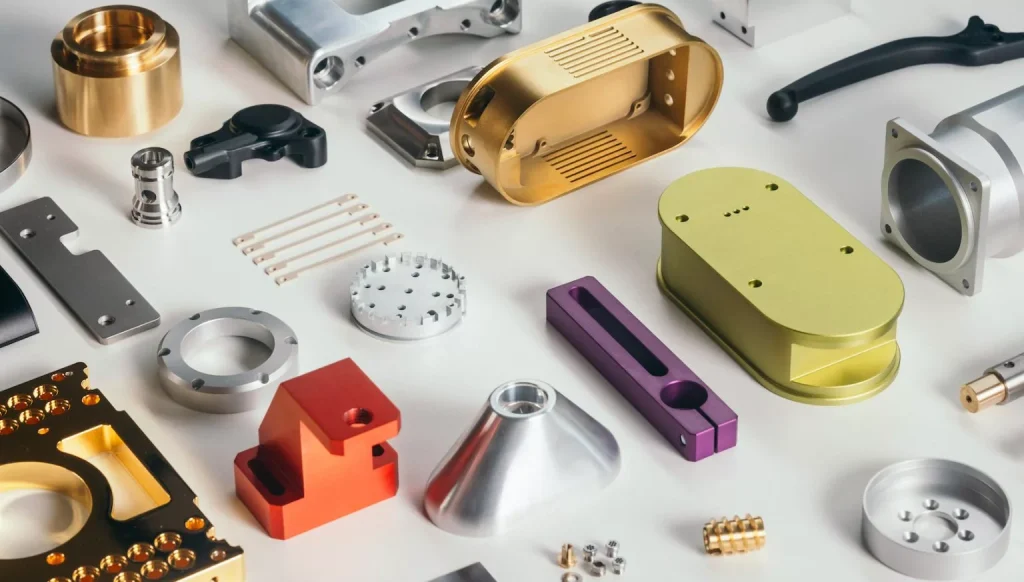 Common Materials of Precision CNC Machining
At MS Machining, our custom CNC machining services cover a broad range of materials to meet the diverse needs of our clients. Whether you’re working with metals or plastics, we have the expertise and equipment to handle your project with precision.
Metals We Machine
- Aluminum 6061 & 7075: Lightweight, strong, and corrosion-resistant—ideal for aerospace and automotive parts.
- Stainless Steel 304, 316 & 17-4: Known for excellent corrosion resistance and strength, perfect for medical and defense industries.
- Titanium: High strength-to-weight ratio with superb corrosion resistance, widely used in aerospace and medical devices.
- Inconel: A superalloy suited for extreme heat and corrosion environments, favored in aerospace and energy sectors.
- Tool Steels: Hardened for durability, often used in tooling and molds.
- Brass & Copper: Great for electrical conductivity and aesthetic finishes in consumer electronics and plumbing components.
Plastics We Machine
- PEEK: High-performance thermoplastic with outstanding chemical and heat resistance.
- Delrin (POM): Durable and low-friction, common in mechanical components.
- Ultem: Known for excellent strength and thermal stability.
- PTFE: Offers low friction and outstanding chemical resistance.
- Nylon: Versatile and wear-resistant for various engineering applications.
- Polycarbonate (PC), ABS, and Acrylic: Common in consumer products requiring transparency, toughness, or ease of machining.
Quick Reference Material Properties
| Material | Strength | Temperature Resistance | Machinability Rating |
|---|---|---|---|
| Aluminum 6061 | Medium-High | Up to 275°C (527°F) | Excellent |
| Stainless 316 | High | Up to 870°C (1600°F) | Moderate |
| Titanium | Very High | Up to 400°C (752°F) | Moderate |
| Inconel | Very High | Up to 1000°C (1832°F) | Challenging |
| Brass | Medium | Up to 300°C (572°F) | Excellent |
| PEEK | High | Up to 260°C (500°F) | Moderate |
| Delrin (POM) | Medium | Up to 130°C (266°F) | Excellent |
| Nylon | Medium | Up to 120°C (248°F) | Good |
Our broad materials expertise ensures your custom machined components meet your exact specifications and performance needs. For specialized metal components, you might also want to see our detailed Brass CNC machining services that highlight precise metal CNC machining options.
Tolerances & Surface Finishes We Guarantee
At MS Machining, precision is non-negotiable. Our standard custom CNC machining tolerances start at ±0.005″ (±0.127 mm), with typical accuracies reaching ±0.001″ (±0.025 mm). For critical features, we can hold extremely tight tolerances down to ±0.0002″, ideal for applications demanding high precision.
Surface finishes are just as important. We can achieve superior finishes with Ra values as low as 0.4 μm through precision grinding and polishing. Whether you need parts as-machined or enhanced with finishing options, we offer:
- Anodizing for corrosion resistance and color
- Plating to improve wear and conductivity
- Bead blasting for a matte texture
- Passivation to protect stainless steel surfaces
- Heat treatment to enhance material properties
These options ensure your custom CNC machined components not only meet dimensional specs but also match your surface finish requirements for optimal performance and appearance. For more about our precision work, explore our special CNC machining processes.
From Prototype to Full Production – How the Process Works
At MS Machining, we make moving from prototype to full production smooth and straightforward. Here’s how it typically works:
- Upload Your 3D File & Technical Drawing: Start by sending us your CAD models in common formats like STEP or Parasolid, along with detailed drawings.
- Design for Manufacturing (DFM) Feedback Within 24 Hours: Our experts review your design quickly to ensure it’s optimized for custom CNC machining, helping catch potential issues early.
- Instant or Manual Quote: Depending on your project’s complexity and volume, you’ll get an instant price or a personalized quote.
- Material and Process Selection: We help select the best materials and machining processes to meet your specifications and budget.
- Machining & In-Process Inspection: Your parts undergo precise machining with ongoing quality checks to maintain tight tolerances.
- First-Article Inspection (FAI) & CMM Report: Before full production, we provide comprehensive inspection reports verifying that your part meets all critical dimensions.
- Finishing & Surface Treatment: Options include anodizing, plating, bead blasting, or passivation for improved durability and aesthetics.
- Packaging & Fast Shipping: We securely package parts to prevent damage and offer expedited shipping within the U.S.
Typical turnaround times vary by order size:
- Prototype machining is usually done in 1–3 days
- Low-volume CNC production typically takes 7–14 days
- Larger production runs can range from 3–6 weeks
We focus on transparency and speed so you get reliable custom CNC machined parts exactly when you need them. For high-quality finishing options like anodizing aluminum, check out our detailed guide on anodizing aluminum and how it works.
When to Choose Custom CNC Over 3D Printing or Injection Molding
Deciding between custom CNC machining, 3D printing, and injection molding depends on your project’s requirements for quantity, material, tolerance, and cost. Here’s a simple decision matrix to help you pick the best process:
| Factor | Custom CNC Machining | 3D Printing | Injection Molding |
|---|---|---|---|
| Quantity | Best for prototypes to low/medium volume (1 to 500+) | Ideal for prototypes and very low volumes (1 to 50) | Cost-effective at high volumes (1,000+) |
| Material | Wide range: metals & plastics with precise properties | Mostly plastics; some metals but limited strength | Mostly plastics; some metals with special tooling |
| Tolerance | Tight tolerances down to ±0.0002″ possible | Lower precision: ±0.005″ to ±0.02″ typical | Tight tolerances, but less flexible on design changes |
| Cost | Higher cost per piece for small quantities, scalable with volume | Low setup cost, higher unit cost | High upfront mold cost, very low unit cost at scale |
| Lead Time | Fast turnaround on prototypes and low-volume runs (1–14 days) | Fast for prototypes (few days) | Long lead times due to tooling (weeks to months) |
When CNC is your best bet:
- You need precision CNC machined parts with tight tolerances.
- Your design requires robust metal or specialty plastic materials.
- You are going from prototype to low-volume or medium-volume production.
- You want quick design changes without tooling delays.
- Surface finish and mechanical strength are critical.
For parts requiring complex 5-axis machining or specialty metals, our 5-axis CNC machining services offer unmatched accuracy and flexibility compared to additive processes.
If your quantity is very high and your design is stable, injection molding might be more cost effective—but for quality, speed, and low-quantity flexibility, custom CNC machining stands out.
Quality Certifications & Inspection Capabilities
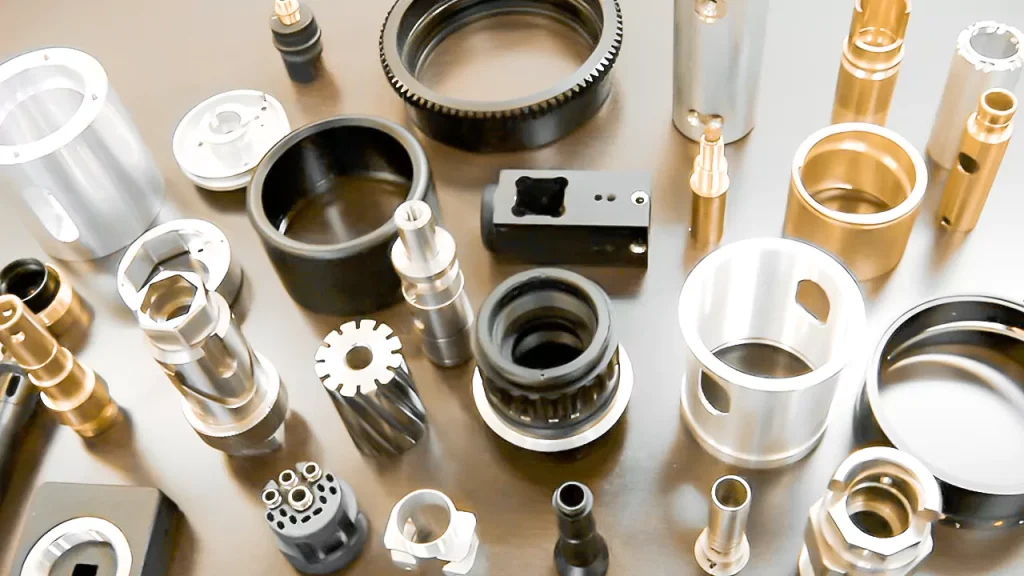
At MS Machining, quality is non-negotiable. We hold industry-leading certifications including ISO 9001:2015 for general quality management, AS9100D tailored for aerospace, and we’re actively pursuing ISO 13485 for medical device manufacturing. These certifications ensure our custom CNC machining processes meet strict standards consistently.
Our inspection capabilities include advanced Zeiss coordinate measuring machines (CMM) and Keyence optical measurement systems, providing high-precision dimensional verification on every part. With full traceability throughout production, we guarantee you receive parts that conform exactly to your specifications and quality expectations.
This commitment to quality supports precision CNC machined parts across aerospace, medical, defense, and more, reinforcing the reliability of every component we deliver.
Pricing Factors in Custom CNC Machining
When it comes to custom CNC machining, pricing varies based on several key factors:
- Material cost: Premium metals like titanium or Inconel generally cost more than aluminum or brass.
- Part complexity: Intricate designs or multiple setups increase machining time and labor.
- Tight tolerances: The closer the tolerance (e.g., ±0.0002”), the more precision effort is required, raising the price.
- Secondary operations: Finishing processes like anodizing, plating, or laser engraving add to the total cost.
- Quantity breaks: Larger orders reduce the price per part due to more efficient machining runs.
Here are some transparent pricing examples to give you a baseline:
- A batch of 10 pieces of a typical 6061 aluminum part runs about $85 each.
- Increasing the volume to 500 pieces lowers the price to roughly $18 per part.
At MS Machining, we focus on clear, upfront pricing so you know exactly what to expect. For more detailed cost insights, check out our pricing guides and CNC machining basics to understand how factors like material selection impact your quote.
How to Get the Fastest Quote and Best Results from MS Machining
To get the quickest and most accurate custom CNC machining quote from MS Machining, start by providing clear, detailed files. We recommend uploading your designs in ideal file formats like STEP, Parasolid, or technical PDF drawings. These formats make it easier for our engineers to review and provide precise feedback.
Make sure to highlight all critical dimensions and any tight tolerances directly on your drawings. Calling out these key measurements upfront helps us avoid back-and-forth delays and ensures your parts come out exactly as needed.
You can easily submit your files through our online upload portal, which streamlines the request process. If you prefer, you can also reach us directly via email or phone for quick assistance and support.
For more details on submitting your project files and what to expect, visit our how to create a prototype page, where we break down the steps for smooth project starts.