CNC Tips on How Machining Suppliers Cut Costs
Cutting Tool Downgrade and Extended Tool Life
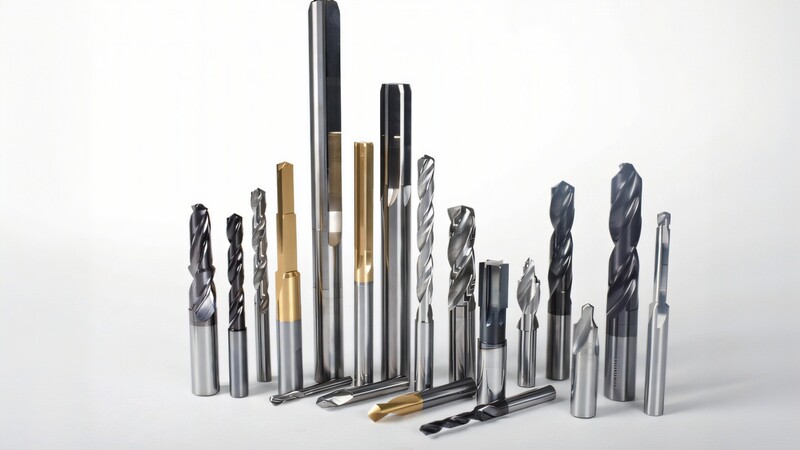
One of the fastest ways to lower machining costs is swapping premium carbide for lower-grade alternatives or running tools far past their optimal lifespan. On paper, the tooling expense drops significantly. In reality, tool wear degrades accuracy and surface finish long before the part technically fails inspection.
The hidden risks of cheap tooling strategies:
- Inconsistent Dimensions: Worn edges push material rather than cutting it, altering tolerances.
- Poor Surface Finish: Dull tools leave chatter marks and rough textures.
- Increased Stress: Dull cutting edges introduce residual stress into the workpiece.
Shorter Cycle Times and the Trade-Offs Behind Them
Reducing machining cycle time looks efficient, but aggressive feeds and speeds generate excessive heat and mechanical stress. While these parts might pass a quick initial check, CNC machining vibration issues often introduce dimensional variations that only appear once production ramps up.
- Heat Buildup: Thermal expansion during cutting leads to undersized parts once they cool.
- Vibration Marks: Aggressive speeds cause chatter, ruining aesthetic finishes.
- Tool Deflection: High cutting forces bend the tool slightly, compromising geometric accuracy.
Delaying Maintenance and Worn Spindle Problems
Machine maintenance is a frequent target for cost reduction. Delaying service minimizes downtime, but it comes at a high price. Worn spindles and unchecked backlash quietly push parts out of tolerance, often causing unpredictable defects that are difficult to trace back to a single cause.
Consequences of skipped maintenance:
- Backlash Errors: Play in the axis drive results in oval holes or mismatched cuts.
- Spindle Runout: Worn bearings cause the tool to wobble, destroying tight tolerances.
- Unplanned Downtime: Minor issues escalate into major breakdowns, delaying delivery.
Fixturing Shortcuts in Production Machining
Robust workholding ensures precision, but it requires investment. Suppliers looking to save will often use lower-cost or reused fixtures to cut setup time. Unfortunately, fixturing accuracy directly dictates repeatability.
Why cheap fixturing fails:
- Poor Repeatability: Parts sit differently in the fixture for each cycle.
- Vibration Susceptibility: Weak clamping allows movement during heavy cuts.
- Multi-Axis Errors: Inaccurate datum points compound errors in 5-axis work.
Where CNC Machining Quality Is Usually Compromised
When suppliers aggressively cut corners to drop the price tag, quality is almost always the first casualty. We often see parts that look acceptable at a glance but fail where it counts—in the assembly line or the field. Here is where the cracks usually start to show.
Tolerance control under cost pressure
When cost becomes the absolute priority, tolerance interpretation often gets looser. A supplier might ship parts that are technically “in spec” but sit on the extreme edges of the allowable limit. In isolation, a single part might pass a basic check, but tolerance stack-up creates a nightmare during assembly.
- Loose Fits: Parts rattle or fail to seal properly.
- Assembly Jams: Components require manual filing or force to fit.
- Functional Failure: Mechanisms bind due to geometric inaccuracies.
Surface finish inconsistency and vibration marks
Inconsistent surface finish is usually an early warning sign of a process out of control. Chatter marks, visual banding, or rough patches generally point to worn tooling being pushed past its life or machines running at aggressive speeds that cause excessive vibration.
For high-precision applications, such as a spiral groove bearing, surface finish isn’t just cosmetic—it’s functional. Poor finishes can lead to premature wear, seal failure, and increased friction, even if the primary dimensions still look acceptable on a drawing.
Batch inconsistency and rising rework rates
True precision isn’t about making one perfect part; it’s about making thousands of them exactly the same. Once process control weakens to save time, batch-to-batch variation spikes. You might get one batch that works perfectly and a second batch that causes line stoppages.
Higher CNC rework and scrap rates quickly cancel out any initial unit price savings. If a supplier isn’t investing in consistent setups and in-process monitoring, the hidden costs of sorting and fixing bad parts will eventually land on your desk.
CNC Tips on Quality Control Shortcuts Buyers Should Notice

Skipping CMM inspection and in-process checks
When cost reduction becomes the main driver, the inspection room is often the first place suppliers cut corners. Reducing inspection steps lowers immediate overhead, but skipping CMM inspection or ignoring in-process measurement removes the critical feedback loop needed to catch tool wear or thermal drift.
I often see shops bypass the CMM for “simple” geometries to save setup time, relying only on hand tools. The result is that issues are only discovered after the parts reach the customer and fail assembly. For high-stakes custom CNC machining, relying on final visual checks instead of dimensional data is a massive risk.
Watch for these signs of weak QC:
- Missing Data: If they can’t provide a dimensional report, they likely didn’t measure it properly.
- Low Sampling: Checking 1 out of 100 parts is rarely enough to catch intermittent vibration issues.
- No In-Process Checks: Operators should be measuring parts while the machine is running, not just at the end.
Rushed or incomplete first article inspection
A weak First Article Inspection (FAI) sets the stage for repeated headaches. Some suppliers will hand-pick a “golden part”—one perfect piece made slowly and carefully—to pass the initial check, while the actual production run is rushed.
This is a common reason buyers hear, “It worked last time,” when the next batch fails. A proper FAI must prove that the manufacturing process is stable and repeatable, not just that a single part can be made. This validation is critical in CNC turning services, where diameter variances can shift quickly due to heat and tool pressure. If the FAI is treated as a formality rather than a stress test, you aren’t approving a production process; you’re just approving a prototype.
Material and Process Trade-Offs That Lower CNC Machining Costs
Material substitution and grade differences
Material substitution rarely gets discussed openly, but it happens more often than buyers realize. To shave off costs, some suppliers might swap a specified high-grade alloy for a cheaper, generic variant if the print isn’t explicitly strict. While two grades of aluminum or steel might look identical on the shelf, small differences significantly impact machinability, tensile strength, and corrosion resistance.
When we select CNC precision parts materials, we stick to the exact specifications because we know that “close enough” doesn’t cut it in the field. A cheaper grade might save a few dollars upfront, but it often leads to premature failure or finishing issues down the line.
Common Material Risks:
- Generic vs. Brand Name: Using non-branded engineering plastics (like generic acetal vs. Delrin) can lead to porosity issues.
- Imported Metal: Lower-cost imported stock may have inconsistent grain structures compared to domestic certified materials.
Uncertified material and loose heat treatment control
Using uncertified raw material or loosely controlled heat treatment reduces traceability and increases risk, especially for structural or precision components. In industries where safety is paramount, such as medical manufacturing devices, lacking proper material test reports (MTRs) is a dealbreaker.
Cutting costs by skipping material certification means you are essentially machining “mystery metal.” Furthermore, sending parts to the cheapest heat treat vendor often results in inconsistent hardness or warping. We prioritize rigorous process control because we know that a part is only as good as the material it is made from and the processes it undergoes.
The Hidden Costs of Process Shortcuts:
- Lack of Traceability: Inability to track material batches in case of a recall.
- Inconsistent Hardness: Parts that are too soft wear out quickly; parts that are too brittle crack under stress.
- Warping: Poor stress relief during heat treatment causes parts to move out of tolerance during final machining.
CNC Tips for Evaluating Machining Suppliers Before RFQ Approval
Looking beyond price when comparing CNC suppliers
Price is naturally the first thing you look at, but in precision manufacturing, it rarely tells the whole story. A significantly lower bid often signals that a shop is cutting corners on tooling, skipping maintenance, or reducing quality control efforts. To ensure you aren’t buying into future headaches, you need to audit the supplier’s operational standards, not just their hourly rate.
Key factors to review beyond the price tag:
- Inspection Flow: Do they perform rigorous in-process checks, or just a final glance?
- Tooling Strategy: Are they investing in high-performance cutters, or pushing worn tools until they break?
- Material Integrity: Do they verify raw stock with mill certifications? You can review our strict approach to material for CNC machining to understand why certified stock is non-negotiable for quality.
RFQ comparison tips to avoid quality-driven rework
The clarity of a quote often reflects the engineering maturity of the supplier. Vague quotes are a major red flag and usually lead to “scope creep,” missed deadlines, and difficult conversations when parts don’t fit. To avoid costly quality-driven rework, look for a partner who provides a detailed breakdown of how they intend to manufacture your parts.
Your RFQ comparison checklist should include:
- Tolerance Confirmation: Explicit acknowledgement of your tightest tolerances and the ability to hold them.
- Inspection Scope: Clear agreement on First Article Inspection (FAI) and final data reporting.
- Process Assumptions: Transparency regarding surface finishes and handling requirements.
If you are ready to work with a team that values transparency and precision over shortcuts, contact us today to discuss your project needs.