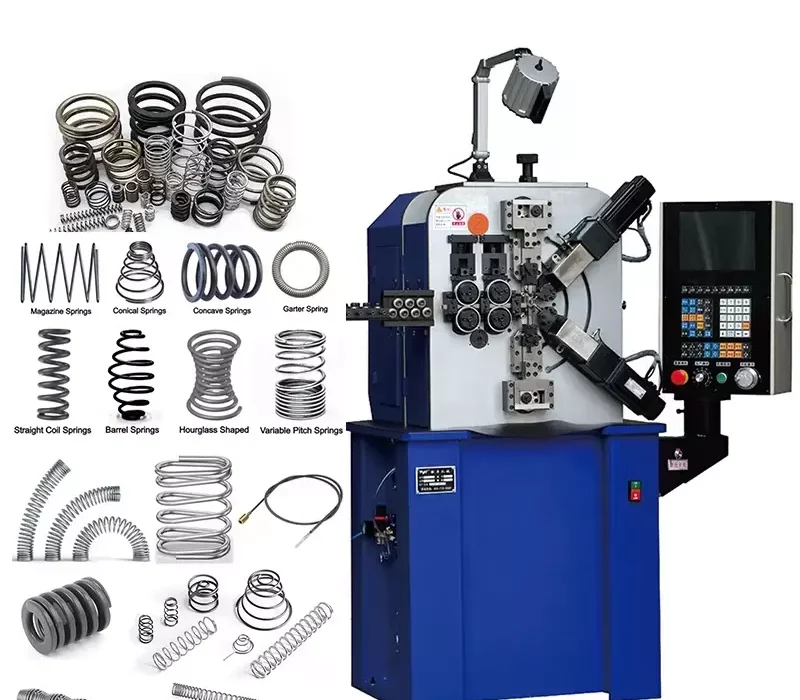
What Is a CNC Spring Coiling Machine?
A CNC spring coiling machine is an automated system designed to produce precision springs by coiling wire with exact control. Unlike traditional mechanical or manual spring coilers, CNC (Computer Numerical Control) machines use computerized commands for fast, repeatable, and flexible spring manufacturing.
Core Components
| Component | Function |
|---|---|
| Wire Feed System | Feeds wire consistently into the coiling area |
| Servo Motors | Precisely control movement and positioning |
| CNC Control Unit | Programs and automates the coiling process |
| Coiling Points | Form wire into specific spring shapes |
| Arbor | Supports and shapes the coil |
| Cutters | Automatically cut springs to exact length |
How It Works: Step-by-Step
- Wire Feeding – The wire feed system delivers wire steadily to the coiling points.
- Automated Coiling – Servo motors and the CNC unit coordinate to bend and shape the wire into coils.
- Cutting – Once the desired spring length is reached, cutters trim the spring automatically.
- Ejection and Reset – The finished spring is released, and the machine resets for the next cycle.
Differences from Traditional Spring Coilers
| Aspect | Traditional Mechanical/Manual | CNC Spring Coiling Machine |
|---|---|---|
| Control | Manual adjustments, limited precision | Fully computerized, high precision |
| Speed | Slower, labor-dependent | Fast, automated for high-volume production |
| Flexibility | Limited to simple designs | Handles complex shapes like conical, torsion |
| Repeatability | Varies by operator skill | Consistent, repeatable output |
| Setup Time | Longer; requires manual changes | Shorter; software-driven tool change |
In short, CNC spring coiling machines streamline spring making by combining wire coiling, precision spring manufacturing, and automation into one efficient package. This makes them ideal for industries needing high-quality springs with tight tolerances and rapid turnaround.
Types of CNC Spring Coiling Machines
CNC spring coiling machines come in several types to match different production needs and spring designs. The two main categories are single-point and dual-point coilers. Single-point coilers use one coiling tip to shape the spring, making them ideal for simple and small springs where tight control isn’t critical. Dual-point coilers have two coiling points, offering better control over tension and pitch, making them perfect for producing more complex or larger springs with higher precision.
When it comes to axis configurations, CNC spring machines range from 2-axis setups (basic wire feeding and coiling) up to multi-axis machines with 8 to 12 axes. More axes allow for greater complexity in spring shapes, including variable pitch, precise bends, and special forms like torsion or conical springs. Popular options are 3-axis and 4-axis coilers, commonly used in precision spring manufacturing.
Specialized CNC spring coilers include camless designs, which replace traditional mechanical cams with servo-driven actuators for faster changeovers and better accuracy. There are also high-speed spring coiling machines designed for rapid mass production, and in-line production systems that integrate coiling directly into assembly lines, improving efficiency and lowering labor costs.
These types cover a wide range of applications, allowing manufacturers in industries like automotive, aerospace, and electronics to pick the right spring coiling machine for their specific needs. For those looking into precision or advanced spring production, exploring the full range of axis configurations and specialized models is key to staying competitive.
Key Features and Technical Specifications to Consider
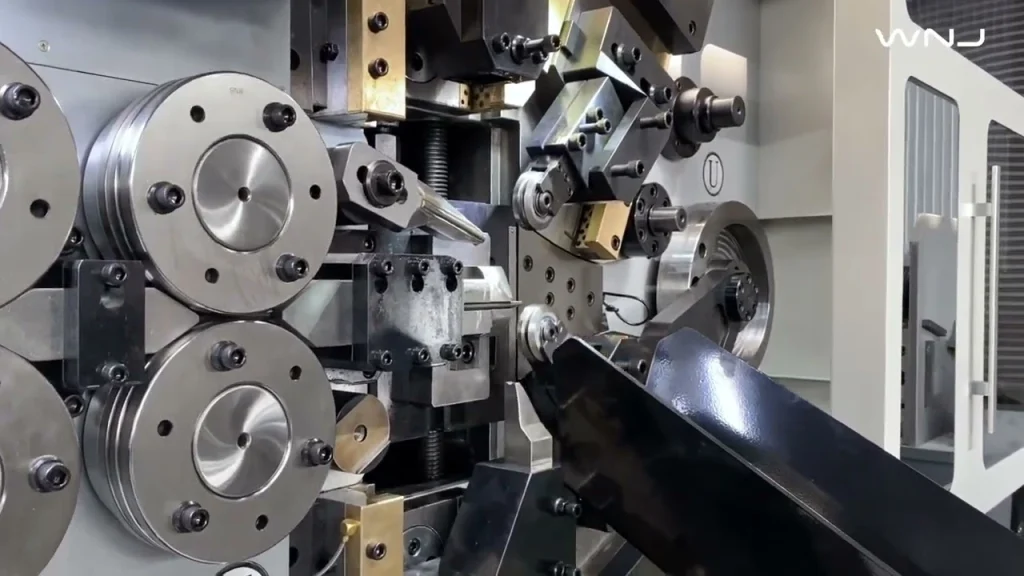
When choosing a CNC spring coiling machine, it’s important to evaluate these core features and specs to match your production needs:
| Feature | Details & Range |
|---|---|
| Wire Diameter Range | Typically 0.1mm to 16mm, compatible with steel, stainless steel, copper, and more |
| Material Compatibility | Supports various wire types including hardened and soft metals |
| Production Speed | Varies by model – from hundreds to thousands of springs per hour |
| Coil Diameter | Adjustable for both small and large springs, often from a few mm up to several inches |
| Pitch Control | Precise control for uniform spacing between coils, essential for compression and extension springs |
| Outer Diameter (OD) | Accurate OD control ensures spring fits application specs perfectly |
| Advanced Options | – Length detection for consistent spring size |
– OD control sensors
– Torsion spring attachments for specialty springs
– Full software integration for programming flexibility |
|
| Precision & Repeatability | High repeatability with servo-driven motors and CNC control units guarantees consistent quality batch after batch |
|
These specs ensure your machine handles a wide variety of springs—like compression, extension, torsion, and conical springs—with excellent precision. For users looking to optimize production, features like camless technology or multi-axis controls add flexibility and speed.
If precision and versatility matter to your spring-making process, exploring multi-axis CNC spring coilers can offer even greater control. For related insights on how multi-axis capabilities improve manufacturing, see our guide on why 5-axis machining is ideal for low-volume, high-mix manufacturing.
Choosing a machine with strong software controls also helps adapt quickly to different spring designs, boosting productivity without sacrificing accuracy.
Benefits of Using CNC Spring Coiling Machines
CNC spring coiling machines offer clear advantages over manual or traditional spring making machines. Here’s why they’re a go-to choice for many U.S. manufacturers:
| Benefit | Details |
|---|---|
| Enhanced Accuracy & Consistency | Perfect for high-volume production with minimal variation, ensuring every coil meets exact specs. |
| Reduced Setup Time & Waste | Automated processes cut setup and changeover times, saving material and reducing scrap. |
| Lower Labor Costs | Less manual handling means fewer operators required, which cuts overhead. |
| Flexibility for Complex Designs | Easily handles various spring types like compression, extension, torsion, and conical shapes. |
| Improved Safety & Ease of Use | Servo-driven systems reduce the risk of errors and injuries, while user-friendly interfaces simplify operation. |
Using a CNC spring coiling machine also means faster turnaround times and reliable repeatability, essential for industries requiring precision and volume. Plus, advanced features like automated cutters and coiling points help maintain efficiency without sacrificing quality.
If you work with aerospace or medical device springs, combining CNC coilers with precision machining can be a game-changer. For related manufacturing processes, check out our insights on aerospace machining components.
In short, CNC spring coiling machines bring accuracy, speed, and versatility — a perfect fit for today’s fast-paced industrial landscape.
Applications Across Industries
CNC spring coiling machines are essential across various industries thanks to their precision and versatility. In the automotive sector, these machines produce critical components like suspension springs, valve springs, and clutch springs that need reliable performance and durability. Aerospace and defense applications rely on CNC spring machines for lightweight, high-strength springs that meet strict quality standards in harsh conditions.
In electronics and medical device manufacturing, the demand for miniature precision springs is high. CNC spring coilers can handle tiny wire diameters with excellent repeatability, making them perfect for these sensitive and intricate parts. Additionally, general manufacturing industries such as furniture, appliances, and machinery benefit from automated coil spring makers to produce durable springs efficiently for everyday products.
These varied applications highlight the flexibility of CNC compression spring machines and torsion spring coiling machines in delivering consistent quality across different spring types and sizes. Such adaptability makes them a smart investment for businesses looking to improve production capabilities.
For related precision tools and machining solutions, exploring resources like the Chinese CNC milling machine overview can provide insights into complementary technologies used alongside spring making machines.
How to Choose the Right CNC Spring Coiling Machine
Picking the right CNC spring coiling machine means matching your needs with the right features. Here’s a quick guide to help you make the best choice:
Assess Your Production Needs
- Production Volume: High volumes call for faster, multi-axis machines. Smaller runs might suit simpler models.
- Spring Types: Compression, extension, torsion, or conical springs need different coiling capabilities.
- Wire Specs: Know your wire diameter and material type (e.g., stainless steel, music wire). Ensure the machine supports your range.
Key Factors to Consider
| Factor | What to Look For | Why It Matters |
|---|---|---|
| Automation Level | Fully automatic vs. semi-automatic | Affects speed and labor costs |
| Budget | Entry-level to top-tier pricing | Balance features with investment |
| Machine Footprint | Size and space available in your shop | Fits your workspace efficiently |
| After-Sales Support | Warranty, training, and tech service | Keeps your machine running smooth |
Common Mistakes to Avoid
- Choosing a machine without verifying wire compatibility
- Overlooking software and control system flexibility
- Ignoring future production scale needs
- Underestimating setup and maintenance support
Why MS Machining?
MS Machining stands out by offering customized CNC spring coiling machine solutions tailored for U.S. manufacturers. Their reliable equipment comes with expert guidance, flexible automation levels, and responsive after-sales support. Plus, they specialize in precision parts—check out their custom machining services to see how they can meet your exact spring making needs.
For a smoother workflow, pairing your spring coiler with related equipment like CNC tubing benders can also boost efficiency in complex assemblies.
Choosing right saves time, cuts waste, and keeps your operation running efficiently.
Top Manufacturers and Market Trends
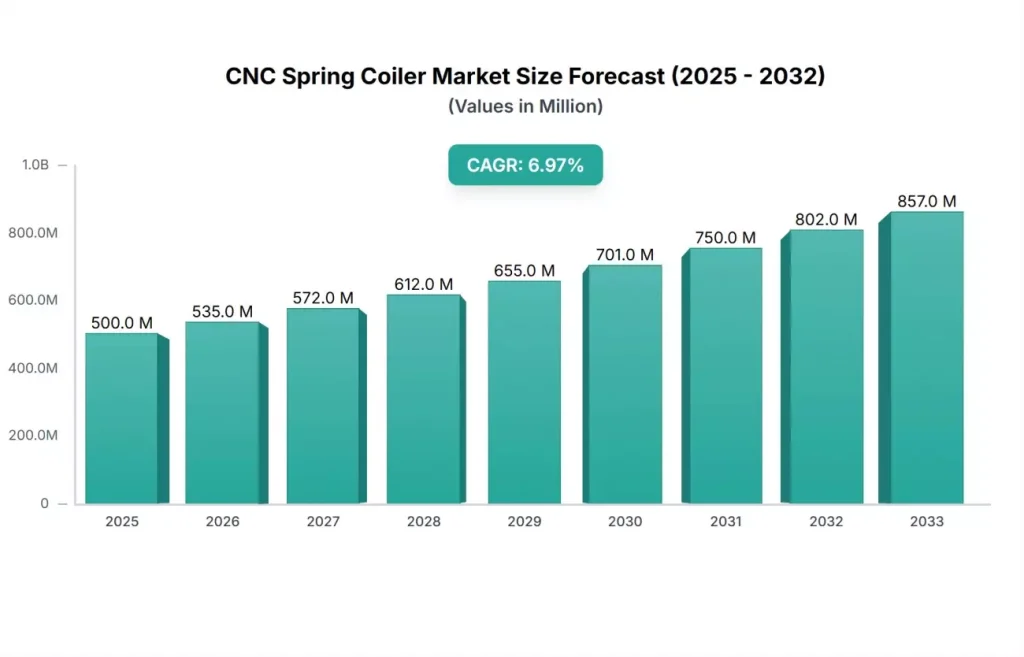
When selecting a CNC spring coiling machine, understanding the capabilities of leading global manufacturers is essential. Top-tier suppliers in the industry are known for producing high-precision automatic spring coiling equipment and advanced servo-driven spring forming systems. These machines are designed to deliver consistent accuracy, stable performance, and long-term operational reliability.
In precision spring manufacturing, industry-leading CNC spring coiling machines typically cover a wide production range, from single-point coil spring machines to multi-axis spring formers. This flexibility allows manufacturers to produce various spring types and complex geometries while maintaining tight tolerances and efficient production workflows.
Emerging market trends are shaping the future of spring making machines, especially with camless technology becoming more popular. This innovation removes the traditional cams, allowing for faster, more flexible spring production and easier programming. Another major shift is the integration of CNC spring coiling machines with Industry 4.0 systems. Connected machines deliver real-time data for better process control and predictive maintenance, ultimately improving efficiency. Plus, newer models focus heavily on energy efficiency to reduce operational costs without sacrificing performance—ideal for manufacturers aiming to cut waste and comply with green standards.
On pricing, entry-level CNC spring coiling machines are more accessible for small to mid-sized shops, offering decent wire diameter ranges and standard automation. However, high-end models designed for industrial spring forming with multi-axis control and advanced software integration come at a premium, justified by their superior precision, speed, and versatility. For businesses weighing options, understanding these cost differences helps match the right solution to production demands.
For reliable parts and additional manufacturing support, consider exploring CNC turning services and precision turned parts that complement spring coiling operations.
With these shifts and choices in mind, staying updated on top manufacturers and market trends will ensure you invest smartly in the best CNC spring coiling machine for your needs.
Maintenance, Operation, and Best Practices for CNC Spring Coiling Machines
Keeping your CNC spring coiling machine running smoothly starts with solid daily setup and programming habits. Always double-check wire alignment and machine calibration before starting a batch. Use precise programming to set the coil parameters like diameter, pitch, and length to minimize errors and material waste.
Routine maintenance is key to extending your machine’s lifespan and ensuring consistent spring quality. Here’s what to focus on:
- Clean and lubricate moving parts regularly—this reduces wear on servo motors, coiling points, and cutters.
- Inspect wire feed mechanisms for jams or damage to prevent production stops.
- Check cutting tools and replace them before they become dull to maintain clean cuts.
- Verify the CNC control unit and software updates to prevent glitches or downtime.
Troubleshooting common issues like inconsistent coil diameter or wire breakage typically involves checking feed tension, coiling point alignment, and servo motor performance. Having a good understanding of your machine’s components makes diagnosing problems faster and less costly.
Training operators is another critical factor. Skilled operators familiar with CNC programming and spring design help optimize machine performance and reduce errors. Many manufacturers, including MS Machining, offer training resources and support for new users to get you up to speed quickly.
For a deeper dive into automation and precision manufacturing, you might find useful insights in our guide on what CNC stands for in manufacturing and how precision parts are made with CNC turning. These resources help you understand the technological backbone behind your spring coiler.
Following these maintenance and operation best practices ensures your CNC spring making machine stays efficient, delivering accurate, high-quality springs with minimal downtime.
FAQs About CNC Spring Coiling Machines
What wire diameters can CNC spring coiling machines handle?
Most CNC spring coiling machines can process wire diameters ranging from about 0.1mm up to 16mm. This wide range covers everything from delicate precision springs to heavy-duty industrial coils, making them versatile for various applications.
How does a multi-axis machine improve production?
Multi-axis spring coilers — with 4, 5, or even up to 12 axes — offer greater flexibility and precision. They can shape complex springs like torsion or conical types with tighter tolerances. This reduces manual adjustments, speeds up production, and improves consistency across large runs.
What is the difference between single-point and dual-point coiling?
Single-point coilers use one stationary tool to form the spring, best suited for simpler designs and lower volumes. Dual-point coilers have two coiling points for enhanced accuracy and smoother wire feeding, ideal for high-speed, high-precision manufacturing.
Are these machines suitable for small-batch production?
Absolutely. Modern CNC spring coiling machines are designed for flexibility. Even small-batch or custom spring jobs benefit from their quick setup, programmable controls, and repeatability—saving time and reducing waste compared to manual coilers.
How to get started with MS Machining’s CNC solutions?
MS Machining offers customized CNC spring coiling machines tailored to your production needs. To begin, assess your spring requirements including wire size and spring type, then contact MS Machining for expert guidance and support. Their solutions are designed for reliability and precision, backed by strong after-sales service.
For related precision components that complement your spring manufacturing, check out MS Machining’s expertise in micro-tip precision engineering for high-performance applications. This can enhance the overall quality of your final assemblies.