
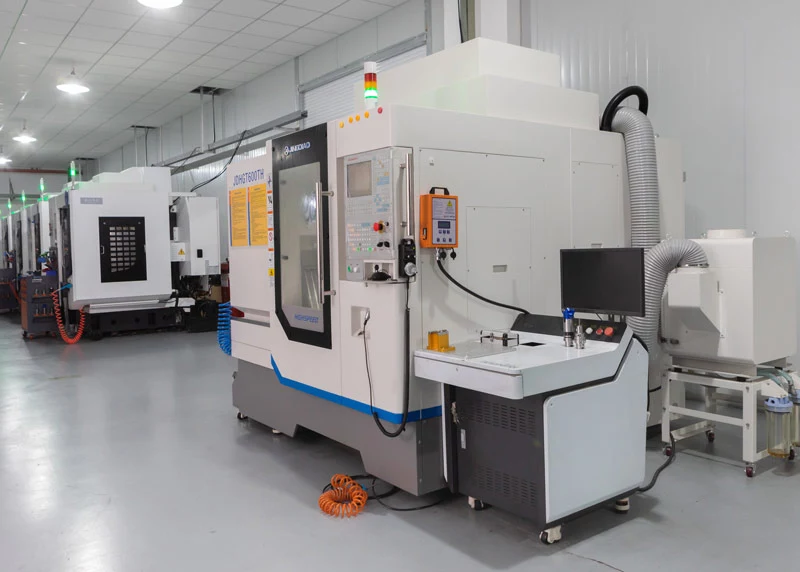
Are you struggling to balance high-precision tolerances with production speed?
In the high-stakes world of industrial production, a mismatch between your machine capabilities and your raw stock kills efficiency.
In this guide, you’re going to learn exactly how to optimize CNC Machining Solutions for B2B Manufacturers.
From managing the heat of titanium to preserving the surface finish of aluminum, Selecting the Right Technology for Every Material is the difference between a profitable run and a costly scrap pile.
I’ve broken down the specific strategies—from 5-axis milling to EDM—to help you scale your manufacturing operations.
Let’s get to work.
Understanding CNC Machining in B2B Manufacturing
Definition and Scope of CNC Machining
CNC (Computer Numerical Control) machining is a precise subtractive manufacturing process where pre-programmed computer software dictates the movement of factory tools and machinery. At MS Machining, our scope extends beyond basic cutting; we integrate advanced 3-axis, 4-axis, and 5-axis milling, alongside CNC turning and Electrical Discharge Machining (EDM). This technology allows us to shape complex geometries from a vast array of rigid materials, including metals like Aluminum 6061 and Titanium, as well as engineering plastics like PEEK and POM.
Role of CNC in Modern Industrial Production
In today’s fast-paced supply chain, CNC technology acts as the backbone for high-stakes industries such as aerospace, medical, automotive, and robotics. It bridges the gap between digital CAD designs and physical functional parts, enabling the production of components that manual machining simply cannot achieve. By leveraging automated tool paths and rigorous Design for Manufacturability (DFM) analysis, we ensure that complex designs are manufactured efficiently, reducing lead times for prototypes to as little as 1 day.
Benefits for B2B Manufacturers: Accuracy, Repeatability, Scalability
For B2B manufacturers, the primary advantage of partnering with a professional machine shop is the assurance of quality and capacity. We utilize ISO 9001:2015 certified processes to deliver components that meet strict industrial standards.
Key Manufacturing Advantages:
| Benefit | Description |
|---|---|
| High Precision | Achieving standard tolerances of ±0.005mm (0.0002″), ensuring parts fit perfectly in assembly. |
| Repeatability | Automated processes guarantee that the 1,000th unit is identical to the first, crucial for volume production. |
| Scalability | Seamless transition from single-unit rapid prototyping to low-to-high volume production (up to 10,000+ units). |
| Material Versatility | Capability to machine diverse materials, from soft Brass and Copper to hardened Steel and Stainless Steel 316. |
Key CNC Technologies for Different Materials
When providing CNC Machining Solutions for B2B Manufacturers, selecting the right equipment is the foundation of efficiency. We don’t just throw every part on the most expensive machine; we match the technology to the material properties and geometric complexity. Since limitations vary, knowing exactly what materials a CNC machine can cut guides us in selecting between milling, turning, or EDM to ensure the tightest tolerances and best surface finishes.
3-Axis vs 4-Axis vs 5-Axis CNC milling: choosing by complexity
Milling is the backbone of modern manufacturing, but the number of axes determines the capability. For manufacturers deciding on production methods, comparing 5-axis CNC machining services vs 3-axis helps determine the best balance between precision and budget.
- 3-Axis Milling: The standard for drilling holes and cutting sharp edges on flat surfaces. It is cost-effective but requires manual repositioning for complex sides.
- 4-Axis Milling: Adds a rotary axis (A-axis). This allows us to machine the sides of a part or cut continuous helixes without re-fixturing.
- 5-Axis Milling: Moves the tool and the part simultaneously across five axes. This is essential for aerospace impellers and complex medical implants where precision is non-negotiable.
| Axis Configuration | Best Application | Setup Time | Cost per Hour |
|---|---|---|---|
| 3-Axis | Simple geometries, prismatic parts | Low | Lower |
| 4-Axis | Cylindrical features, side machining | Medium | Moderate |
| 5-Axis | Complex contours, single-setup machining | High (Complex programming) | Higher |
CNC turning and multi-spindle lathes for cylindrical components
For parts that are cylindrical or tubular, CNC turning is the superior choice. Unlike milling, where the tool spins, here the workpiece spins. We utilize multi-spindle lathes for high-volume B2B orders. These machines can perform operations on multiple parts simultaneously, drastically reducing cycle times.
Key advantages include:
- Speed: Rapid material removal rates for brass, steel, and aluminum shafts.
- Live Tooling: Modern lathes include milling capabilities (Mill-Turn), allowing us to drill cross-holes or mill flats on a turning part without moving it to a different machine.
- Precision: Excellent concentricity and surface finish for pins, bushings, and fittings.
EDM (Wire and Sinker) for hard metals and complex shapes
Electrical Discharge Machining (EDM) is our go-to solution when traditional cutting tools fail. This non-contact process uses electrical sparks to erode material, making it perfect for hardened tool steels or titanium that would otherwise break a milling cutter.
- Wire EDM: Uses a thin, electrically charged wire to cut through metal like a hot knife through butter. It is ideal for cutting tight corners and intricate extrusion dies.
- Sinker EDM (Ram EDM): Uses a custom-shaped electrode to “sink” a cavity into the material. We use this for creating blind cavities in molds where sharp internal corners are required.
CNC laser cutting and welding integration for sheet metal
For sheet metal components, mechanical cutting isn’t always efficient. CNC laser cutting offers speed and precision without physical contact, eliminating material deformation. When integrated with automated welding, this technology streamlines the transition from flat sheet to finished assembly.
- Fiber Lasers: Highly efficient for cutting reflective metals like copper and brass, as well as standard steel and aluminum.
- Precision Welding: CNC-controlled laser welding provides consistent, clean seams that often require no post-process grinding, speeding up the production line for enclosures and chassis.
Material-Specific CNC Strategies
Selecting the right parameters isn’t just about the machine; it’s about how the cutter interacts with the material. To provide effective CNC Machining Solutions for B2B Manufacturers, we have to adapt feeds, speeds, and tooling strategies for every specific substrate. A deep understanding of what is CNC milling and turning dynamics is essential to avoid costly scrap and ensure part integrity.
Aluminum alloys: lightweight, machinability, and surface finish considerations
Aluminum (such as 6061, 7075, or 5052) is the workhorse of modern manufacturing. It allows for high-speed machining, but chip evacuation is critical. If chips aren’t cleared instantly, they get re-cut, destroying the surface finish.
- High RPMs: We run spindles fast to take advantage of aluminum’s softness.
- Sharp Tooling: We use specific flute geometries (usually 2 or 3 flutes) to maximize chip clearance.
- Finishing: For parts requiring anodizing, we focus on minimizing tool marks to ensure a uniform cosmetic appearance.
Stainless steel: heat management and tool wear prevention
Stainless steel (303, 304, 316) is notorious for work-hardening. If the tool dwells in one spot or rubs rather than cuts, the material hardens instantly, destroying the end mill.
- Aggressive Feeds: You have to commit to the cut. We maintain a constant chip load to cut beneath the work-hardened layer.
- Flood Coolant: Heat management is vital. We use high-pressure coolant to flush heat away from the cutting zone and lubricate the tool interface.
- Rigidity: Any vibration or chatter will kill tool life in stainless, so rigid workholding is non-negotiable.
Titanium and nickel alloys: aerospace and medical-grade machining challenges
Titanium and superalloys like Inconel are poor thermal conductors. Unlike steel, where heat leaves with the chip, here the heat transfers directly into the cutting tool.
- Heat Resistance: We utilize specialized carbide tooling with advanced coatings (like TiAlN) to withstand extreme temperatures.
- Low Speed, High Feed: We slow the RPMs down but keep the tool moving to prevent heat buildup.
- Tool Life Monitoring: In aerospace and medical applications, we monitor tool wear strictly to prevent catastrophic failure mid-cut.
Engineering plastics and composites: precision without deformation
Machining plastics (Delrin, PEEK, Nylon, PTFE) requires a delicate touch. The main enemy here is heat and stress.
- Clamping Pressure: Plastics warp easily. We use soft jaws or vacuum fixtures to hold parts without compressing them out of tolerance.
- Heat Control: If you cut too fast, the plastic melts and gums up the tool. We use massive air blasts or specific coolants to keep the material rigid.
- Sharp Geometries: We typically use single-flute cutters designed for plastics to slice through the material cleanly without pushing it.
Brass, copper, and non-ferrous metals: conductivity and surface quality concerns
While brass is often considered “free-machining,” pure copper is incredibly gummy and difficult to drill without breaking tools.
- Chip Breaking: Brass creates small chips that clear easily, but copper creates long, stringy chips that wrap around the tool. We use “peck drilling” cycles to break these chips.
- Surface Integrity: For electrical contacts, the surface must be burr-free. We use spot drills and chamfer tools extensively to ensure smooth edges right off the machine.
- Oxidation Prevention: We have to be careful with coolant selection to ensure the chemicals don’t stain or oxidize the copper parts before they are cleaned.
Factors Influencing CNC Technology Selection
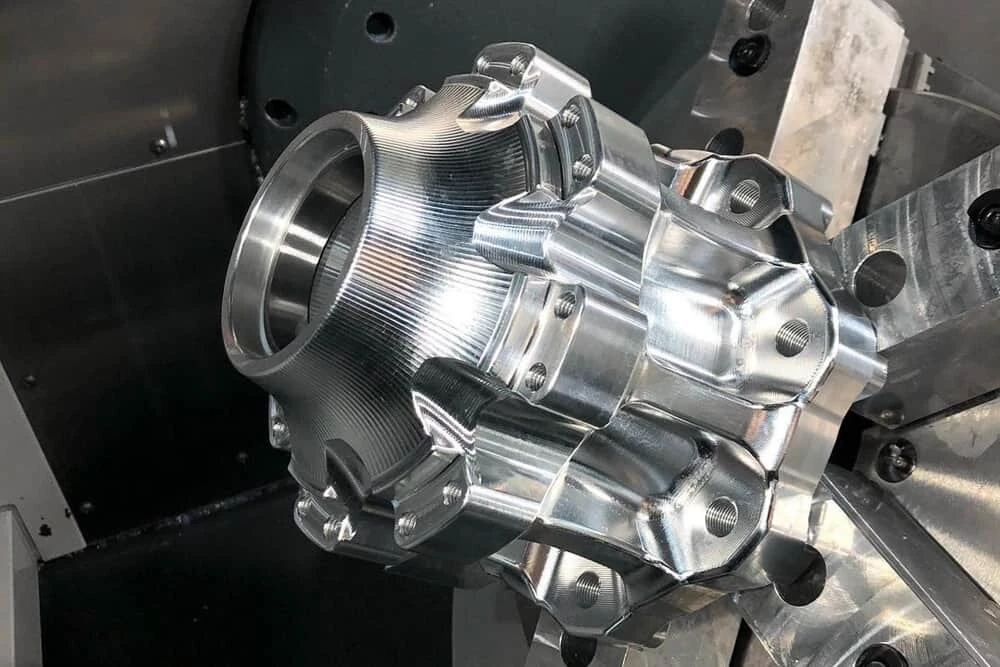
Selecting the right equipment isn’t just about grabbing the most expensive machine on the floor; it’s about matching the capability to the specific needs of the job. As a B2B manufacturer, making the right call here determines our profitability and delivery speed.
Part geometry and dimensional complexity
The shape of the part is usually the first filter we apply. Simple, prismatic parts with flat surfaces are straightforward and cost-effective on standard 3-axis mills. However, as soon as designs introduce undercuts, deep pockets, or complex organic curves, the strategy changes.
- Simple Geometries: Best for 3-axis milling or standard turning centers.
- Complex Geometries: Require simultaneous motion to avoid collisions and reach difficult angles.
If a component requires machining on multiple faces, we look at technology that reduces setup changes to maintain accuracy.
Volume of production: prototypes vs mass production
The quantity we are machining dictates our entire approach to tooling and automation. For a single prototype, the priority is speed-to-part, meaning we use flexible workholding and standard tooling to get it done fast. However, when moving to high-volume runs, efficiency is king. Understanding the nuances of CNC milling for prototype vs production is crucial here; for mass production, we invest in custom fixtures, pallet changers, and automated bar feeders to shave seconds off every cycle and reduce the cost per unit.
Tolerance requirements and surface finish specifications
In the US market, precision is non-negotiable. When a blueprint calls for tight tolerances—often down to the micron—we can’t rely on older equipment. Achieving these strict standards requires high-precision CNC machining capabilities that offer superior thermal stability and vibration damping.
Surface finish requirements also drive technology selection. If a part needs a mirror-like finish (low Ra value), we select machines capable of high-speed machining (HSM) strategies. This allows us to achieve the desired surface quality directly off the machine, eliminating the need for expensive manual polishing or secondary processing.
Machine capabilities and multi-axis advantages
We always weigh the benefits of advanced kinematics against the project cost. While 3-axis machines are the workhorses of the shop, they require manual repositioning for multi-sided parts, which introduces the risk of human error.
Leveraging multi-axis advantages allows us to machine complex parts in a “Done-in-One” setup. This significantly improves geometric dimensioning and tolerancing (GD&T) accuracy because the part stays clamped in the same position throughout the process. It’s an investment in reliability.
Material hardness, thermal conductivity, and machinability
The material acts as the final gatekeeper for technology selection. Different materials exert different forces on the machine and require specific spindle characteristics:
- Hard Metals (Titanium, Hardened Steel): Require high-torque, rigid machines to prevent chatter and tool deflection.
- Soft Metals (Aluminum, Brass): Require high-RPM spindles to maximize material removal rates.
- Thermal Issues: Materials with low thermal conductivity trap heat in the tool rather than the chip. In these cases, we select machines equipped with high-pressure through-spindle coolant systems to manage temperatures and extend tool life.
Optimizing CNC Machining Processes for B2B Manufacturers
To get the best ROI on parts production, simply having a machine isn’t enough. We have to fine-tune every variable in the workflow. Optimizing CNC machining solutions for B2B manufacturers means looking at the entire ecosystem—from the cutter touching the metal to the final inspection report. This approach reduces cycle times and ensures that the thousandth part is identical to the first.
Tooling selection and cutting parameters
The cutter determines the finish. We don’t just grab a standard end mill; we match the tool material and geometry to the workpiece. For tough alloys like Inconel, we use high-performance carbide with specific coatings (like TiAlN) to handle the heat. For aluminum, polished flutes prevent chip welding.
Equally important are the cutting parameters:
- Feeds and Speeds: Dialing these in prevents chatter and extends tool life.
- Depth of Cut: Optimizing for roughing passes versus finishing passes reduces machining time.
- Coolant Strategy: High-pressure coolant helps clear chips in deep pockets.
Fixture design and workholding strategies
If the part vibrates, precision is lost. Rigid workholding is non-negotiable. We design custom fixtures that allow for maximum tool access while keeping the part rock-solid.
- Soft Jaws: Custom-machined to match the part profile for complex geometries.
- Vacuum Chucks: Ideal for thin plates where clamps would warp the material.
- Modular Fixturing: Allows for quick changeovers between different jobs.
Process automation and multi-part machining setups
To compete in the US market, spindle uptime is king. We aim to minimize “door-open” time. By utilizing multi-part setups, such as loading a tombstone on a horizontal mill, we can machine dozens of parts in a single cycle.
Automation strategies include:
- Pallet Changers: Load the next job while the current one is running.
- Bar Feeders: Essential for continuous turning operations.
- Robotic Loading: consistent loading for high-volume runs.
Monitoring, quality control, and statistical process verification
Quality isn’t inspected in; it’s built in. However, verification is critical. We integrate on-machine probing to check dimensions before the part even leaves the fixture. This allows for immediate compensation if tool wear is detected.
For critical applications, we rely on Statistical Process Control (SPC) to track trends and catch deviations early. True CNC precision machining requires a data-driven approach, using CMM (Coordinate Measuring Machines) to validate that every tolerance is met according to the print.
Cost Considerations in CNC Machining Solutions
Balancing precision, material, and production speed
In the world of CNC Machining Solutions for B2B Manufacturers, cost efficiency is often a balancing act between design requirements and manufacturing reality. Pushing for tighter tolerances than necessary is a common cost driver; while we can achieve standard tolerances of ±0.005mm, specifying this level of precision on non-critical features increases machining time and inspection efforts.
Material selection also plays a massive role. Machining hard metals like Titanium or Stainless Steel 316 consumes more tool life and machine time compared to Aluminum 6061 or Delrin. We work with clients to find the sweet spot where material properties meet performance needs without unnecessary expense. Understanding how accurate CNC milling processes need to be for your specific application is the first step in controlling costs.
Reducing scrap and improving efficiency with process planning
Waste is the enemy of profitability in manufacturing. We utilize rigorous Design for Manufacturability (DFM) reviews to identify potential production issues before the machines start running. By analyzing part geometry, we can suggest slight modifications—such as adjusting corner radii or wall thickness—that significantly reduce machining difficulty and the risk of scrap.
Our ISO 9001:2015 certified quality assurance process ensures that every step, from programming to final inspection, is optimized for efficiency. Whether utilizing 3-axis milling for simple parts or complex 5-axis CNC setups, efficient process planning minimizes cycle times and material waste, directly lowering the final part cost.
Volume discounts and scalable manufacturing strategies
One of the distinct advantages of partnering with us is the ability to scale seamlessly from rapid prototyping to mass production. Setup costs—programming, fixturing, and tooling—are significant for a single unit but become negligible when amortized over 1,000 or 10,000 parts.
Key Scalability Factors:
- Prototypes (1-10 units): Focus on speed and design verification.
- Low-Volume Production: Bridges the gap for market testing.
- High-Volume Production: Maximizes efficiency with dedicated tooling and automated workflows.
We offer competitive pricing structures that reward higher volumes. By leveraging our instant quote system and supply chain capabilities, B2B manufacturers can plan their budgets effectively, ensuring that the transition from a prototype to a market-ready product is both smooth and cost-effective.
Industry Applications for CNC Machined Components
We understand that CNC Machining Solutions for B2B Manufacturers must adapt to the specific demands of each sector. Whether it is managing heat in electronics or ensuring structural integrity in heavy machinery, our ISO 9001:2015 certified processes deliver parts that meet rigorous industry standards.
Industrial machinery and tooling components
In the industrial sector, equipment downtime is costly. We manufacture high-strength components designed to withstand heavy loads and repetitive cycles. Our capabilities include producing custom jigs, fixtures, and robotic end-effectors that integrate seamlessly into automated lines. By utilizing durable materials like Steel and Aluminum 6061, we ensure your tooling maintains accuracy over long operational lifespans.
Electronics enclosures and heat sinks
Precision and thermal management are critical for electronic hardware. We specialize in machining complex heat sinks from copper and aluminum to maximize heat dissipation for high-performance devices. Additionally, we mill durable enclosures and casings with tight tolerances to protect sensitive PCBs from environmental factors while ensuring proper fit and finish.
Energy and power generation components
The energy sector requires components that can survive harsh environments, high pressures, and corrosive elements. We machine reliable parts for oil, gas, and renewable energy applications using tough materials like Stainless Steel (304, 316) and Titanium. From valve bodies to turbine components, our parts are inspected to ensure they perform safely under stress.
Transportation and automotive parts requiring tight tolerances
Speed and precision drive the automotive industry. We support manufacturers with both rapid prototyping and low-to-high volume production of engine components, shafts, and brackets. When specific design requirements arise, our custom metal fabrication services offer the flexibility needed for specialized automotive projects. We maintain tolerances as tight as ±0.005mm, ensuring every part meets safety and performance specifications.
Future Trends in CNC Machining for B2B Manufacturing
The manufacturing landscape is shifting fast. As a partner to B2B clients across aerospace, medical, and industrial sectors, we aren’t just watching these changes; we are adapting to them. The future of CNC machining solutions focuses on connecting data, materials, and machines to deliver parts faster and with higher precision than ever before.
Integration with Industry 4.0 and smart factories
The days of isolated machines are ending. We are seeing a massive move toward smart manufacturing, where digital networks connect every stage of production. For our clients, this connectivity means better transparency and speed.
- Digital Thread: From the moment you upload a CAD file to our instant quote portal, data flows directly to the shop floor.
- Real-Time Monitoring: Connected machines provide instant feedback on production status, ensuring we hit those rapid lead times of 1–10 days.
- Automated Quality Control: Integrating CMM inspection data directly into the production loop ensures consistent adherence to ISO 9001:2015 standards.
Advanced materials and additive hybrid machining
B2B manufacturers are demanding more from their materials. We are seeing a rise in requests for complex superalloys and high-performance engineering plastics like PEEK and Ultem. To handle these, the industry is exploring hybrid manufacturing—combining the geometric freedom of 3D printing with the surface finish and tolerance precision of CNC machining.
While traditional subtraction remains king for structural integrity, new techniques are emerging. For instance, innovative CNC sheet metal fabrication methods are increasingly being paired with high-precision machining to create complex, multi-component assemblies that were previously impossible to manufacture cost-effectively.
AI-assisted process optimization and predictive maintenance
Artificial Intelligence is reshaping how we approach Design for Manufacturability (DFM). Instead of manual reviews, AI-driven algorithms can now instantly analyze part geometry to suggest changes that reduce machining time and cost.
- Predictive Maintenance: Smart sensors monitor spindle vibration and temperature to predict tool wear before it impacts part quality.
- Optimized Toolpaths: AI helps generate the most efficient cutting paths for 5-axis CNC machines, reducing cycle times for complex geometries.
- Waste Reduction: Smarter nesting and material usage strategies help us keep material costs down, passing those savings on to our partners.