The Science Behind the Precision: How It Works
When sourcing complex metal components, the biggest concerns we hear from engineers revolve around dimensional consistency and surface integrity. Can the part hold tight tolerances without excessive machining? Will the surface finish meet aesthetic and functional requirements? At MS Machining, we utilize the Lost Wax Casting Process to answer these questions with a resounding “yes.” This method isn’t just about pouring metal; it is a multi-step engineering solution designed to replicate intricate details that other casting methods simply cannot match. Here is why Investment Casting is Ideal for Producing High-Precision Parts.
The Ceramic Shell Advantage and Silica Sol Process
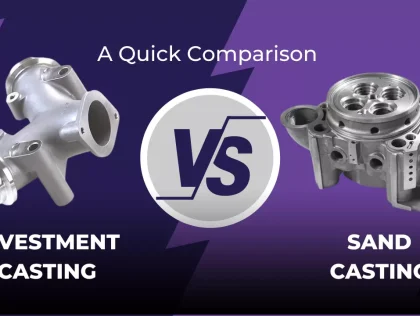
The secret to our high-grade surface finish lies in the mold material. Unlike sand casting, which uses coarse grains that leave a rough texture, we employ the Silica Sol Process. This involves dipping the wax pattern into a high-grade refractory slurry containing fine silica flour.
- Superior Surface Finish: The fine grain of the silica sol creates an incredibly smooth internal mold surface, allowing us to achieve as-cast finishes of Ra 3.2–6.3μm.
- High-Temperature Stability: The ceramic shell withstands the high pouring temperatures of stainless steel and alloy steel without deforming, ensuring the final part matches the design intent.
- Detail Reproduction: The liquid slurry flows into every crevice of the wax pattern, capturing intricate logos, text, and complex geometries with high fidelity.
Ensuring Wax Pattern Stability for Accuracy
A casting can only be as precise as the pattern used to create it. We treat the wax injection phase as a critical control point in our manufacturing process. By using high-quality wax and strictly controlling the injection temperature and pressure, we minimize shrinkage and distortion before the shell is even built.
This rigorous control over the wax pattern allows us to maintain dimensional tolerances between CT4 and CT6. For our clients, this means the parts you receive are consistent from the first batch to the thousandth, reducing the rejection rate and ensuring seamless assembly.
Eliminating Parting Lines and Flash
One of the distinct advantages of investment casting over die casting or sand casting is the reduction of mold artifacts. Because the ceramic shell is built as a continuous, single-piece mold around the wax pattern (which is melted out), there is no traditional “parting line” where two mold halves meet.
- Reduced Flash: While minor witness lines may exist from the wax die, they are significantly less prominent than the heavy flash found in forging or sand casting.
- Lower Finishing Costs: With less excess material to grind away, we reduce the labor required for secondary finishing operations.
- Net Shape Capability: The lack of draft angles and parting lines allows us to achieve Near-Net Shape Manufacturing, delivering a component that is ready for final machining or immediate use.
Top Advantages for High-Precision Parts

At MS Machining, we rely on investment casting when our clients need components that balance intricate detail with structural integrity. This process, often called lost wax casting, isn’t just about melting metal; it is a strategic manufacturing choice for achieving high-precision results without the exorbitant costs associated with machining complex features from solid blocks. Here is why this method stands out for precision engineering.
Achieving Near-Net Shape Manufacturing
The primary reason we recommend investment casting for complex projects is its ability to achieve Near-Net Shape. This means the cast part emerges from the mold with dimensions very close to the final specifications. By minimizing the excess material that needs to be removed, we significantly reduce material waste and machining time.
While we offer extensive CNC machining for metal parts to perfect final dimensions, starting with a near-net shape cast allows us to focus those secondary operations only on critical mating surfaces. This efficiency drives down the cost per unit, especially for alloys like stainless steel or heat-resistant steel that are difficult and expensive to machine in large volumes.
Superior Surface Finish and Roughness (Ra/RMS)
One of the immediate visual differences between investment casting and other methods, such as sand casting, is the surface quality. Because we use a fine ceramic slurry to create the mold, the final metal part retains an incredibly smooth surface finish.
- Standard Finish: We typically achieve a surface roughness of Ra 3.2–6.3μm right out of the mold.
- Reduced Finishing: This high-quality finish often eliminates the need for initial grinding or polishing steps.
- Aesthetic Appeal: For parts that remain visible or require plating, this smooth base is essential for a professional look.
Handling Complex Geometries and Thin-Wall Casting
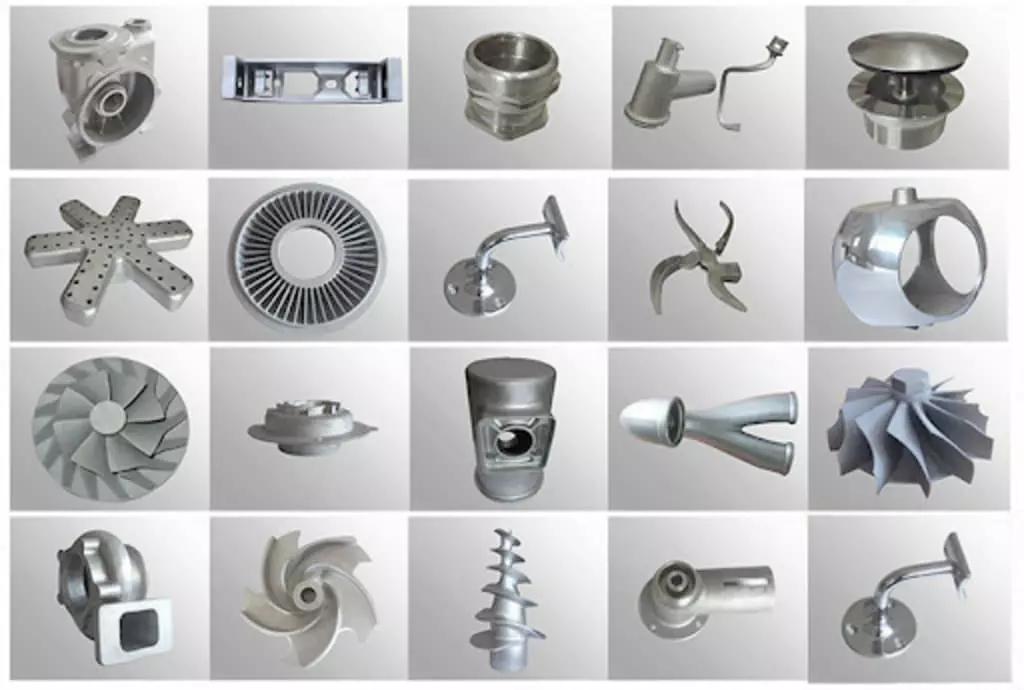
Machining undercuts, internal curved channels, or thin walls can be a nightmare for traditional subtractive manufacturing. Investment casting liberates the design process. Since the ceramic shell is formed around a wax pattern that is later melted away, we can produce complex geometries that would be impossible to machine directly.
This capability is vital for industries requiring lightweight components. We can successfully execute thin-wall casting, allowing for weight reduction without compromising the part’s rigidity. Whether it is intricate internal cooling passages or complex external contours, the liquid metal flows into every detail of the ceramic mold, capturing features that standard tooling simply cannot reach.
Meeting Tight Dimensional Tolerances
Precision is the cornerstone of our ISO 9001:2015 certified operations. Investment casting is renowned for holding tight dimensional tolerances, ensuring consistency across small-to-medium production batches.
- Linear Tolerances: We consistently maintain linear tolerances within the CT4–CT6 range.
- Repeatability: The use of precise metal molds to create the initial wax patterns ensures that every subsequent cast part is identical to the first.
By controlling the process from the wax injection to the final cooling, we ensure that the parts meet strict engineering requirements before they even reach the inspection stage. This level of accuracy makes investment casting the ideal solution for critical applications in automotive, marine, and machinery sectors.
Material Versatility and Alloy Options
One of the biggest reasons we champion investment casting at MS Machining is the sheer range of materials we can work with. Unlike other manufacturing methods that are limited by the hardness or machinability of the stock material, investment casting allows engineers to select the exact alloy needed for performance without worrying about tool wear or machining feasibility.
Casting Hard-to-Machine Metals like Stainless Steel
Machining hard metals from solid blocks is often expensive and time-consuming due to rapid tool degradation. Investment casting bypasses these issues completely. We can easily produce components using tough materials like stainless steel, heat-resistant steel, and carbon steel.
Since we form the part by pouring molten metal into a ceramic shell, the hardness of the alloy doesn’t hinder the production process. This is particularly useful when you are weighing material options, such as the differences in durability and application between brass vs stainless steel, allowing you to choose the stronger option without incurring excessive machining costs.
Common Alloys We Cast:
- Stainless Steel: Excellent corrosion resistance and strength.
- Carbon Steel: Cost-effective and durable for industrial machinery.
- Alloy Steel: Tailored mechanical properties for specific stress loads.
- Copper Alloys: Bronze and brass for marine and electrical applications.
Grain Structure and Structural Integrity for Aerospace
For industries where failure is not an option, such as aerospace and automotive, internal structural integrity is paramount. Investment casting produces parts with a fine, uniform grain structure. Because the part is cast as a single unit, there are no welding seams or mechanical joints that could act as stress concentrators or weak points.
This process ensures consistent mechanical properties throughout the component. We verify this integrity through rigorous quality control measures, including chemical analysis and tensile testing, ensuring every batch meets the strict safety standards required for high-performance applications.
| Feature | Investment Casting | Traditional Machining |
|---|---|---|
| Material Hardness | No limit (melts any alloy) | Limited by tool hardness |
| Material Waste | Low (Near-Net Shape) | High (Subtractive process) |
| Internal Structure | Uniform grain, no seams | Directional grain from stock |
| Design Freedom | High (complex alloys) | Moderate (machinability limits) |
Investment Casting vs. CNC Machining

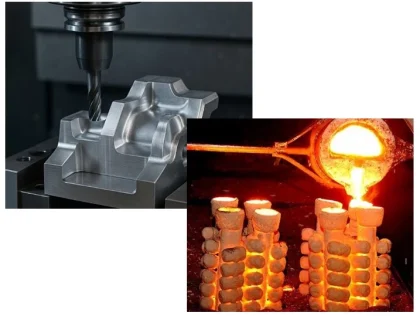
Choosing between investment casting and CNC precision parts often comes down to balancing design complexity with production volume. While CNC machining cuts away material to reveal the part, investment casting builds the part from the ground up. Understanding where each process excels helps us deliver the best cost-to-performance ratio for your project.
Comparing Volume and Complexity Matrices
We look at two main factors when advising clients: how many parts you need and how intricate they are.
- Low Volume / Simple Geometry: If you need a prototype or a small run of simple brackets, CNC precision machining is usually faster and cheaper because there are no tooling costs.
- High Volume / High Complexity: As volumes rise and designs get harder to machine (think internal channels or thin curved walls), investment casting becomes the clear winner.
Machining complex geometries from a solid block wastes a significant amount of expensive material as chips. Investment casting minimizes this waste by pouring metal only where it is needed.
| Feature | CNC Machining | Investment Casting |
|---|---|---|
| Material Waste | High (Subtractive) | Low (Near-Net Shape) |
| Tooling Cost | Low / None | Moderate |
| Unit Cost at Volume | Higher | Lower |
| Geometry Limits | Line-of-sight access required | High freedom (undercuts allowed) |
The Hybrid Approach: Casting Plus Secondary Machining
At MS Machining, we often find that the best solution isn’t one or the other—it’s both. We utilize a hybrid strategy where we cast the component to a Near-Net Shape and then perform secondary machining operations on critical features.
This approach allows us to maintain the high production speed of casting while ensuring specific mating surfaces or threaded holes meet extremely tight tolerances. For instance, complex compressor components often require the structural integrity provided by casting, followed by precision grinding or boring to ensure perfect assembly. This method drastically reduces machining time compared to cutting the entire part from solid stock, saving you money without sacrificing precision.
Quality Assurance and Inspection Standards
Precision isn’t just about the casting process; it’s about proving that every dimension and material property meets the spec. At MS Machining, we don’t leave accuracy to chance. We employ a rigorous quality control framework that verifies everything from the raw alloy composition to the final geometric tolerances.
ISO 9001:2015 and Process Control
Operating as an ISO 9001:2015 certified manufacturer means our entire workflow is standardized and traceable. We control every variable in the lost wax casting process to prevent common metal casting defects. Our process control includes:
- Chemical Analysis: We use spectrometers to verify the exact chemical composition of the molten metal before pouring, ensuring the material matches the required grade (like Stainless Steel 316 or Carbon Steel).
- Mechanical Testing: We perform tensile, yield, and hardness testing to guarantee the structural integrity of the final part.
- Visual Inspection: Every unit undergoes a visual check for surface finish quality and obvious flaws before moving to secondary operations.
CMM and X-Ray Inspection Methods
To validate dimensional tolerances and internal soundness, we rely on advanced metrology equipment. This is non-negotiable for high-stakes industries like aerospace or automotive where failure isn’t an option.
- Coordinate Measuring Machine (CMM): We use CMM technology to map the surface of the part against the original CAD design. This confirms that complex geometries and critical features—whether on large housings or precision shafts, rods, and mandrels—meet the strict CT4-CT6 tolerance standards.
- X-Ray and NDT: To see what the eye can’t, we utilize X-Ray and other Non-Destructive Testing (NDT) methods. This allows us to detect internal porosity, shrinkage, or cracks inside the casting walls without damaging the component.
- Surface Roughness Testing: We verify that the surface finish falls within the specified Ra 3.2–6.3μm range, ensuring the part is ready for use or prepared for final polishing.
Frequently Asked Questions (FAQs)
What are the standard tolerances for investment casting?
At MS Machining, our investment casting process typically achieves linear dimensional tolerances between CT4 and CT6. This level of precision allows us to produce components that are incredibly close to the final design requirements right out of the mold. While tighter tolerances are possible, they may require secondary operations. For most industrial applications, this standard range eliminates the need for extensive post-processing, saving both time and material costs.
How does the surface finish compare to sand casting?
The difference is night and day. Sand casting often leaves a rough, gritty texture that requires significant smoothing. In contrast, our silica sol process yields a much smoother surface finish, typically ranging from Ra 3.2 to 6.3μm. This superior surface roughness (Ra/RMS) means parts look professional immediately after casting and require far less polishing or plating preparation compared to traditional sand cast alternatives.
Is investment casting cost-effective for low-volume production?
Yes, it is highly adaptable. Unlike die casting, which requires expensive permanent tooling, the aluminum molds used for wax patterns in investment casting are relatively affordable. This makes it a viable option for small-to-medium batch sizes. However, for extremely low volumes or single prototypes where tooling costs might not be justified, our rapid CNC machining services can offer a faster and more economical alternative without the need for molds.
Can you cast internal cooling passages?
Absolutely. One of the biggest strengths of the lost wax casting process is the ability to handle complex geometries that are impossible to machine from a solid block. We can create intricate internal structures, including cooling passages and thin-wall casting features, by utilizing specialized ceramic cores. This design freedom allows engineers to optimize parts for weight and thermal performance without compromising structural integrity.