
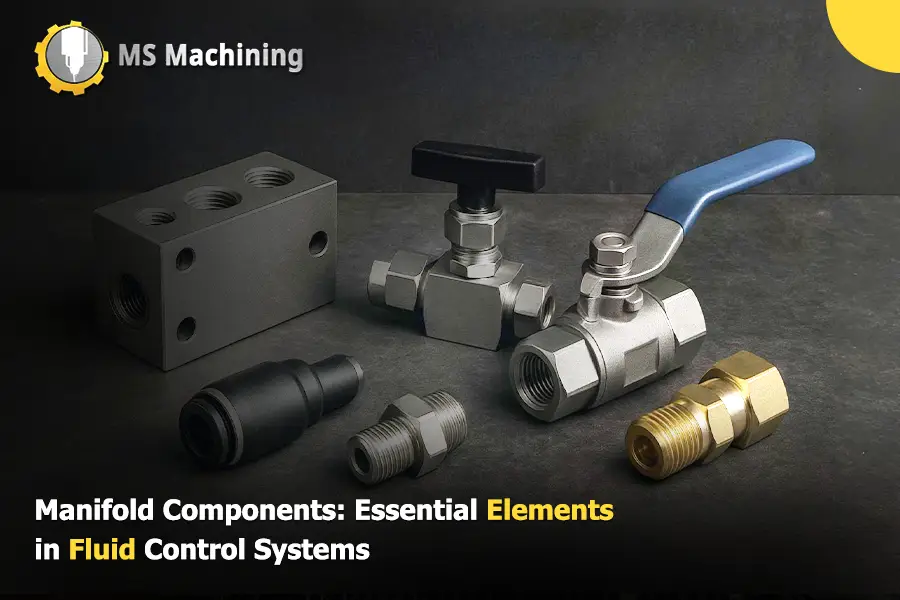
In fluid, pneumatic, and hydraulic control systems, manifold components are the quiet characters. These elements are essential for managing, guiding, and regulating the flow of liquids or gases through a system. From oil and gas and industrial automation to aerospace and automotive engineering, manifold components are essential building blocks that support systems’ safe, dependable, and effective operation.
This article will define manifold components, their types, uses, materials, and contributions to a system’s overall performance. We’ll also respond to frequently asked queries concerning them.
What are Manifold Components?
A manifold is a device that controls the flow of fluids or gases by joining several valves, pumps, or control elements into a single, small unit. The separate parts that comprise or are integrated with the manifold block are known as manifold components. These may include ports, sensors, gauges, plates, fittings, valves, and seals.
Manifold components provide the following purposes:
- Transfer gas or liquid from one location to several locations.
- Consolidate several gas or fluid lines into a single output.
- Regulate the direction, pressure, and flow rate.
- Provide safety cutoffs or isolation.
Make installation easier, minimize leaks, and maximize available space.
Essential Manifold Elements and Their Purposes
Below, I will describe the following explanation of essential manifold elements:

1. Valves
Valves are a key component of many systems. They regulate the fluid or gas’s pressure, flow velocity, and direction.They are following types:
- Verify the valves: To avoid backflow, only permit one flow direction.
- Relief Valves: To ensure system safety, release excess pressure.
- Solenoid valves: Electrically powered solenoid valves are used in automation.
- Shut-off Valves: Cut off the flow for emergencies or maintenance.
2. Fittings and Ports
Ports are the holes through which pipes, tubes, or external hoses are attached to the manifold. Fittings that guarantee a secure and leak-proof attachment include compression or threaded connectors.
3. Plates for mounting
Manifolds can be readily placed within a system with mounting plates or sub-plates, frequently utilizing industry-standard designs like ISO or CETOP.
4. Gaskets and Seals
These are essential for stopping leaks between valve bodies and manifold surfaces. Commonly utilized materials include bonded seals, gaskets, and O-rings.
5. Pressure gauges and flow sensors
These parts provide pressure and flow rate information throughout the manifold while monitoring real-time performance.
Manifold Types and Their Elements
Depending on the system and media being used, manifolds can be of several types. Each type uses particular parts appropriate for its function.
1. Hydraulic manifolds
used to control hydraulic oil flow to motors or cylinders in high-pressure systems. Directional valves, pilot-operated valves, and relief valves are among the parts.
2. Manifolds that are pneumatic
utilized in robotics and automation for air control. Solenoid valves, exhaust ports, silencers, and manual override buttons are among the parts.
3. Manifolds for Gas Distribution
used to disperse gasses in industry, chemical systems, and laboratories. Check valves, needle valves, shutdown valves, and pressure regulators are essential.
4. Manifolds for engines or fuel
found in engines that provide air or fuel in automobiles or airplanes. Injectors, sensors, and mounting brackets are examples of components.
Materials for a Variety of Components
Materials that can tolerate pressure, temperature, corrosion, and particular media (gas, fluid, or chemical) must be used to make manifold components.
Typical resources consist of:
- Aluminum: Often used in pneumatics, it is lightweight and corrosion-resistant.
- Stainless steel: Stainless steel is perfect for chemical, medicinal, and oil and gas applications because it is strong and corrosion-resistant.
- Brass: Excellent machinability and resistance to corrosion.
- Plastics (such as PVC and nylon): Used in fluid applications that are corrosive or lightweight.
The material selection impacts the manifold system’s longevity, cost, and performance.
Design Factors for Multiple Components
Engineers take into account the following while choosing or designing manifold components:
- System Pressure and Flow Requirements:The system pressure and flow requirements determine the kind and size of valves.
- Medium compatibility: Medium compatibility guarantees that materials and seals won’t corrode or deteriorate.
- Space Restrictions: Manifolds are frequently custom-machined in small systems to conserve space.
- Maintenance Ease: Parts must be simple to reach, swap out, or repair.
- Integration with Electronics: Electronic controllers or sensors are examples of components for innovative systems.
Benefits of Various Components and Systems
There are various advantages to using manifold components:
1. Compactness
A manifold system simplifies intricate piping layouts and saves important space by combining several flow pathways into a single unit.
2. Decreased Leak Locations
System reliability rises when there are fewer joints and connections, which reduces the possibility of leaks.
3. Quicker Assembling
Pre-integrated manifolds provide lower labor expenses and faster installation.
4. Better Upkeep and Appearance
It is simpler to diagnose and maintain a cleaner design.
5. Enhanced Productivity
Flow pathways that are optimized minimise energy losses from pressure drop and friction.
Applications of Manifold Component
Many different industries and applications use manifold components:
- Oil and Gas: Used to distribute gases or fluids in wellheads and drilling rigs.
- Aerospace: Fuel delivery, hydraulic systems, and flight control systems.
- Medical devices: Medical devices include dialysis equipment and oxygen or anaesthetic gas distribution systems.
- Automation in manufacturing: It includes robotic arms and pneumatic actuators.
- Automobile: distribution of braking fluid, intake/fuel manifolds.
- HVAC Systems: Control of heating and cooling fluids.
Maintenance and Troubleshooting
For the system to last a long time, manifold components must be regularly inspected and maintained.
Typical problems include:
- Leaks: Resulting from loose fittings or broken seals.
- Valve Failure: Wear or contamination is the cause of valve failure.
- Pressure Drop: A pressure drop indicates a clogged or incorrect flow channel.
- Sensor malfunctions: If improperly calibrated, they may produce erroneous readings.
To avoid problems:
- Conduct regular examinations.
- As necessary, replace the valves and seals.
- Periodically clean the internal channels.
- To avoid contamination, use filters.
Standard vs. Custom Manifold Components
Below, I will describe the following explanation:
Typical Manifolds
These come in standard sizes and configurations, are more affordable, and can be delivered more quickly. They are appropriate for simple systems.
Personalized Manifolds
- Custom manifolds, made for particular uses, enable:
- Combining distinctive elements.
- Streamlined flow routes.
- Unique layouts for footprints and porting.
Applications requiring high performance or limited space are best suited for custom solutions.
Innovations and Trends in the Industry
As Industry 4.0 and innovative systems gain traction, numerous components are also changing:
- Smart Valves and Sensors: Smart sensors and valves provide IoT integration and real-time monitoring.
- Additive Manufacturing: intricate interior geometries are possible with 3D-printed manifolds.
- Modular manifolds: Modular manifolds make it simple to expand or reconfigure.
Due to these tendencies, manifold systems are becoming more intelligent, flexible, and efficient.
FAQs
1. What function does a manifold serve in fluid systems?
A manifold makes it possible to combine several sources into a single output or transfer fluids or gasses from a single input source to several outputs. It makes the system layout simpler, minimizes leaks, and aids in efficiently controlling pressure and flow.
2. How do you pick the appropriate manifold parts for your setup?
The application, fluid or gas type, operating pressure and temperature, material compatibility, and whether manual or automated control is required all influence the best components. For complex systems, speaking with a manifold specialist or engineer is advised.
3. Is it possible to replace specific manifold components?
Indeed. The majority of manifold parts, such as fittings, valves, and seals, are interchangeable and modular. This eliminates the need to replace the entire manifold block, making maintenance simpler and more economical.
4. What indicators point to the necessity for the maintenance of manifold components?
Leaking fluid or air, pressure loss, irregular flow, or inaccurate sensor readings are typical indicators. Any unusual system activity should prompt inspection of the manifold components.
Conclusion
several systems in a wide range of industries depend on several components. They facilitate accurate control, guarantee adequate fluid or gas distribution, and enhance system dependability. Knowing and selecting the appropriate manifold components is essential whether you’re constructing a pneumatic setup for robotics or a hydraulic system for industrial gear.
Manifold systems’ capabilities are evolving along with technology, leading to more intelligent, compact, and effective solutions. Purchasing high-quality manifold components reduces maintenance expenses and downtime and increases performance.
Unlock Precision with MS-Machining: Your Go-To CNC machining Experts!
If you require standard or custom manifold components for your project or facility, seek advice from a skilled machining service or fluid control specialist for best results. Looking for high-quality CNC machining services? MS Machining delivers precision, reliability, and efficiency for all your manufacturing needs.
Contact us now to discuss your needs and get started!