Understanding 5-Axis CNC Fundamentals
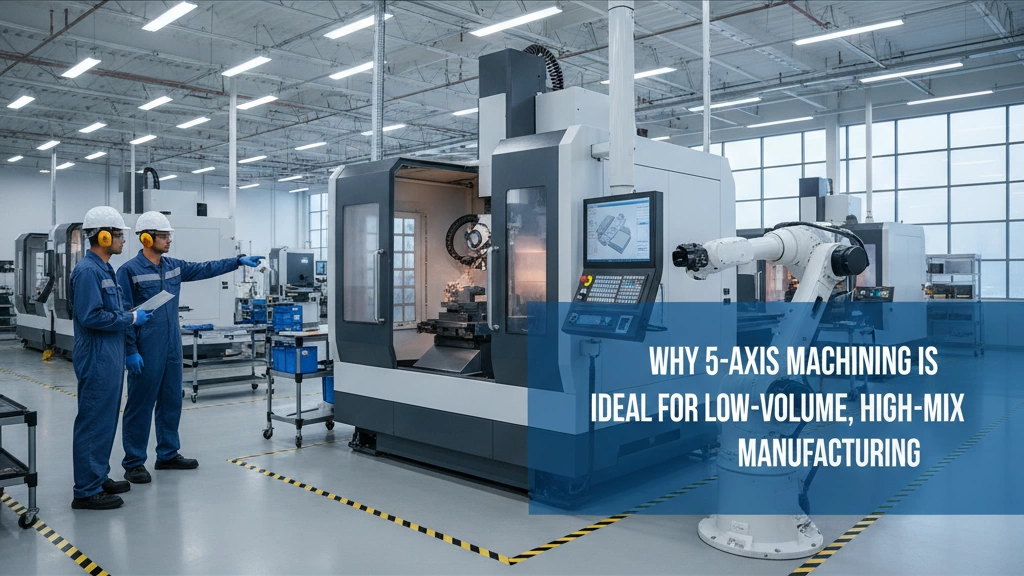
5-axis CNC machining refers to the ability of a machine to move a cutting tool or a part along five different axes simultaneously. Unlike traditional 3-axis CNC machines that move in X, Y, and Z directions, a 5-axis CNC can also rotate on two additional axes—typically labeled A and B or A and C—allowing the tool to approach the workpiece from virtually any angle. This simultaneous 5-axis motion enables more complex part geometries to be machined in a single setup.
The key configurations include:
- Head and table rotation: The spindle (tool head) tilts and rotates while the table holding the part moves linearly.
- Tilt and swivel axes: These give the cutter the ability to maintain optimal angles for cutting difficult surfaces or contours.
- Continuous 5-axis operation: The tool moves smoothly and constantly adjusts position, making intricate shapes and fine details achievable with better precision.
This flexibility is crucial when tackling complex parts that would otherwise require multiple setups or special fixtures. Understanding these fundamentals sets the stage for appreciating why 5-axis machining excels in low-volume, high-mix manufacturing, where maximizing accuracy and reducing setup time is essential.
Core Challenges in Low-Volume, High-Mix Production
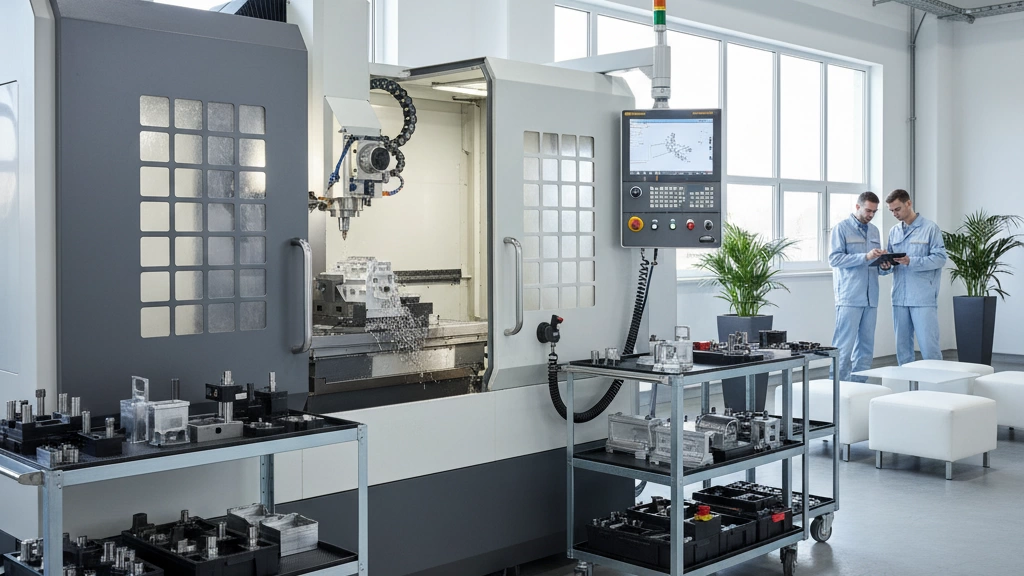
Low-volume, high-mix manufacturing brings some real headaches that 5-axis CNC benefits can help solve. First off, part variety means you’re constantly switching setups for different shapes and sizes. This slows down your workflow and drives up labour costs.
Then there’s tolerance stacking. When producing complex geometry parts in small batches, tiny errors can pile up, making it tough to keep parts within strict precision tolerances. This often leads to more scrap or rework, which isn’t ideal when you’re trying to keep costs down.
Speaking of costs, the overall cost per part can skyrocket because traditional machines need multiple fixtures and setups for each variant. Plus, inefficient machine use and longer cycle times hurt your bottom line.
In short, juggling many product types without bumping up costs or sacrificing quality is tough—and it’s exactly where 5-axis machining shines.
Advantage 1 – Drastic Reduction in Setup Time
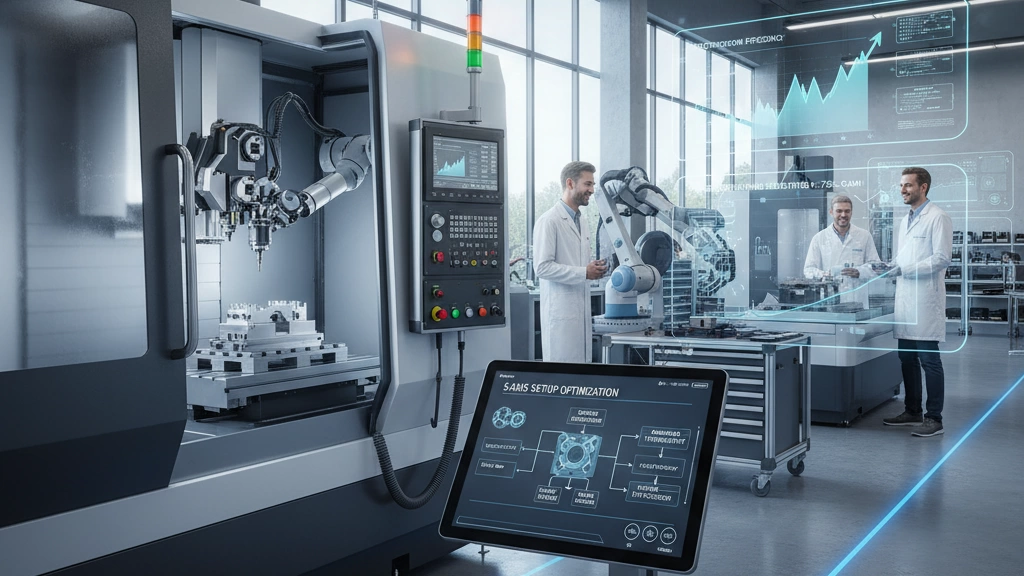
One of the biggest benefits of 5 axis machining for low-volume, high-mix manufacturing is the drastic reduction in setup time. Unlike traditional machines that require multiple setups to reach different angles, a 5-axis CNC lets you machine complex geometry parts in a single setup. This means fewer manual interventions and quicker transitions between operations.
By keeping the part fixed and moving the tool around it, you avoid constant re-fixturing. This not only speeds up production but also reduces errors from repositioning. In real-world cases, manufacturers have seen setup times cut by up to 70%, directly impacting lead time and cost per part.
Key setup time savings include:
- Single setup for complex angles and surfaces
- Fewer fixture changes and repositioning steps
- Streamlined workflow with simultaneous 5-axis motion
- Faster turnarounds in high-mix environments
For local workshops and job shops, this means you can handle diverse parts more efficiently without the downtime lost in setups. It makes 5-axis machining a real game-changer when working with short runs or prototypes where speed and flexibility are critical.
Advantage 2 – Enhanced Part Accuracy and Surface Finish
One big reason 5 axis machining is ideal for low-volume, high-mix manufacturing is its ability to deliver better part accuracy and surface finish. Thanks to simultaneous 5-axis motion, the cutting tool can maintain a perfect angle throughout the entire operation. This means continuous contouring without stopping or repositioning the part, which limits errors and improves surface quality.
Maintaining precision tolerances is easier because the machine approaches complex geometry parts from multiple angles in a single setup. This reduces tolerance stacking — the cumulative error that happens when parts are moved or re-fixtured. The result? More consistent dimensions and tighter fits, which is critical in industries like aerospace and medical device prototyping where every micron counts.
In short, 5-axis CNC benefits include smoother finishes and higher accuracy, which reduce the need for secondary operations like polishing or rework. This not only saves time and cost but also makes your production more reliable and repeatable.
Advantage 3 – Superior Material Utilization and Waste Reduction
One big plus of 5-axis machining in low-volume, high-mix setups is how it makes the most of your raw materials. Thanks to nested toolpaths, the machine can position parts closer together on the stock, cutting down the amount of scrap generated. This not only saves on material costs but also reduces waste—something increasingly important for local manufacturers aiming to stay sustainable.
With simultaneous 5-axis motion, complex parts can be machined in a way that avoids unnecessary cuts and overlaps, improving overall efficiency. Better toolpath optimization means less machine time per part and less leftover material that often ends up discarded.
By using 5-axis CNC benefits to tighten nesting and minimize cutting area, manufacturers see significant improvements in material yield. This aligns well with the growing demand for eco-friendly processes while keeping costs under control in a high-mix, low-volume environment.
Advantage 4 – Scalability Across Batch Sizes Without Re-Fixturing
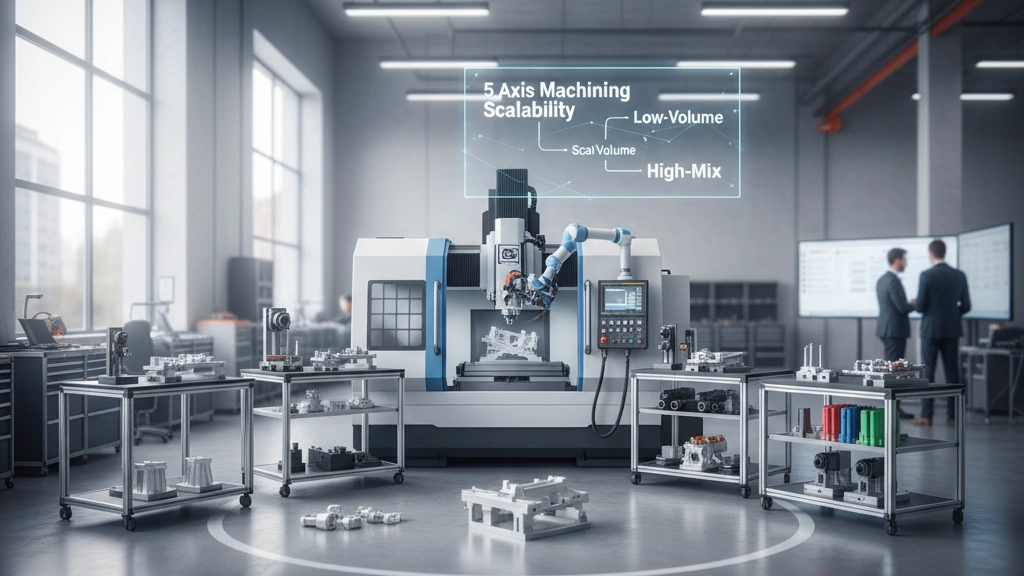
One of the best benefits of 5 axis CNC machining for low-volume, high-mix manufacturing is its ability to handle different batch sizes without the need to re-fixture parts every time. Thanks to parametric programming, you can easily adjust toolpaths and processes to fit varying part designs and quantities without starting from scratch. This means faster changeovers and less downtime between runs.
Plus, many 5 axis machines come equipped with pallet changers. These allow you to load multiple fixtures or parts at once and swap them automatically. This keeps your spindle turning longer and eliminates manual re-fixturing between jobs. For shops juggling short runs of different parts, these features improve throughput and reduce labor costs significantly.
Key points:
- Parametric programming streamlines adjustments for different parts
- Pallet changers enable hands-off swapping of fixtures/parts
- No need to stop and re-fixture every batch
- Supports smooth transitions between low and medium volume production
- Maximizes machine uptime and efficiency
This scalability makes 5 axis machining a practical, flexible choice for shops that serve customers with changing demands and batch sizes, helping keep costs down while staying agile.
Advantage 5 – Cost Justification and ROI Breakdown
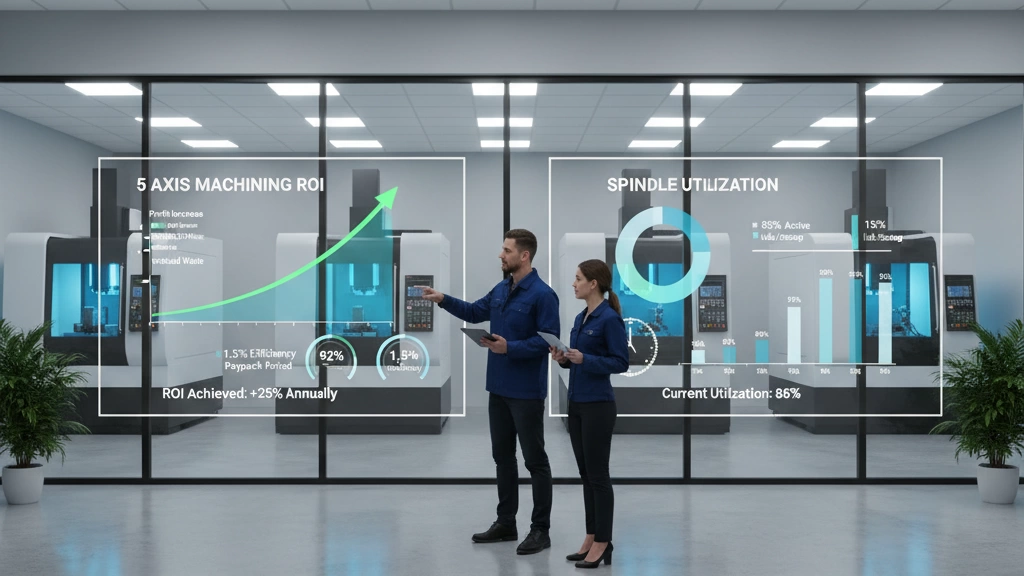
Investing in a 5 axis CNC machine might seem big upfront, especially for low-volume, high-mix businesses. But when you look closer, the cost makes solid sense thanks to higher spindle utilization and quicker payback periods.
Here’s why:
- Better spindle utilization means the machine spends more time cutting and less on setups or manual handling. This boosts overall productivity without needing extra shifts.
- Single-setup manufacturing cuts down on changeovers, which lowers labor costs and speeds up delivery. That directly impacts your cost per part in a positive way.
- With toolpath optimization, you get efficient machining strategies that reduce cycle times and tool wear — saving money over the long run.
- Even with smaller batches, parametric programming and flexible fixturing mean you don’t waste time retooling, which keeps overhead low.
- From a financial standpoint, the initial cost is typically recovered through these gains within a shorter period, often 12-18 months, depending on your production mix. This gives a solid ROI on your 5-axis investment.
In simple terms, 5-axis machining isn’t just about precision—it also makes sense economically, especially when handling diverse parts in small volumes. It keeps your costs down while making your shop more efficient and competitive.
Industry-Specific Success Stories: Aerospace, Medical, Automotive
When it comes to 5-axis CNC benefits in low-volume, high-mix production, real-world results speak volumes. In aerospace, for example, manufacturers have slashed setup times by up to 60%, thanks to single-setup manufacturing of complex geometry parts. This leads to higher precision tolerances, critical for safety and performance, without ballooning costs.
Medical device prototyping also shines with 5-axis machining. The ability to handle precision geometries and fixtureless machining means devices meet tight specs faster. Clinics and labs report better turnaround times and less waste—key for sensitive, low-volume batches.
Automotive suppliers benefit, too. With high product variety and tight cost per part analysis, 5-axis setups improve toolpath optimization and CAM programming efficiency across diverse components. Pallet changers and parametric programming let them scale production without re-fixturing, keeping costs predictable.
Across these industries, the ROI 5-axis investment is clear: improved part accuracy, reduced material waste, and faster time-to-market make these machines a practical choice for low-volume, high-mix demands.
Overcoming Common Adoption Barriers
Switching to 5-axis CNC machining isn’t always smooth sailing, especially for shops used to traditional 3-axis setups. The main hurdles usually come down to training, software complexity, and maintenance demands.
Training Challenges
Getting operators and programmers up to speed is critical. Five-axis machining involves simultaneous 5-axis movements and more complex setups than single-axis machines. Investing time in hands-on training and real-world practice improves CAM programming efficiency and helps avoid costly errors. Many local training programs now focus specifically on 5-axis CNC benefits, making it easier to build skilled teams.
Software Complexity
Advanced CAM software is needed to manage nested toolpaths and generate precise 5-axis toolpaths. This can feel overwhelming without previous experience. Choosing user-friendly, industry-standard CAM packages designed for high-mix production helps reduce the learning curve. Intuitive software improves fixtureless machining and setup time reduction, making the investment worthwhile.
Maintenance and Support
5-axis machines have more moving parts and require precise calibration, increasing maintenance needs compared to simpler machines. Finding local support with expertise in 5-axis CNC machines ensures less downtime. Regular maintenance schedules and remote diagnostics also help keep machines running smoothly.
By addressing these common barriers—solid training, accessible software, and robust maintenance—you can fully leverage 5-axis machining’s advantages in low-volume, high-mix production, boosting productivity without adding headaches.
Future-Proofing with Hybrid and Automation Add-Ons
To stay competitive in low-volume, high-mix manufacturing, integrating hybrid and automation add-ons with your 5-axis CNC machine is key. Robotics can automate part loading and unloading, boosting spindle utilization and cutting downtime. This means more parts made faster, with less manual handling.
Additive manufacturing—like metal 3D printing—when combined with 5-axis milling, lets you create complex parts that were once impossible or costly to produce. It opens doors to innovative designs, reduces material waste, and speeds up prototyping, especially in industries like aerospace and medical device manufacturing.
Industry 4.0 integration brings smart factories to life. By linking your 5-axis CNC machine with IoT sensors and real-time data analytics, you get better insight into machine health, tool wear, and process efficiency. This helps avoid unexpected breakdowns and improves overall productivity.
Key benefits of future-proofing with hybrid and automation:
- Robotics: Faster, reliable loading/unloading, higher spindle uptime
- Additive manufacturing: Complex geometries and faster prototyping
- Industry 4.0: Predictive maintenance and process optimization
Investing in these technologies ensures your 5 axis CNC setup evolves with industry trends, maximizing ROI and keeping your shop ready for tomorrow’s manufacturing challenges.