
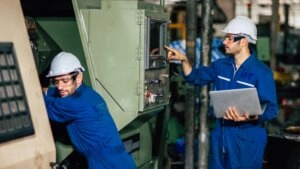
Before CNC: The Predecessors (Pre-1940s)
Before CNC machining became a reality, the idea of automating machine control had long been brewing. As far back as the 1790s, devices like the Jacquard loom laid the groundwork by using punched cards to control weaving patterns automatically. This early numerical control concept allowed intricate textile designs without manual intervention.
Moving into the late 1800s and early 1900s, similar principles appeared in player pianos and music boxes, where mechanical instructions directed their operation. These inventions hinted at a future where machines could follow precise, pre-set commands.
By the 1940s, World War II dramatically accelerated demand for complex, precise parts—especially in aviation. Aircraft manufacturing needed production methods capable of repeatability and tight tolerances that human operators alone couldn’t consistently deliver. This urgent need set the stage for developing numerical control equipment that would eventually evolve into modern CNC machining.
1947–1952 — Birth of Numerical Control (NC)
The real breakthrough for CNC machining started in the late 1940s when John T. Parsons and Frank Stulen came up with the idea of controlling machine tools using numerical data. This concept meant that machines could be programmed to cut parts precisely without manual operation. In 1949, the U.S. Air Force recognized the potential and funded the MIT Servomechanisms Laboratory to develop this technology. By 1952, the team at MIT successfully demonstrated the first working numerical control (NC) system by retrofitting a Cincinnati Hydro-Tel vertical milling machine. This milestone proved that automated, data-driven machining was possible, setting the stage for the future of advanced manufacturing.
This early innovation laid the groundwork for the sophisticated metal CNC machining services we rely on today.
1955–1959 — The First Production NC Machines
Between 1955 and 1959, the first commercial numerical control (NC) machines started to appear, produced by companies like Bendix and Kearney & Trecker. These early machines primarily relied on punched cards and paper tape to input machining instructions. Around this time, the APT (Automatically Programmed Tools) language was developed. APT was a groundbreaking step because it laid the foundation for the G-code used in modern CNC machining.
This period marked a significant jump from experimental setups to practical manufacturing tools, enabling more precise and repeatable machining processes. The introduction of APT programming helped streamline complex tool paths, making the production of intricate components more efficient. For precision work today, many industries still depend on advanced CNC machining services, such as those offered by companies specializing in complex component CNC milling and high-quality carbon steel CNC machined components.
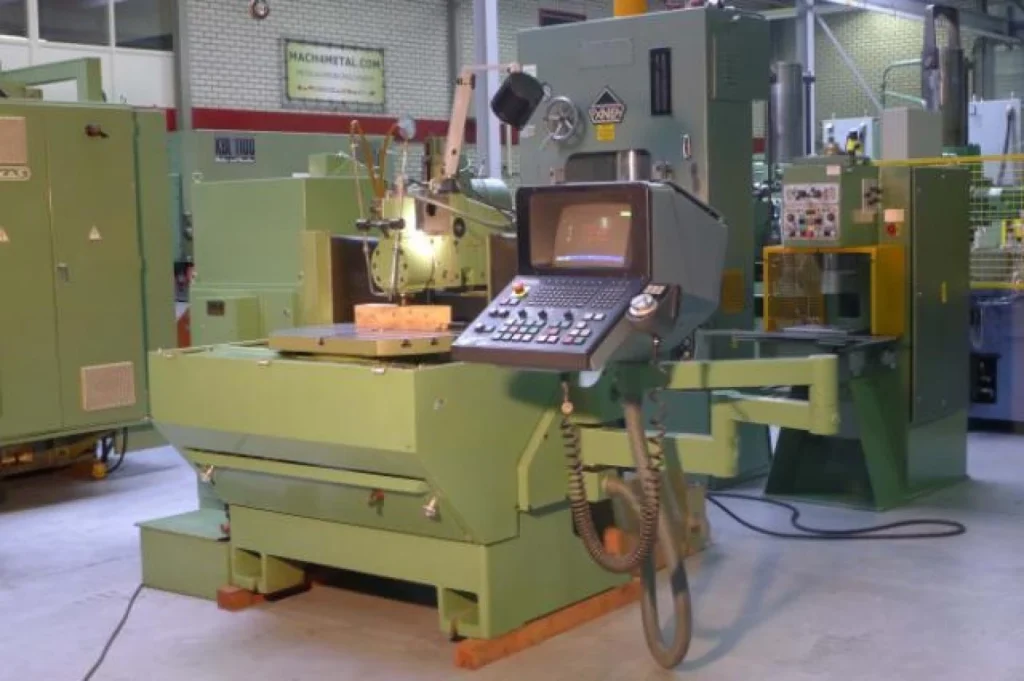
During the 1960s, numerical control (NC) machines began evolving significantly with the transition from bulky vacuum tubes to more reliable and efficient transistors. This shift made the electronics smaller, faster, and less prone to failure. It also paved the way for direct computer control experiments, where machines were controlled by computers in real time—bypassing the earlier reliance on punched tape or paper cards as intermediaries.
These early experiments laid the groundwork for what would become true computer numerical control (CNC), improving both accuracy and speed in machining processes. This was a key step toward automating complex tool movements more efficiently and set the stage for the commercial CNC systems that appeared in the 1970s.
For those interested in how modern CNC techniques have evolved from these early days, MS Machining offers advanced 5-axis solutions built on this legacy of innovation. Learn more about our motion linkage hardware and how precision control drives today’s machining capabilities.
1970–1976 — The True Birth of CNC (Computer Numerical Control)

The 1970s marked the true birth of CNC machining, driven by major advances in electronics. In 1970, the introduction of the first microprocessors made computers smaller, more affordable, and practical for industrial use. This leap enabled the move from basic numerical control (NC) systems relying on punched tape to fully computerized CNC controllers.
Between 1972 and 1974, pioneering companies like Fujitsu Fanuc, Siemens, and Allen-Bradley launched the first commercial CNC controllers. These systems allowed for far greater flexibility, precision, and automation in machine operation.
The watershed moment came in 1976 when Fanuc released their Model 2000C controller. This system is widely recognized as the first modern CNC machine, combining reliable microprocessor-based control with user-friendly software. It laid the foundation for today’s advanced CNC technology, revolutionizing manufacturing processes across the United States and worldwide.
For businesses looking to maximize efficiency, modern CNC machines have evolved substantially since these early breakthroughs — especially in industries where precision machining of materials like stainless steel is critical. You can explore how advanced stainless steel CNC machining services meet today’s tight tolerances and complex designs.
1980s–1990s — CNC Becomes Mainstream
During the 1980s and 1990s, CNC machining made a big leap into everyday manufacturing. This era saw the widespread integration of CAD/CAM (computer-aided design and computer-aided manufacturing), which allowed engineers to design parts digitally and generate precise CNC toolpaths automatically. The advent of affordable personal computers brought CNC control directly into many workshops, making programming and machine operation more accessible and efficient.
Another key advancement was the development and adoption of multi-axis machines, including 4-axis and 5-axis CNC mills. These machines could move tools or parts on multiple planes, greatly expanding the range of complex shapes and angles that could be machined in a single setup. The improvements during this period helped reduce lead times and boosted precision, transforming industries like aerospace, automotive, and medical device manufacturing.
For more on how modern processes build on these foundations, see our guide on precision in manufacturing.
2000s–2020s — The Modern CNC Era
Since the 2000s, CNC machining has advanced dramatically with the rise of high-speed machining and the integration of Industry 4.0 technologies. Modern CNC systems now leverage the Internet of Things (IoT) and adaptive control to enhance precision, reduce downtime, and optimize production flow. Hybrid manufacturing, which combines traditional CNC machining with additive processes like 3D printing, has opened new doors for complex parts and faster prototyping.
By 2026, AI-assisted toolpath optimization and digital twins are transforming how manufacturers plan and execute machining jobs. These technologies allow real-time simulation and adjustment, pushing productivity and accuracy to levels previously thought impossible. For businesses in the U.S. looking to stay competitive, leveraging these advanced CNC capabilities is essential.
To see how this evolution translates into real-world precision and performance, explore best custom CNC machining parts manufacturing that utilize cutting-edge CNC tech for top-tier results.
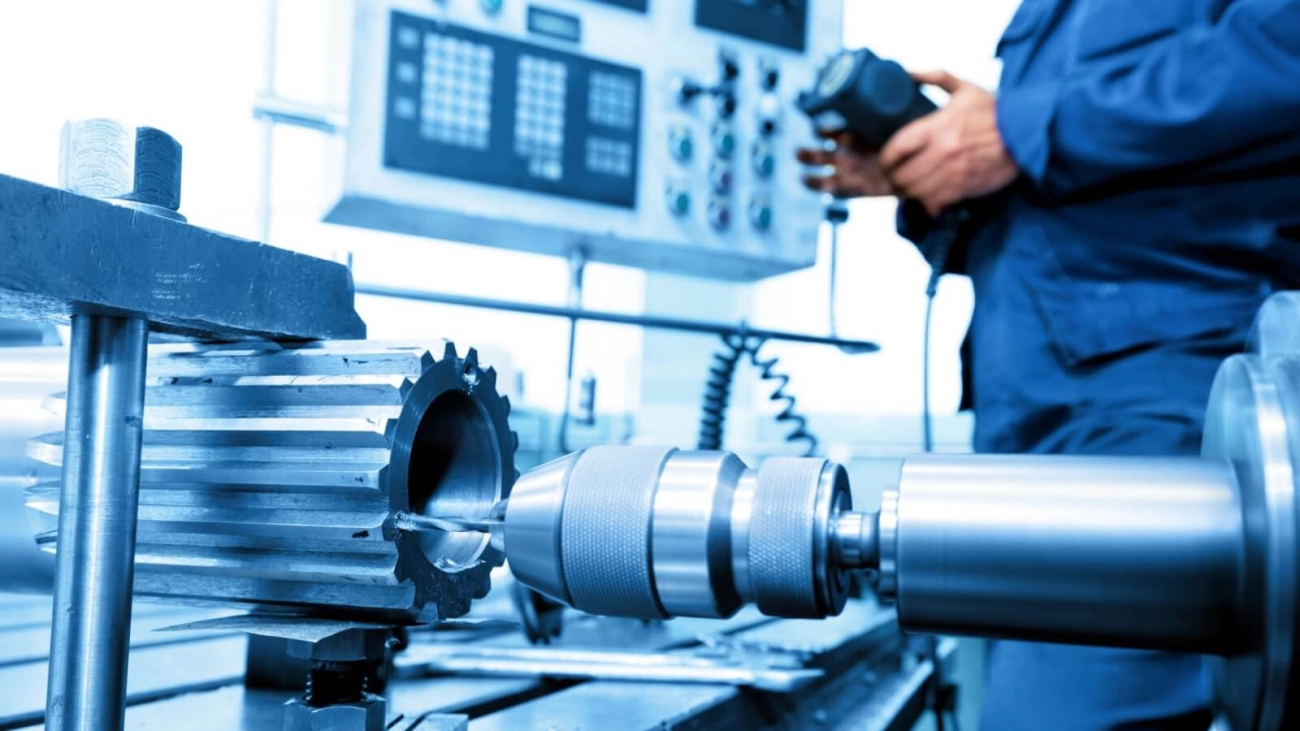
Timeline of CNC Machining
| Year | Milestone | Key Player(s) |
|---|---|---|
| 1949 | Idea of Numerical Control (NC) born | John T. Parsons |
| 1952 | First working NC milling machine demo | MIT Servomechanisms Laboratory |
| 1959 | First commercial NC machines launch | Various U.S. manufacturers |
| 1970–1976 | First true Computer Numerical Control (CNC) systems | Fanuc, Siemens |
| 1980s | Explosion of CAD/CAM integration | – |
| 1990s | 5-axis CNC machines become standard | – |
| 2020s | AI-assisted machining and smart factories emerge | – |
This timeline sums up the key milestones in the history of CNC machining, from its earliest concept in 1949 to the advanced smart factories of the 2020s. For those interested in the latest CNC technology, including multi-axis capabilities, check out our detailed overview of 5-axis CNC milling machines that highlight how far CNC systems have come since their inception.
Who Really Invented the CNC Machine?
The invention of CNC machining wasn’t a one-person job—it’s the result of several key players over the years. John T. Parsons is often credited with the initial concept, as he pushed the idea of using numerical data to control machine tools in the late 1940s. His work, combined with Frank Stulen’s efforts, laid the groundwork for what would become numerical control.
Next up was MIT’s Servomechanisms Laboratory, funded by the U.S. Air Force, which took Parsons’ concept and made it real. In 1952, MIT successfully demonstrated the first workable NC machine, proving the concept was practical and ready for industrial use.
Finally, the commercial development and widespread adoption of CNC came through companies like Fanuc and Siemens in the 1970s. They advanced the technology from basic numerical control into the reliable, computer-driven CNC systems we use today.
For those interested in how the evolution from basic NC to full CNC systems impacted precision machining, check out our detailed look at CNC milling machines.
How CNC Revolutionized Manufacturing
CNC machining transformed manufacturing by cutting the time needed for complex parts from weeks down to just hours. This leap in speed means products can reach market faster and meet tight deadlines with ease. Beyond speed, CNC machines deliver unmatched repeatability—each part is made exactly the same, every time, which drastically reduces scrap and wasted materials. Plus, with 24/7 lights-out machining, factories can run unattended overnight, boosting productivity without adding labor costs. This combination of precision, efficiency, and continuous operation has reshaped how industries approach metal part manufacturing, especially for high-demand sectors looking for fast turnaround on precision parts like those in aerospace and automotive. For example, modern shops specializing in aluminum CNC machining parts rely heavily on these advantages to stay competitive.
CNC Machining in 2026 — Where MS Machining Fits In
Today, CNC machining is at the cutting edge of manufacturing, and MS Machining stays right at the forefront. Using the latest 5-axis and Swiss-type CNC technology, we deliver unmatched precision and complexity for industries ranging from aerospace to medical devices. This commitment to high-quality machining builds directly on a legacy that began over 70 years ago with the first numerical control innovations.
By integrating advanced multi-axis machines with modern CAD/CAM workflows, MS Machining ensures tighter tolerances, faster turnaround times, and lower scrap rates. Our focus on precision machining services combines decades of CNC evolution with the newest digital controls and programming, helping U.S. manufacturers remain competitive in a fast-changing market.
Whether you’re looking for intricate parts made with exacting detail or high-volume runs with consistent quality, MS Machining offers expert craftsmanship backed by state-of-the-art CNC capability. Explore how our precision CNC machining services can bring your toughest projects to life efficiently and reliably. For advanced needs, our 5-axis CNC machining services deliver the complex geometries today’s products demand.