
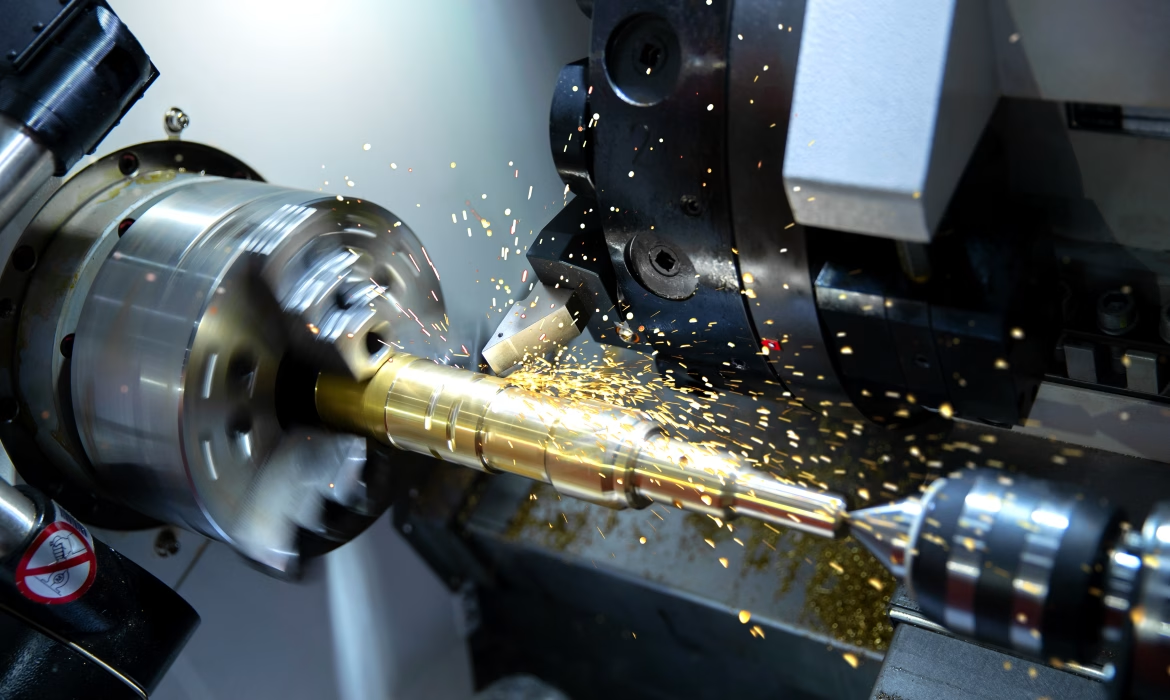
If you’ve ever wondered what a CNC lathe is and why it’s transforming modern manufacturing, you’re in the right place. Simply put, a CNC lathe (Computer Numerical Control lathe) is an automated machine that spins a workpiece while precisely shaping it with cutting tools—following digital instructions with unmatched accuracy and speed. In today’s fast-paced industry, where precision and efficiency define success, knowing how a CNC lathe works can unlock huge advantages—from slashing production times to machining complex parts flawlessly. At MS Machining, we’ve built custom CNC lathes for over 15 years and seen firsthand how these machines become game-changers for shops of every size. Ready to dive into the essentials of CNC turning and why it matters in 2025? Let’s get started.
CNC Lathe vs Manual Lathe – Key Differences
Understanding the difference between a CNC lathe and a manual lathe is vital for any shop deciding which machine fits their needs. Both serve the purpose of shaping rotating workpieces, but their operation, precision, and costs vary significantly.
| Feature | Manual Lathe | CNC Lathe |
|---|---|---|
| Accuracy | Moderate (depends on operator skill) | High (sub-micron repeatability) |
| Speed | Slower, limited by operator | Faster, optimized cycle times |
| Repeatability | Low to moderate | Consistent part-to-part uniformity |
| Operator Skill | Requires skilled machinist | Requires CNC programming & setup expertise |
| Cost | Lower initial investment | Higher upfront cost, lower long-term labor costs |
When Manual Lathes Still Win
- Small batch jobs or prototypes with frequent design changes.
- Shops with lower budgets and experienced operators.
- Simple parts with basic geometry where automation isn’t justified.
When CNC Lathes Dominate
- High-volume production requiring consistent quality.
- Complex parts needing multi-axis capabilities and tight tolerances.
- Situations where reducing labor cost and turnaround time is critical.
Choosing between a manual lathe and a CNC lathe should be based on your production needs, budget, and part complexity. For many small shops, the CNC lathe’s precision and efficiency offer a decisive edge in today’s competitive market.
How a CNC Lathe Actually Works (Step-by-Step)

A CNC lathe starts its job digitally with a design created in CAD (Computer-Aided Design) software. This design is then turned into a machining program using CAM (Computer-Aided Manufacturing) software, which generates the G-code—the instructions the machine reads to perform precise cuts.
Next, the workpiece is securely loaded onto the machine using a chuck, collet, or fixture, depending on the shape and size of the part. The tool turret, usually holding 8 to 24 tools, indexes to bring the right cutting tool into position for each operation.
Movement happens along several axes:
- X-axis: Controls the tool’s in-and-out motion on the diameter
- Z-axis: Moves the tool in and out along the length of the workpiece
- C-axis: Allows spindle rotation control for advanced threading or milling
- In some machines, Y and B axes offer additional tool movement for complex parts.
The cutting process involves a range of operations like turning (removing outer layers), facing (smoothing the end), boring (enlarging holes), threading, grooving, and parting off finished pieces.
Throughout machining, coolant is applied to reduce heat and extend tool life, while chip management systems clear away metal shavings to prevent damage or machine jams.
Understanding these steps is key to using CNC lathes efficiently and producing high-quality components. If you’re interested in seeing precision parts made this way, explore our precision CNC machining services for real-life examples.
Main Components of a Modern CNC Lathe
Understanding the main components of a modern CNC lathe is key to grasping how this machine delivers precision and efficiency. Here’s a quick breakdown:
- Machine Bed & Headstock: The machine bed provides a stable base for the entire lathe. The headstock houses the spindle, which spins the workpiece during machining.
- Spindle & Chuck: The spindle is the rotating axis, while the chuck grips the workpiece securely. Different chuck types (3-jaw, 4-jaw, collet) adapt to various shapes and sizes.
- Tool Turret (8–24 stations): This is a rotating tool holder that indexes multiple cutting tools, enabling fast tool changes and complex operations without stopping the machine.
- Tailstock & Steady Rest: The tailstock supports longer workpieces during machining, while the steady rest stabilizes thin or flexible parts to prevent deflection.
- CNC Controller: The brain of the lathe—brands like Fanuc, Siemens, Mitsubishi, and GSK are industry leaders. The controller runs the programs, controls axis movements, and ensures precise machining.
- Linear Guides & Ball Screws: These components ensure smooth and accurate linear movement of axes, critical for precision and repeatability.
- Automatic Bar Feeder & Parts Catcher: For high-volume production, these automate loading raw bars into the chuck and collecting finished parts, boosting efficiency and reducing manual labor.
These components work together seamlessly, enabling CNC turning centers to produce complex parts with high precision and reliability. For specialized materials, such as bronze or aluminum, paired CNC machining services can enhance part quality and durability—check out examples of custom CNC machining bronze services or aluminum CNC machining to see how material expertise complements CNC lathe capabilities.
Types of CNC Lathes You Should Know
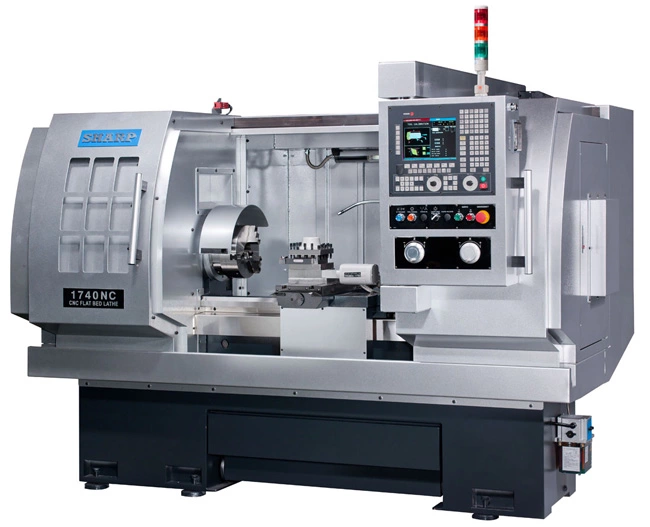
When choosing a CNC lathe, it’s important to understand the different types available, as each serves specific machining needs.
- 2-Axis Standard Turning Center: This is the most common and basic type of CNC lathe. It moves primarily along the X and Z axes, handling typical turning tasks like facing and threading efficiently.
- Slant-Bed vs Flat-Bed:
- Slant-bed lathes have the bed angled, improving chip flow and allowing for better gravity-assisted coolant drainage. They’re great for high-speed, high-volume production.
- Flat-bed lathes have a horizontal bed and are usually simpler and easier to maintain but may not handle heavy cuts as well.
- Multi-Axis CNC Lathes: These advanced lathes add more movement capabilities, including:
- Live tooling (rotating tools for milling and drilling right on the lathe)
- Y-axis movement for off-center cutting
- Sub-spindle to work on both ends of a part without manual repositioning
- Swiss-Type CNC Lathe: Designed for producing small, precise, long parts like medical components or electronic connectors. The workpiece is fed through a guide bushing for extremely tight tolerances.
- Vertical Turning Lathe (VTL): Here, the workpiece spins on a vertical axis, ideal for large, heavy parts like turbine casings or large automotive components. Gravity helps with chip removal and stability.
Choosing the right CNC lathe type depends largely on your production volume, part size, and complexity. For detailed machining of complex parts, multi-axis or Swiss-type lathes often outperform basic 2-axis machines.
For more on precision machining capabilities, check out our insights on CNC precision machining.
Common Industries and Parts Made on CNC Lathes
CNC lathes are essential in industries that demand precision, durability, and complex geometries. Here’s where they shine:
- Aerospace: Making turbine shafts, landing gear components, and other critical parts that require tight tolerances and high reliability.
- Automotive: Producing crankshafts, camshafts, wheel hubs, and other engine and drivetrain parts with consistent quality.
- Medical: Crafting implants, surgical instruments, and devices where accuracy and biocompatibility are crucial.
- Oil & Gas: Manufacturing valve bodies, connectors, and other components that must withstand harsh environments.
- Firearms & Defense: Machining barrels, triggers, and other precision parts where performance and safety are vital.
At MS Machining, we handle a wide variety of these applications, delivering parts that meet exacting standards for both prototype and high-volume production. To see how precise machining combines with advanced processes, you might also find our precision CNC milling services useful for complementary manufacturing needs.
Top Advantages of Using a CNC Lathe
CNC lathes bring a host of benefits that make them a standout choice for modern shops. Here’s why they’re worth the investment:
- 24/7 Unmanned Operation: CNC lathes can run around the clock without needing constant human attention. This means you can maximize productivity, especially for high-volume jobs.
- Sub-Micron Precision & Repeatability: These machines deliver extremely tight tolerances consistently. You get the same perfect part every time, which is crucial for industries like aerospace and medical.
- Reduced Scrap & Labor Costs: Automated programming and cutting mean less material waste and fewer errors. Plus, you need fewer operators, lowering your labor expenses.
- Complex Geometry in One Setup: CNC lathes can handle turning, threading, grooving, and parting all in a single setup. This cuts down on handling time, improving lead times and quality.
- Easy Scaling from Prototype to Mass Production: Whether you’re creating a single prototype or ramping up to large production runs, CNC lathes let you scale smoothly without changing machines or processes.
If you want to see how precise and high-performance CNC machining supports manufacturing, check out our guide on rapid CNC machining speed and precision applications for real-world insights.
How Much Does a CNC Lathe Cost in 2026? (Price Guide)
When budgeting for a CNC lathe in 2026, prices vary widely based on features, size, and complexity. Here’s a quick breakdown:
- Entry-level 2-axis CNC lathes typically range from $45,000 to $80,000. These machines are ideal for small shops or startups focusing on basic turning operations.
- Mid-range machines with live tooling and additional axes often cost between $90,000 and $180,000. They provide more flexibility for complex parts and can handle more diverse operations like milling and drilling on the lathe.
- High-end CNC lathes featuring twin spindles, twin turrets, and advanced automation start at around $250,000 and up. These are best suited for high-volume production in industries requiring tight tolerances and complex part geometries.
Key Factors Affecting CNC Lathe Prices
- Number of axes and live tooling capabilities
- Spindle speed and power
- Built-in automation (bar feeders, parts catchers)
- Controller brand and software sophistication
- Machine size and work envelope
Return on Investment (ROI) Example
Investing in a mid-range CNC lathe could reduce labor costs by up to 50% and scrap rates by 30%, leading to faster payback, especially in high-volume production. The ability to run unattended shifts also boosts throughput—helping justify the initial investment more quickly.
For more insights on CNC machining processes that complement CNC lathe operations, check out our detailed overview of rapid CNC machining techniques, perfect for speeding up prototype to production workflows.
How to Choose the Right CNC Lathe for Your Shop
Picking the right CNC lathe depends on several key factors tailored to your shop’s needs:
| Factor | What to Consider |
|---|---|
| Workpiece Size & Weight | Ensure the lathe can handle your largest parts in diameter and length. Check max load capacity too. |
| Material Types | Different materials (steel, aluminum, alloys) require specific tooling and spindle power. Consider your usual materials; for example, machining oil and gas equipment needs rigid machines. |
| Production Volume | For low volume, a simple 2-axis lathe may suffice. High volumes benefit from multi-axis or automatic bar feeders for efficiency. |
| Future Expansion | Think about potential growth — adding live tooling or sub-spindles later may save you from a costly upgrade. |
| Controller Preference | Popular CNC controllers include Fanuc, Siemens, Mitsubishi, and GSK. Choose one your operators are comfortable with for smoother workflow. |
| After-Sales Support | Especially if buying overseas, strong technical support and fast parts availability keep downtime minimal. Reliable local service is a plus. |
Choosing right means balancing initial cost with long-term productivity gains. For example, a mid-range lathe might seem expensive, but it pays off in faster cycles and less scrap.
If you’re machining specialized parts, such as those in the oil and gas sector, make sure to match your machine capabilities accordingly. You can find more on precision machining and suitable materials in our detailed guide on manufacturing oil and gas equipment.
By focusing on these points, you’ll get a CNC lathe that fits your workflow and delivers consistent, high-quality results.
Maintenance & Longevity Tips from MS Machining Engineers
Keeping your CNC lathe in top shape is key to long-lasting performance and avoiding costly downtime. Here’s a simple maintenance routine that MS Machining engineers recommend:
Daily Checklist
- Clean the machine: Remove chips and coolant residue from the bed and tool turret.
- Lubricate moving parts: Check oil levels in the lubrication system and refill if needed.
- Inspect coolant levels: Ensure the coolant is clean and topped up.
Weekly Tasks
- Check spindle runout: Measure runout to detect early spindle wear or misalignment.
- Inspect ball screws & linear guides: Clean and lubricate to maintain smooth axis movement.
- Look over tool turret operation: Verify indexing accuracy and tool wear.
Monthly Maintenance
- Deep clean machine components: Including chuck jaws, collets, and fixtures.
- Check electrical connections: Tighten loose wiring to prevent faults.
- Test safety sensors and emergency stops: Ensure your operators stay safe.
Common Failure Points & How to Avoid Them
- Spindle bearing wear: Avoid by keeping lubrication consistent and monitoring runout regularly.
- Ball screw backlash: Prevent with proper lubrication and timely adjustments; worn screws should be replaced.
- Tool turret misalignment: Regular checks prevent poor tool positioning that can damage parts.
- Coolant contamination: Flush system periodically to stop corrosion and bacterial growth.
Following these tips can extend your CNC lathe’s life, reduce unexpected repairs, and keep your shop running smoothly. For more on precision machining and care for complex parts, check out our guide on custom CNC machining services.