
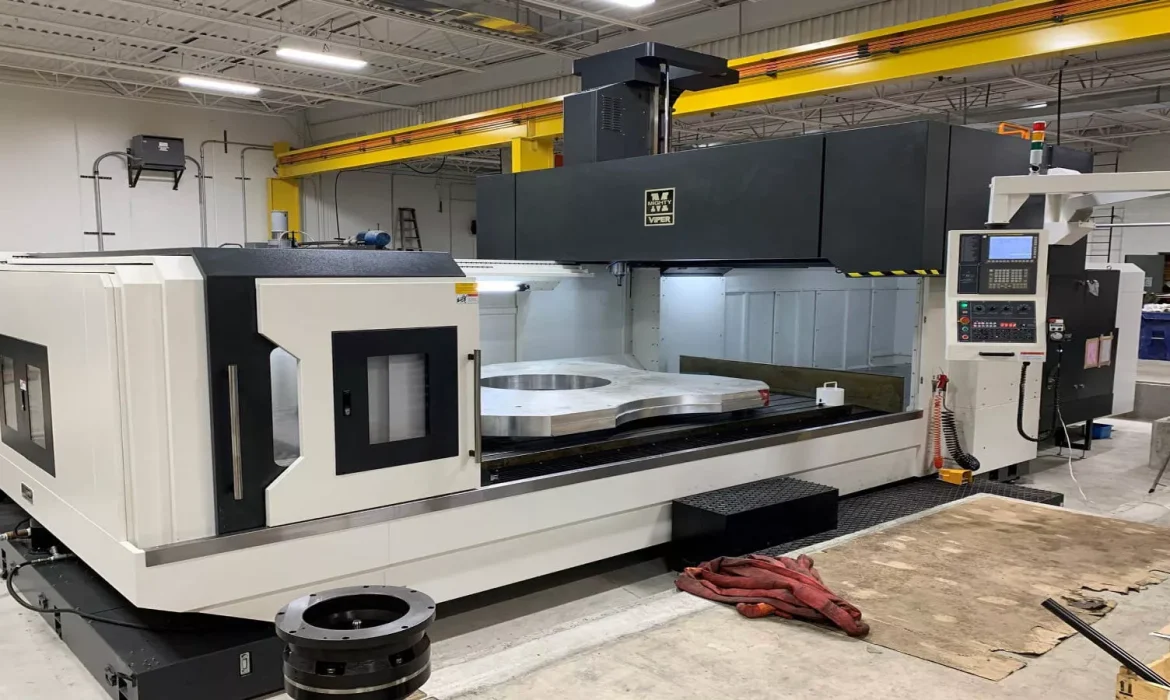
If you work with turbines, frames, or castings that need a crane just to move, you already know: large heavy component machining is a different world.
Standard shops can handle small to mid-size parts. But when you’re dealing with large part CNC machining, heavy precision machining, or oversized component manufacturing measured in meters and tons, the rules change—fast. Fixturing, stability, tolerances, heat, and safety all become mission‑critical.
At MS Machining, we specialize in precisely this kind of work. From CNC milling for large parts and large scale CNC turning to machining large castings and forgings, our team, equipment, and processes are built around one goal: delivering extra large workpiece precision machining that you can trust in the field, not just on paper.
In this guide, you’ll see what really matters when machining large heavy components, the capabilities you should demand from a supplier, and how MS Machining helps you reduce risk, hit tight tolerances, and keep your project on schedule.
What Is Large Heavy Component Machining?
When engineers and buyers talk to us about large heavy component machining, they usually have the same concerns:
“Can you actually hold tolerance on something this big?”
“Can your machines handle the weight?”
“How do we avoid risky multiple setups across different suppliers?”
We define large heavy components as parts that are:
- Too big or too heavy for standard CNC mills and lathes
- Require specialized large part CNC machining equipment, handling, and inspection
- Are critical to safety, uptime, and performance in heavy industry
Typical examples include turbine housings, generator shafts, mining frames, oil and gas valve bodies, and large steel fabrications.
How It Differs From Standard CNC Work
Large heavy component machining is not just “CNC but bigger.” It changes how we plan and run every job:
- Machine size and power: We use big milling machines, large CNC vertical and horizontal boring mills, and large part lathe machining centers designed for extreme weight and long travel.
- Workholding: Standard vises and chucks do not work. We design heavy component workholding solutions and large part fixturing to control deflection and vibration.
- Handling and logistics: We rely on overhead crane handling for machining and engineered rigging to move and position extra large workpieces safely.
- Process risk: One mistake on a large, expensive casting or forging can wipe out the project. We build in robust process controls, setup verification, and on-machine checks.
Typical Size, Weight, and Tolerance Ranges
While every shop is different, in our world large heavy component machining usually means:
- Size envelope: Parts over ~60″ (1.5 m) in any axis, up to many feet in length or diameter
- Weight: From a few thousand pounds into the tens of thousands of pounds per piece
- Tolerances:
- General features: ±0.005″ to ±0.010″ is common
- Critical fits and sealing surfaces: down to tight tolerance large part machining levels of ±0.001″ or better with proper process control
The challenge is not just hitting a number once. It is holding those tolerances over long distances and large surfaces on heavy, sometimes unstable, materials.
Why Only Specialized Shops Can Handle It
Only specialized large part CNC machining shops can reliably take on this work because they must combine:
- Capital equipment:
- Large part vertical machining centers
- Large part horizontal CNC machining and horizontal boring mills for heavy parts
- Large scale CNC turning for long shafts and big diameters
- Heavy duty machining services expertise:
- Experience machining large castings and forgings without distortion
- Knowledge of critical component machining for mission-critical applications
- Integrated handling and inspection:
- High-capacity cranes and rigging for safe movement
- CMM inspection for large parts or laser tracker inspection for large components when needed
We position our shop around these capabilities so we can deliver reliable, repeatable precision machining for heavy components—not just once, but across production runs of large heavy components that our customers depend on.
Key Industries Using Large Heavy Component Machining
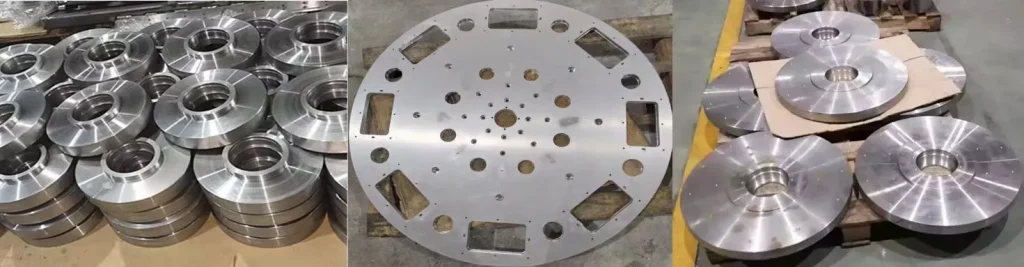
Large heavy component machining sits at the center of a lot of core U.S. industries. When parts weigh several tons and need tight tolerances, standard CNC just won’t cut it. That’s where true large part CNC machining and heavy precision machining come in.
Energy and Power Generation
In energy and power, failure is not an option. We machine:
- Turbine housings and casings
- Generator shafts and rotors
- Large steel fabrication machining for frames and bases
These parts run under constant high load, heat, and vibration, so tight tolerance large part machining is critical for long-term reliability.
Mining and Construction Equipment
Mining and construction demand rugged, repeatable heavy equipment component machining:
- Massive booms, frames, and buckets
- Large gear housings and bearing seats
- Machining large castings and forgings for crushers and mills
Here, our large scale CNC turning and big milling machine setups keep oversized components aligned, flat, and ready for abuse in the field.
Oil and Gas Large Part Requirements
Oil and gas projects rely on mission critical large component machining for:
- Oil and gas valve body machining
- Offshore platform component machining
- Pressure-containing housings and flanges
Corrosion resistance, pressure integrity, and repeatable sealing surfaces are why customers lean on us for Inconel heavy component machining, high-strength alloys, and large stainless parts.
Aerospace and Defense Heavy Precision
For aerospace and defense, the bar is even higher. We support critical component machining for:
- Large structural components and fixtures
- Landing gear elements and heavy brackets
- Defense system bases and housings
Complex parts often blend 5 axis machining for heavy components with strict defense standards. When programs need multi-axis capability on big parts, they tie that into our 5-axis CNC machining services to keep geometry and tolerances locked in.
If you’re in defense and military supply chains, you already know how crucial documented quality and traceability are—our military and defense machining capabilities are built for that.
Heavy Machinery, Marine, and Transportation
We also support:
- Ship and marine engine blocks, stern tubes, and housings
- Rail and heavy transportation frames and couplers
- Industrial presses, mills, and machine bases
These applications combine large mass, cyclic loading, and harsh environments. Our large part vertical machining, horizontal boring mill for heavy parts, and large part lathe machining let us handle long shafts, big diameters, and oversized component manufacturing without sacrificing accuracy.
Built for Extreme Loads and Environments
Across all these sectors, the common thread is performance under stress:
- High loads, shock, and vibration
- Wide temperature swings and thermal growth
- Corrosive or offshore environments
That’s why large heavy component machining isn’t just about size. It’s about precision machining for heavy components that survive decades of service without failing when it matters most.
Core Equipment for Large Heavy Component Machining
When we talk about large heavy component machining, the equipment makes or breaks the job. If the machines, work envelope, and handling systems aren’t built for serious size and weight, you’re going to fight accuracy, cycle time, and safety on every part.
Large CNC Vertical & Horizontal Boring Mills
For large part CNC machining, vertical and horizontal boring mills are the backbone:
- Vertical boring mills (VBMs) handle big, heavy rings, housings, and turbine cases where the part can sit flat and stable.
- Horizontal boring mills are ideal for deep bores, angled features, and heavy blocks like gear cases and valve bodies.
Here, machine envelope and spindle power matter more than anything. You need:
- Massive travels in X/Y/Z
- High torque spindles for roughing tough alloys
- Rigid construction to hold tight tolerances on oversized components
Large Scale CNC Turning & Heavy Duty Lathes
Large part lathe machining and large scale CNC turning come into play for:
- Long shafts
- Large diameter rolls
- Heavy flanges and hubs
Heavy-duty CNC lathes with large swing, long centers, and steady rests let us:
- Turn, groove, and thread large parts in one setup
- Maintain concentricity over long distances
- Combine turning with live tooling for milled features
Gantry & 5-Axis Machining Centers for Oversized Parts
For complex oversized component manufacturing, we rely on:
- Gantry machining centers for big plates, bases, and structures
- 5-axis machining for heavy components where multiple faces and contours must line up perfectly
These machines cut down on re-fixturing, which is key to heavy precision machining. Fewer setups = better accuracy and shorter lead times.
Floor Type Mills, Planers & Big Milling Machine Setups
Floor type milling machines and planer-type big milling machines are our go-to for:
- Large bases, machine beds, frames, and rails
- Long straight ways and precision surfaces
They offer:
- Huge X-axis travel and flexible setup options
- Room for multiple parts or very long components
- The stability needed for tight tolerance large part vertical machining and horizontal milling
If you’re interested in how we keep accuracy under control on this kind of work, our breakdown of how accurate CNC milling can be walks through the fundamentals.
Overhead Cranes, Rigging & Material Handling
You cannot do heavy duty machining services safely without serious handling capability. We build around:
- Overhead crane handling for machining with high tonnage capacity
- Certified rigging and lifting fixtures
- Dedicated staging areas for extra large workpiece precision machining
The goal is simple:
- Move big parts fewer times
- Keep operators safe
- Protect machined surfaces from damage
Machine Envelope, Spindle Power & Axis Control
For large part CNC machining, the right specs matter more than brand names:
- Machine envelope: Defines the max size of part we can handle in a single setup
- Spindle power & torque: Drives productivity in steels, Inconel, and other tough alloys
- Axis control and feedback: Directly impacts accuracy, especially for critical large component fabrication and gear-related features (if you’re dealing with power transmission parts, our CNC gear machining capabilities at this page are a good reference point)
When all three are aligned—envelope, power, and control—you get reliable, repeatable large component machining that holds spec on mission-critical parts, not just “close enough for size.”
Capabilities That Matter for Large Heavy Component Machining
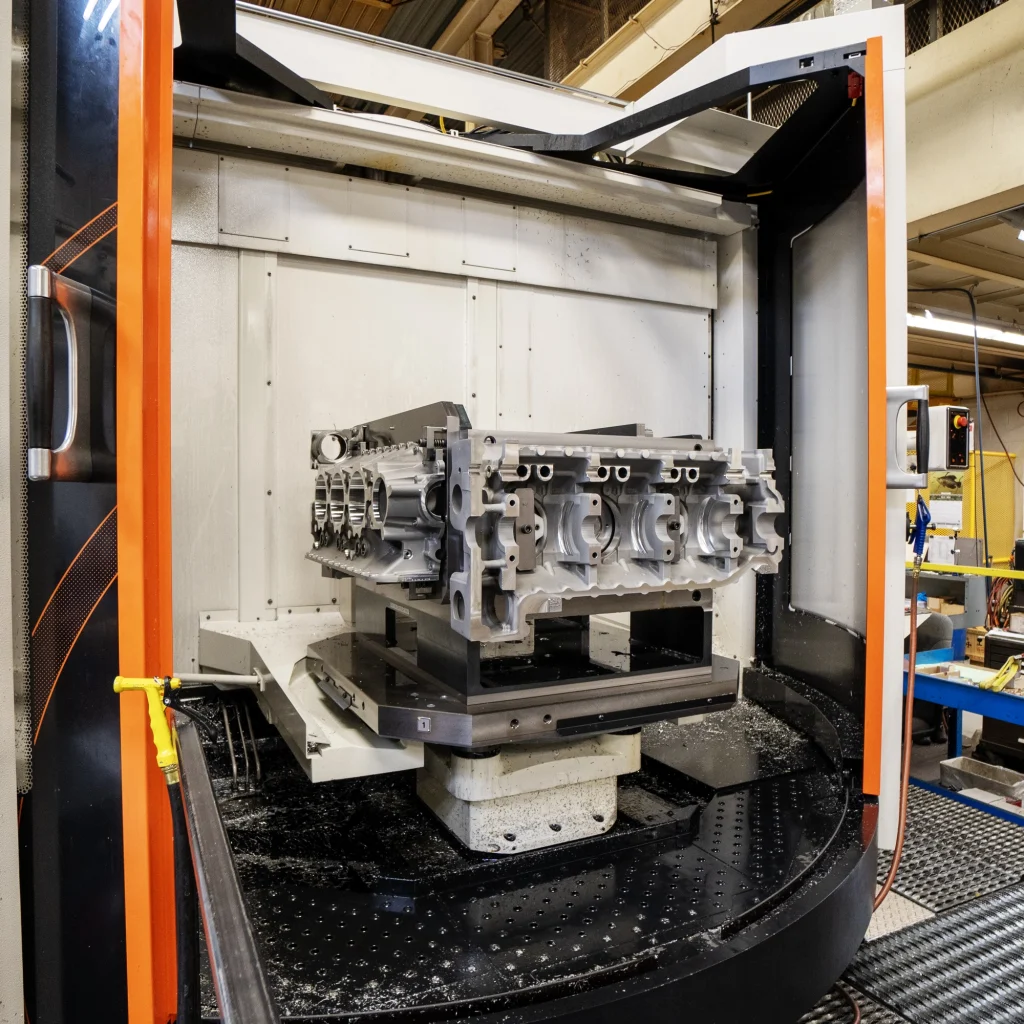
When you’re dealing with large heavy component machining, raw capacity matters just as much as precision. I focus on a few key capabilities that actually move the needle on your project.
Maximum Part Size, Weight, and Machining Envelope
For large part CNC machining, the first question is always: Will it fit, and can you lift it safely?
Key specs I look at:
- Max part weight per machine and per crane
- X/Y/Z travel (machining envelope) for extra large workpiece precision machining
- Pass-through and swing for long or tall components
If the part is near the limits of the machine envelope or crane capacity, I plan setups and fixturing very carefully to avoid surprises, delays, and safety issues.
CNC Milling for Large Parts and Vertical Machining
For big, prismatic components, CNC milling for large parts and large part vertical machining do the heavy lifting:
- Large travel vertical machining centers for bases, frames, and plates
- Big milling machine setups for multiple surfaces in one clamp
- 3, 4, and 5 axis options for complex faces and hole patterns
For tighter features or complex geometries, I often combine this with high-precision approaches used in our CNC machining services for precision parts so large parts still hit small-part tolerances where it counts.
Horizontal Boring Mills for Deep and Complex Features
A horizontal boring mill for heavy parts is essential when you need:
- Deep bores and pockets with tight straightness and location
- Multiple faces machined in one setup by rotating the table
- Large castings and weldments machined inside and out
This is where I handle turbine housings, big gearboxes, and heavy precision machining of thick sections with critical internal geometry.
Large Part Lathe Machining for Long Shafts and Big Diameters
For round work, large part lathe machining and large part CNC turning cover:
- Long shafts and rolls with controlled runout and concentricity
- Large diameter flanges, hubs, and rings
- Critical component machining for generator shafts, hydraulic cylinders, and similar parts
I rely on steady rests, tailstocks, and custom supports to keep large, heavy components stable at speed.
Multi-Operation Setups and Reduced Handling
Every time you move a heavy part, you add cost, risk, and potential error. My approach:
- Multi-operation setups to hit as many features as possible per clamp
- Use of rotary tables, angle heads, and right-angle attachments
- Thought-out pallet systems for repeat work on heavy equipment component machining
The goal is simple: fewer lifts, fewer setups, better repeatability.
From Roughing to Finishing on Critical Large Components
I run the whole process in-house for critical large component fabrication:
- Aggressive roughing to remove stock efficiently on large scale machining jobs
- Semi-finishing to stabilize the part after stress relief
- Final finishing passes to hit tight tolerance large part machining and surface requirements
If a project also includes smaller high-precision details or mating parts, I’ll often pair large part work with our 5 axis and traditional CNC capabilities described in our comparison of 5-axis CNC machining vs. traditional CNC to keep the entire build consistent and controlled.
Materials in Large Heavy Component Machining
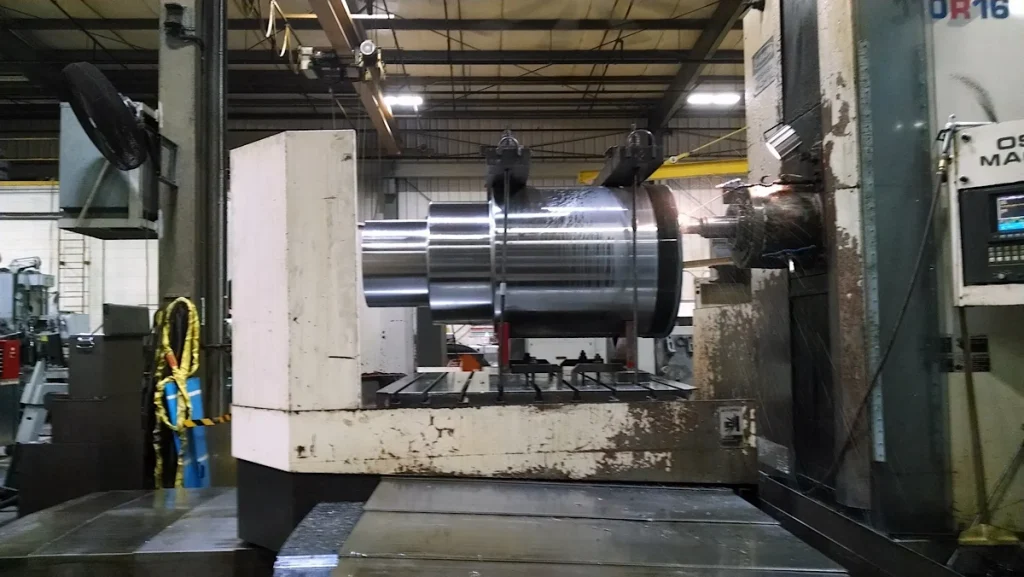
When we take on large heavy component machining, the material choice drives everything—cycle time, tooling strategy, cost, and how stable that part will be in the field.
Common Steels and Alloy Steels
For most heavy duty components—frames, bases, housings, shafts—we’re usually working with:
- Carbon steels (A36, 1045) for weldments and structural parts
- Alloy steels (4140, 4340, 8620) for high-strength, high-load parts
- Quenched and tempered steels where impact, fatigue, and long life matter
These are the workhorses for large part CNC machining because they balance machinability, strength, and cost.
Stainless and Corrosion-Resistant Alloys
In oil and gas, marine, and power generation, we do a lot of stainless steel and corrosion-resistant alloys:
- 304/316 stainless for general corrosion resistance
- 410/420 for wear plus some corrosion resistance
- Duplex and super duplex for aggressive offshore and chemical environments
They’re tougher to cut, but they’re a must when you need heavy precision machining that can survive harsh conditions.
Large Castings and Forgings
A big part of large component machining is turning rough castings and forgings into critical finished parts:
- Cast iron bases, housings, and machine structures
- Steel castings for valves, pumps, and gearboxes
- Forged shafts, rolls, and high-stress components
We design our setups and tooling around draft, skin hardness, and variable wall thickness so machining large castings and forgings is predictable instead of risky.
Titanium, Inconel, Hastelloy, and High-Performance Alloys
For high-temperature, high-pressure, or safety-critical parts, we get into titanium heavy part machining, Inconel heavy component machining, and Hastelloy machining services. These alloys are common in:
- Turbine and generator components
- Oil and gas valve bodies and pressure parts
- Chemical processing and nuclear applications
They generate heat, wear tools fast, and demand tight process control. That’s where our experience with CNC machining Hastelloy parts really matters, and we lean on proven parameters and tooling strategies for these alloys (see our Hastelloy CNC capabilities).
Heat Treatment, Stress Relief, and Certification
On big parts, heat treatment and stress relieving are non‑negotiable. We plan for:
- Pre- and post-machining stress relief to minimize movement
- Hardening and tempering cycles matched to the final load case
- Full material certification (MTRs, traceability, test reports) for every large piece
This is critical for critical large component fabrication—especially when you’re dealing with mission‑critical equipment in energy, defense, or heavy industry.
How Material Choice Impacts Precision and Durability
Material selection directly affects:
- Precision: Different alloys move differently as you rough and finish. We plan sequences, stock allowance, and inspection based on how each material behaves.
- Durability: Strength, hardness, corrosion resistance, and fatigue life all come from picking the right grade and the right heat treatment, not just “steel vs stainless.”
- Cost and lead time: Some materials machine fast; others eat tools and require slower feeds and speeds. On large parts, that difference multiplies quickly.
When we quote large scale machining projects, we always look at material first—because choosing the right metal up front is the fastest way to control distortion, hit tight tolerances, and keep your heavy components running for years without surprises.
Technical Challenges in Large Heavy Component Machining
Large heavy component machining looks simple from the outside, but the technical challenges are huge. If you want tight tolerance large part machining to be repeatable and profitable, you have to engineer every step.
Managing Deflection, Vibration & Thermal Expansion
On extra large workpiece precision machining, the part itself fights you:
- Long, heavy sections will deflect under their own weight
- Cutting forces generate vibration and chatter
- Heat from cutting changes size due to thermal expansion
To control this, we:
- Use optimized toolpaths and conservative stepdowns for heavy precision machining
- Add support points and temporary bracing on long spans
- Control coolant and cycle time to keep temperature stable over the full part length
Fixturing & Workholding for Oversized Components
Standard vises don’t work for large part CNC machining. We need heavy component workholding solutions built for scale:
- Custom large part fixturing with modular rails and risers
- Multiple clamp zones to support big milling machine operations
- Locating pins and datums designed for GD&T on large surfaces
Good fixturing is the difference between repeatable tight tolerance parts and costly rework.
Chip Evacuation & Coolant at Large Scale
Machining large castings and forgings throws off a massive amount of material. If chips and heat don’t move out, your process slows down and tools die early.
Typical controls:
- High-flow coolant and through-spindle delivery for deep bores
- Wide chip conveyors sized for large scale CNC turning and horizontal boring mill work
- Strategic pecking cycles and dwell reductions to keep tools cutting clean
For complex heavy alloys like steels discussed in our steel CNC machining guide, this becomes even more important.
Holding Tight Tolerances Over Large Distances
Anyone can hit ±0.001″ on a 2″ feature; doing it over 80″ is another story in large component machining.
We focus on:
- Compensating for machine geometry and thermal drift
- Using on-machine probing for large CNC parts to adjust in process
- Breaking features into smart datums to hold form and position over long spans
Safety, Logistics & Setup for Very Heavy Parts
With 10,000–50,000+ lb parts, safety and handling are non‑negotiable:
- Overhead crane handling for machining with rated slings and fixtures
- Clear lift plans and slow, controlled moves into large part vertical machining centers or floor type mills
- Safe walk paths, barricades, and strict rigging procedures
Every setup is engineered so operators aren’t taking chances.
Process Planning to Cut Risk, Rework & Downtime
For mission critical large component machining, we invest heavy in process planning before a chip is cut:
| Area | Planning Focus |
|---|---|
| Sequence | Rough → semi-finish → finish with minimal re-clamps |
| Tooling | Rigid tools sized for heavy cuts and long reach |
| Inspection | Probe checks between stages to catch issues early |
| Contingency | Backup tools, programs, and clear rework paths |
We also lean on lessons from solving issues in complex CNC machining projects, like those covered in our breakdown of common CNC machining problems and solutions, and scale those best practices up for large parts.
In the US market especially, where downtime and field failures are extremely expensive, this level of planning is what keeps large heavy component machining on time, in tolerance, and safe.
How to Achieve Precision and Quality on Large Heavy Parts
When we run large heavy component machining jobs, precision and repeatability are built into the process from day one—not added at the end.
Process Controls for Heavy Precision Machining
For critical large part CNC machining, we lock in process controls before the first chip:
- Defined machining parameters for each material and tool
- Controlled roughing, semi-finishing, and finishing paths
- Tool life tracking and presetting to avoid size drift
- Documented setups for repeat runs of heavy components
This keeps tight tolerance large part machining consistent across batches.
In‑Process Inspection and On‑Machine Probing
On large scale machining, you can’t afford to pull a part off the machine and “hope” it’s right. We use:
- On‑machine probing to verify datums, bores, and critical faces
- In‑process checks after key operations to catch deviation early
- Automatic tool offset updates based on probe data
For smaller precision features on big parts, we apply the same approach we use in our CNC precision machining services—just scaled up.
CMM and Laser Tracker Inspection for Oversized Components
Oversized component manufacturing demands metrology that can reach every inch:
- CMM inspection for large parts when the part fits the envelope
- Laser tracker inspection for large components that exceed CMM size
- Full dimensional reports tied back to your GD&T callouts
This is how we verify flatness, straightness, and feature locations over long distances.
Non‑Destructive Testing for Critical Large Component Fabrication
For mission critical large component machining, quality goes beyond dimensions:
- Dye penetrant and magnetic particle testing for surface defects
- Ultrasonic testing for internal flaws in large castings and forgings
- Visual and weld inspection where fabrication is involved
NDT makes sure your heavy components are structurally sound, not just “on size.”
Quality Systems and Certifications for Large Part CNC Machining
We rely on documented quality systems so every large heavy component runs under the same standards:
- Controlled work instructions and setup sheets
- Material certs, heat treatment, and traceability records
- Calibrated gauges and inspection equipment
This structure supports tight tolerance large part machining for heavy industry.
Maintaining Repeatability Across Multiple Heavy Components
Repeatability is everything when you’re running multiple extra large workpieces:
- Standardized fixturing and heavy component workholding solutions
- Saved CNC programs and proven toolpaths for repeat orders
- Feedback from inspection fed back into process correction
The result: your large heavy components match each other from first article to final piece, with no surprises in the field.
Best Practices for Large Heavy Component Machining Projects
Design for Machinability of Oversized Components
When we review a large heavy component machining project, we push hard on design for manufacturability (DFM):
- Simplify surfaces and blends so we can hit them with standard tools and cutters instead of custom setups.
- Add machining stock in the right places on large castings and forgings to allow clean-up without chasing extra passes.
- Design access for tools and probes so critical features are reachable for both machining and inspection.
- Use standard hole sizes, radii, and chamfers where possible to keep tooling costs and lead times under control.
Early DFM review with a shop that does heavy precision machining every day usually saves weeks, not days. If you want to see how we approach complex parts on the small-to-medium side, our real-world breakdowns on custom CNC machining projects give a good idea of how we think through manufacturability.
Smart GD&T and Tolerances for Large Scale CNC Turning and Milling
On large part CNC machining, GD&T can make or break cost and lead time:
- Use tight tolerances only where the function demands it. Over-tolerancing a large surface or long bore drives cost fast.
- Control datums and functional features first (mating faces, bolt circles, shaft journals, seal surfaces).
- Use position, flatness, and runout wisely instead of stacking linear dimensions across long distances.
- Call out realistic surface finishes for heavy equipment component machining; many non-critical faces can run coarser.
We’re direct with customers: if a tolerance is overkill for the function, we’ll say so and propose something more realistic.
Sequencing Roughing, Semi-Finishing, and Finishing
Large heavy component machining lives or dies on process order:
- Roughing:
- Remove bulk stock aggressively to relieve stress and get the part close to size.
- Focus on safe clamping and chip evacuation, not cosmetics.
- Stabilize:
- Allow the part to relax (especially on large castings and weldments).
- Perform stress relief and intermediate checks if needed.
- Semi-Finish:
- Clean up critical features, set true datums, and check alignment before final cuts.
- Finish:
- Finish machine all critical surfaces from stable datums in as few setups as possible.
- Use on-machine probing to verify key dimensions during cutting.
This approach keeps us from “chasing size” on long shafts or large faces and supports tight tolerance large part machining without endless rework.
Collaborate Early with Your Heavy Duty Machining Partner
On big, mission-critical components, late involvement costs money:
- Share 3D models, 2D prints, and functional requirements before you lock the design.
- Let the machining team weigh in on stock sizes, machining allowances, and datum choices.
- Align early on inspection strategy (CMM, laser tracker, NDT) so features are designed to be measurable.
- Involve us before you place casting, forging, or fabrication orders so we can help avoid problem areas.
We treat every large part as a project, not just a job. A quick engineering review up front almost always pays back in lower risk and fewer surprises.
Balancing Cost, Lead Time, and Precision
For large part CNC turning, milling, and horizontal boring work, you can’t optimize everything at once—you have to choose your priorities:
- If maximum precision is the driver, we plan more setups, checks, and specialized tooling and inspection.
- If lead time matters most, we simplify features, standardize tooling, and lock in a streamlined sequence.
- If cost is the main constraint, we relax non-critical tolerances, reduce operations, and lean on rougher finishes where they don’t affect performance.
We’re upfront about tradeoffs and we model different scenarios with you so the final plan fits your real-world needs—whether that’s a one-off critical component machining job or a repeat production run of heavy industry CNC machining parts.
Why Work With a Specialized Large Heavy Machining Partner
When you’re dealing with large heavy component machining, you can’t afford guesswork. You need a shop that lives and breathes large part CNC machining, understands heavy industry timelines, and can protect you from risk on mission‑critical parts.
Benefits of One‑Stop Large Part CNC Machining Services
A true one‑stop large component machining partner should handle:
- Large part vertical machining and big milling machine work
- Large part CNC turning and large part lathe machining
- Horizontal boring mill work for deep, heavy features
- Material sourcing, heat treat, and final inspection under one roof
This cuts out multiple vendors, keeps communication clean, and makes someone clearly accountable for the whole critical component machining process.
Reducing Lead Times and Handoffs
Every handoff on a heavy part adds risk, freight cost, and schedule slip. A specialized partner helps you:
- Keep large scale machining operations in one facility
- Eliminate repeated setups on different machines and shops
- Shorten project timelines with integrated planning and scheduling
If you’re also running smaller precision jobs, it helps to work with a team that already does high‑precision CNC machining parts and understands how to align big‑part work with your overall build schedule.
Cost Savings From Optimized Setups and Tooling
On heavy components, setup is a huge part of your cost. A good heavy precision machining shop will:
- Design custom large part fixturing and workholding once, then reuse
- Use the right cutters, feeds, and strategies for machining large parts
- Combine operations (milling, turning, drilling) to cut handling and crane time
That’s how you drive real savings on large part CNC machining without sacrificing quality.
Risk Reduction for Mission‑Critical Heavy Parts
For mission critical large component machining—turbine housings, generator shafts, offshore platform components, large valves—you’re managing serious risk. The right partner reduces it by:
- Using proven processes for tight tolerance large part machining
- Backing work with CMM, laser tracker, and NDT for high‑value parts
- Maintaining traceability on materials, heat treatment, and inspection
You’re buying more than machine time—you’re buying confidence the part will perform in the field.
What to Look For in a Large Heavy Component Machining Supplier
When you evaluate a large heavy component machining supplier in the U.S., focus on:
| Area | What You Want to See |
|---|---|
| Capacity | Clear max size/weight, envelopes for vertical, horizontal, and turning work |
| Equipment | Big mills, horizontal boring mills, large lathes, gantry capability where needed |
| Experience | Proven work in your industry (energy, mining, oil & gas, defense, heavy machinery) |
| Quality Systems | Documented inspection, certifications, and data‑driven process control |
| Engineering Support | Help with design for manufacturability, GD&T, and process planning |
| Logistics & Handling | Overhead crane capacity, safe rigging, packaging, and shipping for oversized parts |
If you need both large and smaller parts handled under one roof, look for a shop that also offers mature metal CNC machining processes so everything stays aligned—from the biggest housing to the smallest mating component.