
Key Factors to Consider When Selecting CNC Materials
Choosing the right CNC machining materials for precision parts isn’t just about picking what’s popular. It’s about matching the material to your part’s real-world needs. Here’s what you need to focus on:
Application and Functional Requirements
- Strength, hardness, toughness: Will your part face heavy loads or impacts?
- Flexibility: Does it need slight bending without breaking?
Operating Environment
- Corrosion resistance: Will it be exposed to moisture or chemicals?
- Temperature extremes: Will it handle heat or cold without degrading?
- Chemical exposure: Some environments require chemical-resistant materials.
Mechanical Properties
- Tensile strength: How much pulling force can the part handle?
- Yield strength: When does the material deform permanently?
- Impact resistance: Can it withstand shocks or sudden forces?
Machinability and Dimensional Stability
- Ease of cutting: Some materials wear down tools faster.
- Tool wear: Important for cost and surface finish.
- Thermal expansion: Does the material change size with temperature shifts?
Weight and Density Considerations
- Critical for aerospace or portable devices where every ounce counts.
Cost and Availability
- Material price can vary widely.
- Lead times and supplier reliability matter for production schedules.
Regulatory Compliance
- FDA: For medical parts.
- RoHS: For electronics and environmentally sensitive applications.
| Factor | What to Consider | Why It Matters |
|---|---|---|
| Strength & Hardness | Load-bearing capabilities | Prevent failure and deformation |
| Corrosion Resistance | Exposure to elements or chemicals | Longevity in harsh environments |
| Machinability | Cutting ease, tool wear | Cost-effective production |
| Weight & Density | Lightweight needs (e.g., aerospace) | Performance and energy efficiency |
| Cost & Availability | Price, sourcing, lead times | Budget and timeline management |
| Regulatory Compliance | Industry-specific standards (FDA, RoHS) | Meets legal and safety requirements |
By keeping these factors in check, you’ll find the perfect precision machining materials that hit the mark for performance, budget, and reliability—keys to getting outstanding CNC parts from MS Machining.
Common Metals for CNC Precision Parts
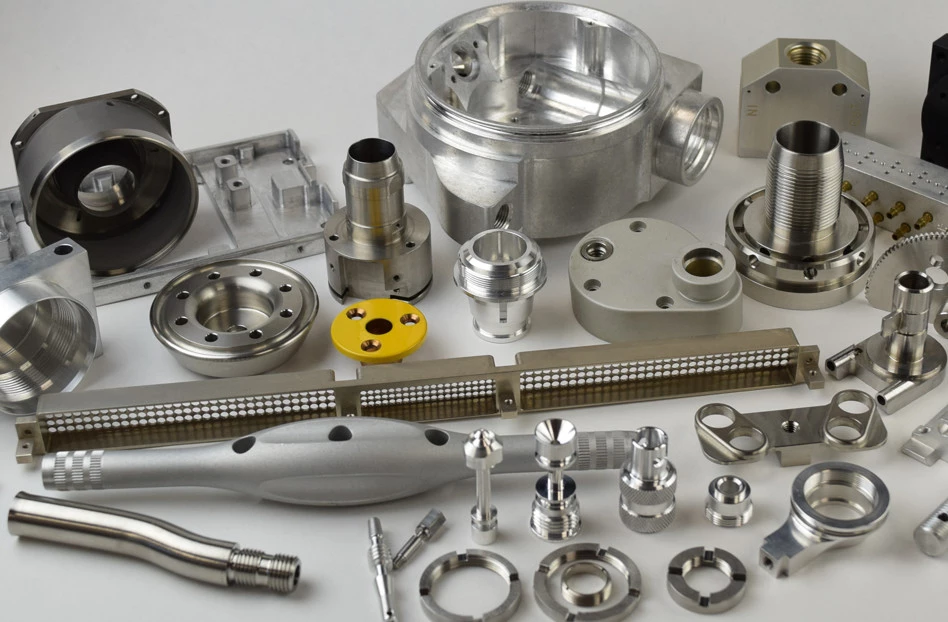
When it comes to CNC precision parts, metals are often the top choice due to their strength and versatility. Here’s a quick look at some commonly used CNC machining materials:
- Aluminum (6061, 7075): Lightweight and corrosion-resistant, aluminum offers excellent machinability. It’s a favorite for aerospace and automotive prototypes where weight savings and precision are key.
- Stainless Steel (304, 316): Known for its high corrosion resistance and strength, stainless steel is ideal for medical devices and food-grade applications. Its durability makes it a reliable choice for precision parts that need to withstand harsh conditions.
- Titanium: Offering a superior strength-to-weight ratio and biocompatibility, titanium is widely used in surgical implants and high-performance aerospace parts. It’s tougher to machine but rewarding in applications demanding both lightness and strength.
- Brass and Copper: These metals stand out for their excellent electrical conductivity and attractive finish. They’re commonly chosen for electrical components and decorative precision parts.
- Tool Steels and Alloy Steels: With high hardness and wear resistance, these steels are suited for tooling and industrial applications where durability under stress is non-negotiable.
Choosing the right metal depends on balancing machinability, strength, corrosion resistance, and the specific requirements of your project. For precision engineering needs, exploring detailed options like those in micro tip precision engineering projects can help refine your material choice.
Common Materials for CNC Precision Parts: Plastics and Composites
When it comes to CNC precision parts, plastics and composites offer versatile options that balance performance and cost. Here are some common materials used in CNC machining for precision plastic parts:
- ABS: This material is impact-resistant and budget-friendly, making it great for prototypes and consumer products. Its ease of machining and strength make it popular for everyday applications.
- POM (Delrin): Known for its high stiffness, low friction, and excellent dimensional stability, POM is ideal for precision parts like gears, bearings, and mechanical components that require tight tolerances.
- PEEK: Offering high-temperature resistance and outstanding chemical inertness, PEEK is perfect for demanding environments such as medical devices and oil/gas precision parts. Its durability makes it a top choice where other plastics fall short.
- Nylon: Valued for toughness and wear resistance, nylon is widely used in mechanical components that face constant stress and movement. It machines well while maintaining strength under load.
- Polycarbonate: With its optical clarity and strong impact resistance, polycarbonate is often selected for precision parts like lenses, protective covers, and other components where visibility and toughness are crucial.
Choosing the right plastic or composite hinges on the specific functional needs, including operating conditions and mechanical stresses. For applications requiring medical-grade quality, exploring specialized CNC machining capabilities can also ensure compliance with strict industry standards, as seen in detailed services like medical device CNC machining.
Using these plastics in CNC machining materials allows manufacturers to create precise, reliable parts suitable for a wide range of industries, from consumer electronics to aerospace.
Material Comparison Table for CNC Precision Parts
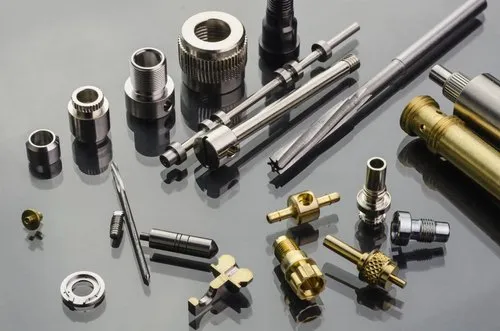
Here’s a quick comparison of popular CNC machining materials, focusing on key factors like strength, machinability, cost, corrosion resistance, and typical uses:
| Material | Strength | Machinability | Cost | Corrosion Resistance | Typical Applications |
|---|---|---|---|---|---|
| Aluminum (6061, 7075) | Medium-High | Excellent | Moderate | Good | Aerospace, automotive prototypes, lightweight parts |
| Stainless Steel (304, 316) | High | Moderate | Higher | Excellent | Medical devices, food-grade components |
| Titanium | Very High | Challenging | High | Excellent | Medical implants, aerospace, high-strength parts |
| Brass | Medium | Very Good | Moderate | Moderate | Electrical parts, decorative components |
| Tool & Alloy Steels | Very High | Difficult | Moderate-High | Moderate | Tooling, wear-resistant industrial parts |
| ABS (Plastic) | Low | Excellent | Low | Poor | Prototypes, consumer products |
| POM (Delrin) | Medium | Excellent | Moderate | Moderate | Gears, bearings, mechanical parts |
| PEEK | High | Moderate | High | Excellent | Medical, oil/gas components |
| Nylon | Medium | Good | Low-Moderate | Moderate | Mechanical components |
| Polycarbonate | Medium | Good | Moderate | Moderate | Optical lenses, protective covers |
This table simplifies your material selection by highlighting the trade-offs to consider during precision machining. For detailed specifications on metals, check out our guide on steel CNC machining to better understand stainless steel and tool steel options.
Step-by-Step Guide to Material Selection for CNC Precision Parts
Choosing the right CNC machining materials starts with a clear understanding of your part’s requirements and performance criteria. Ask yourself what strength, hardness, or flexibility your part needs to function properly. Next, evaluate the environmental and operational stresses it will face — factors like corrosion, temperature changes, or exposure to chemicals can make a big difference in material performance.
Once you’ve outlined these needs, create a shortlist of materials based on their mechanical properties and machinability. Some materials are easier to cut and hold tight tolerances, while others might wear out tools faster or expand more with heat. Don’t forget to think about post-machining finishes like anodizing or passivation, which can enhance corrosion resistance and surface durability after cutting.
Before moving to production, prototype your part using the chosen material and test it under real-world conditions. This step helps validate your choice and ensures the part meets all specifications. Lastly, factor in cost and supplier expertise—choosing materials that are readily available and supported by experienced suppliers can save time and money.
For more in-depth tips on precision manufacturing, check out our guide on metrology and precision in manufacturing. This resource can help you understand how material choices influence final CNC part accuracy and quality.
Common Mistakes to Avoid in CNC Material Selection
When selecting CNC precision machining materials, there are some common pitfalls that can cost you time and money:
- Over-specifying materials: Choosing a higher-grade or specialty material than necessary can inflate costs without improving performance. Stick to what the application realistically needs.
- Ignoring machinability: Materials that are tough to machine can increase tool wear, extend production time, and affect surface finish quality. Always factor in machinability to keep processes efficient.
- Overlooking tolerances and thermal effects: Precision parts must account for dimensional stability during machining and in operation. Ignoring how materials expand or contract with heat can cause parts to fall out of spec.
Avoiding these mistakes streamlines your project and ensures your materials meet both functional and budgetary goals. For more on selecting the best materials, you can explore our detailed CNC machining materials list to understand properties and applications better.
Case Studies: Successful CNC Material Choices
At MS Machining, selecting the right material for CNC precision parts has made a big difference in project success across industries. For example, aluminum alloys like 6061 and 7075 are often chosen for lightweight drone parts and aerospace prototypes thanks to their excellent machinability and strength-to-weight ratio. This keeps components strong but light, which is crucial for flight efficiency.
In medical device manufacturing, titanium CNC parts stand out for their unmatched strength and biocompatibility. We’ve crafted surgical instruments and implants using titanium, ensuring durability and safety under strict regulatory standards.
Another great example comes from the oil and gas sector, where corrosion resistance is critical. Stainless steel 316 parts have been used to withstand harsh environments, offering both strength and chemical resistance in flowline fittings and precision components. You can see more about these applications in our detailed flowline fittings essential components for oil and gas operations case study.
These real-world examples show how matching material properties to specific CNC machining requirements ensures optimal performance, cost-effectiveness, and compliance. Choosing the right material upfront is key to avoiding costly revisions and achieving precision results. For more insight into aerospace-specific materials and CNC machining techniques, explore our CNC machine shop for the aircraft industry.