
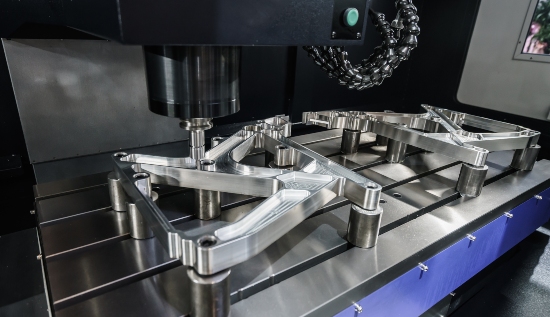
Why CNC Milling Is Entering a New Phase in 2026
As we approach 2026, the manufacturing landscape is shifting from simple machining to intelligent production ecosystems. The industry is no longer just about removing material; it is about optimizing every second of spindle time to meet an increasingly volatile market. We are witnessing a fundamental change in how shops approach CNC Milling, driven by the necessity to balance speed with uncompromising precision.
Manufacturing Pressure From Cost, Quality, and Delivery
The “Iron Triangle” of manufacturing—cost, quality, and speed—is tighter than ever. In 2026, clients refuse to compromise on one to get the others. Manufacturers are facing intense pressure to reduce unit costs despite rising raw material prices and energy expenses.
To survive, machine shops must eliminate inefficiencies. This means:
- Zero-Defect Production: There is no budget for scrap or rework.
- Just-in-Time Delivery: Inventory costs are being pushed down the supply chain, requiring faster turnaround times.
- Process Stability: Ensuring that cnc precision parts are identical from the first run to the thousandth.
Higher Expectations From Aerospace, Automotive, and Industrial Buyers
Major industries are pushing the limits of design complexity. Aerospace and automotive buyers are moving toward lighter, stronger components that require advanced machining strategies. The demand for precision cnc parts in these sectors is driven by stricter fuel efficiency standards and the electrification of vehicles.
Buyers now expect:
- Tighter Tolerances: Standard tolerances are shrinking, requiring machines with superior thermal stability.
- Complex Geometries: Parts often feature undercuts and organic shapes that challenge standard tooling.
- Traceability: Full documentation of the manufacturing process is becoming a standard requirement for industrial orders.
Why Traditional Milling Strategies Are Being Re-Evaluated
Old methods of machining are becoming financial liabilities. Relying solely on manual setups and standard 3-axis strategies is no longer viable for high-mix, low-volume production. We are seeing a massive re-evaluation of workflow to remain competitive.
Key shifts include:
- Moving to Multi-Axis: Reducing setup operations to improve accuracy and speed.
- Data-Driven Decisions: Using machine monitoring to predict tool failure before it damages cnc precision parts.
- Automation Integration: reducing reliance on manual labor for loading and unloading to maintain continuous production cycles.
Machine Capability Trends Affecting CNC Milling Performance
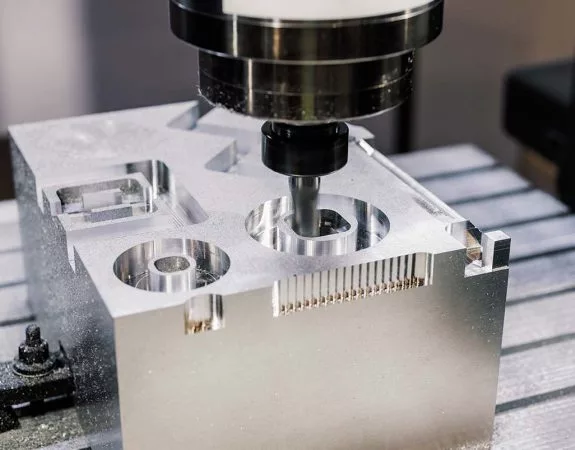
As we look toward 2026, the hardware behind the process is evolving just as fast as the software. It’s not just about having the newest equipment; it’s about matching the right machine architecture to the specific needs of the project. We are seeing a distinct shift in how we deploy different machine types to ensure cnc precision parts meet stricter quality standards without blowing the budget.
When 3-Axis CNC Milling Still Makes Sense
Despite the hype around multi-axis machines, 3-axis milling remains the workhorse for a huge portion of manufacturing. In 2026, we aren’t abandoning 3-axis; we are using it more strategically.
For parts that primarily require face milling, drilling, or simple 2D profiling, 3-axis machines offer the most cost-effective solution. They are rigid, reliable, and generally have lower hourly rates than their multi-axis counterparts. If a design allows for it, keeping production on a 3-axis setup is often the smartest move for keeping unit costs low.
Expanding Use of 4-Axis CNC Milling for Setup Reduction
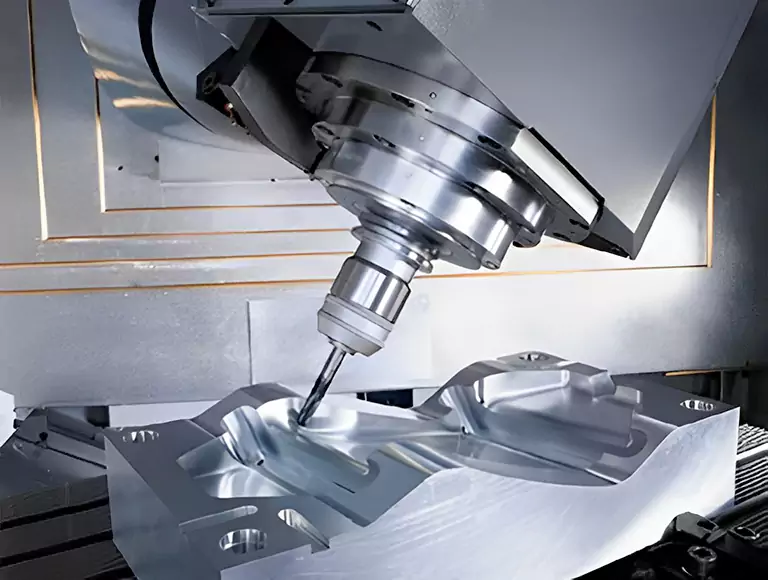
The gap between standard milling and complex machining is being bridged by 4-axis capabilities. We are increasingly using 4-axis indexing to tackle parts that have features on multiple sides.
- Reduced Handling: By adding a rotary table, we can machine three sides of a part in one go.
- Better Accuracy: Fewer manual flips mean less chance for misalignment errors.
- Faster Throughput: The spindle spends more time cutting and less time waiting for an operator to re-fixture the material.
This approach is becoming the standard for medium-complexity components that don’t quite justify the cost of full 5-axis work but need better efficiency than a 3-axis setup can provide.
5-Axis CNC Milling as a Solution for Complex Geometry
When dealing with aerospace components, medical implants, or intricate impellers, 3-axis simply can’t reach the necessary geometry. This is where we leverage 5-axis CNC machining services to handle complex contours and undercuts that were previously impossible or required expensive custom fixtures.
In 2026, 5-axis isn’t just for “impossible” parts; it is also a strategy for accuracy. By machining five sides of a block in a single clamping operation, we maintain a unified coordinate system. This eliminates the “stack-up error” that happens when you move a part from one fixture to another, ensuring the final geometry is perfect.
Machine Stability, Thermal Control, and Long-Run Consistency
The ability to hold a tolerance at 8:00 AM and hold that same tolerance at 5:00 PM is what defines modern quality. As machines run, friction generates heat, causing metal components to expand slightly—a phenomenon known as thermal drift.
To combat this and deliver consistent precision cnc parts, modern machines are equipped with advanced thermal compensation systems and liquid-cooled spindles. We also prioritize machines with heavy, stable bases that dampen vibration. This stability is critical for long production runs where even a deviation of a few microns can result in rejected parts.
Process Optimization Trends in CNC Milling
In 2026, we aren’t just cutting metal; we are aggressively cutting inefficiencies. The market demands faster turnarounds without sacrificing quality, which means our process optimization has to be razor-sharp. We are moving away from “how we’ve always done it” toward data-driven machining strategies that maximize spindle uptime.
Reducing Setup Changes to Improve Accuracy
The biggest killer of accuracy in cnc precision parts is moving the workpiece. Every time an operator unclamps a part to flip it for the next operation, we introduce the risk of stacking tolerances and human error. In 2026, the trend is heavily focused on “done-in-one” or minimizing setups.
We prioritize fixture designs and machine configurations that allow us to hit 3 to 5 sides of a part in a single clamping. This approach drastically improves geometric dimensioning and tolerancing (GD&T) results. By locking the part down once, our CNC precision engineering processes ensure that the relationship between features remains exact, eliminating the variance seen in traditional multi-stage machining.
Benefits of Reduced Setups:
- Higher Accuracy: Eliminates datum shift errors between operations.
- Lower Labor Cost: Less operator intervention required per part.
- Faster Throughput: Parts spend less time sitting on a workbench waiting for the next fixture.
Advanced Toolpath Strategies and CAM Optimization
Modern CAM (Computer-Aided Manufacturing) software has evolved from simple code generation to physics-based process management. We are utilizing dynamic motion toolpaths that maintain constant tool engagement. Instead of burying a cutter in a corner and spiking the load, the software adapts the path to shave material away smoothly.
For complex custom CNC machining projects, these advanced strategies allow us to utilize the full flute length of the end mill rather than just the tip. This spreads wear evenly across the tool and allows for significantly higher feed rates while keeping heat generation low.
- Trochoidal Milling: Keeps tool load constant, preventing breakage.
- Rest Machining: Automatically targets only the material left behind by larger tools.
- Simulation Verification: We catch collisions digitally before a tool ever touches the machine.
Balancing Cycle Time With Surface Finish Requirements
Speed usually fights with quality. If we run too fast, the surface finish suffers; if we run too slow, the part becomes too expensive. The trend now is “smart finishing.” We don’t apply the same surface finish standard to the entire part unless necessary. We analyze the print to determine which features are cosmetic or functional sealing surfaces and which are just clearance.
We balance these requirements by adjusting step-overs and feed rates dynamically throughout the program.
| Feature Type | Machining Strategy | Impact on Cycle Time | Surface Finish Goal |
|---|---|---|---|
| Mating/Sealing Surfaces | Low step-over, high RPM, slow feed | High | Ra 32 or better (Smooth) |
| Cosmetic Exterior | Consistent step-over, finishing pass | Medium | Visual consistency |
| Internal Clearance/Pockets | High-efficiency roughing only | Low | Functional (Ra 125+) |
| Threaded Holes | Rigid tapping or thread milling | Fast | Standard thread spec |
By segmenting the part this way, we deliver precision cnc parts that look great where it counts without wasting machine time on surfaces that will never be seen.
Quality Expectations Are Redefining CNC Milling Standards

As we approach 2026, the definition of quality in manufacturing is shifting aggressively. Buyers are no longer satisfied with parts that simply “fit”; they require components that perform flawlessly in high-stress environments. At MS Machining, we are seeing a clear trend where strict quality assurance is the primary driver for supplier selection, pushing the industry toward zero-defect manufacturing.
Tighter Tolerances Becoming Common in Production Orders
The days of loose general tolerances are fading fast. We are increasingly handling precision cnc parts that demand accuracy previously reserved for specialized tool-making. In sectors like aerospace and medical devices, standard tolerances are tightening significantly.
Where +/- 0.05mm was once acceptable, we now routinely hold tolerances as tight as +/- 0.005mm. This level of precision requires rigid machine setups and advanced 5-axis capabilities. Achieving these specs isn’t just about having the right equipment; it is about understanding how materials like Titanium and PEEK react under cutting pressure. If a shop cannot consistently hit these micron-level targets, they will be left behind in the 2026 market.
In-Process Measurement and Dimensional Control
Waiting until the end of a production run to inspect parts is a strategy of the past. To maintain high throughput without sacrificing quality, we integrate dimensional control directly into the machining workflow. This involves using advanced CNC machining tools and probing systems that verify dimensions while the part is still fixture-mounted.
Our adherence to ISO 9001:2015 standards ensures that every step is documented and controlled. By monitoring key dimensions in real-time, we catch potential deviations before they become scrap. This proactive approach is essential for maintaining the integrity of complex geometries and ensuring that every shipment meets the exact specifications of the design data.
Managing Repeatability in Medium- and High-Volume Runs
Producing one perfect part is engineering; producing 10,000 perfect parts is manufacturing. The real challenge in 2026 is repeatability. With our fleet of 50+ advanced CNC machines operating 24/7, we focus on process stability to ensure the first part is identical to the last.
To manage repeatability in mass production, we rely on:
- Automated Tool Monitoring: Detecting wear before it impacts part dimensions.
- Thermal Stability: Controlling shop temperature to prevent material expansion.
- Standardized Fixturing: Reducing setup variation between batches.
For buyers sourcing cnc precision parts in high volumes, this consistency reduces assembly issues and eliminates the need for incoming inspection at their facility. Reliable repeatability is what transforms a machine shop into a strategic supply chain partner.
Material Trends Driving CNC Milling Decisions
As we approach 2026, material selection is becoming just as critical as the machining process itself. We are seeing a distinct shift where engineers are prioritizing materials that offer specific performance characteristics—like weight reduction or extreme corrosion resistance—over ease of machining. At MS Machining, we adapt our strategies to handle a diverse range of metals and plastics, ensuring that precision cnc parts meet rigorous industry standards regardless of the raw material.
Growing Demand for Aluminum CNC Milling in Structural Parts
Aluminum remains the dominant choice for lightweight structural components, particularly in the robotics and aerospace sectors. We process massive volumes of Aluminum 6061 and 7075 because they provide an exceptional strength-to-weight ratio. The trend is moving toward complex, monolithic frames where speed and finish are paramount. Our specialized CNC aluminum cutting capabilities allow us to run these parts at high velocities, reducing cycle times while maintaining excellent surface quality.
Stainless Steel CNC Milling for Strength and Durability
When environmental resistance and hygiene are non-negotiable, stainless steel is the go-to material. We see increasing orders for 304 and 316 stainless steel for medical devices and food processing equipment. These materials are tougher on tools, but they deliver the longevity required for critical applications. By utilizing advanced tooling strategies, our stainless steel CNC machining services ensure that we can maintain tight tolerances without work-hardening the material, delivering durable parts that resist rust and wear.
Challenges of Titanium and Hard-to-Machine Materials
The push for higher performance in 2026 is driving the adoption of harder, more exotic materials. We are handling more projects involving:
- Titanium: For high-strength, low-weight aerospace applications.
- Copper and Brass: For electrical conductivity and wear resistance.
- Engineering Plastics: Including PEEK, POM, and Teflon for specialized industrial uses.
Machining these materials requires rigid setups and specialized cutting parameters. Our 5-axis machines are essential here, allowing us to approach complex geometries in these tough materials from optimal angles to minimize tool deflection.
Tool Wear, Heat Management, and Process Stability
Working with hard alloys generates significant heat, which is the enemy of precision. If thermal expansion isn’t managed, cnc precision parts can drift out of tolerance. We counter this through:
- High-pressure coolant systems to evacuate heat immediately.
- Real-time monitoring of tool life to prevent breakage mid-cycle.
- Rigid workholding to dampen vibrations during heavy cuts.
By controlling these variables, we maintain our standard tolerances of +/- 0.005mm, ensuring consistent quality whether we are milling soft plastics or hardened steel.
CNC Milling Cost Trends in 2026
In 2026, cost structures are shifting away from simple hourly rates toward efficiency-driven models. We are seeing that the ability to maximize spindle uptime and minimize manual intervention is the primary factor determining the final price of your components. Understanding these drivers helps you budget effectively for high-quality production runs.
How Machine Time Impacts Part Pricing
Machine time remains the single biggest contributor to the cost of cnc precision parts. The equation is straightforward: the longer a part occupies the machine, the higher the cost. However, the nuance lies in how that time is used. Complex geometries requiring 5-axis machining might have a higher hourly rate than standard 3-axis work, but they often complete the job in a single setup.
We focus on reducing cycle times through optimized toolpaths. By utilizing high-speed machining strategies, we remove material faster without sacrificing the +/- 0.005mm tolerances you expect. If a design requires excessive surfacing or deep pocketing, machine time spikes. Balancing complexity with efficient machining strategies is key to keeping costs down.
Labor Efficiency vs Automation Investment
Labor costs are rising, but automation is the equalizer. In our facility, we leverage a fleet of over 50 advanced CNC machines to balance skilled human oversight with automated production. The trend for 2026 is “lights-out” manufacturing.
- 24/7 Production: Our machines run around the clock. This reduces the overhead cost per part because we are producing while the lights are off.
- Reduced Handling: Automated pallet changers and bar feeders mean fewer operators are needed to babysit machines.
- Skilled Oversight: Our manufacturing team focuses on programming and quality control rather than manual loading, ensuring your budget pays for expertise, not just button-pushing.
Why Design for Manufacturability Reduces Overall Cost
The most effective way to lower costs happens before we even cut metal. Design for Manufacturability (DFM) is about tailoring your design to the realities of the machining process. If you design precision cnc parts with features that are impossible to reach with standard tools, we have to use custom tooling or complex setups, which drives up the price.
We encourage looking at your design through a machinist’s eyes. Simple changes, like standardizing corner radii or avoiding unnecessarily tight tolerances on non-critical surfaces, can slash production time. Utilizing our CNC metal machining services early in the design phase allows us to suggest geometry adjustments that maintain functionality while significantly reducing machining hours and material waste.
Prototype CNC Milling vs Production CNC Milling
As we look at How CNC Milling Trends Will Shape Production and Quality in 2026, the line between prototyping and full-scale production is becoming distinct yet more integrated. In my shop, the approach we take for a single concept part is radically different from how we tackle a 10,000-unit run, even if the end product looks identical.
Process Differences Between Prototype and Production Parts
When I am milling a prototype, flexibility is king. The goal is to get a physical part into the engineer’s hands as fast as possible to verify the design. We use standard vises, versatile tooling, and conservative cutting speeds to ensure the part comes out right the first time without breaking a tool.
In production, the priority shifts to efficiency and repeatability. We lock everything down. We design custom fixtures to hold multiple parts at once and optimize toolpaths to shave off milliseconds. The focus is on making precision cnc parts that are identical, part after part, with minimal human intervention.
Key Differences at a Glance:
| Feature | Prototype Milling | Production Milling |
|---|---|---|
| Primary Goal | Speed of Delivery & Design Check | Cost Efficiency & Consistency |
| Fixturing | Modular Vises / Soft Jaws | Dedicated Fixtures / Pallets |
| Setup Time | Short (Generic Setup) | Long (Optimized Setup) |
| Inspection | 100% Manual Verification | Statistical Process Control (SPC) |
What Changes When Scaling From Low to High Volume
Scaling isn’t just about running the machine longer; it requires a complete rethink of the manufacturing strategy. When we move from low to high volume, we have to look closely at cycle times and material handling. A ten-second delay in loading a part doesn’t matter for five prototypes, but it kills profitability on a large order.
We often switch to horizontal machining centers or automated pallet systems to keep the spindle turning while operators load the next batch. At this stage, understanding the nuances of CNC machining service costs is critical, as optimized programming and tooling choices directly impact the final unit price.
Controlling Quality Drift Over Long Production Cycles
The biggest challenge in long production runs is consistency. Over a 20-hour run, machines experience thermal expansion, and tools wear down. If we don’t manage this, dimensions start to drift, and cnc precision parts can quickly fall out of tolerance.
In 2026, we are relying more on in-process probing and automated monitoring to catch these shifts. By integrating AI in CNC machining, we can predict tool life and auto-correct offsets in real-time. This ensures that the last part off the line has the exact same dimensions as the first, maintaining the high quality our US clients expect without constant manual adjustments.
Lead Time and Supply Chain Considerations
As we look toward 2026, supply chain resilience is becoming just as critical as the machining process itself. We can’t ignore how logistics and sourcing strategies impact the final delivery of cnc precision parts. It is no longer just about who can cut the metal the fastest; it is about who can guarantee the parts arrive on the dock when needed.
Local CNC Milling vs Offshore Manufacturing Trade-Offs
The gap between domestic and offshore manufacturing is shifting. It used to be a simple choice: go local for speed or offshore for cheap parts. Now, we are seeing a hybrid approach dominate CNC Milling Trends. Buyers are becoming smarter about calculating the total landed cost rather than just the unit price.
- Local Shops: We use these for rapid prototyping, IP-sensitive projects, and quick-turn needs where communication must be instant.
- Offshore Production: This remains the go-to for high-volume, stabilized designs where lead time is less critical than hitting a specific price point.
- The Hybrid Strategy: Many US buyers are now splitting orders—keeping a safety stock produced locally to mitigate risk while sourcing the bulk volume overseas.
Material Sourcing and Production Scheduling Risks
Even the best machine shop can’t cut air. Material availability remains a primary bottleneck in the production cycle. If we don’t secure raw stock early, production schedules crumble. This is especially true for specific grades of metal that may experience market fluctuations.
For instance, securing high-grade stock for aluminum machining parts often requires forecasting demand months in advance to lock in pricing and availability. We have to integrate material lead times directly into the production quote to avoid over-promising and under-delivering.
Flexible Batch Sizes and Delivery Planning
The days of massive, one-time dump shipments are fading. Buyers now prefer flexible delivery schedules to manage their own inventory costs and cash flow. We are structuring more agreements around blanket orders with staggered releases.
This approach ensures a steady stream of precision cnc parts without flooding the customer’s warehouse. It allows us to optimize machine utilization by running larger batches internally while holding stock, giving buyers the agility they need to react to market changes without carrying the burden of excess inventory.
How Buyers Will Evaluate CNC Milling Suppliers in 2026
As we move toward 2026, procurement teams are looking beyond just the bottom-line price. The focus is shifting heavily toward total reliability and technical versatility. Buyers are vetting suppliers based on their ability to adapt to changing market demands without sacrificing quality or speed.
Process Capability and Equipment Fit
The first thing buyers evaluate is whether a shop has the actual hardware to back up their promises. In 2026, a supplier needs a diverse fleet to handle varying complexities. We operate over 50 advanced CNC machines, covering everything from standard 3-axis work to complex 5-axis milling and Swiss lathe machining.
Buyers are specifically looking for shops that can produce CNC precision parts without needing to outsource operations. The equipment must match the part geometry. If a supplier tries to force a complex aerospace component onto a basic 3-axis machine, efficiency and accuracy drop. We ensure the right machine is used for every job, maintaining tolerances as tight as +/- 0.005mm.
Engineering Communication and Response Speed
Speed is the currency of modern manufacturing. By 2026, waiting three days for a quote will be unacceptable. We have streamlined our quoting system to provide responses within 24 hours. Buyers prioritize suppliers who don’t just send a price but also offer immediate feedback on design feasibility.
Effective communication means catching potential issues before production begins. A strong supplier acts as a partner, reviewing CAD files for manufacturability to prevent costly delays later.
Risk Control Through Stable Machining Processes
Supply chain stability is a massive factor in supplier evaluation. Buyers need to know that the 1,000th part will be identical to the first. We mitigate risk through our ISO 9001:2015 certified quality management system and over 15 years of industry experience.
Reliability comes from consistent process control. This includes:
- Material Verification: Ensuring raw stock meets specs (Aluminum 6061, Titanium, PEEK, etc.).
- In-Process Inspection: Checking dimensions during the CNC milling process, not just at the end.
- 24/7 Production: Running “lights-out” shifts to buffer against lead time crunches.
Buyers in 2026 will gravitate toward suppliers who can prove this level of stability, ensuring their production lines never stop due to a vendor quality issue.
Preparing CNC Milling Strategies for the Years Ahead
As we move closer to 2026, success in manufacturing isn’t just about having the fastest machines; it’s about having the smartest strategy. We are seeing a shift where planning the process is just as critical as cutting the metal. To stay competitive, we have to look at the bigger picture of how we handle cnc precision parts from the initial drawing to the final delivery.
Selecting the Right Milling Approach for Part Complexity
Not every part needs the most expensive machine on the floor. The key to efficiency in the coming years will be matching the complexity of the design to the right equipment immediately. Over-processing simple parts on advanced machinery wastes money, while under-estimating complex geometry leads to quality failures.
For intricate components with tight geometric tolerances, utilizing dedicated 5-axis machining strategies allows us to hit all features in a single setup, eliminating the errors that come from re-fixturing. However, for flat, prismatic parts, a robust 3-axis setup remains the most cost-effective route. The goal is to let the part geometry dictate the technology, not the other way around.
Aligning Cost, Quality, and Production Volume
Balancing the budget against quality expectations is the oldest challenge in manufacturing, but the tools to manage it are changing. In 2026, we are looking at data-driven decisions to align these factors. High-volume runs require heavy investment in fixture automation to drive down per-part costs, while low-volume prototypes prioritize speed and flexibility over cycle time efficiency.
To maintain this balance, we rely on comprehensive CNC precision engineering solutions that analyze the entire production workflow before a tool ever touches the material. This ensures that we aren’t just making precision cnc parts quickly, but that we are making them at a price point that makes sense for your market strategy.
Building Sustainable CNC Milling Processes
Sustainability in machining is often misunderstood. It isn’t just about recycling chips; it is about building a process that is stable, repeatable, and economically viable for the long haul. A “sustainable” process is one that produces the same result on Monday morning as it does on Friday afternoon without constant operator intervention.
Key factors for sustainable processing include:
- Tool Life Management: Predicting wear to avoid mid-cut failures.
- Standardized Workholding: Reducing setup variation between batches.
- Scrap Reduction: Focusing on first-pass yield rather than inspecting quality in later.
By focusing on process stability, we reduce waste—both in material and time—ensuring that your supply chain remains reliable regardless of market fluctuations.