
Understanding CNC Machining Tools
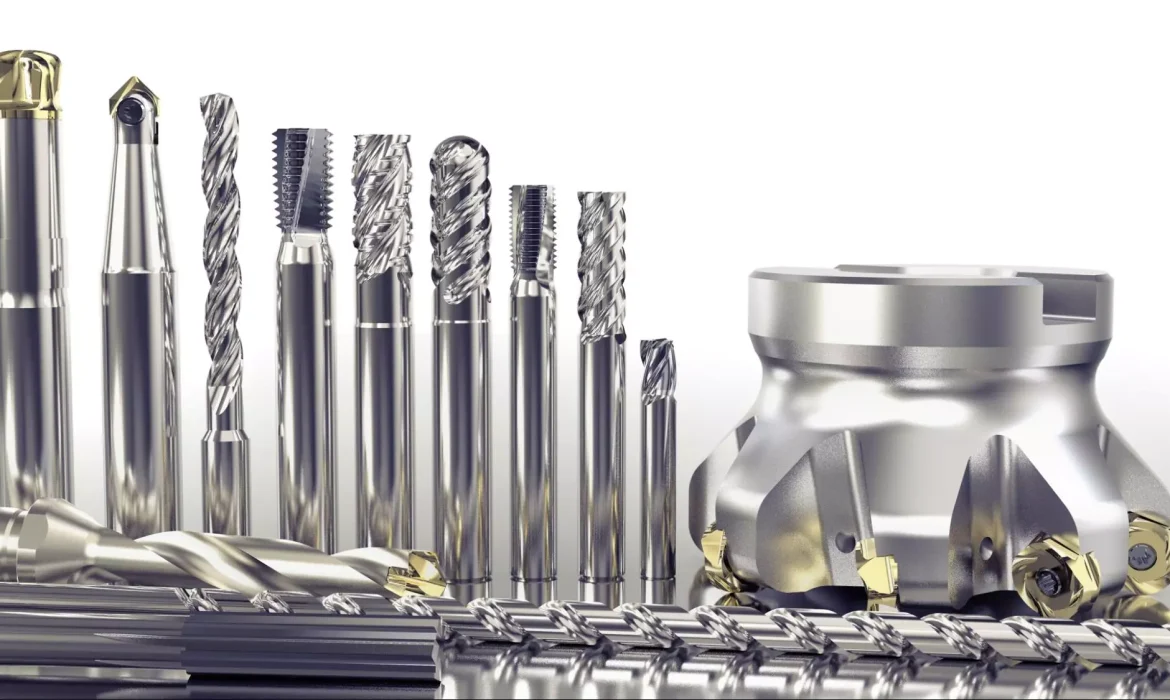
When diving into CNC machining tools, it’s helpful to get clear on what they are and how they differ by function. CNC machining tools are the cutting instruments used in computer numerical control (CNC) machines to shape, cut, drill, or bore materials with precision. The most common types are milling tools, turning tools, and drilling tools, each designed for a specific machining task.
- Milling tools primarily remove material using rotary cutters. They can create flat surfaces, slots, and complex contours.
- Turning tools work on lathes, rotating the workpiece while the tool removes material, ideal for cylindrical shapes.
- Drilling tools focus on creating holes, using various drill bits adapted to different materials and hole specifications.
Understanding a tool’s anatomy helps you pick the right one for your project. Key components include:
- Flutes: Helical grooves that guide chips away from the cutting area.
- Cutting edges: The sharp surfaces that actually cut the material.
- Shank: The non-cutting end that fits into the tool holder or spindle.
- Geometry: Includes the tool’s shape, helix angle, and rake angle, all of which affect cutting performance and chip evacuation.
Each CNC cutting tool’s design influences how it handles speed, feed, and material removal. Knowing these basics makes selecting milling cutters, drill bits, or lathe tools easier and more effective. Whether you’re working with small CNC machining tools or heavy-duty cutters, understanding these elements is the foundation of good machining.
Common Materials for CNC Cutting Tools
Choosing the right material for CNC machining tools is key to getting the best performance and tool life. Here’s a quick rundown of the most common materials used in CNC cutting tools:
- High-Speed Steel (HSS): HSS tools are popular because they offer good toughness and sharp cutting edges at a reasonable cost. They work well for softer metals and general-purpose machining where high heat resistance isn’t critical. If you need reliable tools for moderate speeds and lighter jobs, HSS is a solid choice.
- Carbide: Carbide tooling stands out for its outstanding durability and excellent heat resistance. This makes carbide ideal for high-speed machining and tougher materials. It holds its cutting edge longer than HSS, reducing downtime for tool changes. Carbide end mills and drill bits are a staple in most shops aiming for accuracy and efficiency.
- Cobalt and Ceramic Tools: When you’re dealing with extremely hard materials or high-temperature applications, cobalt and ceramic tools shine. Cobalt adds strength and heat tolerance to HSS tools, while ceramic tools can sustain very high temperatures, perfect for heavy-duty or dry machining where coolant use is limited.
- Coated Tools (TiN, TiAlN): Tool coatings like Titanium Nitride (TiN) and Titanium Aluminum Nitride (TiAlN) add another layer of benefits. Coatings improve hardness, reduce friction, and extend tool life by protecting against wear and heat. This lets you push speeds and feeds higher without sacrificing tool life.
Choosing the right material depends on your workpiece, machining speeds, and budget. For more on finishing and roughing techniques that suit these cutting tools, check out advanced CNC milling machines and tooling options.
Essential Types of CNC Milling Tools
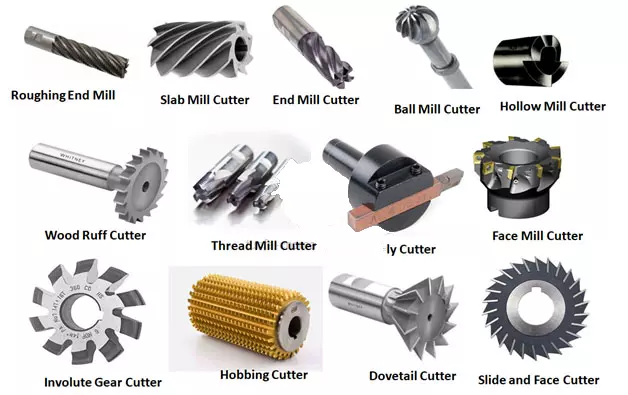
When it comes to CNC machining tools, milling cutters are some of the most versatile. Here’s a quick rundown of the essential types of CNC milling tools and what they’re best for:
- End Mills: These are the most common CNC cutting tools for milling operations.
- Flat end mills are perfect for precision cutting and slotting.
- Ball nose end mills are great for 3D contouring and smooth curved surfaces.
- Roughing end mills have serrated edges designed for fast material removal.
- Corner radius end mills reduce edge chipping and increase tool life, useful for finishing.
- Face Mills: These tools are designed for cutting large, flat surfaces quickly. They’re often used for stock removal and prepping the surface of the workpiece before detailed milling.
- Slab Mills and Fly Cutters: Ideal for heavy material removal, slab mills have multiple cutting edges on the face, while fly cutters have one or two, both excelling at planing large work surfaces.
- Specialty Mills: These serve niche purposes in milling:
- T-slot mills are used for creating T-shaped grooves, common in machine tables.
- Dovetail mills cut angled profiles used in tool joints and fixtures.
- Thread mills provide precise thread cutting, flexible for different thread sizes.
Choosing the right milling cutter depends on your material, desired finish, and operation. For custom CNC jobs, considering the right end mills and specialty cutters is key to efficiency and accuracy. If you’re interested in a more tailored solution, check out our best custom CNC machining parts manufacturing services for expert guidance.
Drilling and Hole-Making Tools
When it comes to CNC machining tools for drilling and hole-making, choosing the right drill bit is essential for accuracy and efficiency. Common types include twist drills, which are versatile for general purpose; center drills used to create starter holes; spot drills for precise hole positioning; ejector drills designed to clear chips quickly; and step drills that can cut multiple hole sizes with a single tool.
For applications where tight tolerances and smooth finishes are critical, reamers come into play. They ensure holes meet exact specifications with minimal surface roughness, which is especially important in precision parts production.
To prepare holes for fasteners or improve assembly fit, countersink and counterbore tools are used. Countersinks create chamfers allowing screw heads to sit flush, while counterbores drill a flat-bottomed recess for bolt heads or nuts.
Selecting the right combination of these CNC cutting tools depends on the material and machining goals, whether you’re working on lightweight aerospace parts or sturdy industrial components. For high-precision requirements, exploring CNC drilling and turning options like those detailed in our CNC turning precision parts can offer deeper insights into tool selection and machining strategies.
Turning and Lathe Tools
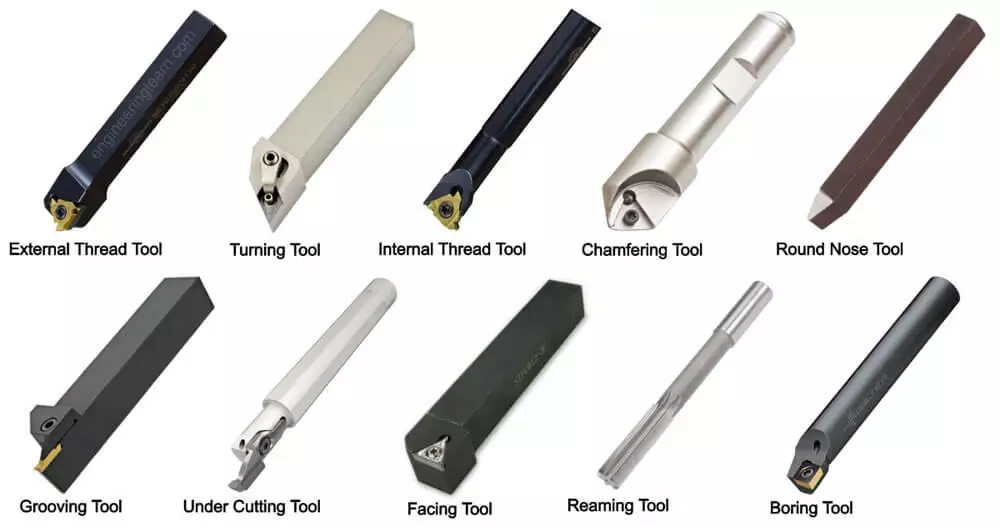
Turning and lathe tools are essential for shaping parts by removing material on CNC lathes. External and internal turning tools are designed for cutting the outside or inside diameters of a workpiece. Roughing inserts are made to remove large amounts of material quickly, while finishing inserts focus on smooth surface finishes and precise dimensions.
Boring bars play a key role in precision hole enlargement, allowing tight control over hole size and finish. For threading operations, CNC threading tools include taps, thread mills, and single-point threading cutters — each suited for different thread types and sizes.
Parting and grooving tools are used to cut off finished parts or create grooves. These tools must be sharp and rigid to avoid deflection during cuts. Selecting the right turning and CNC lathe tools depends heavily on the material and the specific machining task. For a deeper dive into lathe operations, see our guide on what is a CNC lathe.
By choosing the appropriate inserts and tooling styles, you’ll boost efficiency and surface quality in lathe machining.
Factors to Consider When Selecting CNC Tools
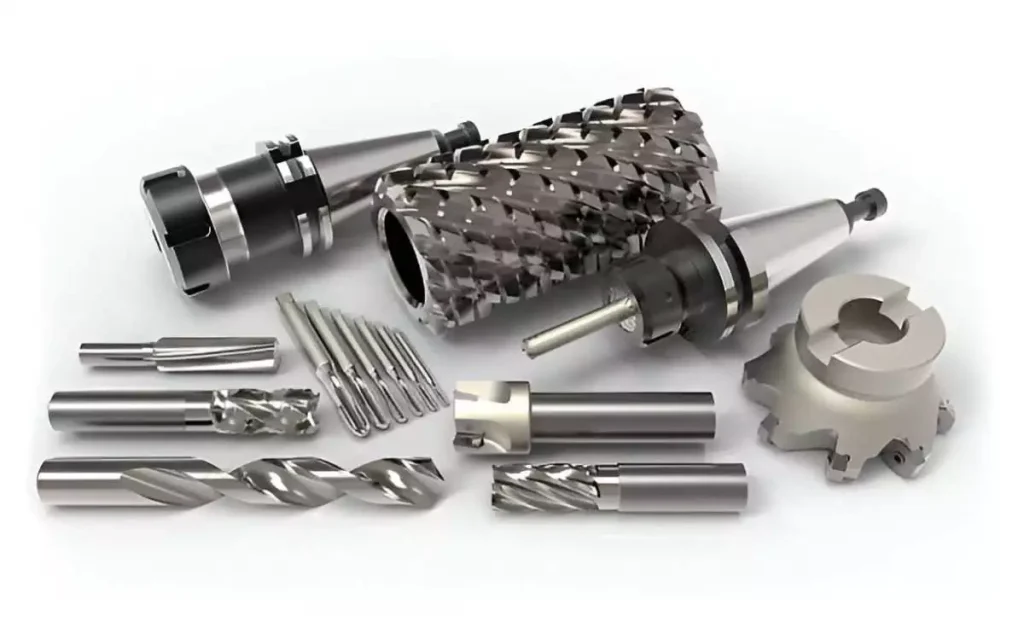
Choosing the right CNC machining tools depends heavily on several key factors to get the best performance and tool life.
- Workpiece Material Compatibility: Different materials like aluminum, steel, or composites need specific tool materials and coatings. For instance, carbide tooling excels with hard metals, while high-speed steel (HSS) suits softer materials.
- Operation Type and Tool Geometry: Whether you’re milling, drilling, or turning determines the tool shape and features needed. Tool geometry, including flute count and helix angle, affects chip evacuation and surface finish. More flutes usually mean smoother cuts but slower chip clearance.
- Tool Coatings: Coatings like TiN and TiAlN improve tool life by reducing heat and wear. These are especially important for high-speed or heavy-duty operations.
- Speed, Feed Rates, and Coolant Needs: Matching the cutting speed and feed with the tool design and material ensures efficient machining without premature tool wear. Proper coolant use can extend tool life and maintain part quality.
- Balancing Cost and Performance: Higher-end tools might cost more upfront but save money over time with longer life and better finishes. Consider your production volume and part tolerances when selecting between budget and premium CNC cutting tools.
Taking these aspects into account helps avoid unnecessary downtime and boosts overall productivity. For deeper insight into precision manufacturing, check out our detailed guide on metrology and precision in manufacturing.
Best Practices for Tool Maintenance and Optimization
Keeping your CNC machining tools in top shape is key to maintaining precision and cutting costs. Here are some best practices to extend tool life and reduce downtime:
- Proper Storage: Store your CNC cutting tools in clean, dry places to prevent corrosion and damage. Use protective cases or racks to keep tools organized and avoid chipping or dulling the edges.
- Regular Sharpening and Inspection: Frequent inspection helps catch wear early. Sharpen tools like end mills and drill bits as soon as you notice dullness to maintain cutting efficiency and surface finish quality.
- Wear Monitoring and Breakage Prevention: Keep an eye on tool wear by checking for edge chipping, erosion, or discoloration. Update your tool usage based on these signs to avoid unexpected breakage, which can disrupt production.
- Coolant Use: Proper coolant application reduces heat buildup and friction during machining. Using appropriate coolants not only protects your tools but also improves workpiece quality.
- Tips to Reduce Downtime:
- Rotate between multiple sets of tools to allow cooling and sharpening without halting production.
- Keep spare cutting tools ready to swap immediately when wear is detected.
- Train operators on correct tool handling and setup to minimize accidental damage.
Following these simple steps can significantly boost the efficiency and lifespan of your CNC machining tools, making your shop more productive and cost-effective. For insights on optimizing machining operations with the right tools, consider looking into advanced tools for specific materials like those used in CNC machining of Hastelloy steel parts.
Advanced and Specialty CNC Tools
For precision work in small-scale or high-speed machining, advanced CNC machining tools are essential. These high-performance tools offer enhanced accuracy and faster cycle times, making them ideal for industries that demand tight tolerances and quick turnaround.
When working with exotic materials like titanium and composite alloys, standard CNC cutting tools often fall short. Specialty tools designed for these tough materials feature tougher substrates and coatings that resist wear and handle extreme temperatures better.
Emerging trends in CNC machining tools include variable helix designs, which improve chip evacuation and reduce vibrations, leading to smoother cuts. Another breakthrough is polycrystalline diamond (PCD) tooling, known for its exceptional hardness and longevity. PCD tools excel in machining abrasive materials with superior surface finishes and reduced tool change frequency.
By selecting the right advanced or specialty CNC tool, you can boost productivity and extend tool life, especially when tackling challenging materials or demanding operations. For an overview of the basics, check out our detailed CNC machining basics guide.