
Tired of delayed lead times and out-of-tolerance components?
Sourcing custom parts shouldn’t feel like a gamble.
As a manufacturing specialist, I know that even minor oversight can lead to expensive scrap and missed deadlines.
In this guide, I’m breaking down exactly How to Avoid Common Issues in CNC Machining Services for Precision Parts.
From optimizing design files to selecting the right tolerances, these are the proven strategies you need to secure high-quality results and protect your bottom line.
Let’s get to work.
What Are the Common Issues in CNC Machining for Precision Parts?

Achieving tight tolerances and flawless aesthetics requires navigating several potential pitfalls. In professional CNC Machining Services, identifying these common failures early is the first step toward ensuring consistent quality and reducing waste.
1. Poor Surface Finish
A rough surface is more than just a cosmetic flaw; it compromises the functionality and safety of CNC Precision Parts. This issue is frequently caused by dull tooling, aggressive feed rates, or unstable machine settings that induce vibration.
- Impact: Increases friction, affects sealing surfaces, and leads to immediate rejection in high-stakes industries.
- Common Scenarios: Critical for medical devices and high-end automotive components where surface smoothness is a strict requirement.
2. Dimensional Inaccuracy
When CNC machining for precision parts, failing to meet design specifications renders the component useless. This usually stems from machine calibration drift, improper workpiece clamping that allows movement, or flawed tool paths.
- Impact: Parts fail to fit during final assembly, causing costly production delays and material waste.
- Common Scenarios: Prevalent in aerospace and precision machinery sectors where tolerances are measured in microns.
3. Tool Wear and Tear
Excessive tool degradation is a silent killer of machining precision. This occurs due to overuse, machining extremely hard materials without appropriate coatings, or setting feed speeds too high.
- Impact: As the tool edge degrades, it causes chatter marks and a progressive loss of dimensional accuracy.
- Common Scenarios: Frequent during extended production runs of hardened steel or when executing intricate, deep cuts.
4. Overheating and Thermal Deformation
Heat is a natural byproduct of friction, but uncontrolled heat causes materials to warp. Without proper heat dissipation, the workpiece expands during cutting and shrinks out of tolerance upon cooling.
- Impact: Results in warped parts, incorrect dimensions, and compromised structural integrity.
- Common Scenarios: A major challenge in precision machining services handling heat-sensitive metals like aluminum or titanium alloys.
Key Strategies to Avoid Common CNC Machining Issues
To deliver top-tier CNC Machining Services, we don’t just react to problems; we prevent them. Avoiding defects in CNC Precision Parts requires a mix of discipline, technology, and experience. Here are the strategies we use to keep production running smoothly and ensure every part meets spec.
1. Regular Tool Maintenance and Monitoring
Worn-out tools are the number one enemy of a good surface finish. If a cutter is dull, it drags rather than slices, leading to rough edges and dimensional errors. We stay ahead of this by implementing strict tool life monitoring.
- Solution: Regularly check for signs of chipping or flank wear. We always use high-quality carbide tools and adjust feed rates to match the material hardness.
- Best Practice: Implement automated tool monitoring systems that alert operators before a tool fails.
- Customer Tip: Ensure your supplier uses sharp, maintained tools to guarantee accurate cutting and minimize the risk of part rejection.
2. Proper Machine Calibration and Setup
Even the most expensive machine is useless if it isn’t calibrated correctly. CNC machining for precision parts demands rigid adherence to geometric accuracy. If the machine axis drifts even a micron, the part fails. This is especially critical for industries demanding tight tolerances, such as CNC aerospace machining, where precise calibration is non-negotiable.
- Solution: We calibrate machines regularly using laser interferometers and ball bars to ensure the setup is perfectly balanced.
- Best Practice: Use high-precision calibration tools to verify the machine’s accuracy before starting any high-value run.
- Customer Tip: Work with experienced suppliers who can provide verification of their equipment calibration logs.
3. Advanced Programming and Simulation Techniques
Human error in coding can lead to costly machine crashes or scrapped parts. We rely on advanced software to “cut” the part virtually before we ever touch the metal. This is critical when manufacturing complex geometries found in CNC medical and pharmaceutical equipment, where there is no room for error.
- Solution: Use integrated CAD/CAM software to simulate the entire process. This helps identify common CNC machining issues like tool collisions or inefficient paths.
- Best Practice: Run full virtual simulations to optimize cutting paths and cycle times.
- Customer Tip: Ask if your manufacturing partner integrates CAD and CAM for precise and efficient machining workflows.
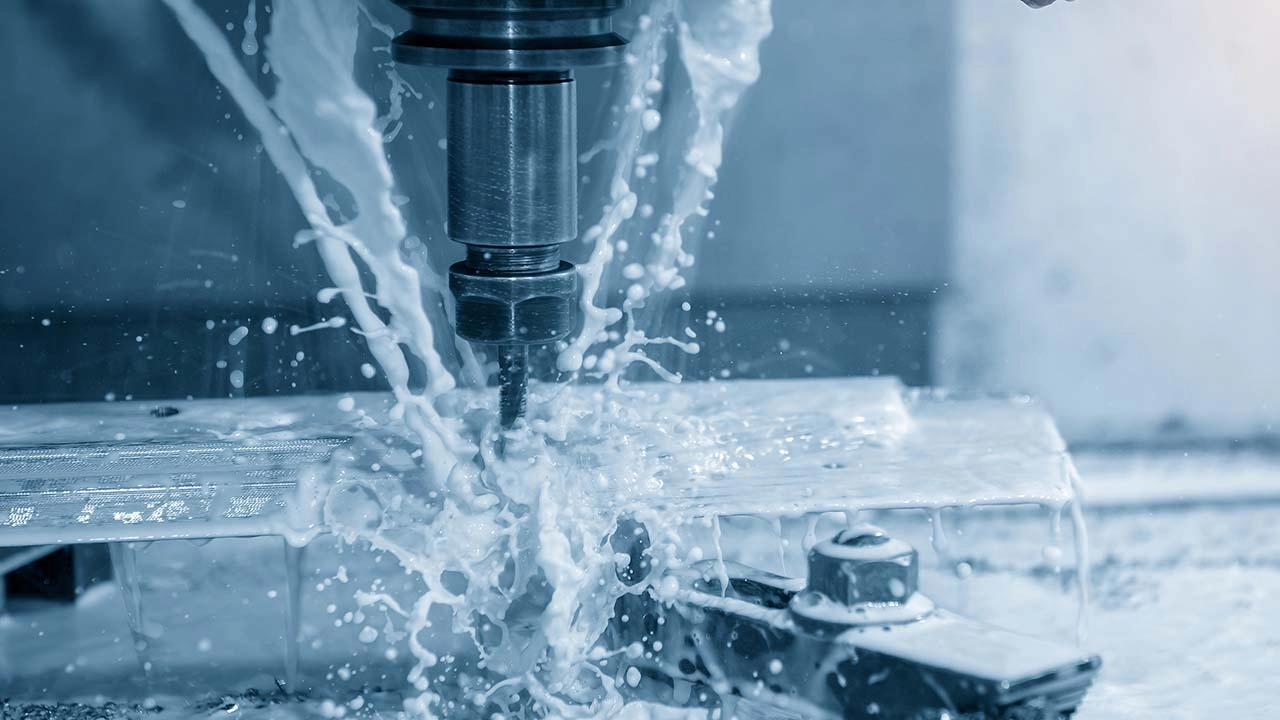
4. Cooling and Lubrication Management
Heat is a byproduct of friction, and excessive heat causes thermal deformation. If the workpiece expands during cutting and shrinks later, your dimensions will be off. Proper fluid management is essential for precision machining services.
- Solution: We use specific cooling liquids and lubricants tailored to the material (like aluminum vs. titanium) to flush chips and reduce heat.
- Best Practice: Optimize high-pressure coolant systems to get fluid exactly where the tool meets the material.
- Customer Tip: Look for shops that use cooling fluid filtration and recycling systems to maintain stable temperature control throughout the production run.
How to Select the Right CNC Machining Service to Avoid Issues
Finding a partner that delivers consistent CNC Machining Services is often more critical than the design itself. I’ve seen great designs fail because the machine shop didn’t have the right culture or capabilities. To avoid the headaches of scrapped parts and missed deadlines, you need to vet your suppliers thoroughly.
Evaluate the Supplier’s Expertise in Precision Parts
Experience is everything in this industry. You want a supplier who specializes in CNC machining for precision parts, not just a general fabrication shop. When I review a potential partner, I look at their track record with similar components. Do they have a technical background in your specific industry, whether it’s medical or aerospace?
It is also vital to see how they handle the development phase. A supplier that knows how to create a prototype effectively demonstrates they can troubleshoot issues before full-scale production begins.
What to look for:
- Case Studies: Proof of past work with tight tolerances.
- Material Knowledge: Expertise in the specific alloys or plastics you are using.
- Engineering Support: Ability to offer DFM (Design for Manufacturing) feedback.
Check Equipment and Technology Capabilities
High-precision results require high-precision tools. You need to ensure the supplier’s equipment list matches the complexity of your CNC Precision Parts. A shop running outdated 3-axis machines might struggle with complex geometries that a modern 5-axis setup handles easily.
Having a solid understanding of what is CNC milling capacity regarding their specific axis configurations will help you determine if they can meet your geometric requirements without excessive setups, which introduces error.
| Feature to Check | Why It Matters |
|---|---|
| Multi-axis Machining | Reduces setup times and improves accuracy for complex shapes. |
| High-Speed Spindles | Essential for achieving fine surface finishes on small parts. |
| Automated Loading | Increases consistency and lowers cost for volume orders. |
Understand the Supplier’s Quality Control Process
Never take quality for granted. The best precision machining services have a rigorous Quality Control (QC) process baked into every step, not just a final check at the end. I always advise customers to request specific quality certifications, like ISO 9001, which guarantees a standardized management system.
Key QC Checklist:
- In-Process Inspection: Checking parts while they are still on the machine.
- CMM Reports: Ask for Coordinate Measuring Machine reports to verify dimensions.
- First Article Inspection (FAI): Ensure the first part off the line is perfect before running the rest.