
Reverse Engineering Services for Parts Without Drawings
Recreate obsolete, worn, or undocumented parts from 3D scan or existing data into parametric CAD and manufacturing-ready files for redesign, replacement, and CNC machining.
Our Service
Reverse Engineering Services for Replacement Parts and Existing Components
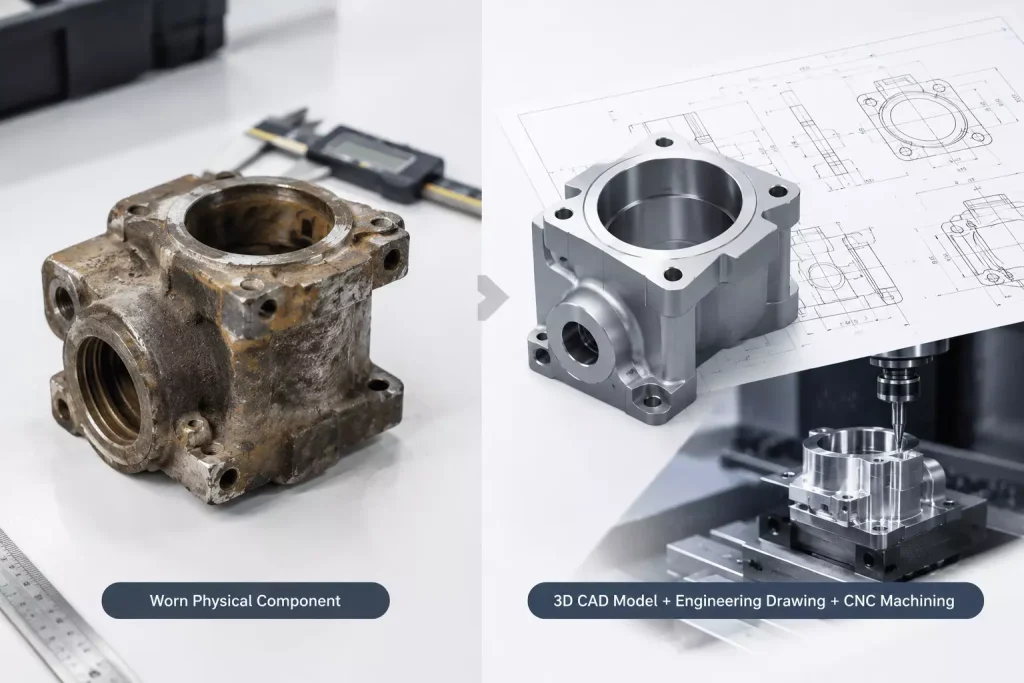
When an existing component needs to be reproduced but the original drawings, CAD files, or supplier are no longer available, reverse engineering can recover the design information needed to manufacture a replacement or develop a revised version. We work from physical components and available technical references to reconstruct the design and prepare it for manufacturing.
- Obsolete or Discontinued Components — The equipment is still in service, but the original part is no longer available. We use the existing component as a reference to reconstruct its geometry and critical features, providing a basis for producing a replacement.
- Parts Without Drawings or CAD Files — You have the physical component but lack the design data needed for reproduction. We analyze the available part, dimensions, mating information, and technical references to rebuild the design for manufacturing.
- Worn or Damaged Parts — A replacement is needed, but the original design information is unavailable. We work from the remaining geometry and available technical references to establish the replacement design before production.
- Existing Parts That Need Modification — An existing component needs changes to dimensions, interfaces, clearances, or other functional features. We reconstruct the existing design and use it as the basis for developing the revised component before CNC machining.
Our Service
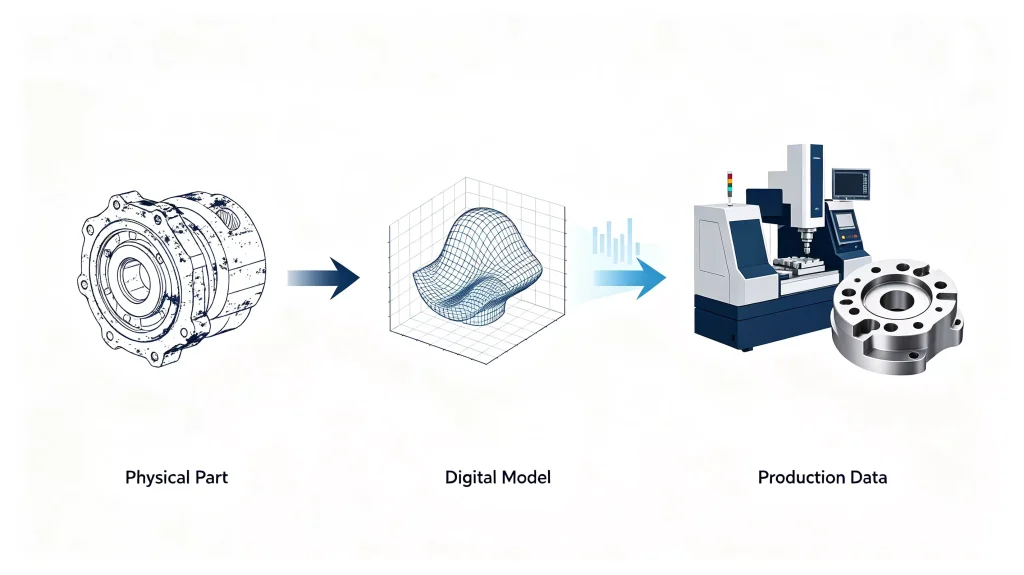
From Physical Part to Manufacturing Data
A physical component, sample, or partial technical reference provides the starting point for rebuilding a production-ready design. The focus is on the geometry, critical dimensions, interfaces, and functional features that determine how the part fits, functions, and can be manufactured.
- 1. Part & Reference Review — Our team reviews the physical component together with available drawings, mating parts, samples, and dimensional information to identify critical interfaces and functional features before reconstruction begins.
- 2. Measurement & Feature Capture — Key dimensions, mounting features, bores, threads, mating surfaces, and other functional geometry are captured with consideration for how the component fits and interacts with related parts.
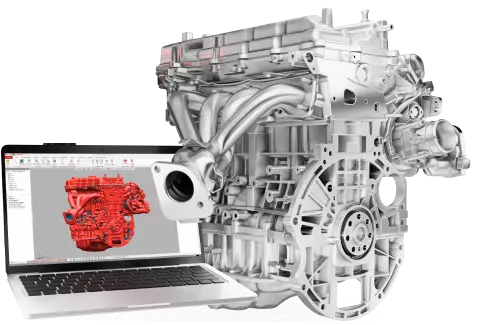
- 3. CAD Reconstruction — The collected information is used to recreate the component as a digital CAD model, with key geometry and functional relationships defined for design review and production.
- 4. Design & Manufacturing Review — Our engineering team checks critical dimensions, tolerances, interfaces, and manufacturability against the available reference information before the design moves into production.
- 5. Production — The completed design can then move into the appropriate manufacturing process for a replacement part, modified component, low-volume production, or repeat manufacturing.
Our Service
Reference Information for Reverse Engineering
A physical part is often the most important reference when original drawings or CAD files are no longer available. As a manufacturing partner, MS Machining can work from available part information, technical references, and application requirements to reconstruct the design with production in mind.
- Physical Parts or Samples — An existing component provides a direct reference for its geometry, interfaces, mounting features, and other functional details. These references form the basis for reconstruction and replacement production.
- Drawings & CAD Data — Original drawings, partial CAD models, sketches, or older design files can help clarify dimensions, features, tolerances, and design intent. Available data can be reviewed alongside the physical part when the original design information is incomplete.
- Mating Parts & Known Dimensions — Related components, interface dimensions, fit requirements, and known critical measurements help define how the part connects and functions within the assembly. This information also helps ensure the reconstructed design is suitable for manufacturing and fit.
- Application & Modification Requirements — Information about how the component is used, along with required changes to dimensions, interfaces, clearances, or functional features, helps define the revised design and its production requirements.
Our Service
Engineering Input for Production
Reverse engineering involves more than reproducing the geometry of an existing part. The condition of the reference component, the relationship between mating features, and the requirements of the manufacturing process all need to be considered before the reconstructed design is released for production.
Wear vs. Original Geometry — Used components may have worn bores, shafts, threads, sealing surfaces, or contact areas. These conditions need to be distinguished from the intended geometry so that wear is not reproduced in the replacement part.
Fits & Functional Interfaces — Critical dimensions are evaluated in relation to mating components. Bore and shaft fits, locating surfaces, mounting patterns, thread interfaces, and sealing features can be established from the available part and assembly information.
Manufacturing & Inspection — Wall thickness, internal radii, feature accessibility, tolerance requirements, and inspection access can affect how a reconstructed part is manufactured and verified. These considerations are addressed before production.
Material & Surface Requirements — Known material grades, heat-treatment requirements, and surface finishes can be incorporated into the production information when supported by drawings, specifications, or application requirements.
Reverse Engineering Services FAQ
Practical answers to common questions about rebuilding parts without original drawings, establishing critical dimensions, and preparing reconstructed designs for production.
Yes. A physical part can be used as the primary reference when original drawings or CAD files are unavailable. The measured condition of the part is not automatically treated as the original design. Critical interfaces, mating features, and available dimensions are reviewed before the replacement geometry is established.
A worn component cannot always be treated as a direct dimensional reference. Bores, shafts, threads, sealing surfaces, and contact areas may have changed during service. The remaining geometry is considered together with mating components, known dimensions, drawings, and application requirements to distinguish functional design dimensions from wear.
There is no single accuracy value that applies to every feature. The achievable result depends on the feature, part size, condition of the reference component, measurement method, and functional requirement. Production tolerances should be defined according to how the part fits and functions rather than applying an unnecessarily tight tolerance to every dimension.
Measurement also has its own uncertainty, so the required manufacturing tolerance and inspection method need to be considered together when establishing production requirements.
Not always, but a mating component can be valuable when fit or interface dimensions are critical. It can provide direct information about bore-and-shaft relationships, locating surfaces, mounting patterns, threads, sealing features, and other interfaces that may not be fully determined from the reference part alone.
Yes, but previous machining, welding, grinding, or other repairs need to be distinguished from the original design where possible. A repaired area should not automatically be reproduced simply because it exists on the current part. Drawings, mating components, known dimensions, and application information can help determine whether a feature represents the intended design or a previous repair condition.
The reconstructed model can be prepared for manufacturing, but it should first be reviewed against the required tolerances, datums, interfaces, material, surface finish, and production method. Reverse-engineered CAD data is not simply a visual copy of the physical part. Manufacturing and inspection requirements need to be incorporated into the production definition.
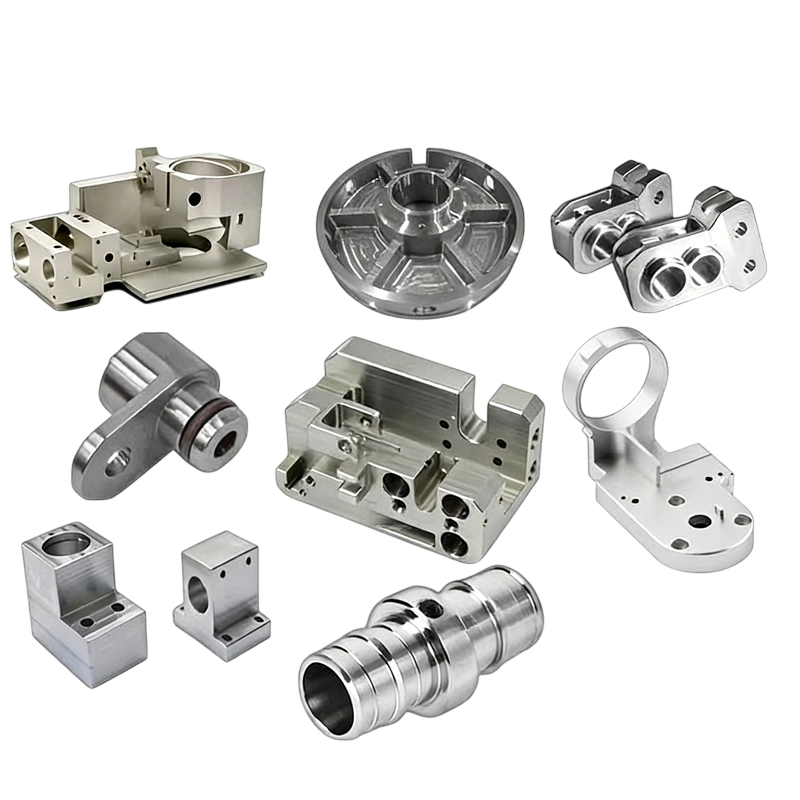
Yes. This is useful when the customer needs both design recovery and a replacement part. The reconstructed design can be reviewed against the intended manufacturing process and then moved into production, avoiding the need to separate the engineering and manufacturing work between different suppliers.
Send whatever is available: the physical part, photos, drawings, CAD files, known dimensions, mating components, material information, surface-finish requirements, and the intended application. Even incomplete information can be useful for the initial review. Clear functional requirements also help distinguish missing design information from dimensions that can be established directly from the reference part.
Have a Part Without Usable Design Data?
Send us the available part information, drawings, CAD files, or technical references. We can review the requirements and determine the next steps for reverse engineering and production.
Get a Reverse Engineering Quote