
Plating & Passivation Services for Precision CNC Parts

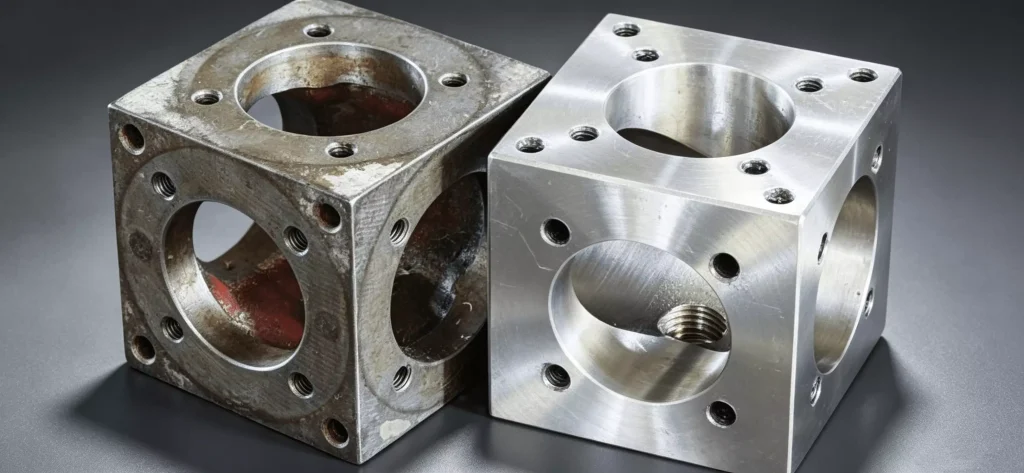
We handle CNC machining and surface treatment as one process, with plating or passivation requirements considered from the start. Masking, critical dimensions and functional surfaces are defined around the drawing, while finished parts are inspected after treatment to verify the final condition—not just the machined part.

Our Service

What Our Service Covers

Our plating and passivation process is integrated with CNC production to control the finished condition of each part. Surface finish, coating thickness, masking and dimensional requirements are established from the drawing before treatment.

We provide electroless nickel, zinc and zinc-nickel plating, as well as stainless steel passivation to ASTM A967 and AMS 2700. The service covers both parts machined by us and customer-supplied CNC blanks.

Critical features such as threads, bores, bearing seats, seal lands and ground surfaces are reviewed for masking and finish allowance. Where required, finished dimensions can be controlled to ±0.01 mm, with tighter tolerances reviewed against the part geometry, material and surface treatment.

For drawings that call out only “nickel plate” or “passivate,” we review the applicable specification, coating thickness and masking requirements before production and confirm the final treatment requirements before processing.

Plating & Passivation Capabilities

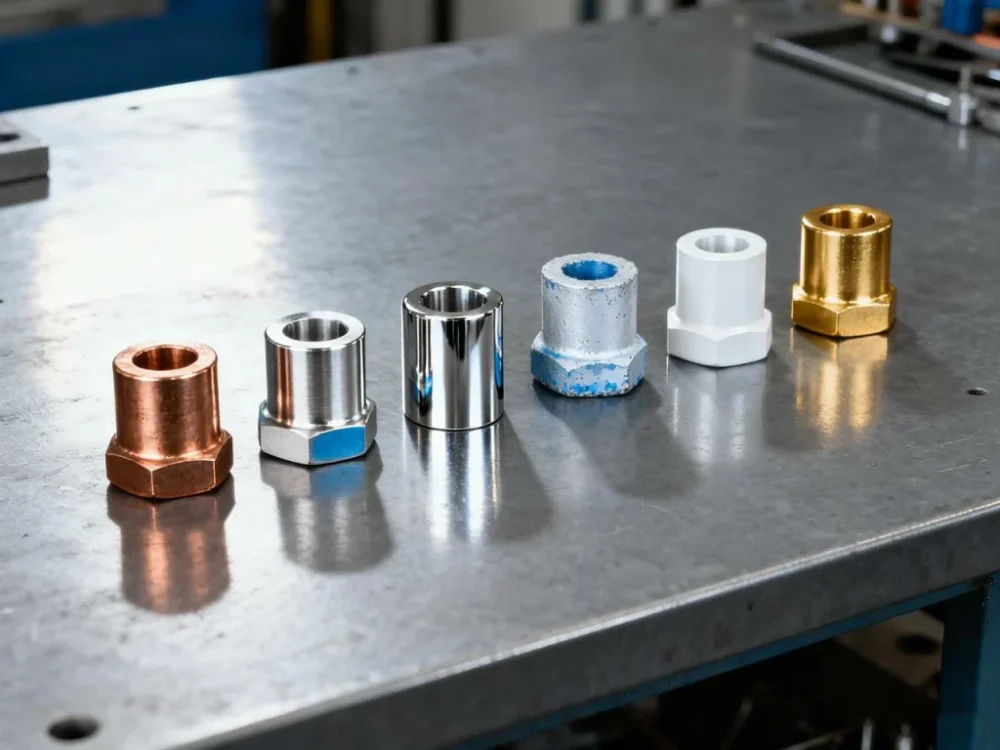
The right finish depends on the part material, required corrosion or wear resistance, functional surfaces and allowable dimensional change. The table below compares the plating and passivation processes we offer.

Finish Primary Function Typical Substrates Coating / Dimensional Consideration Common Specification
Electroless Nickel Corrosion and wear resistance with uniform deposition Steel, stainless steel, copper alloys, aluminum Typically 5–25 µm with uniform coverage on complex features ASTM B733, AMS 2404
Zinc Plating Sacrificial corrosion protection Carbon and alloy steel Coating thickness must be considered on fits and threads ASTM B633
Zinc-Nickel Plating Enhanced corrosion protection Carbon and alloy steel Coating thickness must be considered on functional surfaces ASTM B841, AMS 2417
Electrolytic Nickel and Chrome Wear resistance, hardness and surface appearance Steel, copper alloys Deposit distribution varies with part geometry Applicable ASTM or AMS specification
Chem Film Aluminum corrosion protection and electrical conductivity Aluminum Very thin conversion coating with minimal dimensional effect MIL-DTL-5541
Stainless Steel Passivation Improved corrosion resistance 304, 316, 316L, 17-4 PH No intentional coating build-up ASTM A967, AMS 2700
Black Oxide and Phosphate Light corrosion protection or paint base Carbon steel Minimal dimensional change Applicable AMS or MIL specification

Choosing the Finish

For stainless steel parts that require corrosion resistance without coating build-up, passivation is typically the appropriate process.

For complex geometries, bores and recessed features that require uniform coverage, electroless nickel provides more consistent deposition than conventional electrolytic plating.

For steel components requiring sacrificial corrosion protection, zinc or zinc-nickel plating can be selected based on the required corrosion performance and service environment.

For aluminum components requiring corrosion protection while maintaining electrical conductivity, chem film is commonly used.

Our Service

Plating & Passivation Process Differences

We select the finish based on the part material, geometry, corrosion requirements, wear requirements and dimensional control. The key difference is how each process performs on the finished part.

Plating & Passivation Process Differences
PLATING & PASSIVATION

How We Hold Plated Parts to Print

A finish that changes the fit can make an otherwise correct part unusable. We treat the coated or passivated dimension as the delivery condition. Plating thickness, pre-finish dimensions, masking and critical features are reviewed before finishing, with final inspection performed after treatment.

01

What the Finish Does to Size

Electrolytic zinc, nickel and chrome add material to the surface. Outside diameters increase, while holes and internal threads become smaller. Edges and thread crests can build more than recessed features because of current distribution.

Electroless nickel provides more uniform coverage, but it still adds material to every coated surface. Pre-finish machining dimensions are adjusted around the required coating thickness and final tolerance.

Chem film, black oxide and phosphate normally have minimal dimensional effect. Passivation does not intentionally add a coating, so it normally has no meaningful effect on dimensional fits.

If a drawing gives a tight fit but does not define whether the tolerance applies before or after finishing, we confirm the inspection condition before production.
02

Drawing and PO Requirements

A callout such as “nickel plate” or “passivate” is not enough for controlled production. The drawing or PO should define the process, applicable specification, coating thickness, measurement location, finished or pre-finish dimension condition, and required masking areas.

For high-strength steel, the applicable hydrogen-embrittlement relief and bake requirements must also be defined.

When these requirements are incomplete, we confirm the finish condition before quoting rather than making assumptions.

03

Threads, Fits and Sealing Surfaces

Internal threads, precision bores, press fits and bearing seats can lose functional clearance after plating. These features are either masked or machined to a controlled pre-finish dimension based on the specified coating build.

Seal grooves and gasket lands are handled the same way because coating build can affect compression and sealing. Ground and bonding pads are normally masked when direct metal contact is required.

04

Hydrogen Bake for High-Strength Steel

Acid cleaning and electrolytic plating can introduce hydrogen into susceptible high-strength steel. The material and hardness are reviewed before plating, and the required post-plating bake is performed within the applicable specification's time and temperature limits.

Bake conditions are recorded with the production lot. This requirement applies to susceptible steel undergoing electrolytic plating; it is not a passivation requirement for stainless steel.

ENGINEERING CHECK

Where Missing Callouts Cause Problems

!
Missing Requirement Typical Result
No coating thickness range Threads, bores or fits can fail after plating
No masking requirements Sealing, bearing or grounding surfaces receive unwanted coating
Tolerance defined only on the bare part Finished assembly can fail despite the machined part passing inspection
No bake requirement for susceptible steel Hydrogen-embrittlement risk may remain after dimensional inspection

Our Service

From Machined Blank to Certified Finish

Machining and finishing requirements are controlled under the same order. Before production, we confirm the material, finish specification, coating thickness, masking areas and critical finished dimensions. These requirements are carried through machining, surface treatment and final inspection so the delivered part is checked in its finished condition.

PLATING & PASSIVATION

FAQ

Common questions about machining, plating, passivation, dimensional control, compliance and quoting for finished CNC machined parts.

01 Can you machine and finish parts under one order?

Yes. Machining and surface treatment are controlled under the same order, with finishing requirements carried through production and final inspection performed on the finished part. This keeps machining, plating or passivation, and final dimensional requirements aligned.

02 What if the drawing only says “nickel plate” or “passivate”?

We review the finish callout before quoting and confirm the applicable specification, coating thickness, masking requirements and finished-dimension condition. If the drawing does not provide enough information for controlled production, we clarify the requirement before processing.

03 Do you accept customer-supplied blanks for finishing?

Yes. Customer-supplied blanks can be processed when the material, finish specification, coating thickness, masking requirements and required inspection condition are defined. The incoming condition is also reviewed before finishing.

04 Will threads, bores and press fits remain within tolerance after plating?

The finished dimension must account for coating build or the feature must be masked. For plated parts, we review threads, bores, fits and sealing surfaces against the specified coating thickness before production rather than relying on the bare-machined dimension.

05 Is passivation the same as plating?

No. Passivation is a chemical treatment for stainless steel that removes free iron and supports formation of the protective oxide layer without intentionally depositing a coating. It is not a substitute for plating and does not provide the same function on carbon steel.

06 When is hydrogen bake required?

Hydrogen embrittlement relief may be required for susceptible high-strength steel after electrolytic plating processes such as zinc, electrolytic nickel or chrome. The applicable specification determines the bake requirements and documentation; stainless steel passivation does not require this type of post-plating bake.

07 Do you provide RoHS and REACH compliant finishes?

Compliance depends on the selected finish and applicable chemical requirements. Trivalent chromate and other RoHS/REACH-compatible processes can be specified when required by the purchase order, with the applicable finish and process recorded in the order documentation.

08 What do you need for a quote?

Send the 2D drawing, 3D model when available, material grade, quantity and required finish specification. For plated or passivated parts, include coating thickness, masking areas, critical finished dimensions and any requirements for hydrogen bake, salt spray or quality documentation.

READY TO QUOTE?

Send Us Your Drawing

Share your drawing and finish requirements. We will review the machining, plating or passivation requirements before quoting.

Upload Drawing for Quote