In many industrial manufacturing projects, a single production process is not enough to complete a finished metal component. Large structures, custom equipment parts, and fabricated assemblies often require a combination of welding and CNC machining to meet both structural and dimensional requirements.
Welding provides the flexibility to create complex structures by joining multiple metal components, while CNC machining is used to achieve accurate dimensions, precise holes, flat surfaces, and critical connection areas.
This combination, often referred to as welding machining, is commonly used for components that require both fabrication capability and machining accuracy. For manufacturers sourcing custom metal parts, choosing a CNC machining services supplier with experience in machining welded components can help simplify production coordination and improve consistency throughout the manufacturing process.
What Is Welding Machining?
Welding machining refers to a manufacturing approach that combines welding processes with CNC machining operations. Instead of producing a component entirely through machining or fabrication alone, manufacturers use each process where it is most suitable.
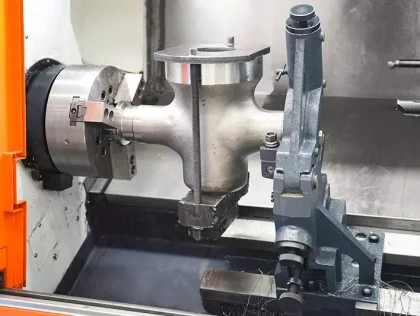
In a typical workflow, metal plates, tubes, or structural parts are first cut and welded into the required shape. After welding, CNC machining is performed on specific areas where tighter tolerances are needed.
For example, a welded machine base may provide the required structural support, but the mounting surfaces, alignment holes, and connection points may still require CNC milling or drilling to meet the final drawing specifications.
This process allows manufacturers to balance structural requirements, material usage, and machining requirements based on the actual design of the part.
How Welding and CNC Machining Work Together
Welding Creates the Basic Structure
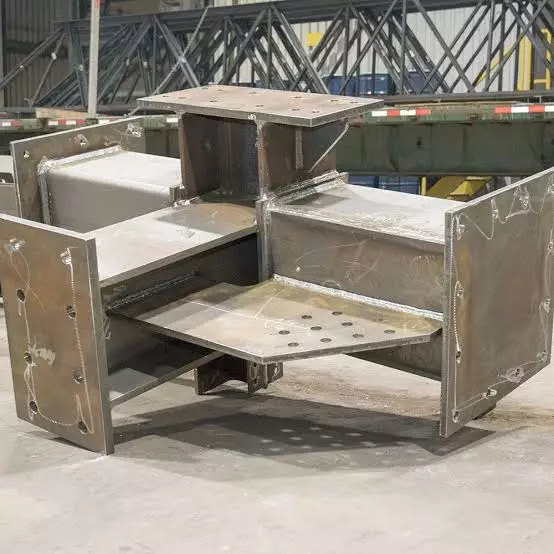
Welding is often selected when a component has a large size, complex geometry, or a design that would require excessive material removal if manufactured from a single block of material.
Common welded structures include:
- Machine frames
- Equipment supports
- Large brackets
- Custom enclosures
- Fabricated steel assemblies
For these types of parts, welding helps create the overall structure before precision machining begins.
However, welding can also introduce factors that need to be considered during manufacturing. Heat generated during welding may cause localized deformation or slight dimensional changes. Because of this, some surfaces and features may require additional CNC machining after welding.
CNC Machining Improves Dimensional Accuracy After Welding
After a welded assembly is completed, CNC machining is often used to process areas that directly affect assembly or performance.
Typical CNC machining operations include:
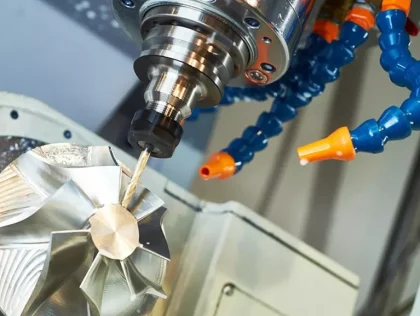
- Milling mounting surfaces
- Drilling accurate hole patterns
- Machining bearing seats
- Creating alignment features
- Finishing connection interfaces
For example, a welded frame may have the required overall shape, but the equipment installed on that frame may require flat mounting surfaces and accurately positioned holes. CNC machining helps achieve these functional requirements based on engineering drawings.
This is one reason why many manufacturers use welding machining instead of relying on welding alone for precision components.
Why Combine Welding and CNC Machining?
Suitable for Large and Complex Components
One challenge in CNC machining large parts is the amount of material that must be removed when starting from a solid block.
For a large steel structure, machining the entire component from raw material may increase:
- Material consumption
- Machining time
- Equipment requirements
A welding machining approach allows manufacturers to create the basic structure through fabrication and apply CNC machining only where precision is required.
This method is often considered for:
- Industrial equipment frames
- Large machine bases
- Custom mechanical structures
- Heavy fabricated components
Better Control of Critical Machined Areas
Not every surface of a welded component requires the same level of accuracy.
In many applications, only certain areas affect assembly performance. These may include:
| Component Area | Typical Process |
|---|---|
| Main structural body | Welding fabrication |
| Mounting surfaces | CNC milling |
| Precision holes | CNC drilling |
| Rotating connection areas | CNC turning |
| Final fitting surfaces | CNC machining |
By separating structural fabrication from precision machining, manufacturers can focus machining resources on the areas that influence final performance.
Reduce Unnecessary Material Removal
Using CNC machining alone for complex parts may require removing a significant amount of material.
For some welded components, a more practical manufacturing route is:
Raw material preparation → Welding assembly → CNC machining → Inspection
This approach can be suitable for projects where the part requires a strong structure but only specific areas need precise machining.
For OEM customers, this production method can also provide more flexibility when developing custom equipment or low-volume components.
Common Applications of Welding Machining
Industrial Equipment Components
Many industrial machines require welded structures combined with precision-machined surfaces.
Examples include:
- Equipment frames
- Machine supports
- Assembly platforms
- Custom mounting structures
These components usually need sufficient rigidity while maintaining accurate installation dimensions.
A CNC machining service provider can support these projects by machining key areas after fabrication, such as mounting plates, holes, and interface surfaces.
Custom Machinery Parts
Custom machinery manufacturers often work with non-standard designs that are produced according to customer drawings.
Compared with standard catalog parts, these components usually involve:
- Unique dimensions
- Different material requirements
- Low-volume production
- Specific assembly conditions
Welding machining provides a practical option for producing these customized parts because the fabrication stage allows design flexibility, while CNC machining handles the precision features.
Heavy Metal Fabricated Components
Large metal components used in industrial environments often combine welded structures with machined areas.
Typical examples include:
- Steel support structures
- Fabricated housings
- Large equipment components
For these applications, manufacturing capability is not limited to one process. The supplier needs to understand how welding, machining, and inspection work together throughout the production process.
How CNC Machining Services Support Welding Machining Projects
A CNC machining services supplier plays an important role in converting welded assemblies into finished components that meet engineering requirements.
Machining Welded Parts According to Drawings
Most welding machining projects begin with technical documentation, including:
- 2D drawings
- 3D CAD models
- Material specifications
- Tolerance requirements
- Surface finish requirements
Based on these requirements, the manufacturing team can determine the suitable machining processes and inspection methods.
Typical CNC machining services may include:
- CNC milling
- CNC turning
- Drilling
- Surface finishing
- Dimensional inspection
Machining Only the Areas That Require Precision
A common mistake in manufacturing planning is applying the same process to every area of a component.
For welded assemblies, CNC machining is usually focused on functional surfaces, such as:
- Mounting locations
- Precision holes
- Shaft connection areas
- Assembly interfaces
This approach allows the manufacturer to maintain the required accuracy without adding unnecessary machining operations.
Inspection During the Manufacturing Process
Inspection is an important part of welding machining projects because the final component depends on both fabrication quality and machining accuracy.
Common inspection activities include:
- Dimensional measurement
- Drawing verification
- Hole position checking
- Surface inspection
- Final quality documentation when required
For repeat production, maintaining consistent inspection procedures helps ensure that future orders meet the same manufacturing requirements.
Welding Machining vs CNC Machining Only: How to Choose?
The suitable manufacturing method depends on factors such as part size, design complexity, tolerance requirements, and production quantity.
| Consideration | Welding Machining | CNC Machining Only |
|---|---|---|
| Large components | Suitable for fabricated structures | May require larger machining capacity |
| Complex shapes | Flexible for structural designs | Limited by raw material size |
| Material usage | Can reduce unnecessary material removal | More material may be removed |
| Precision features | Added through CNC operations | Machined directly from raw material |
For a compact precision component, CNC machining alone may be appropriate. For larger assemblies with both structural and precision requirements, welding machining may provide a more suitable manufacturing route.
What to Consider When Choosing a Welding Machining Supplier
Selecting the right supplier involves more than checking whether they have CNC machines. A reliable manufacturing partner should understand the relationship between welding, machining, and final assembly requirements.
Manufacturing Capability
Important factors include:
- CNC machining equipment capacity
- Experience with welded components
- Material processing knowledge
- Ability to handle custom production requirements
A supplier familiar with both fabrication and machining processes can provide better support during production planning.
Engineering Support
Manufacturing challenges often appear before production begins.
A capable supplier can assist with:
- Reviewing part drawings
- Identifying machining requirements
- Suggesting manufacturing improvements
- Evaluating production feasibility
This type of engineering communication can help reduce unexpected issues during manufacturing.
Production Consistency
For companies requiring repeat orders, production consistency is an important consideration.
Key areas include:
- Process control
- Inspection procedures
- Documentation management
- Communication during production
A structured manufacturing process helps maintain stable results across different production batches.
CNC Machining Services for Welding Machining Projects
At [Your Company Name], we provide CNC machining services for customers requiring precision machining of custom metal components and welded assemblies.
Our capabilities include:
- CNC milling
- CNC turning
- Custom machined parts
- Prototype manufacturing
- Low-volume production
- Secondary machining after welding
By combining machining knowledge with an understanding of welded component requirements, we support customers from drawing review through finished part production.
Whether a project involves a welded structure requiring precision finishing or a custom-machined component with specific dimensional requirements, our team works according to customer drawings and manufacturing specifications.
Conclusion
Welding and CNC machining are often used together when a component requires both structural fabrication and precise machining features.
Welding helps create complex structures and large assemblies, while CNC machining provides the accuracy needed for functional surfaces, holes, and connection areas.
For companies sourcing custom metal components, selecting a CNC machining services supplier with experience in welding machining can help simplify the manufacturing process and improve coordination between fabrication, machining, and inspection.
Understanding how these processes work together allows manufacturers to choose a production approach that matches the requirements of each project.