
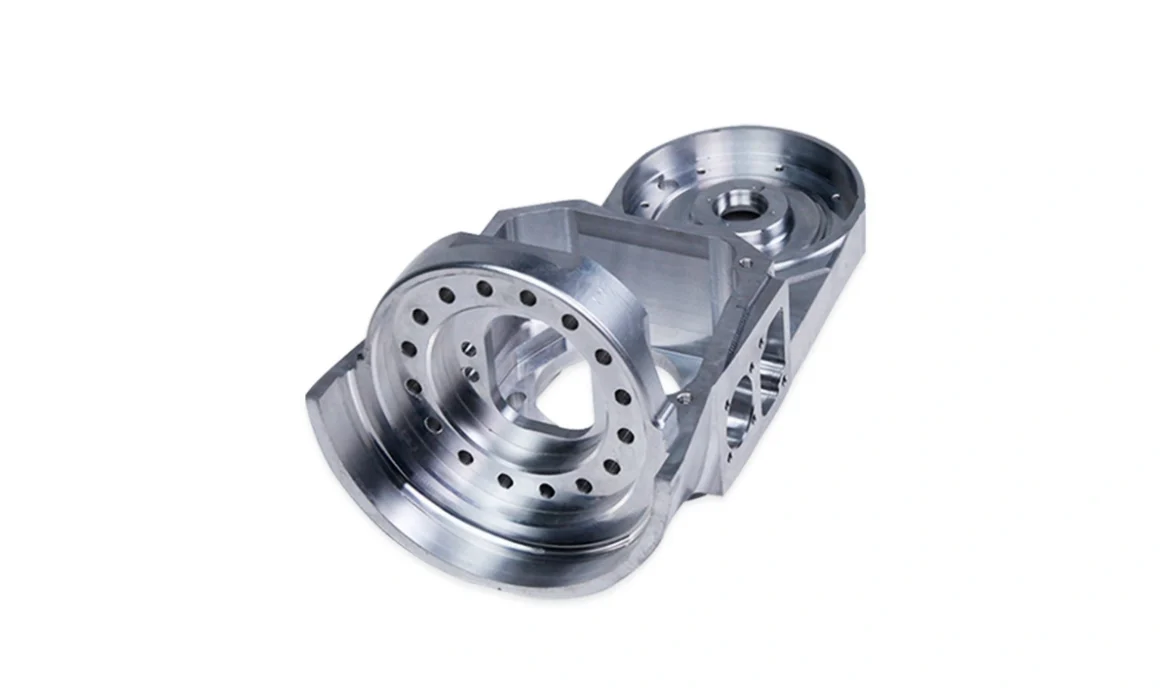
Why Choose Carbon Steel for Precision CNC Machined Parts?
If you’re trying to balance strength, cost, and precision on your next project, precision CNC machined carbon steel parts are often the smartest move.
Key Mechanical Properties of Carbon Steel CNC Parts
Carbon steel offers a strong mix of strength, hardness, ductility, and wear resistance that works well for tight tolerance CNC machining.
Typical benefits (general ranges, not grade-specific):
| Property | Why It Matters for CNC Precision Parts |
|---|---|
| Strength | Handles high loads, torque, and impact without deformation |
| Hardness | Resists wear on shafts, pins, gears, and bearing surfaces |
| Ductility | Absorbs shock, less brittle than many tool steels |
| Wear resistance | Extends life in sliding, rotating, and impact applications |
This balance is why we use carbon steel CNC parts for shafts, bushings, brackets, manifolds, and structural components that must hold tight tolerances under real-world loads.
Cost Advantages vs Stainless and Exotic Alloys
If you don’t actually need stainless or exotic alloy performance, carbon steel usually wins on cost:
- Lower material cost than stainless, nickel alloys, and tool steels
- Faster machining = less spindle time, lower cycle cost
- Readily available bar, plate, and tube in the US = shorter lead times
In many projects, switching from stainless to precision CNC machined carbon steel parts with the right coating (zinc, black oxide, phosphate) cuts total part cost 20–40% without hurting performance.
Machinability Benefits for Tight Tolerance CNC
For high precision CNC machining services, carbon steel is a solid choice:
- Good machinability on common grades (1018, 1045, 12L14, etc.)
- Stable and predictable chip formation with proper tooling
- Easier to hold tight tolerances on CNC milling and CNC turning (down to ±0.0005″ with proper process control)
- Less tool chatter and deflection than with many aluminum parts in long, slender geometries
This makes high precision carbon steel machining ideal for tight tolerance steel parts like carbon steel shafts, bushings, pins, and valve components.
Weldability and Heat-Treatability
Another big advantage of cnc machined steel parts is what we can do after machining:
- Weldability:
- Low and medium carbon steels weld well with standard processes (MIG/TIG)
- Useful for fabricated frames, mounts, and custom carbon steel components
- Heat-treatability:
- Normalizing, quenching, tempering, and case hardening available
- We can increase surface hardness while keeping a tough core
- Perfect for heat treated carbon steel parts like wear surfaces, drive components, and impact-loaded parts
This flexibility lets us tune the same base material for strength, wear, and fatigue life without jumping to expensive alloys.
When Carbon Steel Is the Right Choice
Carbon steel is usually the right call over aluminum, stainless, or tool steel when you need:
- Higher strength and stiffness than aluminum at a similar or lower price
- Better machinability and lower cost than stainless steel, and you can manage corrosion with plating or coatings
- Tough, wear-resistant alternatives to tool steel where ultra-high hardness is not mandatory
- High volume CNC production where material and cycle time cost really matter
- Custom CNC steel fabrication for industrial machinery, automotive, fluid power, or general OEM use
If you need strong, consistent, and economical precision CNC parts, and you can handle corrosion with surface treatment, carbon steel CNC parts are usually the most practical solution in the US market.
Carbon Steel Grades for CNC Machining

When we talk about precision CNC machined carbon steel parts, the carbon content drives almost everything: machinability, strength, hardness, and cost. Here’s how I look at the main carbon steel families when choosing material for tight tolerance CNC work.
Overview: Low, Medium, and High Carbon Steels
- Low carbon steel (≈0.05–0.25% C)
Best for general carbon steel CNC parts, easy to machine and weld, moderate strength, great for cost‑sensitive components. - Medium carbon steel (≈0.30–0.55% C)
Higher strength and hardness, ideal for precision CNC components that see real load and wear. - High carbon steel (≈0.60–1.0% C)
Used when you need wear‑resistant, spring, or cutting components that hold hardness after heat treat.
If you want a deeper dive on how each group behaves in real production, I’ve broken down typical grades on our page on CNC machined carbon steel components.
Low Carbon Steels: 1018, 1020
For low carbon steel CNC parts, these are the go‑to workhorses:
- 1018
- Very good machinability and excellent weldability
- Stable for tight tolerance steel parts with basic to moderate strength needs
- Common for brackets, blocks, flanges, pins, and general industrial carbon steel prototypes
- 1020
- Similar to 1018, slightly better toughness
- Good choice for cnc turned shafts, bushings, and simple fittings
- Great when you want a balance of cost, ease of machining, and decent mechanical properties
Use these when cost, availability, and predictable machining matter more than extreme strength.
Medium Carbon Steels: 1045, 1050
For medium carbon steel CNC machining, 1045 and 1050 are the sweet spot:
- 1045 steel precision components
- Stronger and harder than 1018/1020, especially after heat treatment
- Widely used for carbon steel shaft machining, couplings, gears, and hubs
- Good choice for parts that see torsion, impact, and fatigue
- 1050
- Slightly higher carbon, can reach higher hardness with proper heat treat
- Used for more demanding cnc machined steel parts where wear and strength matter
These grades are ideal for precision cnc parts that carry load and need long service life without stepping up to tool steel.
Free‑Machining Carbon Steels: 12L14, 1215
When speed and volume matter, free machining carbon steel grades save real money:
- 12L14 free machining steel
- Outstanding machinability; chips break easily and surface finish is excellent
- Perfect for high-volume CNC production, automatic lathes, and small batch cnc steel parts with many turned features
- Common for fittings, bushings, spacers, fasteners, and cnc machined hydraulic components
- 1215
- Similar high machinability without lead (often used to meet environmental policies)
- Great for parts with threads, cross holes, and close‑tolerance turned diameters
Choose these when cycle time, tool life, and cost per piece are critical, and extreme strength or weldability isn’t the priority.
High Carbon Steels: 1075, 1095
For high carbon steel CNC components that must resist wear:
- 1075
- Good for spring parts, wear strips, and blades after proper heat treatment
- Tougher than 1095, still capable of high hardness
- 1095
- Very high carbon; can reach very high hardness
- Used for thin cutting edges, springs, and wear‑resistant profiles
- Machining is tougher, often done in the annealed state, then heat treated
Use these when you need heat treated carbon steel parts that hold an edge or act like a spring under repeated load.
Comparing Machinability, Strength, Hardness, and Cost
Quick reality check across common CNC carbon steels:
- Machinability (easiest → hardest)
12L14 / 1215 → 1018 / 1020 → 1045 / 1050 → 1075 / 1095 - Strength & Hardness Potential (lowest → highest)
1018 / 1020 → 12L14 / 1215 → 1045 / 1050 → 1075 / 1095 - Cost (lowest material + machining cost → highest overall)
1018 / 1020 → 12L14 / 1215 → 1045 / 1050 → 1075 / 1095
Free‑machining grades cut the cheapest per part in high volume; high carbon grades cost more to cut and to heat treat, but deliver the longest wear life.
You can see how we balance these trade‑offs project‑by‑project in our broader overview of steel CNC machining services.
Choosing the Best Carbon Steel Grade
When I select a grade for high precision carbon steel machining, I narrow it down with a few basic questions:
- Need low cost and easy machining?
→ 1018, 1020, 12L14, 1215 - Need higher strength and torque capacity?
→ 1045 or 1050 for carbon steel shafts, hubs, and couplings - Need high wear resistance or spring behavior?
→ 1075 or 1095 with proper heat treatment - Need very tight tolerances (±0.0005″) with good stability?
→ 1018 or 1045 in normalized/annealed condition, with controlled processes
In short: match the carbon steel grade to the load, wear, environment, and tolerance stack. If you share your application, tolerance band, and volume, I can usually narrow it to one or two grades that give the best mix of performance and cost for your custom carbon steel components.
Precision CNC Machining Processes for Carbon Steel Parts
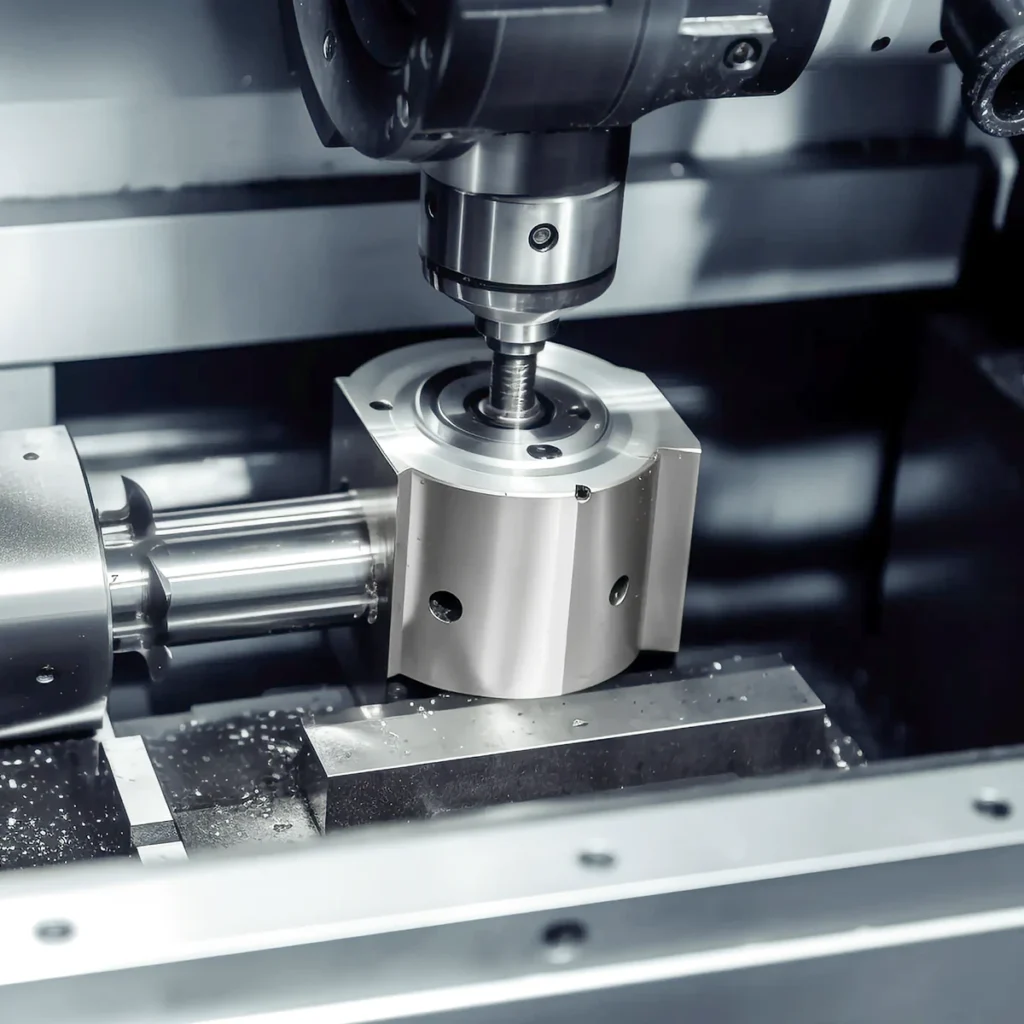
When we machine precision CNC machined carbon steel parts, the process has to be tight, repeatable, and geared toward cost control. Here’s how we typically approach it in our shop for U.S. customers who need reliable, production-ready components.
CNC Milling Carbon Steel (2‑Axis, 3‑Axis, 5‑Axis)
For most carbon steel CNC parts, we rely on:
- 2‑axis / 3‑axis CNC milling for brackets, blocks, manifolds, plates, and simple prismatic parts
- 4‑axis / 5‑axis CNC machining for complex faces, undercuts, angled ports, and multi‑side features without multiple setups
Multi‑axis machining keeps features in a single datum structure, which is key when you’re chasing tight tolerance steel parts with critical relationships between holes, bores, and sealing faces.
If your design includes motion-related details like linkages or joints, our experience producing tight-tolerance motion linkage hardware directly translates to better accuracy and smoother movement in carbon steel assemblies.
CNC Turning Carbon Steel (Shafts, Bushings, Pins, Rings)
For rotational carbon steel CNC parts, we use:
- CNC turning centers for shafts, bushings, pins, spacers, rings
- Live-tooling lathes for turned parts with milled flats, cross holes, and keyways
- Rigidity-focused setups to keep runout low on long shafts
This is where carbon steel shaft machining really shines—especially 1045 and 1144—for automotive, industrial, and heavy‑duty applications.
Multi‑Axis Machining for Complex Carbon Steel Geometries
For custom carbon steel components with complex 3D shapes:
- 4/5‑axis machining reduces setups and stack‑up error
- Simultaneous multi‑axis cuts improve surface finish on contours and pockets
- Ideal for cnc machined hydraulic components, valve bodies, manifolds, and intricate housings
This approach is what allows us to keep features concentric and aligned even when the part geometry is anything but simple.
Achieving Tight Tolerances (Down to ±0.0005″)
For high precision carbon steel machining, we routinely hold:
- ±0.001″ on most critical features in production
- Down to ±0.0005″ on bores, shafts, and bearing fits when the print and process support it
To hit these numbers, we combine:
- Thermal control (material, machine, and coolant)
- Tool wear compensation and in‑process probing
- Controlled clamping to avoid distortion
Tooling Selection for Carbon Steel
Tool life and consistency matter a lot on carbon steel. We typically use:
- Carbide tools as the default for milling and turning
- Coated carbide (TiAlN, AlTiN, etc.) for higher speeds and abrasive steels
- Strong, rigid toolholders to reduce chatter on harder grades
Matching the insert geometry and edge prep to the specific carbon steel grade for CNC machining (1018 vs 1045 vs 12L14) is critical to both finish and cost.
Cutting Speeds, Feeds, and Coolant Strategy
For cnc milling carbon steel and cnc turning carbon steel, we dial in:
- Lower surface speeds on harder or high carbon steels
- Higher chip loads on free‑machining grades like 12L14 free machining steel
- Flood coolant or high‑pressure coolant to control heat, flush chips, and prevent built‑up edge
On gummy low carbon steels, chip thinning and aggressive chip breaking are essential to keep the process stable.
Managing Distortion, Residual Stress, and Warping
Carbon steel can move if you don’t respect it. To keep your precision CNC machined carbon steel parts stable, we use:
- Pre‑machining stress‑relief when required
- Symmetrical material removal where possible
- Sequenced rough‑then‑finish operations with rest time in between for critical parts
- Fixturing that supports the part without over‑clamping
This is especially important for long, thin, or heavily pocketed parts and for cnc machining tolerances for steel tighter than ±0.001″.
Secondary Operations: Heat Treat, Grinding, Plating, Coating
Once machining is done, many carbon steel cnc parts go through:
- Heat treat (through harden, induction harden, or case harden) for wear or strength
- Grinding (OD, ID, surface) to bring tight diameters and flats into final size
- Plating and coatings like zinc plating, black oxide, or phosphate for corrosion resistance and aesthetics
We routinely manage complete process chains, from rough machining through heat treat and finish grind, especially on heat treated carbon steel parts like shafts, pins, and wear components.
Deburring, Edge Breaking, and Surface Finishing
Every cnc machined steel part that leaves our floor gets:
- Manual or automated deburring
- Controlled edge breaking where sharp corners are not allowed
- Surface finish control based on print (Ra targets for sealing faces, bearing fits, etc.)
For cosmetic or exposed surfaces, we can add bead blasting, tumbling, or polishing before coating.
Quality Control and Traceability
For precision CNC machining services on carbon steel, our quality approach includes:
- CMM inspection for complex or tight-tolerance features
- Go/no‑go gauges, micrometers, bore gauges, and thread gauges for production checks
- Material certification for steel parts (mill certs, heat numbers)
- Lot-level traceability and documentation as required by your industry
For customers that need higher-level validation or tooling support for production, our background in precision tooling and tool and die making helps us design stable, repeatable processes that keep your carbon steel parts in spec from prototype through high volume.
If you design around the strengths of carbon steel and pair it with the right CNC machining process, you get a strong, cost‑effective part with the accuracy and consistency your U.S. production lines actually need.
Design Tips for Precision CNC Machined Carbon Steel Parts
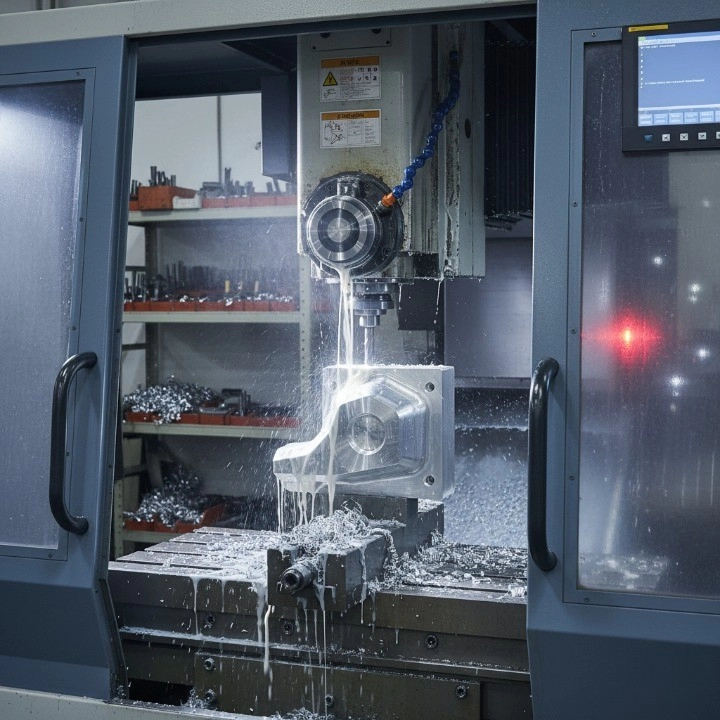
Design for Manufacturability (DFM) for Carbon Steel CNC Parts
When you’re designing precision CNC machined carbon steel parts, get your machinist involved early. A few smart DFM moves can cut cost and lead time fast:
- Stick to standard stock sizes (bars, plates, tubes) to avoid excessive roughing.
- Avoid super deep pockets and ultra-thin fins if a simpler layout can do the same job.
- Use consistent dimensions and common tool sizes across the design to reduce tool changes.
- Keep features accessible from as few setups as possible; if you know you’ll need multi‑axis work, say so up front (similar to how we plan 4-axis work on our multi-axis CNC machining services).
Tolerancing Strategy: Critical vs Non‑Critical
Tight tolerance steel parts are doable, but every extra decimal place costs money. For precision CNC machined carbon steel parts:
- Hold tight tolerances (±0.0005″–±0.001″) only on truly critical fits: bearing bores, sealing surfaces, alignment features.
- Use looser tolerances on covers, brackets, non-mating surfaces, and cosmetic faces.
- Dimension from a single primary datum structure to reduce stack‑up.
- Use GD&T only where it adds functional value (position, runout, flatness for critical assemblies).
Best Practices for Holes, Threads, and Fillets
For carbon steel CNC parts, clean geometry keeps cycle times down and quality up:
- Holes
- Prefer standard drill sizes and depths ≤3x diameter when possible.
- Avoid blind holes with sharp bottoms; use drilled + chamfered or drilled + flat-bottom tooling if needed.
- Threads
- Use standard UN/metric threads and leave enough relief at the bottom of blind tapped holes.
- Add chamfers to lead-in; avoid threading right up to a shoulder if you can.
- Fillets & Radii
- Add internal fillets ≥ tool radius (0.03″–0.06″ is a good starting point).
- Avoid sharp inside corners; they drive up cost and create stress risers.
Wall Thickness, Cross‑Section, and Rigidity
Carbon steel is strong, but it will still move under cutting forces and heat:
- Keep walls as uniform as possible to minimize distortion.
- Avoid long, slender features that will chatter or bend in the cut; add ribs or temporary supports when possible.
- For shafts and pins, use generous fillets at steps to improve strength and fatigue life.
- If you need thin sections, plan for finish passes and careful fixturing.
Surface Finishes for Functional and Cosmetic Steel Parts
Finish requirements have a big impact on time and cost:
- For most functional surfaces on carbon steel CNC parts, Ra 63–125 µin from milling/turning is enough.
- Bearing seats, sealing faces, and sliding surfaces may need Ra 16–32 µin and possibly grinding.
- Cosmetic faces can be specified as machined, bead‑blasted, or coated (zinc, black oxide, paint) depending on your brand look and corrosion needs.
- Avoid calling out ultra‑fine finishes everywhere; limit them to where they matter.
Design for Heat Treatment and Dimensional Stability
If you’re using heat treated carbon steel parts or case hardened features:
- Decide which features are machined soft vs. hard. Usually, rough/semifinish in the soft state, heat treat, then finish critical fits.
- Leave grinding stock (0.005″–0.015″ per surface) on features that will be finished after heat treat.
- Avoid asymmetrical heavy/thin sections that will warp during heat treatment.
- Clearly specify target hardness (HRC) and area to be treated (whole part vs local case).
Common Design Mistakes That Drive Up Cost
A few avoidable choices often make precision CNC machined carbon steel parts more expensive than they need to be:
- Over‑tight tolerances on every dimension “just in case.”
- Non‑standard thread forms, drill sizes, or callouts without a real functional reason.
- Very deep, narrow slots or pockets that require special tooling and slow feeds.
- Calling out grinding or ultra‑fine finishes across the whole part instead of just the functional zones.
- Missing or vague notes on material grade, heat treatment, and surface finish, which can lead to re‑quotes and delays.
Designing carbon steel CNC parts with these rules in mind lets us hit the precision you need while keeping your parts practical to machine, inspect, and repeat in production.
Applications and Industries Using Precision CNC Machined Carbon Steel Parts
Precision CNC machined carbon steel parts show up everywhere in the U.S. market because they hit the sweet spot of strength, cost, and availability. Here’s where they make the most impact.
Automotive Carbon Steel CNC Parts
For automotive and off-road applications, carbon steel is a workhorse. We regularly machine:
- Shafts and axles (driveline components, steering shafts)
- Gears and hubs for powertrain and wheel assemblies
- Fasteners and bushings for suspension and chassis systems
- Brackets and linkage parts where strength and fatigue resistance matter
These precision CNC machined carbon steel parts hold tight tolerances under shock loads, road salt, and real-world abuse.
Industrial Machinery and Equipment
If you build or maintain industrial equipment, carbon steel CNC parts are usually your best value:
- Bushings, rollers, and pivots for material handling and conveyors
- Brackets, plates, and fixtures for automated cells and tooling
- Custom carbon steel components for packaging, printing, and process equipment
Here, tight tolerance steel parts keep machines running with less downtime and predictable wear.
Hydraulic and Pneumatic Components
Carbon steel is a go-to for cnc machined hydraulic components and pneumatic systems where pressure and durability are critical:
- Hydraulic manifolds and blocks with complex internal passages
- Fittings, adapters, and couplings
- Valve bodies and actuator housings
We machine carbon steel valve bodies that can be plated or coated for extra corrosion resistance in fluid and vacuum systems, similar to what’s done for specialized fluid and vacuum components machining.
Aerospace and Defense Support Parts
While critical flight parts lean toward alloys and stainless, carbon steel is still widely used for:
- Pins, clevises, and bushings for ground support and fixtures
- Brackets, clamps, and mounting hardware
- Actuator and test fixture components
For customers in aerospace and defense, we support high precision carbon steel machining as part of broader aerospace machining services like those provided by an ISO and AS9100-focused aircraft machining shop.
Oil, Gas, and Heavy Equipment
For harsh environments and heavy loads, carbon steel CNC parts are favored for their strength and toughness:
- Couplings, flanges, and adapters
- Tool components and wear parts
- Structural brackets and supports for rigs and heavy machinery
These cnc machined steel parts are often heat treated and coated to handle impact, vibration, and contamination.
General Manufacturing and OEM Custom Parts
Most U.S. OEMs lean on custom carbon steel components for:
- Prototype and small batch CNC steel parts
- Replacement parts to keep legacy equipment running
- High volume cnc steel production for standardized product lines
With precision CNC machining services, we can turn 1018, 1045, or 12L14 bar into ready-to-assemble parts with consistent quality.
Real-World Performance Expectations
From my side as a supplier, here’s what you can realistically expect from precision CNC machined carbon steel parts:
- High strength and fatigue resistance for dynamic loads
- Predictable wear when properly heat treated and lubricated
- Stable tolerances under normal operating temperatures
- Good value per part compared with stainless or exotic alloys
Paired with the right surface treatment for carbon steel parts (zinc plating, black oxide, case hardening), these components deliver long, reliable service in demanding U.S. industrial, automotive, and heavy-equipment environments.
Advantages and Challenges in Machining Carbon Steel
When we produce precision CNC machined carbon steel parts, we like carbon steel because it gives you a strong, predictable part at a very competitive price. But it does come with its own machining challenges that we manage with the right tooling, parameters, and post-treatments.
Key Advantages of Precision CNC Machined Carbon Steel Parts
For most U.S. OEMs and industrial buyers, carbon steel hits the sweet spot:
- High strength and toughness – Great for shafts, pins, brackets, and structural components that actually see load.
- Good hardness and wear potential – Especially when heat treated, high precision carbon steel machining supports long-life parts.
- Lower material cost than stainless and exotic alloys – You get strong CNC machined steel parts without blowing up your budget.
- Wide availability – Common grades (1018, 1045, 12L14, etc.) are easy to source in bar, plate, and tube, which keeps lead times down.
- Predictable cutting behavior – Most carbon steel CNC parts machine consistently, which helps us hold tight tolerance steel parts in production.
Predictable Cutting and Repeatability
Carbon steel’s consistent structure makes it ideal for precision CNC machining services:
- Stable cutting forces make it easier to dial in reliable programs for CNC turning carbon steel and CNC milling carbon steel.
- We can repeat tight tolerances (often down to ±0.0005″ where needed) part after part.
- Surface finishes stay consistent across lots, which helps if you’re doing high-volume or automotive-type runs.
Common Machining Challenges with Carbon Steel
Some carbon steel grades bring specific challenges that we plan around:
- Work hardening & built-up edge
- Certain low/medium carbon steels can develop a hard skin during cutting.
- Built-up edge on the tool ruins surface finish and can push dimensions out of spec.
- Chip control in gummy or low carbon steels
- Grades like 1018 can form long, stringy chips if not cut aggressively or with the right chipbreaker.
- Poor chip control can slow cycle times and hurt tool life.
- Tool wear & heat on harder steels
- Higher carbon or heat-treated steels generate more heat and stress on cutting edges.
- Without proper tooling and coolant, you see rapid tool wear and inconsistent size.
- Corrosion limits vs stainless
- Carbon steel rusts faster than stainless, especially in outdoor, humid, or fluid-contact environments.
- Bare carbon steel CNC parts are not ideal for corrosive or washdown applications unless treated.
How We Mitigate These Issues
We design our process around these challenges so your custom carbon steel components arrive right the first time:
- Tooling choices
- Use high-quality carbide tools with proper geometries and chipbreakers.
- Apply advanced coatings (TiAlN, AlTiN, etc.) for hotter, harder cuts and longer tool life.
- Optimized cutting parameters
- Dial in speeds/feeds to avoid rubbing (which causes work hardening) and to break chips reliably.
- Adjust depth of cut and engagement to manage heat and keep size stable.
- Coolant strategy
- High-pressure, directed coolant to flush chips and control temperature.
- Proper coolant type and mix to reduce built-up edge and extend tool life.
- Post-treatment and protection
- Use surface treatments like zinc plating, black oxide, phosphate, or nitriding to improve wear and corrosion resistance.
- Apply rust inhibitors and packaging that match your storage and shipping environment.
For complex geometries and tighter tolerances in carbon steel, we often use advanced setups like multi-axis and 5-axis CNC machining to keep tool engagement optimal and reduce distortion; you can see how we handle that on our 5-axis CNC machining services page.
Boosting Carbon Steel Performance with Coatings and Surface Treatments
To push carbon steel CNC parts closer to stainless or tool steel performance without the cost:
- Zinc plating or phosphate – Better corrosion resistance for industrial and automotive parts.
- Black oxide – Low-cost corrosion resistance with a clean, uniform appearance.
- Case hardening / nitriding – Hard, wear-resistant surface with a tough core.
- Oil, paint, or powder coat – Added environmental protection and branding/cosmetic options.
Handled correctly, precision CNC machined carbon steel parts give you high strength, repeatable accuracy, and very solid value. The key is knowing how to control the cutting behavior, manage heat and chips, and apply the right surface protection for your real-world environment.
Heat Treatment and Surface Treatments for Precision CNC Machined Carbon Steel Parts

For high-precision CNC machined carbon steel parts, heat treatment and surface finishes can completely change how the part performs in the field. When we quote or produce precision CNC parts, we always match the heat/surface treatment to the strength, wear, and corrosion requirements—not just the material grade.
Common Heat Treatments for Carbon Steel CNC Parts
For most precision CNC machined carbon steel parts, we typically use:
- Normalizing
- Refines grain structure
- Improves toughness and makes properties more uniform
- Great for stabilizing parts before finish machining
- Quenching & Tempering
- Quench (oil or water) for high hardness and strength
- Temper to dial back brittleness and achieve a target hardness (e.g., 28–40 HRC for many 1045 steel precision components)
- Ideal for shafts, pins, and carbon steel CNC parts that see heavy loads
- Case Hardening (Carburizing / Carbonitriding)
- Hard wear-resistant outer layer with a tough core
- Used for case hardened carbon steel components like gears, pins, and wear surfaces
How Heat Treatment Affects Hardness, Strength, and Machinability
Heat treatment always comes with trade-offs:
- Higher hardness / strength = better wear and fatigue resistance
- Higher hardness = tougher on tools, slower machining, more heat and tool wear
- Normalized or annealed carbon steels are much easier to machine and hold tight tolerances
For high precision carbon steel machining, we often:
- Rough machine in soft state → heat treat → finish grind or light machine critical faces
- Or, for medium hardness, fully machine after quench & temper when the hardness is stable and predictable
When to Machine Before vs After Heat Treatment
A simple rule for tight tolerance precision CNC parts:
- Machine before heat treatment when:
- You’re removing a lot of material
- Tolerances are moderate
- The part will be ground after heat treat
- Machine after heat treatment when:
- You need tight tolerance steel parts (±0.0005″) on bearing fits, bores, or sealing surfaces
- You want to avoid distortion on final dimensions
- Features are small and would move too much during heat treat
We’ll usually rough, leave stock, heat treat, stress relieve if needed, then finish machine or grind to final size.
Surface Treatments and Coatings for Carbon Steel CNC Parts
Since carbon steel doesn’t naturally resist rust like stainless, surface treatments are critical for many custom carbon steel components:
- Zinc Plating
- Good corrosion protection for hardware, brackets, and outdoor parts
- Common for zinc plated carbon steel components in industrial and automotive applications
- Black Oxide
- Low-cost, thin black finish
- Adds mild corrosion resistance, reduces glare, helps with oil retention
- Popular for black oxide carbon steel parts, tooling, and fasteners
- Phosphate (Parkerizing)
- Good for wear-in, paint adhesion, and oil retention
- Often used on firearm parts, fasteners, and machinery components
- Nitriding / Ferritic Nitrocarburizing
- Hard, wear-resistant surface without major distortion
- Strong option for sliding and wear parts, similar to some heat treated carbon steel parts in hydraulic and industrial applications
If you’re comparing carbon steel to alloys like Inconel or bronze, it’s useful to understand how we handle different materials; you can see how we approach other metals on our CNC machining materials list.
Improving Wear and Corrosion Resistance
To boost performance of carbon steel CNC parts:
- Pair quench & temper or nitriding with:
- Proper lubrication paths
- Smooth surface finishes
- Use zinc plating or phosphate + paint where corrosion is the main concern
- Use nitriding or case hardening where wear and contact stress are the main issue
This lets you keep the cost advantage of carbon steel while pushing performance close to more expensive alloys.
Balancing Cost and Performance
For US customers, cost vs performance is usually decided by:
- Environment
- Indoors & dry: black oxide or phosphate is usually enough
- Outdoors or exposed: zinc plating or better
- Load and wear
- Light duty: normalized + basic coating
- Heavy duty: quenched & tempered + localized hardening (case hardening or nitriding)
We usually recommend:
- Start with a standard grade like 1018 carbon steel machined parts or 1045 steel precision components
- Add only the heat/surface treatment that’s actually needed for your real-world environment
- Keep treatments consistent across families of custom CNC steel fabrication to simplify inspection, material certs, and supply chain
If you’re not sure which combination fits your part, send the print, usage environment, and expected life—we’ll spec a heat/surface treatment stack that hits the performance target without overspending.
Cost Factors for Precision CNC Machined Carbon Steel Components
When you’re buying precision CNC machined carbon steel parts, cost usually comes down to a mix of material choice, tolerances, volume, and finishing. Here’s how we look at it when we quote carbon steel CNC parts in the U.S. market.
Material Grade and Bar/Plate Size
Your material choice can swing the price more than most people expect.
- Low carbon steels (1018, 1020) are usually the most economical for precision CNC machined carbon steel parts.
- 1045, 1050, and high carbon steels cost more per pound and may require slower cutting and added heat treat.
- Bar/plate size matters:
- Oversized stock = more rough machining, more chips, more time.
- Near-net bar sizes (for shafts, pins, bushings) cut cycle time and waste.
- Ask your shop which standard bar sizes they stock; designing around common sizes can deliver immediate savings.
Tolerances, GD&T, and Machining Time
Tighter tolerances on carbon steel CNC parts will raise machining time and inspection costs.
- General rule:
- ±0.005″ = standard, low cost
- ±0.001″ = moderate cost
- ±0.0005″ or true position/GD&T all over = high cost
- Extra cost usually comes from:
- Slower feeds/speeds
- Extra setups or operations (like finish passes and grinding)
- More CMM inspections and documentation
Use tight tolerance only on critical features—let everything else relax.
Prototypes vs Production Runs
Setup time is a silent cost driver for custom carbon steel components.
- Prototypes / small batch:
- Setup is spread over just a few parts, so piece price is higher.
- Great for design validation but not unit-cost friendly.
- Production / high volume:
- One setup cost spread across hundreds or thousands of parts.
- Worth investing in custom fixturing and optimized programs.
- Frequent changeovers (small batches, many part numbers) increase hourly cost. Combining similar parts into shared runs can help.
If you’re looking at both prototypes and production, choose a shop that handles both under one roof, not one that only runs big lots, such as a full-service provider offering general CNC machining services.
Tooling Costs, Tool Life, and Optimization
Carbon steel is generally friendly to machine, but tooling still impacts pricing.
- Carbide tooling and coated inserts (TiAlN, etc.) cost more up front but lower cycle time.
- Harder carbon steels (1045+, high carbon) shorten tool life, increasing:
- Tool change time
- Scrap risk
- Hourly machining cost
- Once volumes are known, we tune feeds, speeds, and tool paths to hit your best cost-per-part without killing tool life.
Finishing, Coating, and Heat Treatment Adders
Every extra process adds cost—and lead time.
Common adders for cnc machined steel parts:
- Heat treatment: normalizing, quench & temper, case hardening
- Surface treatments:
- Zinc plated carbon steel components
- Black oxide carbon steel parts
- Phosphate, nitriding, or other wear/corrosion treatments
- Grinding or super-finishing for tight tolerance steel parts or bearing surfaces
Bundling machining with finishing through one supplier (instead of juggling multiple vendors) usually lowers your total landed cost and reduces logistics headaches.
Smart Design Changes That Cut CNC Costs
A few small design tweaks can dramatically reduce CNC machining cost for carbon steel parts:
- Open up tolerances where possible.
- Use standard hole sizes and thread calls (UNC/UNF, standard tap depths).
- Add generous fillets instead of sharp internal corners.
- Avoid ultra-thin walls that chatter or distort during machining.
- Align features to allow fewer setups (think about how the part is held).
We’re always ready to give DFM feedback during quoting, so you’re not overpaying for features that don’t add real value.
What to Include in Your RFQ for Accurate Carbon Steel CNC Quotes
A clear RFQ saves days of back-and-forth and gets you tighter pricing.
Include at least:
- 2D drawing (PDF) + 3D model (STEP/IGES)
- Material grade (e.g., 1018, 1045, 12L14) and any heat treatment or hardness range
- Critical dimensions and tolerances, GD&T where required
- Thread specs, surface finish requirements, coating/plating callouts
- Expected annual usage, batch size, and delivery schedule
- Any inspection requirements (material certs, CMM reports, PPAP, FAI)
If you need help picking the right material or machining approach, we can review your design and suggest the most cost-effective path using our precision CNC machining services for carbon and alloy steels, similar to what we offer on our dedicated alloy CNC machining services page.
How to Choose a CNC Machining Supplier for Precision CNC Machined Carbon Steel Parts
If you’re buying precision CNC machined carbon steel parts in the U.S., the right shop will save you money, lead time, and headaches. Here’s what to look for and how I’d evaluate a supplier.
Key Capabilities in a Carbon Steel CNC Machining Shop
Make sure the shop is set up specifically for carbon steel CNC parts, not just aluminum or plastics:
- Core services: tight‑tolerance CNC milling and CNC turning of carbon steels
- Real production experience with:
- 1018, 1020 low carbon steel
- 1045, 1050 medium carbon steel
- 12L14, 1215 free‑machining steel
- 1075, 1095 high carbon steel
- Ability to handle rough stock, saw cutting, and in‑house fixturing for rigid setups
For complex prismatic parts, you want a shop that runs advanced CNC milling for carbon steel with 3–5 axis capability, like we do in our CNC milling services for steel components.
Equipment: Mills, Lathes, and Finishing
Ask for a clear equipment list. For high precision carbon steel machining, you’ll usually want:
| Area | What You Should See |
|---|---|
| Milling | 3‑axis and 5‑axis vertical/horizontal machining centers |
| Turning | CNC lathes / turning centers, with live tooling and sub‑spindles |
| Secondary operations | OD/ID grinding, surface grinding, honing (for tight bores) |
| Support | Sawing, deburring, vibratory finishing, basic assembly |
If you have shaft work, bushings, or rings, make sure they offer CNC turning services optimized for carbon steel, like our dedicated CNC turning capabilities.
Quality Systems and Certifications
For precision CNC machined carbon steel parts, especially in automotive, industrial, or aerospace support:
- ISO 9001: minimum baseline for process control
- AS9100: preferred if you’re in aerospace, defense, or high‑risk industrial
- Ability to support:
- PPAP (automotive)
- FAI (First Article Inspection)
- Serialized material certs and full traceability
Inspection Capabilities for Tight Tolerance Steel Parts
If your parts call for ±0.001″ or tighter, the shop must prove they can measure it:
- CMM with calibrated probes and reports
- Height gauges, bore gauges, ring/plug gauges
- Capability for SPC and capability studies if you’re running ongoing production
Ask them to send sample CMM reports from similar tight tolerance steel parts.
Lead Times, Prototyping, and Volume Flexibility
Choose a shop that can grow with you:
- Prototypes / small batch CNC steel parts: quick-turn capability, flexible setups
- High volume CNC steel production: standardized workholding, proven cycle times
- Clear standard lead times (e.g., 2–3 weeks for repeat orders)
- Ability to hold schedules for annual programs and blanket orders
Engineering Support and DFM for CNC Machined Steel Parts
You want a supplier who will help you cut cost and risk before the first chip:
- DFM reviews focused on carbon steel machining
- Suggestions on:
- Tolerances (what really needs ±0.0005″ vs. what doesn’t)
- Material grades (e.g., 1018 vs 1045 vs 12L14)
- Surface treatments (zinc plating, black oxide, case hardening)
- Ability to work directly with your engineers on STEP files and prints
Smart Questions to Ask a CNC Machining Partner
Use these questions to filter suppliers for custom carbon steel components:
- Which carbon steel grades do you machine most (1018, 1045, 12L14, etc.)?
- What tolerances do you routinely hold on carbon steel bores, shafts, and flats?
- Do you provide material certs and CMM inspection reports as standard or on request?
- How do you handle heat-treated carbon steel parts and distortion control?
- What’s your typical lead time for prototypes and for repeat production?
- Can you support design changes quickly during development?
Signs Your Current Supplier Isn’t a Good Fit
You may need a new partner for precision CNC machined carbon steel parts if:
- You see inconsistent dimensions batch to batch (especially on bores and shafts)
- They push back on tighter tolerances or steel grade changes
- Lead times keep slipping and communication is slow or vague
- You’re doing your own sorting or rework due to surface finish or burr issues
- They resist providing CMM data or proper material certification
If any of this sounds familiar, it’s time to move to a CNC shop built around high precision carbon steel machining that can support you from prototype to production with solid process control and real DFM support.
Case Studies for Precision CNC Machined Carbon Steel Parts
1045 Carbon Steel Shafts – High Volume, Tight Concentricity
We ran a long-term production job on 1045 carbon steel shafts requiring:
- Concentricity within 0.0008″ TIR over the full length
- Surface finish Ra 32 or better on bearing journals
We used dedicated workholding, in-process probing, and controlled tool offsets to hold size and runout from the first to the last part in the batch. For customers needing similar carbon steel shaft machining, our process mirrors what we use on our own precision shaft and rod projects.
1018 Carbon Steel Hydraulic Manifold – Complex Internals
For a hydraulic OEM, we machined 1018 carbon steel hydraulic manifolds with:
- Deep cross-drilled galleries
- Tight positional tolerances on ports
- Multiple threaded connections
We handled this with multi-axis CNC milling, careful toolpath planning, and full CMM inspection to validate every internal feature. This is a good example of how we approach CNC machined hydraulic components and valve body machining in carbon steel.
12L14 Free-Machining Steel – High-Speed Assembly Components
A customer needed high-volume 12L14 carbon steel parts for an automatic assembly line:
- Short cycle times
- Stable dimensions over long runs
- Clean, consistent chamfers for smooth feeding
We optimized feeds and speeds around 12L14’s free-machining behavior, using carbide tooling and high-pressure coolant to extend tool life and keep parts consistent across tens of thousands of pieces. This is where free-machining carbon steel grades shine for precision CNC parts.
Cutting Cost – Switching from Stainless to Carbon Steel
One project started in 304 stainless. We proposed switching to 1018 carbon steel with:
- Zinc plating for corrosion resistance
- Minor design tweaks for better chip evacuation and shorter cycle time
The result:
- Material + machining cost reduced by 20–30%
- Same functional performance in the customer’s environment
This is a common path for customers looking to lower cost on cnc machined steel parts without sacrificing reliability.
Improving Part Life – Heat-Treated High Carbon Steel
A wear component originally made from 1045 was wearing out too fast. We moved to:
- High carbon steel (1095)
- Through-hardening heat treatment with tempering to target hardness
- Light post-grind operation for tight tolerance and finish
Service life increased by more than 2x, with consistent performance in a tough industrial environment. Heat-treated high carbon steel CNC components are a strong option when you need real wear resistance.
Lessons Learned from Challenging Carbon Steel CNC Jobs
From these projects, a few key points stand out for precision CNC machined carbon steel parts:
- Control distortion early: Start with stress-relieved stock and plan machining steps to balance material removal.
- Match grade to tolerance: Tightest tolerances and finishes are easier on 1018, 1045, and 12L14 than on very hard or high-carbon steels.
- Plan for finishing: If you’re plating, coating, or heat treating, allow for growth or distortion in your tolerances.
These real jobs guide how we quote, program, and inspect high precision carbon steel machining for United States manufacturers who need reliable, repeatable results.
Specifying and Ordering Precision CNC Machined Carbon Steel Parts

When you’re ordering precision CNC machined carbon steel parts, how you specify the job on day one will decide your lead time, price, and quality. Here’s how we like customers to set things up so we can hit tight tolerances and avoid surprises.
Clear Drawings and 3D Models for Carbon Steel CNC Parts
For high precision CNC machined carbon steel parts, give us both:
- Fully dimensioned 2D drawing (PDF or DWG)
- Clear views, no overlapping dimensions
- Datums called out for key features
- GD&T where position/flatness/runout matters
- Native 3D model (STEP, IGES, Parasolid)
- Matches the drawing 1:1
- No leftover “reference” geometry or outdated features
If the 3D model and print disagree, we always default to the drawing—so make sure they match before sending your RFQ.
Specifying Material Grade, Hardness, and Heat Treatment
Be specific about the carbon steel grade and final condition. On the drawing, call out:
- Material: e.g. “Material: 1045 carbon steel”
- Condition/heat treatment:
- “As rolled” or “Annealed”
- “Quench and temper to 28–32 HRC”
- “Case harden to 58–62 HRC, case depth 0.030–0.040 in”
- Standards (if needed): ASTM, SAE, or equivalent
If you’re flexible on grade (1018 vs 1020, 1045 vs 1050, etc.), say:
“Material: 1045 or equivalent, must meet min yield ___ ksi”
That lets us optimize cost and availability.
Tolerances, Threads, and Surface Finish
Define only what you truly need for precision cnc machined carbon steel parts:
- General tolerances: e.g. ±0.005″ unless otherwise noted
- Critical features:
- Holes, bores, shafts, sealing surfaces
- Use GD&T (true position, runout, flatness) where function depends on alignment
- Threads:
- Call out standard: “1/2-13 UNC-2B, per ASME B1.1”
- Depth, through vs blind, countersink/counterbore if needed
- Surface finish:
- Only tighten where it matters: Ra 32 µin vs 16 vs 8
- Note finish before/after plating or coating
Clear tolerancing is one of the biggest cost drivers in cnc machining precision parts. Over-tolerancing everything will drive your quote up fast.
Inspection and Certification Requirements
If you need formal inspection for tight tolerance steel parts, list it right on the print or RFQ:
- Material certs: Mill certs / material test reports for the carbon steel grade
- Inspection level:
- Layout reports or CMM reports on key dimensions
- 100% inspection vs sampling (e.g., ANSI/ASQ Z1.4)
- Special requirements:
- PPAP, FAI, or control plans for automotive or aerospace
- Full traceability by heat lot and serial/part number
For industries like oil and gas, where material and process control matter, we typically align this with our broader industrial equipment machining and manufacturing workflows.
Usage, Batch Size, and Delivery Expectations
To get accurate pricing for precision cnc machining services, include:
- Annual usage: Estimated yearly demand
- Batch size: Typical order quantities (e.g., 25, 100, 1,000 pcs)
- Delivery needs: Lead time targets, partial releases, blanket orders, or Kanban
- Prototype vs production: Tell us if this is a one-off prototype, pilot run, or long-term program
This helps us choose the right process (low setup vs high volume, free-machining carbon steel grades, custom fixturing, etc.).
Fixing Common Communication Gaps
Most delays and quality issues on carbon steel cnc parts come from simple miscommunication between engineers, buyers, and the machine shop:
- Engineer assumes “everyone knows” the critical surfaces – but they’re not marked
- Buyer asks for three quotes but doesn’t send the latest revision
- Machine shop assumes “standard finish” or “standard tolerance,” but the part actually needs more
Best fix: make your drawing the single source of truth and keep RFQ notes short, clear, and consistent with the print.
RFQ Checklist for Carbon Steel CNC Machining
Before you send an RFQ for cnc machined steel parts, double-check:
- [ ] Correct material grade and heat treatment clearly specified
- [ ] Drawing and 3D model match and are latest revision
- [ ] Tolerances defined only where function needs them
- [ ] Threads, holes, and surface finishes fully called out
- [ ] Inspection, certs, and traceability listed if required
- [ ] Quantities, annual usage, and delivery expectations included
- [ ] Any coatings or surface treatments (zinc plating, black oxide, etc.) clearly stated
When you send complete information up front, we can quote faster, hold tighter tolerances, and keep your precision CNC machined carbon steel parts on time and on budget.