
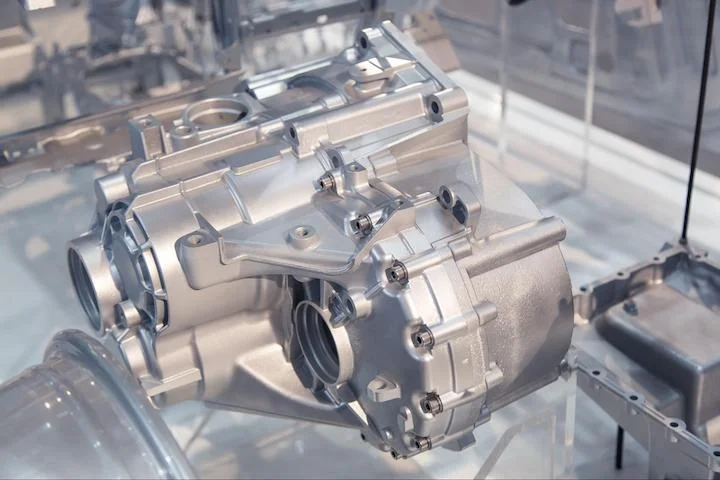
What Is Die Casting?
Die casting is a metal casting process where molten non-ferrous metal is forced under high pressure into a precisely machined mold cavity, known as a die. This method is widely used to produce complex shapes with excellent surface finishes and detailed features. The high-pressure injection ensures that the metal fills every part of the mold quickly and accurately, resulting in parts with tight tolerances and thin walls.
How Die Casting Compares to Other Casting Methods
| Casting Method | Key Features | Typical Uses | Precision & Detail |
|---|---|---|---|
| Die Casting | High-pressure injection of metal | Intricate, thin-walled parts | High precision and surface finish |
| Sand Casting | Metal poured into sand molds | Large, heavy parts | Rougher surface, less detail |
| Gravity Casting | Metal poured into metal molds | Medium-sized parts | Moderate accuracy |
| Investment Casting | Wax patterns coated with ceramic | Complex, delicate parts | Very high detail, lower volume |
Die casting stands out because it can produce complex, thin-walled parts that maintain tight dimensional control, which is more challenging with sand or gravity casting. Unlike investment casting—which excels in complexity—die casting allows for faster production cycles and is more cost-effective at scale.
Why Die Casting Is Ideal for Precision Parts
- Thin walls and intricate details: The high-pressure process pushes molten metal into tiny mold cavities, making it perfect for parts like housings, connectors, and intricate components.
- Tight tolerances: Die casting molds are precisely machined, enabling consistent part dimensions that often require little or no secondary machining.
- Surface finish: Parts come out with smooth finishes, requiring minimal post-processing.
In , die casting combines speed, accuracy, and detail, making it the go-to choice for producing high-quality metal parts with fine features and precise measurements.
The Die Casting Process Step-by-Step
Die casting starts with die preparation. The mold, or die, is securely clamped together, then lubricated to protect the cavity and help eject the finished part smoothly. Proper lubrication prevents sticking and extends the life of the casting dies.
Next comes melting and injection. Molten non-ferrous metal — often aluminum, zinc, or magnesium — is melted to the right temperature. Then, using high pressure, the molten metal is forced into the die cavity quickly. This high-pressure die casting ensures the metal fills even the tiniest details for precision parts.
Once injected, the metal begins cooling and solidification inside the mold. The quick cooling helps maintain tight tolerances and a smooth surface finish. After the metal solidifies, the die opens and the part is ejected.
After ejection, the casting goes through trimming to remove any excess metal like flash, runners, or gates. These extra bits are cut or ground off to prepare the part for final use.
Finally, the casting may undergo post-processing such as machining for fine details, drilling, or surface finishing like polishing or plating. These steps enhance part accuracy and improve appearance.
For precision metal parts manufacturing, combining die casting with efficient post-processing often leads to excellent final products. If you’re curious about machining parts after casting, check out our detailed guide on how CNC machining works to see how machining complements die casting.
Types of Die Casting
Die casting comes in several types, each suited for different metals and applications.
Hot-Chamber Die Casting is ideal for low-melting point metals like zinc, magnesium, and lead. In this process, the injection mechanism is submerged in molten metal, enabling fast cycles and high production rates. It’s a great choice for small, intricate parts but is limited by the metals it can handle due to corrosion potential and temperature restrictions.
Cold-Chamber Die Casting works best for higher-melting metals such as aluminum and copper alloys. Here, molten metal is poured into a cold chamber and then injected into the die under high pressure. Though the cycle times are longer than hot-chamber casting, this method handles a wider range of metals and produces strong, high-quality parts.
There are also other variants like vacuum die casting, which reduces porosity by eliminating trapped gases, improving the mechanical properties of parts. Squeeze casting combines die casting with forging, applying pressure as the metal solidifies to enhance strength and density.
Each method has its pros and cons, influencing material choice, production speed, and final part quality—key factors to consider when selecting the ideal die casting process for your project.
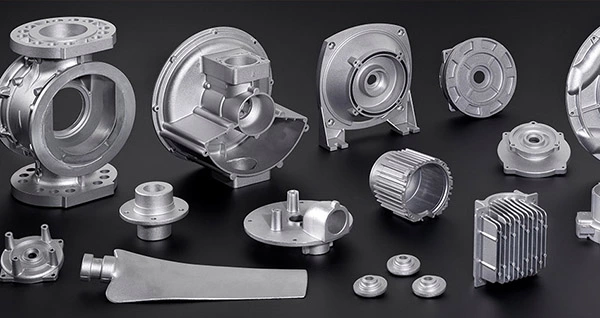
Common Materials Used in Die Casting
Die casting mainly uses non-ferrous metals due to their excellent casting properties. The most popular materials include:
- Aluminum alloys (like A380): These are lightweight, corrosion-resistant, and strong, making them perfect for automotive parts where weight savings and durability are key. Aluminum die casting is widely favored in industries requiring good thermal conductivity and strength.
- Zinc alloys (such as Zamak): Zinc offers excellent detail and surface finish, making it ideal for consumer goods that require fine features. It’s also easy to plate, which adds to its appeal in electronics and hardware.
- Magnesium alloys (e.g., AZ91D): Known as the lightest structural metal, magnesium is used in applications where weight reduction is critical, like aerospace and portable electronics.
Other metals like copper, lead, and tin are also used but mostly for specialized small parts or niche purposes.
When selecting a material for die castings, factors like strength, thermal and electrical conductivity, cost, and intended application all come into play. Choosing the right alloy helps optimize both performance and manufacturing efficiency.
For more on how different metals behave during precision manufacturing, you might find our overview of understanding insulators and conductivity useful.
Advantages of Die Casting
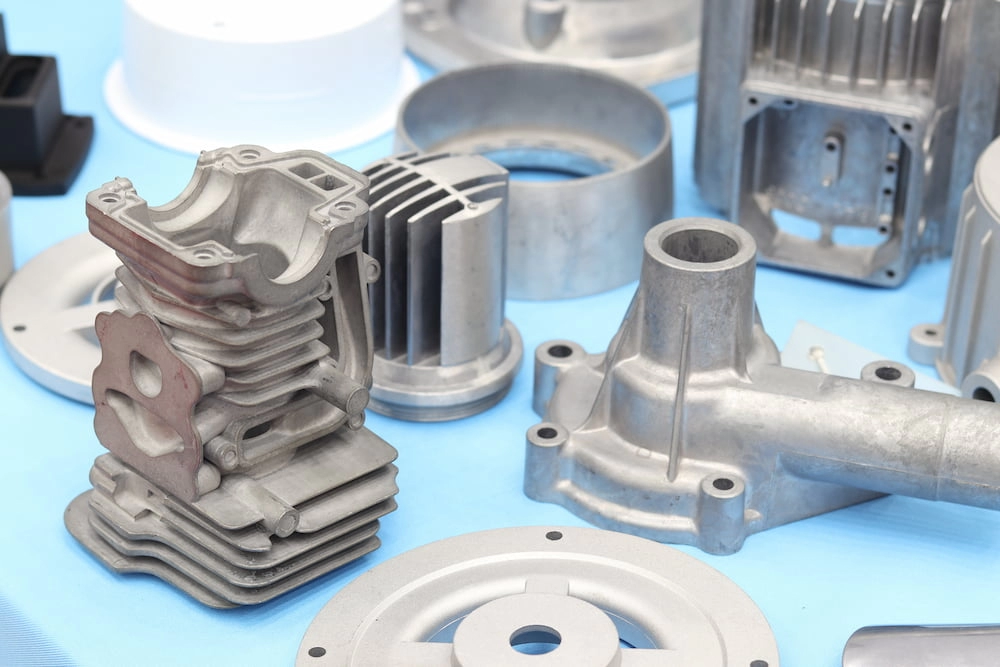
Die casting offers several advantages that make it a top choice for manufacturing precision metal parts. One major benefit is its high production speed and volume efficiency. Because molten metal is forced under high pressure into molds, multiple parts can be produced quickly and consistently, ideal for large production runs.
Another standout feature is its superior dimensional accuracy and surface finish. Compared to methods like sand casting, die casting molds deliver parts with tighter tolerances and smoother surfaces right out of the mold, reducing the need for extensive post-processing.
Parts made through die casting also boast excellent mechanical properties, including strong durability and strength due to the dense, uniform metal structure achieved under pressure. Plus, the process creates minimal waste because of its near-net-shape parts, meaning the castings require less machining and trimming.
Lastly, die casting is cost-effective for large runs despite higher initial tooling expenses. When producing thousands or millions of parts, the speed and repeatability of die casting significantly reduce per-unit costs, making it a smart choice for mass production projects.
For businesses looking to optimize metal parts with precision and efficiency, die casting remains a proven solution. To complement the castings, companies often rely on precision CNC machining services to achieve exact specifications and fine details.
Disadvantages of Die Casting
While die casting offers many benefits, it does come with some drawbacks. One major downside is the high initial tooling cost. Creating durable and precise die casting molds requires a significant investment, making it less cost-effective for small production runs or prototypes. Because dies are expensive, the process favors large-volume manufacturing.
Another limitation is that die casting mainly works with non-ferrous metals like aluminum, zinc, and magnesium, and is typically used for smaller to medium-sized parts. It’s not suited for large, heavy components or ferrous metals like steel or iron.
There’s also a risk of porosity forming inside the parts if the molten metal isn’t properly controlled during the high-pressure die casting process. This can affect the mechanical strength and surface finish of the finished component.
Lastly, die casting isn’t ideal for low-volume runs or experimental prototypes due to the upfront tooling costs and longer setup times. For those cases, processes like sand casting or metal injection molding might be better suited.
For detailed insights on tooling and precision, check out our guide on tool and die maker services to understand how quality tooling impacts die casting outcomes.
Applications and Industries
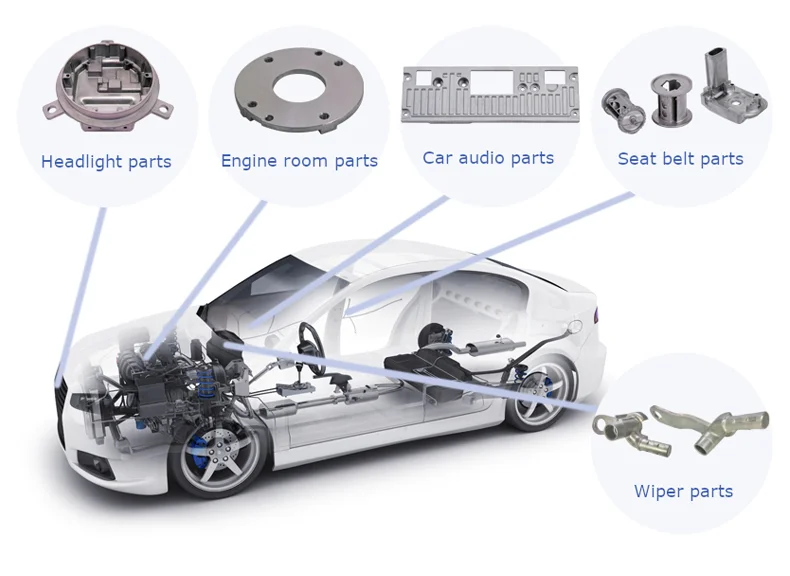
Die casting is widely used across various industries thanks to its ability to produce strong, precise, and lightweight parts at high volumes.
- Automotive: Common parts like engine components, transmission housings, and wheels benefit from aluminum die casting due to its strength and corrosion resistance. These parts require tight tolerances and durability, which die casting reliably delivers.
- Electronics: Die castings for housings, connectors, and heat sinks provide excellent dimensional accuracy and surface finish, ensuring reliable protection and efficient heat dissipation in electronic devices.
- Aerospace: Lightweight structural parts made from magnesium and aluminum alloys are popular for reducing aircraft weight without sacrificing strength.
- Consumer Goods: From appliances and hardware to toys, die casting offers detailed, aesthetically pleasing parts that are both durable and cost-efficient for mass production.
- Industrial: Pump bodies, valves, and enclosures commonly use die cast components, benefiting from their strength and wear resistance in demanding environments.
- Emerging Uses: With the rise of electric vehicles and advanced medical devices, die casting adapts to new materials and complex shapes, supporting the growing demand for lightweight, high-performance parts.
For insights on related precision manufacturing processes, our overview of investment castings compares well with die casting in terms of tolerances and materials.
Design Considerations for Die Casting
When designing parts for die casting, keeping wall thickness uniform is crucial. Uneven walls can cause issues like warping or uneven cooling, which impacts the quality and strength of the final part. Including proper draft angles—slight tapers on the walls—helps in easy ejection of parts from the die without causing damage. Fillets, or rounded edges, reduce stress points and improve metal flow, leading to fewer defects.
Avoiding undercuts is another key factor since these can complicate the mold design and increase tooling costs. Also, porosity (tiny air pockets inside the metal) is a common challenge in die casting, so the design should minimize thick sections or sharp corners that trap gases during the high-pressure injection.
To optimize parts for cost and performance:
- Keep wall thickness consistent to reduce defects and machining time
- Design with draft angles of at least 1 to 3 degrees for easy part release
- Use fillets in corners to improve metal flow and reduce stress
- Simplify part geometry to avoid complex undercuts when possible
- Account for possible post-processing like machining or finishing to meet tight tolerances
Following these design tips streamlines the die casting process and saves on production costs while ensuring strong, precise results. For parts needing further accuracy or finishing, combining die casting with high-precision CNC machining can be a smart solution.
Why Choose MS Machining for Die Casting?
At MS Machining, we specialize in die casting with a focus on aluminum, zinc, and magnesium alloys—three of the most popular materials in the industry. Our deep expertise ensures your parts meet strict quality and performance standards, especially for applications requiring high-pressure die casting methods.
Our Core Capabilities:
- High-pressure processes: We use advanced machinery to handle both hot-chamber and cold-chamber die casting efficiently.
- Precision tooling: Custom-built molds and dies help achieve tight tolerances and excellent surface finishes.
- Quality assurance: Rigorous inspections minimize defects like porosity, ensuring durability and consistent parts.
What Sets Us Apart:
- Custom solutions: From prototype runs to full-scale production, we adapt quickly to meet your specific project needs.
- Fast prototyping: Rapid turnaround shortens your development cycle with functional test parts.
- Scalable production: Whether small batches or high volumes, we optimize cost and output for your business.
| Feature | Benefit |
|---|---|
| Aluminum, Zinc, Magnesium Casting | Lightweight, corrosion-resistant parts tailored to your specs |
| High-Pressure Die Casting Equipment | Superior dimensional accuracy and strength |
| Custom Tooling | Precise, repeatable production with minimal waste |
| Quality Control | Consistent parts with fewer defects |
MS Machining is your go-to partner for reliable, cost-effective metal die casting solutions that deliver performance and precision every time. To complement your die-cast parts, we also offer expert precision metal parts manufacturing capabilities to help finish your components exactly as needed.