
You might already know that standard CNC milling just doesn’t cut it when you’re dealing with hardened metals, titanium, or incredibly complex geometries…
But which alternative process actually fits your specific blueprint?
Well, you’re in the right place, because I’ve put together a complete breakdown of the 3 main types of electric discharge machining.
Choosing the wrong method can wreck your tolerances, inflate your costs, and ruin your production timeline.
As a precision engineering partner at MS Machining, I know that understanding the exact technical differences between Wire EDM, Sinker EDM, and Hole Drilling EDM is the secret to a flawless production run.
In this post, you’re going to learn exactly how to choose the right process to achieve sub-micron accuracy and stress-free cuts for your toughest parts.
Let’s dive right in.
Type 1: Wire EDM (Wire Electrical Discharge Machining)
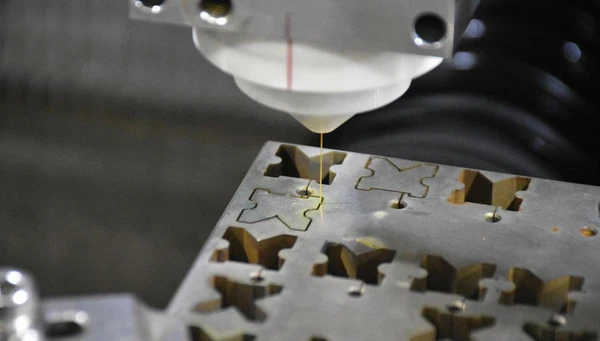
When we talk about achieving micron-level precision on conductive materials, Wire EDM is often the first tool we reach for. Think of it as an ultra-precise electronic band saw, but instead of a serrated blade, we use a microscopically thin, electrically charged wire to slice through metal.
What it is
Wire Electrical Discharge Machining (Wire EDM) is a non-contact machining process. It uses a thin, single-strand metal wire (usually brass or stratified copper) to cut through a workpiece submerged in a tank of dielectric fluid. The wire never actually touches the part; instead, the cutting happens through controlled electrical sparks.
Key Mechanism: Spark Erosion Machining
The magic here is spark erosion machining. We feed the wire through the workpiece while an electrical discharge creates intense heat (up to 12,000°C). This literally vaporizes the material in its path.
Because the wire is constantly being spooled from a fresh source, we avoid the wear issues you’d see in traditional cutting tools. The EDM dielectric fluid (usually deionized water) flushes away the microscopic debris and cools the cutting zone instantly.
Best Used For
We rely on Wire EDM for parts that require intricate contours and tight corners that traditional CNC milling just can’t handle. It is ideal for:
- Through-hole applications: Cutting dies, extrusion dies, and stripper plates.
- Thick materials: We can cut plates up to 300mm+ thick with zero deflection.
- Hardened tool steel machining: Since it cuts with electricity, material hardness doesn’t matter.
- Complex geometries: Capable of 4-axis Wire EDM cutting to create tapered shapes or different profiles on the top and bottom of the part.
MS Machining Capabilities (Technical Specs)
Here is a breakdown of what we can achieve with our Wire EDM setup. These specs define why this method is a go-to for high-precision components.
| Feature | Specification |
|---|---|
| Precision / Tolerance | Precision EDM tolerances down to ±0.001mm (1 micron) |
| Surface Finish | Excellent EDM surface finish Ra as low as 0.1µm |
| Wire Diameter | Typically 0.02mm to 0.3mm (allows for incredibly small corner radii) |
| Material Compatibility | Any conductive metal: Titanium, Carbide, Superalloys, Steel |
Why Choose It
The biggest advantage is that it is a stress-free machining process. Because there is no physical contact or cutting force applied to the workpiece, we don’t have to worry about the material warping or distorting. This is crucial when working with delicate parts or expensive materials like titanium EDM cutting. If you need sharp internal corners and a burr-free finish right out of the tank, Wire EDM is the superior choice.
Types of Electric Discharge Machining: Sinker EDM
Ram EDM / Die Sinking Basics
When we need to sink complex 3D shapes into solid metal, we use Sinker EDM, widely known in the industry as Ram EDM or Die Sinking.
In this setup, we use a custom-shaped electrode—typically graphite or copper—that acts like a reverse 3D stamp. As the electrode gets close to the workpiece, intense sparking melts and vaporizes the metal to mirror the electrode’s shape. This is classic spark erosion machining in action.
The Key Distinctions
The biggest difference between Sinker EDM and other types of electric discharge machining is its ability to stop midway through a part.
- Blind Cavity Machining: Unlike wire systems that cut all the way through a block, Sinker EDM is designed to hollow out blind pockets and deep cavities.
- Custom Tooling: The electrode must be pre-machined to the exact geometry we want to burn into the workpiece.
- Fluid Environment: The entire operation is fully submerged in specialized EDM dielectric fluid. This fluid acts as an insulator, controls the spark gap, cools the part, and flushes out the microscopic metal debris.
Best Used For
Because it is a true non-contact machining process, Sinker EDM puts zero physical cutting stress on the workpiece. This makes it perfect for delicate, detailed, or incredibly hard components. We typically rely on it for:
- Building high-precision plastic injection molds and stamping dies.
- Blind cavity machining where standard CNC endmills simply cannot reach tight bottom corners or sharp internal features.
- Sinking complex details—like internal hexes, splines, or intricate logos—directly into hardened tool steel components without risking tool breakage.
Type 3: Hole Drilling EDM (Hole Popper)
When we look at the different types of electric discharge machining, the Hole Drilling EDM—often called the “hole popper”—is the specialist of the bunch. While Wire EDM cuts shapes and Sinker EDM molds cavities, this machine is dedicated entirely to small hole drilling EDM.
In my shop, we don’t use this for shaping complex geometries; we use it for rapid, vertical penetration. It uses a rotating hollow tubular electrode (usually brass or copper) rather than a solid shape.
Key Distinction: The Hollow Electrode
The real game-changer here is how we manage the EDM dielectric fluid. Instead of just submerging the part, we pump the high-pressure fluid directly through the center of the rotating electrode tube.
- Internal Flushing: The fluid shoots out the bottom of the electrode, instantly flushing away the eroded metal particles.
- Deep Penetration: Because the debris is cleared so effectively, we can drill incredibly deep holes relative to the diameter (high aspect ratio) without the electrode stalling.
- Speed: It is significantly faster than Sinker EDM for making holes, though slightly rougher in surface finish.
Best Used For
I rely on the hole popper for tasks where traditional drilling physically cannot compete, specifically involving hardened tool steel machining or carbide. Since it is a non-contact machining process, the hardness of the material is irrelevant—it cuts carbide as easily as mild steel.
- Pilot Holes for Wire EDM: You cannot thread a wire through a solid block. We use the hole popper to create the initial “start hole” so the wire can be threaded through to begin the main cut.
- Turbine Blades: Creating cooling holes in aerospace components made of superalloys.
- Removing Broken Taps: If a drill bit snaps off inside a specialized part, I use the hole popper to disintegrate the broken bit without damaging the surrounding threads.
Quick Comparison: Wire vs. Sinker vs. Hole Drilling
When I’m deciding which machine to put a job on, I look at the geometry first. While all types of electric discharge machining use spark erosion machining to remove material, the setup and application for each are distinct. Understanding the trade-offs between Wire cut EDM vs Sinker EDM and hole poppers is crucial for hitting those micron-level precision targets without wasting budget.
Here is a breakdown of how we distinguish them on the shop floor:
| Feature | Wire EDM | Sinker (Ram) EDM | Hole Drilling (Hole Popper) |
|---|---|---|---|
| Primary Action | Cuts through-holes and contours (like a cheese cutter) | Plunges shaped electrodes to create blind cavities | Rapidly drills deep, small diameter holes |
| Electrode | Spooled wire (usually brass) | Custom-shaped Graphite or Copper | Rotating brass or copper tube |
| Tolerance | Precision EDM tolerances (±0.0001″ or better) | High precision (typically ±0.0005″) | Standard precision (±0.001″ – ±0.005″) |
| Ideal For | Complex 2D shapes, punches, and extrusion dies | Blind cavity machining, molds, and plastic injection dies | Starter holes for wire EDM, ejector pin holes, turbine blades |
Wire EDM is my go-to for anything requiring extreme accuracy on through-parts. Ram EDM / Die Sinking is the only option when you need to create complex 3D shapes that don’t go all the way through the block. Meanwhile, Small hole drilling EDM is purely a utility player—it’s fast, efficient, and preps the material for the wire machines.
Why Wire EDM is Often the Superior Choice
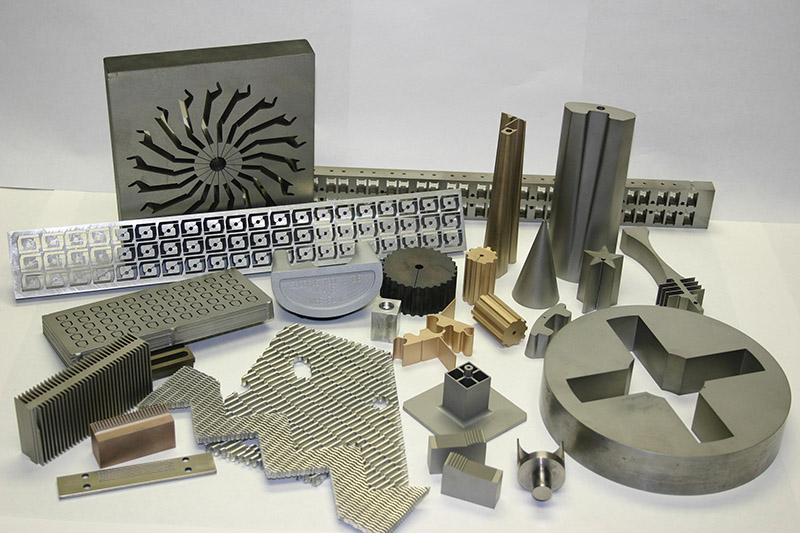
When evaluating the different types of electric discharge machining, we consistently see Wire EDM stand out for producing complex, high-tolerance components. In the ongoing Wire cut EDM vs Sinker EDM comparison, wire cutting frequently delivers the best baseline for US manufacturing demands.
Stress-Free Machining
Because this is a true non-contact machining process, the cutting wire never actually touches the workpiece. The electrical sparks handle all the material removal.
- Zero mechanical stress: Parts do not warp, bend, or distort during the cut.
- Delicate features: Easily produces thin-walled and fragile components that would crush under a standard CNC mill.
Hard Material Compatibility
If a metal conducts electricity, we can cut it—no matter how hard it is on the Rockwell scale.
- Perfect for hardened tool steel machining without requiring pre-machining annealing.
- Slices through titanium, tungsten carbide, and aerospace-grade alloys effortlessly.
- Zero tool deflection, meaning the hardness of the material doesn’t compromise the final shape.
Cost vs. Accuracy
Achieving micron-level precision typically drives up production costs. Wire EDM balances this out by getting the job done right on the very first run.
- Precision EDM tolerances: Holds extreme tolerances that eliminate the need for secondary finishing operations.
- Reduced tool costs: Uses inexpensive brass or zinc-coated wire instead of high-dollar, breakable carbide end mills.
- Lower scrap rates: Predictable accuracy means less wasted material, keeping overhead costs down.
Industries That Rely on Different EDM Types
In the US manufacturing landscape, I see three specific sectors dominating the demand for the various types of electric discharge machining. These industries don’t just want precision; they demand it because safety and performance are on the line. Whether utilizing wire cut EDM or ram EDM, the ability to cut the hardest metals without direct contact is a game-changer for electrical discharge machining applications.
Aerospace
In aerospace, weight reduction and heat resistance are everything. We rely heavily on titanium EDM cutting here because traditional cutting tools simply can’t handle heat-resistant superalloys (like Inconel) without wearing out instantly or causing heat stress cracks. We are regularly machining turbine blades, landing gear components, and compressor disks with micron-level precision. The non-contact nature of spark erosion machining ensures the structural integrity of these flight-critical parts remains intact.
Medical
This is where small hole drilling EDM and high-precision wire work really shine. When manufacturing surgical instruments, catheters, or orthopedic implants, the EDM surface finish Ra and dimensional accuracy must be flawless. Since this is a non-contact machining process, we can create delicate, complex shapes in difficult biocompatible materials without bending, distorting, or contaminating the part.
Automotive
While automotive mass production often uses stamping or casting, the molds and dies for those parts start in shops like ours. We use sinker EDM for hardened tool steel machining to create the complex, deep-ribbed injection molds that churn out car parts. It is also the standard for drilling the microscopic holes in fuel injectors to maximize engine efficiency.
| Industry | Key Application | Why Use EDM? |
|---|---|---|
| Aerospace | Turbine blades, engine parts | Cuts exotic alloys (Titanium, Inconel) completely stress-free. |
| Medical | Implants, surgical tools | Achieves micron-level precision on tiny, complex geometries. |
| Automotive | Injection molds, fuel injectors | Essential for blind cavity machining in hardened steel molds. |
FAQ: Common Questions About EDM Types
When clients come to us with tricky designs, they usually have a few burning questions about what our spark erosion machining can actually handle. Here is the lowdown on the most common inquiries we get about the different types of electric discharge machining.
Can Wire EDM create blind pockets?
No, it can’t. Think of Wire EDM like a highly precise cheese slicer—the wire has to pass all the way through the workpiece to make the cut. If you need blind cavity machining (pockets that don’t go all the way through), we utilize Ram EDM / Die Sinking instead. Sinker EDM plunges a custom electrode into the material, which allows us to create complex bottomed shapes that wire cutting just can’t touch.
What is the smallest wire diameter available?
For projects demanding extreme detail, we can go incredibly small. Standard wires run about 0.010” to 0.012”, but for high-precision micro-machining, we can use wires as thin as 0.0008” (0.02mm). This capability allows us to achieve micron-level precision and tight corner radii that standard milling tools physically cannot fit into.
Does EDM work on non-conductive materials?
Generally, no. Since the entire process relies on electrical sparks jumping between an electrode and the workpiece, the material must be electrically conductive. It works beautifully for hardened tool steel machining, titanium, and carbide. If you are working with ceramics or composites, they generally need to be specially engineered conductive variants to work with this process.
Why is Wire EDM more precise than CNC Milling?
It comes down to force. CNC milling involves physical contact and cutting force, which can cause tool deflection or push the part out of tolerance, especially with thin walls. Wire EDM is a non-contact machining process. There is no cutting pressure, meaning we get zero distortion and perfect EDM surface finish Ra, even on delicate or extremely hard parts.