

Drilling platforms are essential for managing pressure and guaranteeing safe operations during drilling and production in the oil and gas sector. The tubing head, a crucial piece of machinery that supports and seals tubing strings while granting access for different well operations, is one of the main parts of a wellhead assembly. The purposes, parts, varieties, and best practices for installing and maintaining tube heads are all covered in this article.
What is a Tubing Head?
The part of the wellhead that supports the tubing string and creates a pressure-tight seal around it is called a tubing head. It ensures appropriate production fluid control and pressure regulation by acting as an interface between the tubing hanger and the casing head. Tube heads are an essential part of both onshore and offshore drilling operations since they are made to fit various tube sizes and well conditions.
Functions of a Tubing Head:
Tubing heads have several uses, such as:
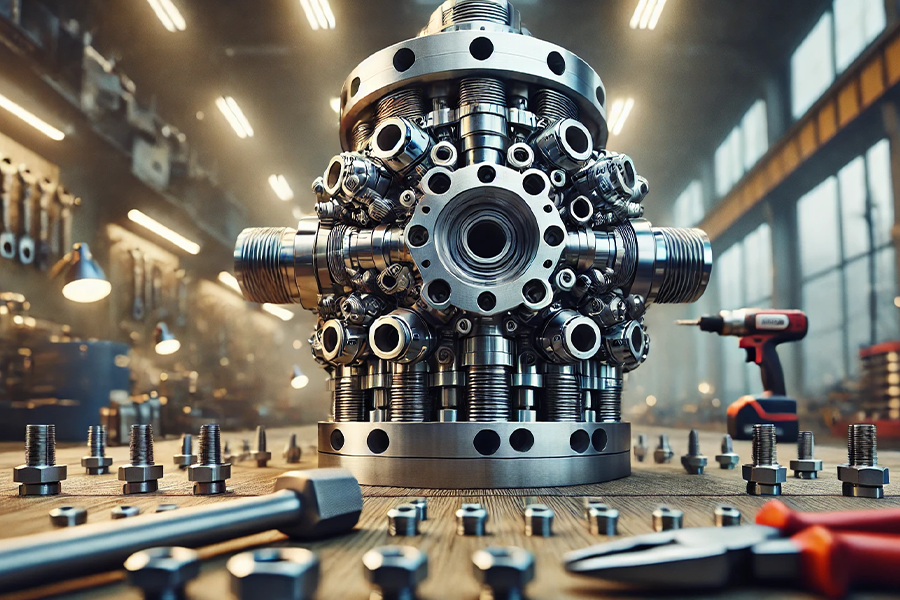
- Supporting the Tubing String: The tubing head holds the tubing hanger in place, ensuring the tubing string is firmly suspended inside the well.
- Providing Sealing and Controlling Pressure: Sealing components in the tube head stop fluid or gas leaks while regulating well pressure.
- Facilitating Well Maintenance and Intervention: The tube heads’ design makes the wellbore easily accessible for tasks like workovers, tubing replacement, and well intervention.
- Connecting to the Christmas Tree: The tree regulates production flow and pressure and is connected to tubing heads.
Components of a Tubing Head
Several essential parts make up a conventional tubing head:
- Tubing Head Spool: The tubing head spool is the primary component that holds the tubing hanger and serves as a stable mounting point.
- Tubing Hanger: A tubing hanger controls pressure while hanging the tubing string within the tubing head.
- Seals and Gaskets: Gaskets and seals guarantee a leak-proof connection between the wellhead parts.
- Secondary Seals: To stop leaks from the annulus, provide more sealing.
- Test and Access Ports: Provide for sound monitoring and pressure testing.
- Lockdown screws: Hold the tubing hanger firmly in position and stop it from moving while under a lot of pressure.
Types of Tubing Head
To satisfy diverse operational needs, tubing heads are available in a variety of designs:
1. Standard Tubing Heads
Standard oil and gas wells frequently employ these tubing heads. They accept a variety of tubing sizes and have a straight-bore design. Traditional tubing heads are dependable and simple to maintain.
2. Two Tube Heads
Dual-tubing heads simultaneously accommodate two tubing hangers in wells with several tubing strings. They are frequently utilized in high-production wells that need more flow capacity.
3. Heads of Integral Tubing
Integral tubing heads eliminate the need for several connections by combining the tubing head and casing head into a single device. These are the recommended options for small wellhead installations.
4. Heads for Specialty Tubing
These tubing heads are made to order for certain good conditions, such as high-pressure, high-temperature (HPHT) settings or corrosive applications.
Installing and Maintaining Tubing Heads
Tube heads must be installed and maintained correctly for well operations to be safe and effective.
Steps for Installation:
- Preparation: Verify that the tubing head is compatible with the wellhead components and check for flaws.
- Positioning: Use bolts and seals to fasten the tubing head onto the casing head.
- Installing the Tubing Hanger: Insert the tubing hanger into the tubing head after lowering the tubing string into the well.
- Sealing and Pressure Testing: To ensure integrity, gaskets and seals are installed, and pressure tests are performed.
- Final Assembly: Before manufacturing starts, attach the Christmas tree and ensure all connections are correct.
Best Practices for Maintenance:
- Frequent Examinations: Check for leaks, corrosion, and wear regularly.
- Seal Replacement: To preserve pressure integrity, replace worn-out or damaged seals.
- Monitoring Pressure: Use access ports to monitor well pressure and spot irregularities early.
- Cleaning and Lubrication: Use the right lubricants to keep things from rusting and to make things run smoothly.
Faqs
1. What distinguishes a casing head from a tubing head?
While the tubing head holds the tubing hanger and supports the tubing string, the casing head holds the casing strings and connects the casing hangers. The tubing head is positioned above the casing head as part of the wellhead assembly.
2. Is it possible to modify tube heads to suit various well conditions?
Indeed, tubing heads can fit particular good circumstances, such as sour gas applications, offshore drilling, or high-pressure, high-temperature (HPHT) settings. CustomizationCustomization involves specific seals, materials, and configurations to guarantee optimum performance to guarantee optimum performance.
3. How frequently ought tube heads to be examined?
At least once a year, routine inspections should be carried out; in corrosive or high-pressure settings, this should be done more frequently. Frequent maintenance prolongs the equipment’s lifespan, guarantees safety, and stops leaks.
4. What materials are used to make tubing heads?
Depending on the well conditions, high-strength carbon or stainless steel are commonly used to make tubing heads. Wells that produce corrosive gases or fluids may be treated with corrosion-resistant materials and special coatings.
Conclusion
Tubing heads are crucial parts of wellhead systems to ensure tubing strings’ safe and effective suspension. They are essential to the oil and gas sector because of their roles in production efficiency, well intervention, and pressure control. Operators can preserve well integrity and maximize output by being aware of tube heads’ types, parts, and upkeep. The careful selection, installation, and maintenance of tubing heads enhance oil and gas wells’ durability and general safety.
Elevate Precision: Contact MS-Machining Today!
Experience the efficiency and precision our CNC machining services bring to your projects. Ready to take your production to the next level? Contact us today to learn how we can support your needs for CNC Machining Services.
Visit ms-machining.com and head to our ‘Contact Us‘ page to get started!