If you’re diving into product development, you’ve probably heard about prototype machining and why it’s a game-changer for bringing ideas to life. Whether you’re an engineer, designer, or startup founder, understanding how precise CNC prototype machining works can save you time, reduce risk, and ensure your designs don’t just look good on screen—they function perfectly in the real world. In this guide, you’ll get a clear, no-fluff overview of why prototype machining is essential for rapid testing, material accuracy, and seamless transition to production. Ready to see how MS Machining can turn your concepts into high-precision prototypes? Let’s get started.
Introduction to Prototype Machining
Prototype machining is a subtractive manufacturing process used to create highly accurate, functional prototypes by removing material from solid blocks. This method is essential in modern product development, allowing engineers and designers to test a product’s form, fit, and function before mass production. Unlike early approaches that relied heavily on manual tools, prototype CNC machining now utilizes advanced CNC rapid prototyping techniques to deliver precision and repeatability.
With rapid CNC prototyping, manufacturers can quickly produce prototype CNC parts that mirror final production components, enabling more reliable design validation. MS Machining leverages state-of-the-art equipment and precision prototyping machining methods to provide high-quality CNC machined prototypes. This expertise helps clients accelerate their product ideas from concept to reality, ensuring faster iteration and seamless transition to production-ready parts.
What Is Prototype Machining?
Prototype machining is a subtractive manufacturing process that starts with solid blocks of material—like metal or plastic—and removes excess material to create precise, functional parts. Unlike additive methods such as 3D printing, which build parts layer by layer, prototype CNC machining cuts away material to achieve tight tolerances and smooth finishes essential for testing real-world product performance.
This process plays a crucial role in turning early design concepts into production-ready components. By producing high-precision prototype CNC parts, engineers can validate form, fit, and function before moving into full-scale manufacturing. This bridging step helps identify design flaws early, saving time and cost down the line. Whether through milling, turning, or advanced multi-axis operations, prototype machining offers reliable, accurate parts that replicate final product standards.
The Prototype Machining Process Step-by-Step
Prototype machining starts with the design phase, where detailed CAD models are created to capture every aspect of your part. During this stage, manufacturability is carefully considered to avoid issues down the line. Choosing the right materials comes next, whether it’s metal or plastic, based on the prototype’s strength, durability, and testing needs.
Once the design and materials are set, programming begins. Here, designs are converted into CAM software and translated into precise G-code instructions that guide the CNC machines. This step is critical for ensuring accurate prototype CNC machining.
The machining phase involves various operations like CNC milling for prototypes, turning, and advanced multi-axis machining to achieve complex geometries and tight tolerances. Using these techniques, CNC machined prototypes are shaped layer by layer from solid blocks of material.
After machining, the parts undergo post-processing, which includes finishing touches like deburring, polishing, and sometimes heat treatment. Rigorous inspection and quality assurance ensure each prototype meets your specifications perfectly. This thorough process ensures high-quality precision prototyping machining to support functional prototype production.
For complex geometries or metal parts, MS Machining’s expertise in CNC milling machines and other precision equipment guarantees prototypes that truly match your design intent.
Advantages of Prototype Machining
Prototype machining offers superior precision and tight tolerances, making it ideal for producing CNC prototype parts that function exactly as intended. This level of accuracy is crucial for testing and validating designs under real-world conditions.
Another key benefit is its wide material compatibility. Whether you need metals like aluminum, stainless steel, or titanium, or plastics such as ABS and polycarbonate, precision prototyping machining can handle them all. This flexibility ensures you get the right material for strength, durability, or specific testing needs.
Cost-effectiveness is another strong point, especially for low-volume CNC machining runs and iterative prototyping. You avoid the high upfront costs of tooling and molds, making it affordable to refine designs quickly. Plus, lead times for prototype CNC machining are much faster compared to traditional tooling methods, helping you speed up product development cycles.
Finally, prototype machining supports a seamless transition from prototype to production. Using the same subtractive manufacturing techniques means you can scale up without redesigning your manufacturing process, ensuring consistency and reliability. For high-precision parts, MS Machining’s rapid CNC prototyping services deliver fast, accurate solutions that bridge your design ideas to real production-ready parts.
Explore our expert CNC milling parts and CNC machining metal services to see how we can accelerate your prototype machining projects.
Common Materials Used in Prototype Machining
When it comes to prototype CNC machining, material choice plays a huge role in how your final part performs. Metals like aluminum, stainless steel, titanium, and brass are popular for their strength, durability, and ability to handle functional testing. Aluminum offers a great balance of lightweight and machinability, while stainless steel and titanium are perfect for high-strength or corrosion-resistant parts.
On the plastics side, materials like ABS, polycarbonate, nylon, and PEEK are common choices. These plastics provide different benefits depending on the prototype’s requirements—ABS is easy to machine and good for visual models, polycarbonate offers impact resistance, nylon is strong and flexible, and PEEK excels in high-temperature or chemical resistance scenarios.
Selecting the right material depends on factors like mechanical strength, wear resistance, thermal properties, and the specific testing needs of your prototype. Choosing the right substrate helps ensure your CNC machined prototypes perform like the final product, making your prototype machining process more effective and reliable.
For detailed material capabilities, explore our CNC machining services that cover a wide range of metals and plastics tailored to your project.
Prototype Machining vs. Other Prototyping Methods
When deciding between prototype machining and other prototyping methods, understanding their strengths helps you pick the right process for your project.
Method
Strengths
Best For
Limitations
Prototype Machining
High precision, tight tolerances, wide material options
Functional prototype production, testing fit & function
Higher cost for complex shapes, slower for some geometries
3D Printing
Fast, cost-effective for complex shapes, good for early visual models
Rapid design validation, lightweight parts
Lower strength, surface finish varies, limited material choices
Injection Molding
Excellent for high-volume, production-like parts
Pre-production validation, large runs
High upfront tooling cost, slow initial setup
When to Choose Prototype Machining Over 3D Printing
Need durable, functional parts with properties close to final production
Require tight tolerances and superior surface finish
Working with metals or engineering plastics not easily printed
Why Prototype Machining Beats Injection Molding for Validation
No expensive molds required, perfect for low-volume runs
Faster turnaround, allowing for quick design iterations
Useful for complex geometries difficult to mold
Hybrid Approaches: Best of Both Worlds
Use 3D printing for quick form and fit checks
Move to CNC prototype machining for functional testing and durability
Combine with finishing services like anodizing aluminum for enhanced performance—see our aluminum CNC machining for quality results
Choosing the right prototyping method depends on your project timeline, budget, material needs, and performance goals. For production-ready CNC prototype parts with precision and reliability, prototype machining remains a top choice.
Key Applications and Industries
Prototype machining plays a vital role across many industries where precision and reliability are non-negotiable. In aerospace, high-strength components and complex assemblies are created to meet rigorous safety and performance standards. Automotive companies rely on functional prototype CNC machining to test parts for fit, durability, and real-world conditions before moving to full production.
The medical device industry benefits from biocompatible and precise prototypes, where accuracy is critical for patient safety and regulatory approvals. Consumer electronics and industrial equipment manufacturers use rapid CNC prototyping to produce detailed parts that validate designs and speed up product launches.
At MS Machining, our precision prototyping machining services have supported a range of successful projects, helping clients go from concept to functional prototypes quickly. If you want to see how CNC machined prototypes make a difference in complex industries, check out our precision CNC machining services and explore our expertise in delivering tailored prototype CNC machining parts.
Design Tips for Successful Prototype Machining
Getting your prototype CNC machining right starts with smart design choices. Here are some key tips to optimize for manufacturability and avoid common pitfalls:
Follow Design for Manufacturability (DFM) Principles: Keep your designs simple where possible. This helps reduce machining time and cost, while improving precision.
Mind Tolerances: Tight tolerances can be expensive and difficult to hold consistently. Specify only what’s necessary for your functional needs.
Watch Wall Thickness: Thin walls may warp or break during machining. Maintain minimum thickness recommended for your chosen material.
Feature Size & Detail: Avoid features that are too tiny for the machine tools to handle reliably. This ensures CNC rapid prototyping stays efficient and accurate.
File Preparation: Use clean, error-free CAD files. Remove unnecessary details and confirm all geometry is fully defined before converting to CAM or code.
Iterate Wisely: Test prototype CNC machining designs in stages where possible. Early feedback lets you refine parts before committing to low-volume CNC machining runs.
Following these best practices improves the chances of delivering high-quality, precision prototyping machining that meets your product goals without costly delays or revisions. For an effective blend of prototype CNC machining with optimized design, consider how your parts will move from design to production-ready—an approach that helps bridge the gap smoothly.
Why Choose MS Machining for Your Prototype Needs
When it comes to rapid CNC prototyping and precision prototyping machining, MS Machining stands out. We specialize in delivering high-quality CNC machined prototypes that help accelerate your product development from concept to production.
What Sets MS Machining Apart?
Feature
Benefit
Expertise in rapid CNC prototyping
Quick, accurate prototype delivery
Advanced CNC turning and milling
Handles complex geometries with ease
Quality commitment
Tight tolerances and consistent results
Fast turnaround times
Keeps your project on schedule
Collaborative approach
Tailored solutions to meet your needs
Scalable capacity
From single prototypes to small production runs
By combining years of experience with state-of-the-art equipment, MS Machining ensures your prototype CNC machining projects get the precision and attention they deserve. Our capabilities include complex multi-axis machining, so no design is too intricate.
For precise, reliable, and fast custom prototype machining, trust MS Machining to deliver. Whether you need a single functional prototype or are preparing a bridge to production, our services adapt to your timeline and specifications.
Explore our full range of prototype CNC machining and CNC turning and milling capabilities to see how we can support your next project.
Prototype machining is the process of making sample parts before full production. CNC is widely used because it can produce prototypes that are very close to final production parts, both in shape and accuracy. This helps engineers test fit, function, and performance without guessing.
The main difference is volume, not quality. CNC prototype machining focuses on flexibility and speed, allowing design changes to be made quickly. The same machines and processes are often used later for production, which means the prototype results are reliable and scalable.
CNC prototype machining can achieve the same tight tolerances as production parts, commonly around ±0.01 mm. This makes it ideal for functional testing, especially when precise fit and mechanical performance need to be evaluated early.
Most production materials can be used, including aluminum, stainless steel, steel alloys, brass, copper, titanium, and engineering plastics. Using the same material as the final part helps ensure test results reflect real-world conditions.
Absolutely. One of the key benefits of CNC prototype machining is how quickly design changes can be implemented. Adjustments to dimensions or features can be made directly in the program without the need for expensive tooling changes.
Clear 2D drawings or 3D CAD files, material requirements, tolerance expectations, and the intended use of the prototype are usually enough. The more context provided, the easier it is to recommend the right machining approach and deliver usable prototypes quickly.


 Prototype machining starts with the design phase, where detailed CAD models are created to capture every aspect of your part. During this stage, manufacturability is carefully considered to avoid issues down the line. Choosing the right materials comes next, whether it’s metal or plastic, based on the prototype’s strength, durability, and testing needs.
Once the design and materials are set, programming begins. Here, designs are converted into CAM software and translated into precise G-code instructions that guide the CNC machines. This step is critical for ensuring accurate prototype CNC machining.
The machining phase involves various operations like CNC milling for prototypes, turning, and advanced multi-axis machining to achieve complex geometries and tight tolerances. Using these techniques, CNC machined prototypes are shaped layer by layer from solid blocks of material.
After machining, the parts undergo post-processing, which includes finishing touches like deburring, polishing, and sometimes heat treatment. Rigorous inspection and quality assurance ensure each prototype meets your specifications perfectly. This thorough process ensures high-quality precision prototyping machining to support functional prototype production.
For complex geometries or metal parts, MS Machining’s expertise in CNC milling machines and other precision equipment guarantees prototypes that truly match your design intent.
Prototype machining starts with the design phase, where detailed CAD models are created to capture every aspect of your part. During this stage, manufacturability is carefully considered to avoid issues down the line. Choosing the right materials comes next, whether it’s metal or plastic, based on the prototype’s strength, durability, and testing needs.
Once the design and materials are set, programming begins. Here, designs are converted into CAM software and translated into precise G-code instructions that guide the CNC machines. This step is critical for ensuring accurate prototype CNC machining.
The machining phase involves various operations like CNC milling for prototypes, turning, and advanced multi-axis machining to achieve complex geometries and tight tolerances. Using these techniques, CNC machined prototypes are shaped layer by layer from solid blocks of material.
After machining, the parts undergo post-processing, which includes finishing touches like deburring, polishing, and sometimes heat treatment. Rigorous inspection and quality assurance ensure each prototype meets your specifications perfectly. This thorough process ensures high-quality precision prototyping machining to support functional prototype production.
For complex geometries or metal parts, MS Machining’s expertise in CNC milling machines and other precision equipment guarantees prototypes that truly match your design intent.
 When it comes to prototype CNC machining, material choice plays a huge role in how your final part performs. Metals like aluminum, stainless steel, titanium, and brass are popular for their strength, durability, and ability to handle functional testing. Aluminum offers a great balance of lightweight and machinability, while stainless steel and titanium are perfect for high-strength or corrosion-resistant parts.
On the plastics side, materials like ABS, polycarbonate, nylon, and PEEK are common choices. These plastics provide different benefits depending on the prototype’s requirements—ABS is easy to machine and good for visual models, polycarbonate offers impact resistance, nylon is strong and flexible, and PEEK excels in high-temperature or chemical resistance scenarios.
Selecting the right material depends on factors like mechanical strength, wear resistance, thermal properties, and the specific testing needs of your prototype. Choosing the right substrate helps ensure your CNC machined prototypes perform like the final product, making your prototype machining process more effective and reliable.
For detailed material capabilities, explore our CNC machining services that cover a wide range of metals and plastics tailored to your project.
When it comes to prototype CNC machining, material choice plays a huge role in how your final part performs. Metals like aluminum, stainless steel, titanium, and brass are popular for their strength, durability, and ability to handle functional testing. Aluminum offers a great balance of lightweight and machinability, while stainless steel and titanium are perfect for high-strength or corrosion-resistant parts.
On the plastics side, materials like ABS, polycarbonate, nylon, and PEEK are common choices. These plastics provide different benefits depending on the prototype’s requirements—ABS is easy to machine and good for visual models, polycarbonate offers impact resistance, nylon is strong and flexible, and PEEK excels in high-temperature or chemical resistance scenarios.
Selecting the right material depends on factors like mechanical strength, wear resistance, thermal properties, and the specific testing needs of your prototype. Choosing the right substrate helps ensure your CNC machined prototypes perform like the final product, making your prototype machining process more effective and reliable.
For detailed material capabilities, explore our CNC machining services that cover a wide range of metals and plastics tailored to your project.
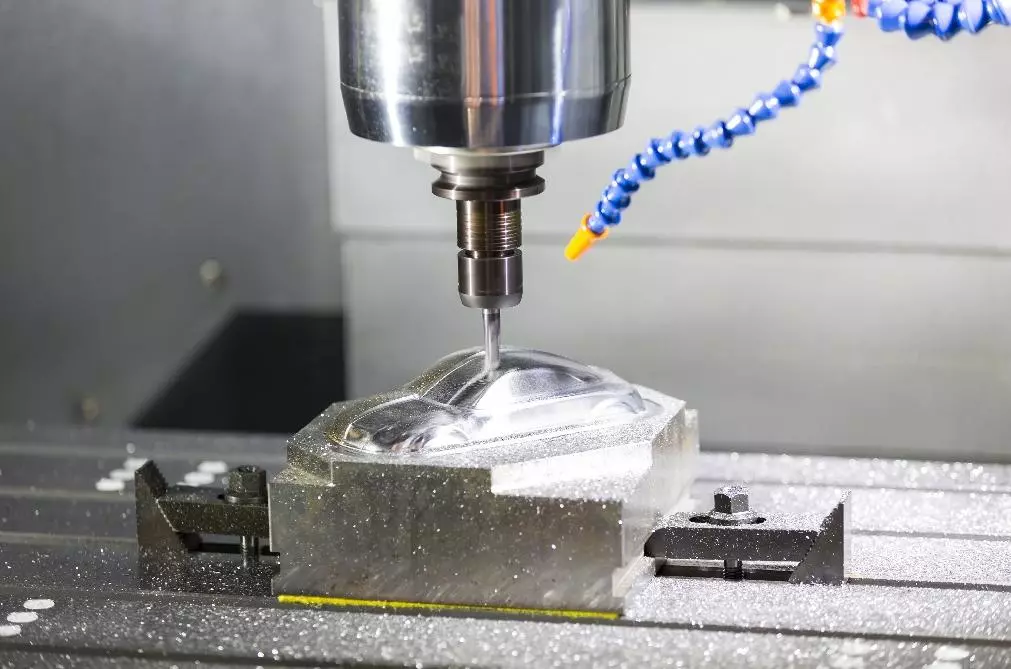 Prototype machining starts with the design phase, where detailed CAD models are created to capture every aspect of your part. During this stage, manufacturability is carefully considered to avoid issues down the line. Choosing the right materials comes next, whether it’s metal or plastic, based on the prototype’s strength, durability, and testing needs.
Once the design and materials are set, programming begins. Here, designs are converted into CAM software and translated into precise G-code instructions that guide the CNC machines. This step is critical for ensuring accurate prototype CNC machining.
The machining phase involves various operations like CNC milling for prototypes, turning, and advanced multi-axis machining to achieve complex geometries and tight tolerances. Using these techniques, CNC machined prototypes are shaped layer by layer from solid blocks of material.
After machining, the parts undergo post-processing, which includes finishing touches like deburring, polishing, and sometimes heat treatment. Rigorous inspection and quality assurance ensure each prototype meets your specifications perfectly. This thorough process ensures high-quality precision prototyping machining to support functional prototype production.
For complex geometries or metal parts, MS Machining’s expertise in CNC milling machines and other precision equipment guarantees prototypes that truly match your design intent.
Prototype machining starts with the design phase, where detailed CAD models are created to capture every aspect of your part. During this stage, manufacturability is carefully considered to avoid issues down the line. Choosing the right materials comes next, whether it’s metal or plastic, based on the prototype’s strength, durability, and testing needs.
Once the design and materials are set, programming begins. Here, designs are converted into CAM software and translated into precise G-code instructions that guide the CNC machines. This step is critical for ensuring accurate prototype CNC machining.
The machining phase involves various operations like CNC milling for prototypes, turning, and advanced multi-axis machining to achieve complex geometries and tight tolerances. Using these techniques, CNC machined prototypes are shaped layer by layer from solid blocks of material.
After machining, the parts undergo post-processing, which includes finishing touches like deburring, polishing, and sometimes heat treatment. Rigorous inspection and quality assurance ensure each prototype meets your specifications perfectly. This thorough process ensures high-quality precision prototyping machining to support functional prototype production.
For complex geometries or metal parts, MS Machining’s expertise in CNC milling machines and other precision equipment guarantees prototypes that truly match your design intent.
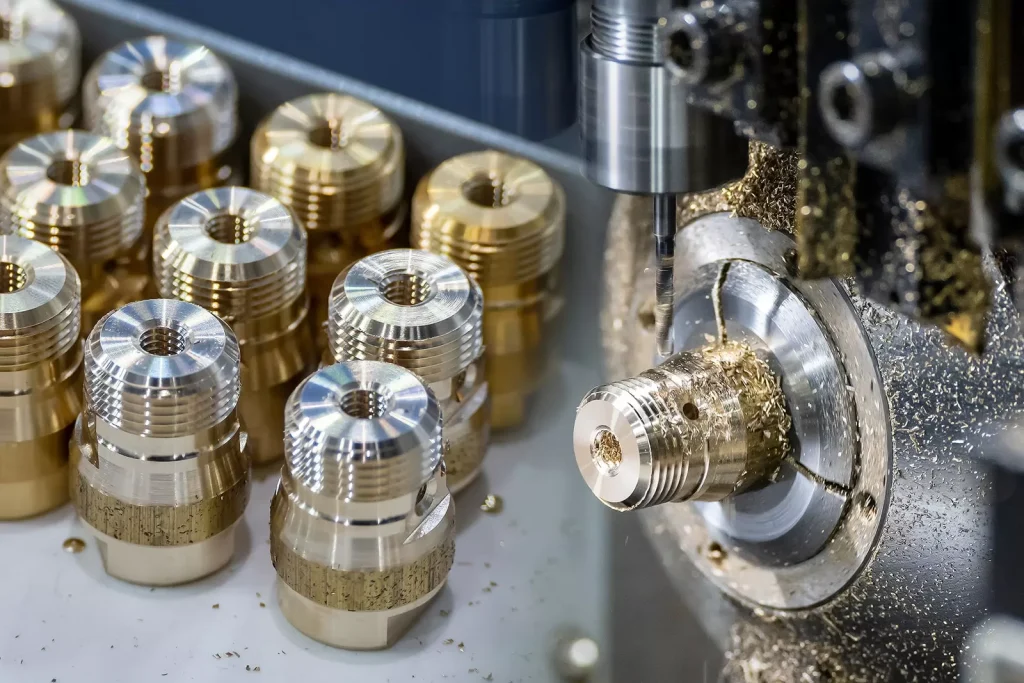 When it comes to prototype CNC machining, material choice plays a huge role in how your final part performs. Metals like aluminum, stainless steel, titanium, and brass are popular for their strength, durability, and ability to handle functional testing. Aluminum offers a great balance of lightweight and machinability, while stainless steel and titanium are perfect for high-strength or corrosion-resistant parts.
On the plastics side, materials like ABS, polycarbonate, nylon, and PEEK are common choices. These plastics provide different benefits depending on the prototype’s requirements—ABS is easy to machine and good for visual models, polycarbonate offers impact resistance, nylon is strong and flexible, and PEEK excels in high-temperature or chemical resistance scenarios.
Selecting the right material depends on factors like mechanical strength, wear resistance, thermal properties, and the specific testing needs of your prototype. Choosing the right substrate helps ensure your CNC machined prototypes perform like the final product, making your prototype machining process more effective and reliable.
For detailed material capabilities, explore our CNC machining services that cover a wide range of metals and plastics tailored to your project.
When it comes to prototype CNC machining, material choice plays a huge role in how your final part performs. Metals like aluminum, stainless steel, titanium, and brass are popular for their strength, durability, and ability to handle functional testing. Aluminum offers a great balance of lightweight and machinability, while stainless steel and titanium are perfect for high-strength or corrosion-resistant parts.
On the plastics side, materials like ABS, polycarbonate, nylon, and PEEK are common choices. These plastics provide different benefits depending on the prototype’s requirements—ABS is easy to machine and good for visual models, polycarbonate offers impact resistance, nylon is strong and flexible, and PEEK excels in high-temperature or chemical resistance scenarios.
Selecting the right material depends on factors like mechanical strength, wear resistance, thermal properties, and the specific testing needs of your prototype. Choosing the right substrate helps ensure your CNC machined prototypes perform like the final product, making your prototype machining process more effective and reliable.
For detailed material capabilities, explore our CNC machining services that cover a wide range of metals and plastics tailored to your project.